How many planets have we landed rovers on?
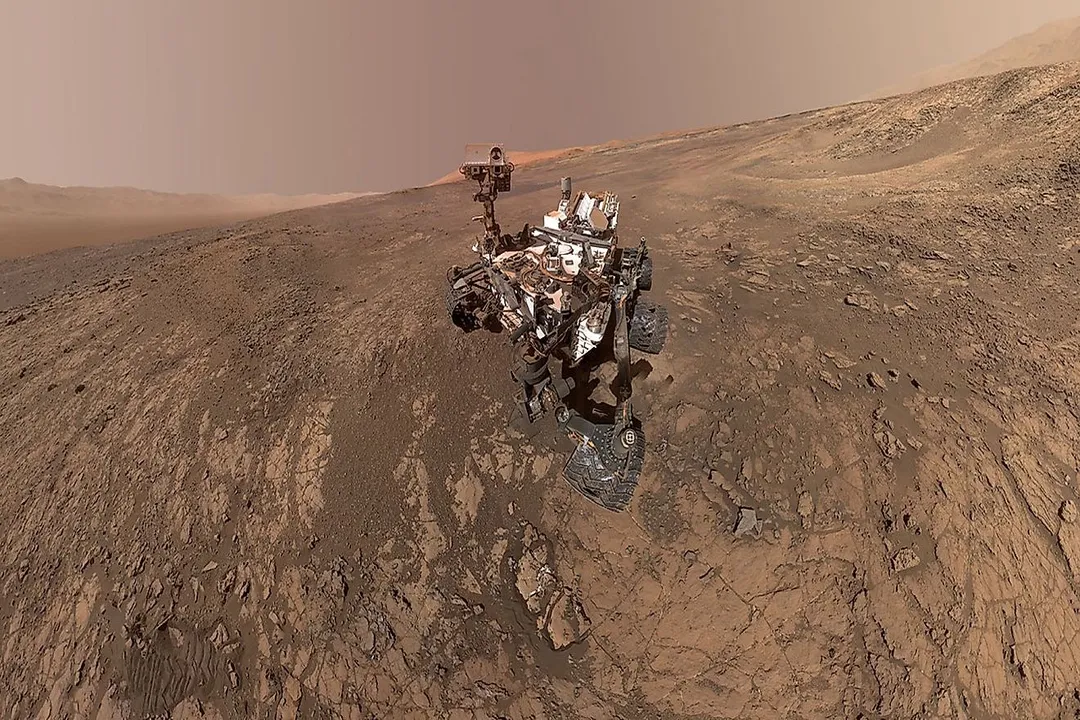
The count for planetary surfaces visited by robotic wheeled vehicles designed to roam is surprisingly small. To date, humanity has successfully landed and operated rovers on exactly one planet in our solar system: Mars. [1][2][4] While robotic explorers have touched down on other celestial bodies, the distinction between a stationary lander and a mobile rover—a vehicle built to traverse terrain—is key to answering this precise question. [1][6]
# One World
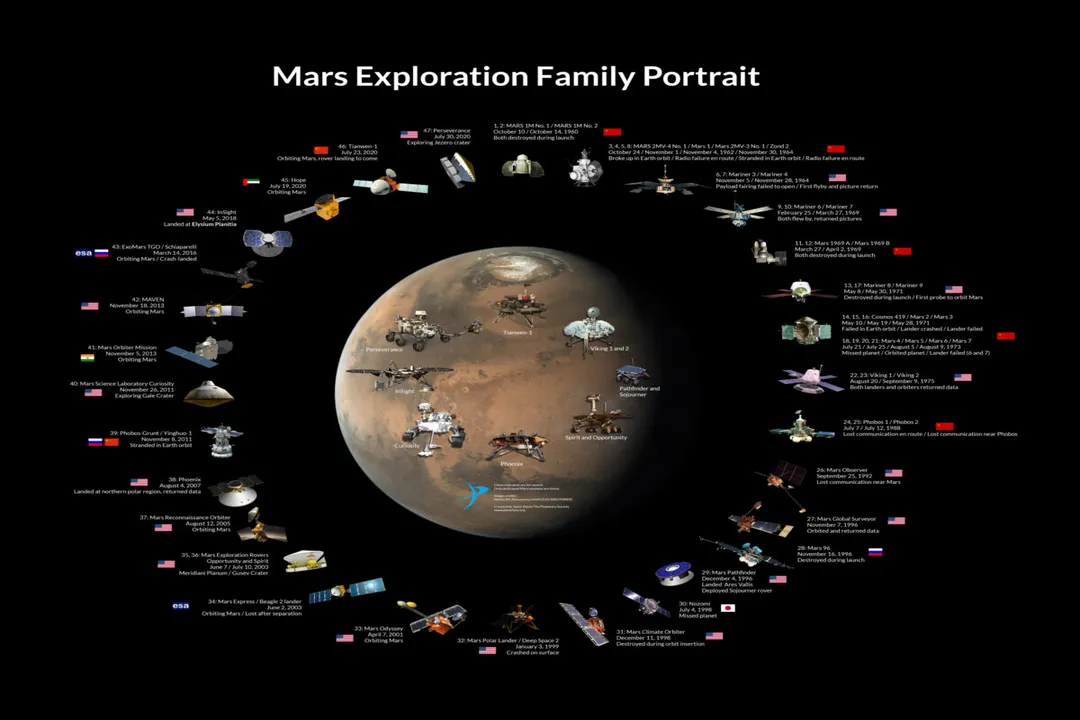
The singular focus of our surface-traversing robotic exploration efforts has been the Red Planet. [2][8] Sending anything to another world is a monumental feat of engineering, but designing a vehicle that can survive the descent, power itself, navigate hazards, and keep moving over long distances requires a special commitment, one we have historically only applied to Mars. [7] We have sent many missions aimed at landing on Mars, with numerous successes and failures recorded over decades of exploration. [7]
This concentration on Mars isn't random. It is a world that presents tantalizing scientific opportunities while remaining within the realm of survivable engineering constraints for current technology. [6] The historical roster of landings on extraterrestrial bodies shows many successful stationary landers across the Moon, Venus, and even asteroids or comets, but the wheeled, mobile explorers are reserved for Mars. [4][6]
# Martian Pioneers
The exploration of Mars by rovers began in earnest with the landing of Sojourner in 1997, part of the Mars Pathfinder mission. [2][8] This small six-wheeled robot proved that surface traversal was achievable, paving the way for more ambitious subsequent missions.
The real workhorses, however, arrived in 2004: the twin Mars Exploration Rovers, Spirit and Opportunity. [2][8] These missions were designed for a 90-sol (Martian day) mission, yet Opportunity continued operating for nearly 15 years, setting an astonishing endurance record for an extraterrestrial robot before succumbing to a massive dust storm in 2018. [8] Spirit operated for over six years before becoming permanently stuck. [8] Their success redefined expectations for mission longevity and hardware resilience.
Following these successes came Curiosity, landing in 2012, which was significantly larger and carried a more complex laboratory suite to investigate Mars' ancient habitability. [2] Its successor, Perseverance, landed in 2021, bringing the capability to cache samples for a future return mission, a necessary step in assessing the planet's potential for past or present life. [2] These vehicles represent incremental, yet massive, steps in surface mobility and scientific payload delivery. [7]
Here is a brief overview of the active, wheeled explorers that have driven across the Martian terrain:
| Rover Name | Launch Year | Primary Goal | Key Status |
|---|---|---|---|
| Sojourner | 1996 | Technology demonstration | Mission concluded 1997 |
| Spirit | 2003 | Geology, past water | Mission concluded 2010 |
| Opportunity | 2003 | Geology, past water | Mission concluded 2018 |
| Curiosity | 2011 | Habitability assessment | Active |
| Perseverance | 2020 | Astrobiology, sample caching | Active |
| [2][8] |

# Defining Traverse
The defining characteristic of a rover is its ability to move across a body's surface, gathering data from multiple, distinct locations. [1] This contrasts sharply with landers, which remain fixed after descent. For instance, the Soviet Venera program successfully landed multiple probes on Venus between 1970 and 1982. [6] These were extraordinary achievements, managing to transmit data back through incredibly harsh conditions of high heat and crushing atmospheric pressure. [6] However, these probes were stationary observatories; they could not pick up a rock, drive ten meters, and examine a different geological formation. The intense environment of Venus means that sustained traversal—the ability to move across the surface for months or years—is currently beyond the material science capabilities we have successfully implemented there. [6]
If we were to look at the Moon, robotic rovers have operated there, such as China's Yutu rovers. [4] But since the Moon is a natural satellite, not a planet, it does not count toward the planetary tally requested here.
# Engineering Limits
The reason Mars remains the sole destination for these complex, mobile explorers speaks volumes about the balance between scientific desire and engineering realism. While a stationary lander is subjected to the environmental extremes for a limited time at one spot, a rover must be designed for long-term power generation, thermal control, and mobility across diverse, unpredictable terrain, all while communicating across astronomical distances. [7]
The engineering choices made for Mars rovers are deeply informed by the constraints of their destination. For example, the choice of using solar panels (as on Spirit, Opportunity, and Sojourner) mandates operational environments that avoid long, dark winters or frequent, planet-enveloping dust storms—conditions common on Mars but survivable compared to the conditions on Venus. [8] Conversely, the nuclear power source (RTG) used by Curiosity and Perseverance allows them to operate through the Martian winter and in regions where solar access is poor, enabling deeper dives into the planet's history. This fundamental trade-off—solar versus nuclear power—is a direct consequence of the known, if challenging, environment of this one planet. [2]
Comparing the environments reveals why the choice has been so singular. Venus is hot enough to melt lead at the surface, and the atmospheric pressure is over 90 times that of Earth. [6] Designing a vehicle that can support complex electronics and mechanical joints for long-term mobility under those conditions is an order of magnitude more difficult than designing one for the cold, dry, low-pressure environment of Mars. [6] Until we develop materials that can operate reliably for years in a super-critical CO2 atmosphere at 460°C, Mars will likely remain our exclusive wheeled destination among the planets.
# Future Trajectories
While the current list shows only one planet, the planning for future missions suggests that other worlds might eventually host surface traverses, though these plans often focus on different types of vehicles or are focused on moons. For example, discussions about missions to Europa or Titan involve sophisticated aerial or submersible vehicles rather than wheeled surface rovers on a rocky planet. [7]
The success on Mars has provided an entire generation of engineers with the operational experience needed to tackle harder targets. Every successful drive, every unexpected software glitch handled remotely, every terrain map generated by Perseverance builds up a database of expertise that is essential before attempting a similar feat on, say, Mercury or even a rocky exoplanet someday. [7] The knowledge gained from managing the power systems and mobility of the Mars fleet represents a specific, accumulated expertise that is non-transferable without direct application. While the headline answer remains simply one, the accumulated operational data from that single planet is perhaps the most valuable asset for any future planetary mobility project across the solar system.
#Videos
What NASA's Rovers Have Found on Mars - YouTube
Related Questions
#Citations
Aside from Mars have we landed drones or rovers on any other ...
The Mars Rovers | NASA Space Place – NASA Science for Kids
What planets have we landed robotic rovers on? - Quora
List of landings on extraterrestrial bodies - Wikipedia
What NASA's Rovers Have Found on Mars - YouTube
Landers and Rovers - Bricks in Space
Every mission to Mars ever | The Planetary Society
How Many Rovers Have Been On Mars? - World Atlas
What Other Worlds Have We Landed On? - Universe Today