What is the best definition of planet?

Defining a planet is far more complicated than it sounds, even for experts who dedicate their lives to studying them. While a casual glance at the night sky might suggest that a planet is simply a large, bright, non-twinkling object orbiting the Sun, the scientific community settled on a much more formal—and controversial—set of rules back in 2006. This quest for a precise definition became necessary as the sheer number of objects in our solar system, particularly beyond Neptune, began to multiply, forcing astronomers to draw a line in the cosmic sand.
# Current Tripartite Rule
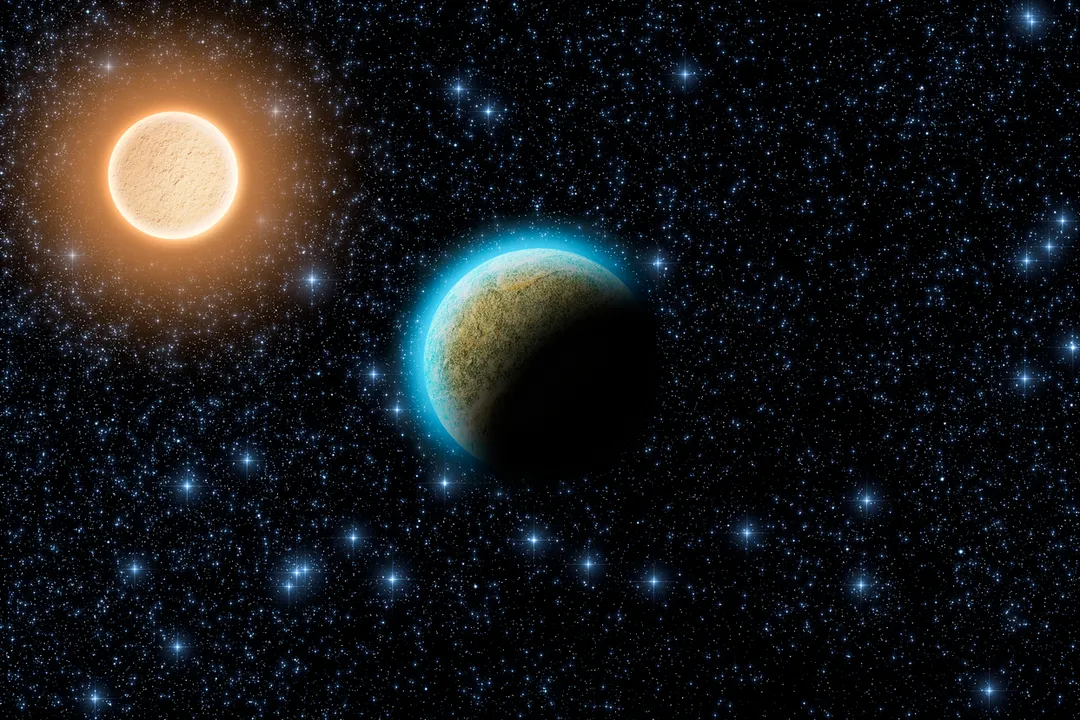
The current, internationally accepted definition of a planet comes from the International Astronomical Union (IAU). According to this ruling, an object in our solar system must meet three specific criteria to be classified as a planet:
- It must orbit the Sun.
- It must have sufficient mass for its self-gravity to overcome rigid body forces so that it assumes a hydrostatic equilibrium shape (nearly round).
- It must have "cleared the neighborhood" around its orbit.
If an object fulfills the first two criteria but not the third, it is relegated to the new category of dwarf planet. This clarity, while necessary for classification within our own solar neighborhood, immediately created classification headaches when considering objects orbiting other stars.
# Orbital Mechanics
The first criterion, orbiting the Sun, seems straightforward enough, but it immediately excludes the vast majority of celestial bodies we study: exoplanets. By definition, if an object orbits a star other than our Sun, it cannot be classified as a planet under the strict IAU ruling, regardless of its size or characteristics. This highlights a key tension: the IAU definition is solar system-centric, whereas modern astronomy is heavily focused on worlds orbiting other stars.
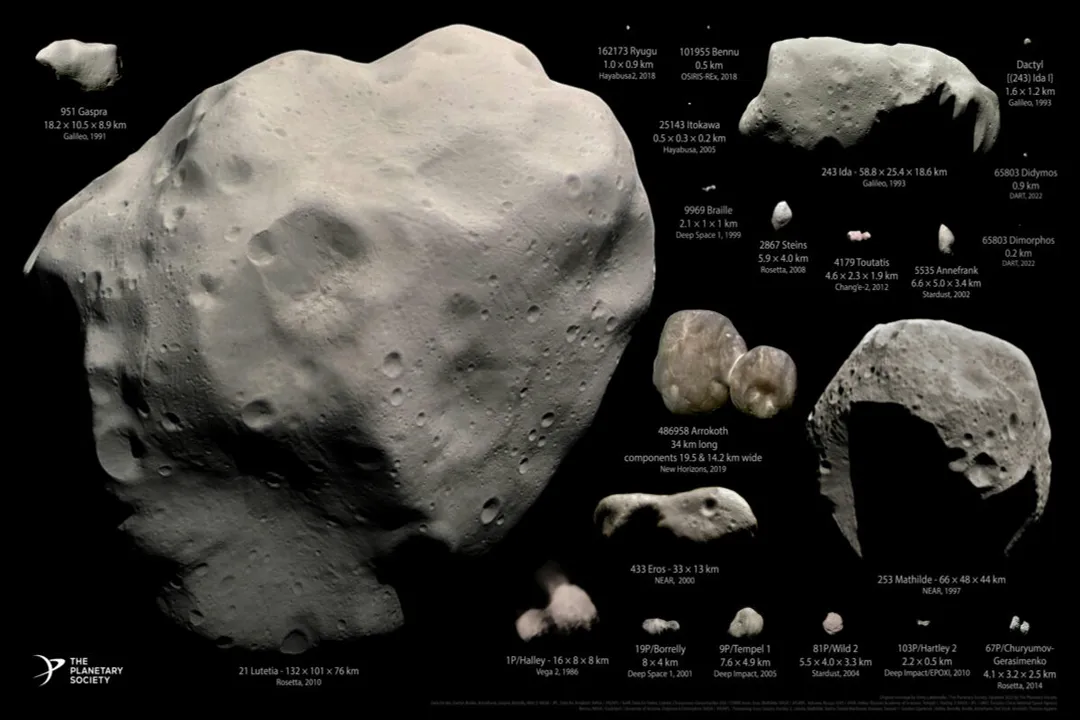
The requirement for hydrostatic equilibrium—being nearly round—is generally met by objects above a certain size threshold, meaning gravity has crushed them into a sphere rather than leaving them as irregularly shaped asteroids or comets. Most objects massive enough to warrant serious discussion as planets usually satisfy this condition naturally.
# Clearing Space
The sticking point, the criterion that famously demoted Pluto, is the third one: clearing the neighborhood around its orbit. This means the object must be the gravitationally dominant body in its orbital path, having either ejected smaller objects, captured them as moons, or incorporated them into its own mass over astronomical timescales.
Pluto, for instance, shares its orbital zone in the Kuiper Belt with countless other icy bodies and shares its orbital plane with objects that are comparable in size, meaning it has not gravitationally dominated its region. This situation provides a natural distinction between the eight major planets—Mercury through Neptune—and smaller bodies like Pluto, Eris, Ceres, Makemake, and Haumea, which are now classified as dwarf planets.
It is worth noting that even this concept has led to internal debate among professionals. Some argue that "clearing the neighborhood" is relative and context-dependent, especially when considering the extremely distant and varied environments of objects in the outer solar system versus the inner system. If we were to strictly apply this rule based on mass dominance relative to all other orbiting bodies, one might even argue that Jupiter, despite its immense size, is not perfectly "clear" in a cosmic sense due to Trojan asteroids locked in its orbital path, though its dominance is overwhelming compared to Pluto’s surroundings.
Planetary Dominance Analysis
To put the "clearing the neighborhood" criterion into perspective, consider a simplified comparison of mass dominance within the orbital zone. For the eight recognized planets, the planet's mass is orders of magnitude greater than the combined mass of all other objects sharing that orbit. For example, Jupiter’s mass is roughly twice that of all the other planets, dwarf planets, asteroids, and comets in the solar system combined. This overwhelming gravitational presence is what the IAU definition aims to capture. A dwarf planet, conversely, resides in a population of similar-sized objects, making its status less singular.
# Exoplanets and Universality
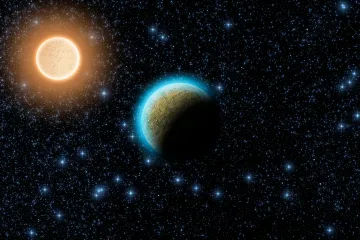
The limitations of the IAU definition become stark when considering the thousands of confirmed exoplanets. Since we cannot wait for an exoplanet to orbit our Sun, astronomers studying worlds around distant stars must rely on different classification methods, usually based on size, mass, and orbital dynamics relative to its parent star. This has led to categories like “Super-Earths” or “Hot Jupiters,” which are clearly planets but fall outside the formal definition because they do not orbit the Sun.
Because of this, scientists often seek a physical definition that is independent of our solar system's architecture. A proposed, alternative scientific definition circulating in some circles suggests dropping the requirement that the object orbit the Sun entirely, focusing instead on fundamental characteristics like mass and whether the object is massive enough to become spherical but not massive enough to initiate sustained nuclear fusion in its core—the condition for a star. This physical approach would allow for a more universal classification system for planets across the galaxy.
# Etymology and History
The term itself has deep historical roots. The word planet comes from the ancient Greek word planētēs, meaning "wanderer," referring to the fact that these bright objects moved relative to the fixed background stars. Early definitions, long before telescopes, were purely observational and based on movement across the sky. The Merriam-Webster dictionary offers a relatively simple definition, describing a planet as "any of the celestial bodies moving in an elliptical orbit around a star". While helpful, this definition today is often seen as incomplete because it fails to distinguish between a massive gas giant and a small, irregular Kuiper Belt object if that object were, hypothetically, orbiting the Sun.
The historical context shows that classification is always fluid. Earth was once considered the center of the universe; the shift to the heliocentric model was a massive definitional change, and Pluto’s reclassification is seen by some as a smaller, though emotionally charged, echo of that shift.
Classifying the Solar System (Post-2006)
The 2006 decision officially solidified the status of the eight major bodies: Mercury, Venus, Earth, Mars, Jupiter, Saturn, Uranus, and Neptune. It also established the dwarf planet category, which includes Pluto, Ceres (now recognized as the largest object in the asteroid belt), Eris, Haumea, and Makemake.
| Body Type | Key Requirement Met | Neighborhood Cleared? | Example |
|---|---|---|---|
| Planet | Orbit Sun, Round, Clear Orbit | Yes | Earth, Jupiter |
| Dwarf Planet | Orbit Sun, Round, Not Clear Orbit | No | Pluto, Ceres |
| Small Solar System Body | Does Not Orbit Sun or Is Not Round | N/A | Asteroids, Comets |
This table neatly encapsulates the impact of the IAU decision on our solar system inventory.
# The Unofficial Debate
The IAU’s decision was not universally embraced, particularly by scientists who specialize in the outer solar system, like those studying Pluto. The Reddit thread discussing the definition reveals a common sentiment: many working planetary scientists feel the IAU definition is too restrictive or simply too focused on orbital dynamics rather than the physical properties of the world itself. For these researchers, if an object has the mass to be a self-gravitating sphere, it should earn the title of planet, regardless of what else is floating nearby.
This perspective suggests that a planet should be defined by its geophysics—what it is made of, how it formed, and whether it has complex geological or atmospheric processes driven by its size—rather than its celestial address or its neighbors. If a body like Pluto were found orbiting a distant star in an isolated orbit, it would almost certainly be called a planet based on its mass and geophysical characteristics. The challenge lies in applying that same geophysical standard consistently to bodies in our own crowded solar system.
# Synthesis and Future Outlook
Ultimately, the "best" definition of a planet depends entirely on the context of the discussion. If one is classifying bodies within our solar system according to current international protocols, the three-pronged IAU rule is the definitive answer. If one is discussing the population of worlds across the galaxy, a more inclusive, size-and-mass-based geophysical definition is essential for scientific communication.
As our understanding grows, the term will continue to evolve. We are finding objects that blur the lines—planets orbiting other stars that are smaller than Pluto, or objects in our system that might be geologically active despite being classified as dwarf planets. The very act of defining a planet reveals more about our capacity to observe and categorize the universe than it does about any single celestial object itself. The ongoing conversation ensures that the classification remains a living piece of astronomical science, not a static label.
Related Questions
#Citations
What is a Planet? - NASA Science
Definition of planet - Wikipedia
What is a Planet? | AAS Division for Planetary Sciences
The current definition of "planet" is too complicated and doesn't ...
Scientific definition of a planet says it must orbit our sun. A new ...
PLANET Definition & Meaning - Merriam-Webster
What Is A Planet? | The Planetary Society
What Is a Planet? (And Why Pluto Doesn't Fit the Definition) | Space