What best describes planet Earth?
Planet Earth exists as the singular exception to the otherwise barren neighborhood of our local star, an ocean-covered world characterized by an astonishing complexity of interlocking systems that allow life to thrive in forms we are still only beginning to catalog. [1][3] It is the third planet out from the Sun, making it the largest and most massive of the four inner, rocky planets, yet it is still the fifth largest overall in the Solar System, dwarfed by the gas giants further out. [2] The planet is not a perfect sphere, despite the smoothing effect of gravity, but is instead an oblate spheroid, slightly flattened at the poles and bulging at the equator due to its continuous spin. [1] This "blue marble" view, so familiar from space photography, highlights its defining feature: an abundance of liquid water covering approximately 71% of its surface, a characteristic utterly unique among its planetary siblings. [1][3]
# Formation Genesis
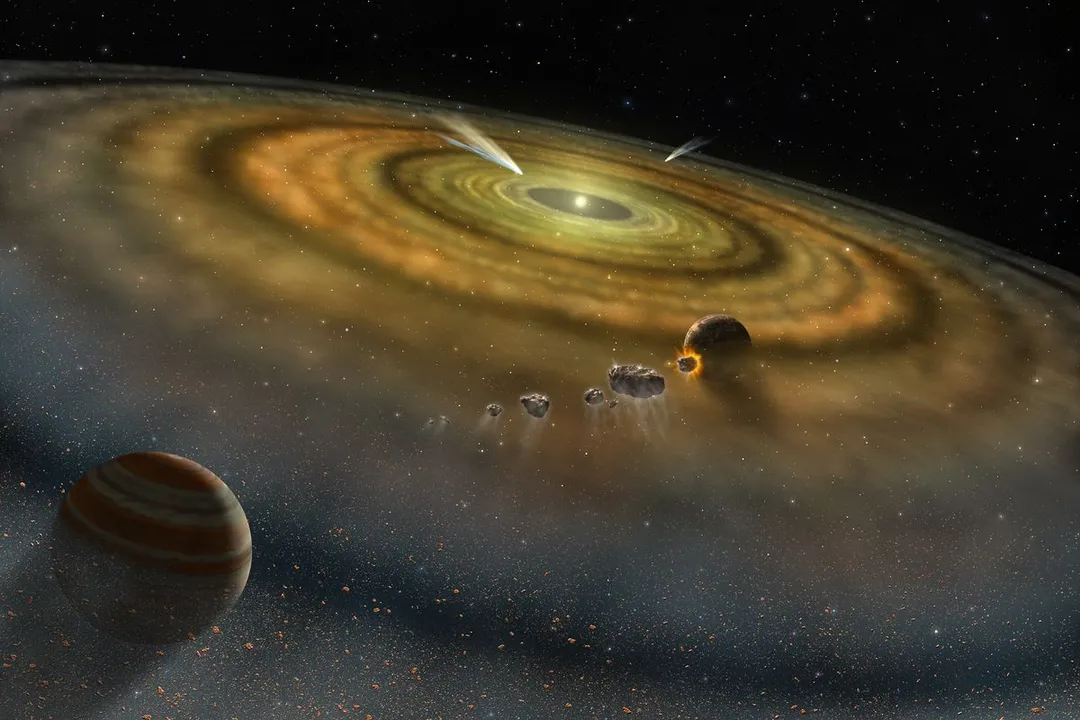
The story of Earth begins around 4.6 billion years ago, emerging from the same swirling disc of gas and dust—the solar nebula—that birthed the Sun and the rest of the system. [1] Initially, scientists pictured this early phase as a violent, waterless hellscape due to constant impacts from cosmic debris. [1] However, newer analyses suggest that liquid water might have been present in some form within the first half-billion years of its existence, perhaps delivered by incoming asteroids, comets, or protoplanets, or released through intense volcanic outgassing as the interior heated up. [1][4]
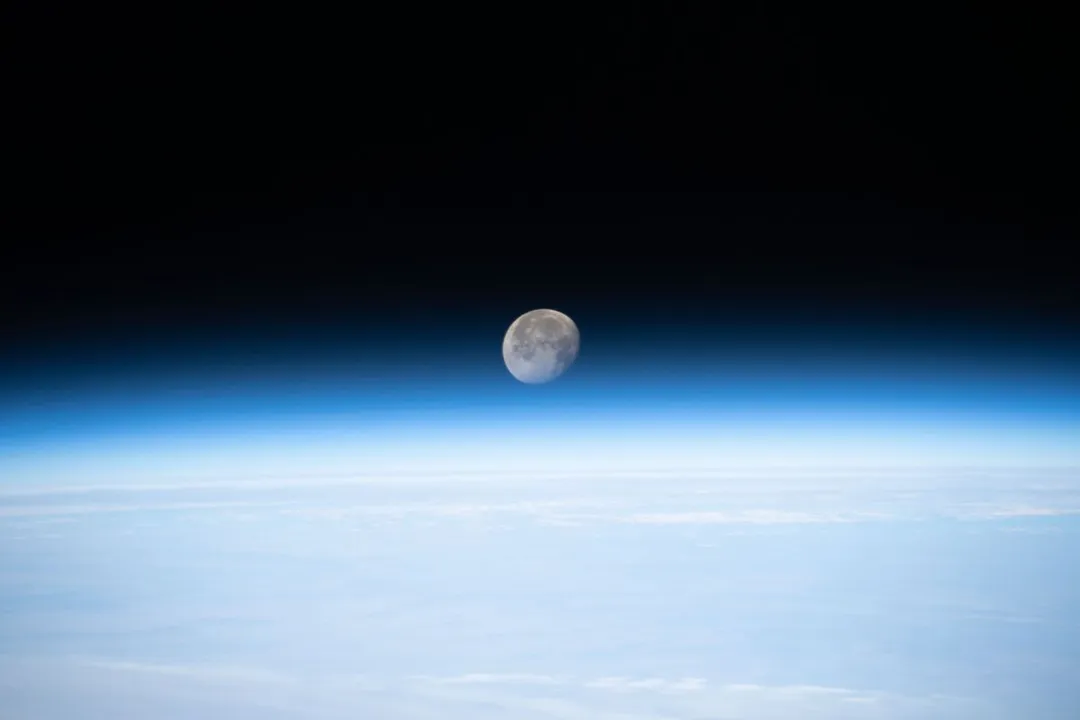
This turbulent early period also set the stage for our unique companion. The leading hypothesis for the Moon's origin involves a catastrophic event: a Mars-sized protoplanet, named Theia, struck the young Earth in a glancing blow. [1][3] This impact ejected massive amounts of material from Earth’s mantle into orbit, which subsequently coalesced to form the Moon. [1][3] The sheer relative size of our Moon—about one-quarter the diameter of Earth—is unusual in the Solar System, leading some to occasionally consider the pair a "double planet" system. [5] This celestial pairing has had profound, long-term effects on our stability, a detail worth considering when looking at other worlds that lack such a large satellite to moderate their rotational behavior.
# Interior Structure
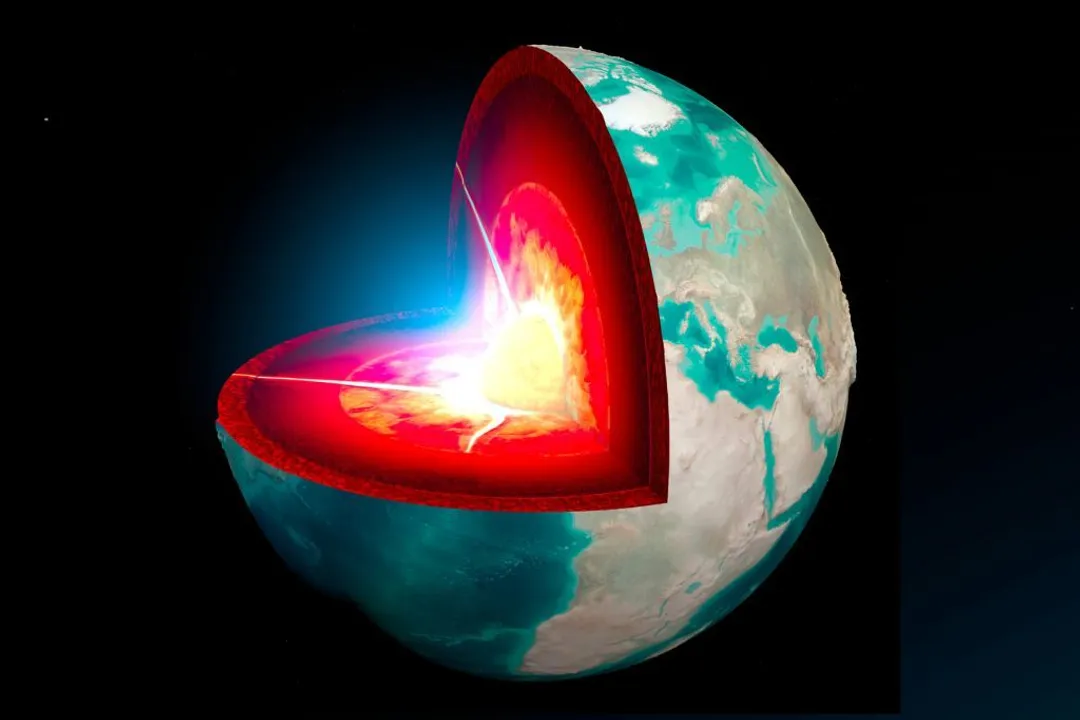
To understand the surface, one must appreciate the sheer heat and pressure contained within. Earth’s interior is layered based on both chemical makeup and physical properties, much like an onion. [1] At the very heart lies the inner core, a solid sphere composed primarily of iron and nickel, reaching temperatures that may rival the surface of the Sun—up to in some estimates. [1][4] This solid mass is enveloped by the outer core, a liquid layer of the same metals. [1] It is the movement within this molten outer core that powers one of Earth’s most vital components: the magnetic field, acting as a planetary dynamo. [1][4]
Surrounding the core is the mantle, the thickest layer, made of hot, viscous, silicate rock that can flow slowly over vast timescales. [1][3][4] Resting atop this is the crust, the outermost shell, which is divided into continental crust (thicker, lighter, granite-rich) and oceanic crust (thinner, denser, basalt-rich). [1][4] The average surface gravity is about or , reflecting this dense internal composition, making Earth the densest object in the Solar System. [1]

# Moving Surface
What truly sets Earth’s geology apart from its neighbors like Mars or Venus is the mechanical division of its rigid outer layer (the lithosphere) into massive tectonic plates. [1][4] These plates are not static; they float upon the less-viscous asthenosphere and constantly interact—colliding, pulling apart, or sliding past one another. [1][3] This slow, grinding motion is the engine behind the planet’s most dramatic geological features: earthquakes, mountain building (like the Himalayas), and volcanism. [1][3]
The surface coverage is defined by this dynamic geology overlaid by water. About 71% of the surface is water, concentrated in the global ocean, while the remaining 29.2% is land, divided into continents and islands. [1][3] It is fascinating to contrast the age of these surface features. While continental crust is ancient, with evidence of felsic crust existing as early as $4.4$ billion years ago, the oceanic crust is constantly recycled back into the mantle at subduction zones along convergent plate boundaries. [1] The oldest known oceanic crust is only about $200$ million years old, whereas continental crust dates back over $4$ billion years. [1] This profound difference in crustal lifespan reveals that Earth is not merely a static ball of rock; it is a planet that continuously discards and reforms its outer shell, retaining only the most stable, lighter rock masses (the continents) over eons, a constant surface renewal that is key to long-term geological cycling and nutrient availability necessary for life. [1]
# Breathable Blanket
The thin envelope of gas surrounding Earth is perhaps its most indispensable feature for us. The atmosphere is overwhelmingly composed of nitrogen () and oxygen (), with trace amounts of argon, carbon dioxide, and water vapor. [1][4] Critically, no other planet in the Solar System boasts an atmosphere rich in free oxygen, which is a direct byproduct of biological processes like photosynthesis that have been running for billions of years. [1][4]
This blanket of air serves dual protective roles. First, through friction, it causes most incoming meteoroids to burn up before striking the ground. [1][4] Second, within the stratosphere, the ozone layer absorbs the sun’s most damaging ultraviolet (UV) radiation, preventing it from reaching the surface and mutating life. [1][4] Furthermore, specific gases, notably and water vapor, facilitate the greenhouse effect, trapping solar energy and raising the average surface temperature from a frigid to a habitable []. [1][3] Without this fine-tuned thermal regulation, the water covering the surface would be frozen solid, ending the stability required for our current biological complexity. [1][3]
# Daily Spin
Earth’s movements in space define our perception of time. The planet performs two main gyrations simultaneously: rotation on its axis and revolution around the Sun. [1][4] A single rotation, defining a solar day, takes about 23.934 hours. [1] Meanwhile, a full orbit—our year—takes approximately $365.26$ days. [1] To reconcile this fraction of a day with our standardized calendar, we insert a leap day every four years. [3][4]
This axial rotation is tilted about $23.44$ degrees relative to the plane of its orbit, which is the direct cause of our seasons. [1][3][4] When a hemisphere is tilted toward the Sun, it receives more direct sunlight and experiences summer; six months later, when tilted away, it experiences winter. [1][3] This tilt is vital, though the slight ellipticity of the orbit means Earth is actually closest to the Sun (perihelion) in early January, which has a much smaller thermal effect than the axial tilt. [1]
Considering the slight slowing caused by tidal friction from the Moon, the Earth’s day is slowly lengthening—by about . [5] To put this miniscule change into perspective, if we trace this deceleration back over deep time, a day $600$ million years ago during the Neoproterozoic era would have lasted about $21.9$ hours, meaning an Earth year would have contained nearly $400$ days instead of $365$. [1] This dynamic change highlights how essential the Moon’s stabilizing gravitational influence has been in maintaining the relatively constant seasonal climate required for complex evolution over geological timescales.
# Invisible Defense
Beyond atmospheric protection, Earth possesses an invisible shield: the magnetosphere. [3][4] This protective bubble is generated deep within the planet, a result of the turbulent churning of the electrically conductive liquid iron-nickel in the outer core. [1][4] This field deflects the majority of the constant barrage of high-energy, charged particles streaming from the Sun—the solar wind—keeping them from stripping away our atmosphere or irradiating the surface beyond what the ozone layer handles. [1][4]
When these trapped solar particles are funneled towards the magnetic poles, they collide with atmospheric molecules, creating the spectacular phenomenon known as the aurorae, or the northern and southern lights. [1][4] Even this shield is not perfectly static. The magnetic poles are always in motion, with the magnetic North Pole currently accelerating its drift toward Siberia. [1] Furthermore, the entire field undergoes periodic reversals, where the North and South magnetic poles swap places, a chaotic event that historically has taken hundreds to thousands of years to complete. [1] While such a flip doesn't pose an existential threat to life itself, a weakened field during the reversal period would increase vulnerability to radiation events. [1]
# Habitable Niche
Ultimately, what best describes Earth is the convergence of all these systems into a state of active habitability. [2] It has the right distance from the Sun to keep water liquid, the right chemical ingredients (like carbon), and internal geological activity (volcanism) that cycles essential chemicals between the interior, oceans, and atmosphere, providing energy pathways for survival. [1]
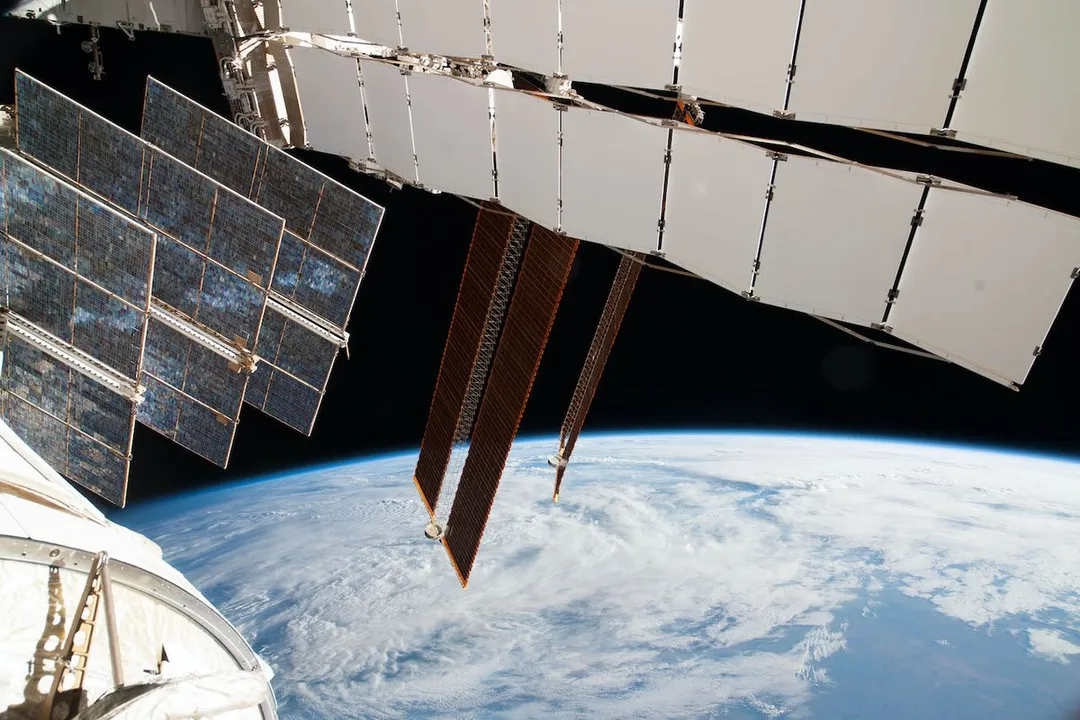
The planet is constantly being monitored, both internally via seismic studies and externally by dozens of Earth-observing satellites, which track vital signs like ice melt, sea level rise, and atmospheric gas concentrations. [1][2][3] This monitoring has revealed that while Earth’s environment has always been shaped by natural processes, including volcanic outgassing and asteroid impacts, the scale and speed of current human impact—evidenced by crossing several planetary boundaries related to climate change and pollution—pose an unprecedented challenge to maintaining this delicate equilibrium. [1][3] The scientific consensus derived from this observation is that preserving the conditions that make Earth uniquely suitable for complex life is not just an environmental concern, but a matter of species survival, as no other known location in the Solar System is remotely ready to sustain our population. [1] Earth is, quite simply, the only home we have.
Related Questions
#Citations
Earth - Wikipedia
Facts About Earth - NASA Science
Planet Earth, explained - National Geographic
Planet Earth — Everything you need to know | Space
Earth | Definition, Size, Composition, Temperature, Mass, & Facts