Why are scientists concerned with finding Earth-like planets?

The drive to find worlds resembling our own, often termed "Earth-like planets," is much deeper than a simple search for cosmic neighbors or a second home. It represents a fundamental scientific quest to understand the prevalence of life, the mechanics of planetary evolution, and ultimately, our own place in the vast universe. [2][7] When astronomers point their instruments toward distant stars, they are not just collecting data points; they are testing the hypothesis that the conditions which allowed life to flourish here might be common elsewhere. [3][5]
# Defining Analogs

To even begin this search, scientists must first define what they are looking for. An "Earth-like" planet isn't just one that happens to be rocky; it requires a specific confluence of characteristics that suggest potential habitability. [6][8]
# Size and Composition
A primary characteristic is size, often related to mass and radius. A planet needs to be roughly the size of Earth to likely possess the necessary gravity to retain an atmosphere over geological timescales. [2] If a planet is too small, its gravity is insufficient, and its atmosphere can easily leak away into space, rendering it barren, much like Mars today. [7] Conversely, if a planet becomes too large, it transitions into a "super-Earth" or even a mini-Neptune, potentially accumulating thick, crushing atmospheres dominated by hydrogen and helium, which are generally considered unsuitable for life as we currently comprehend it. [5] Therefore, the focus is often on rocky, terrestrial worlds within a specific size range. [8]
# Habitable Zone
Perhaps the most critical filter is orbital distance, placing the planet within its star's habitable zone (HZ), sometimes called the "Goldilocks zone". [2] This is the range of orbits where an orbiting planet could maintain liquid water on its surface. [3][4] Water is essential because it acts as a solvent, facilitating the complex chemical reactions necessary for biology. [2] If a planet orbits too closely to its star, any water boils away, resulting in a Venus-like runaway greenhouse scenario. [7] If it orbits too far out, water freezes solid, turning the world into an ice ball incapable of supporting surface biology. [9] The search zeroes in on these specific orbits where temperatures are just right for water to exist in its liquid state. [3]
# Stellar Characteristics
The nature of the host star also heavily influences habitability. Scientists often prioritize searches around M-dwarf stars because their habitable zones are much closer to the star, making transiting planets easier to detect. [2][8] However, M-dwarfs present challenges, such as frequent, intense stellar flares that can strip away atmospheres or sterilize surfaces. [6] Therefore, an ideal target is often a stable, sun-like star—a G-type main-sequence star—though these stars are less numerous than the smaller M-dwarfs, slightly reducing the overall yield of truly Earth-like candidates. [5]
# The Life Imperative

The most profound reason for this intense focus on Earth-like conditions is the age-old question: Are we alone?. [2][7] Finding a world with liquid water, a suitable temperature range, and a rocky base provides the best chance of detecting biosignatures—chemical evidence of past or present life. [3]
For many researchers, the search for life is the only compelling reason to look for exoplanets, as understanding the chemistry of life elsewhere informs our understanding of life’s origins on Earth. [9] If we find life emerging independently on another world with similar conditions, it suggests that life is a cosmic imperative, arising naturally wherever the environment permits. [4]
Consider the necessary ingredients: carbon, liquid water, and an energy source. [2] Earth provides the perfect case study, having supported life for billions of years because its atmospheric composition, magnetic field, and plate tectonics have remained within a life-sustaining window. [7] By searching for planets that mimic these characteristics—especially that stable surface water—we maximize our chances of success in finding even microbial existence. [3]
It is interesting to contemplate the various evolutionary pressures. If we were to look at a planet orbiting a star significantly cooler and dimmer than our Sun, the habitable zone would be much closer. A planet in this region might experience tidal locking, meaning one side permanently faces the star while the other is in perpetual darkness. [6] While this sounds hostile, one could hypothesize that an exceptionally thick atmosphere could redistribute heat efficiently enough to maintain a temperate band—a twilight zone—where liquid water could persist. This highlights that "Earth-like" might be a necessary starting point for our searches, but perhaps not the only template for life. [9] The sheer complexity of Earth’s biological history, involving events like the Great Oxidation Event, suggests that even if a planet starts Earth-like, maintaining habitability over billions of years requires complex, sustained geophysical processes. [7] For example, Earth’s internal heat generation, driven by its size and radioactive decay, drives volcanism and plate tectonics, which regulate carbon dioxide levels—a process that may cease on smaller, cooler rocky worlds once their interiors cool down sufficiently. [5] This planetary thermostat mechanism is something we can only truly study by looking for analogs that have evolved differently over comparable timescales.

# Contextualizing Our Home
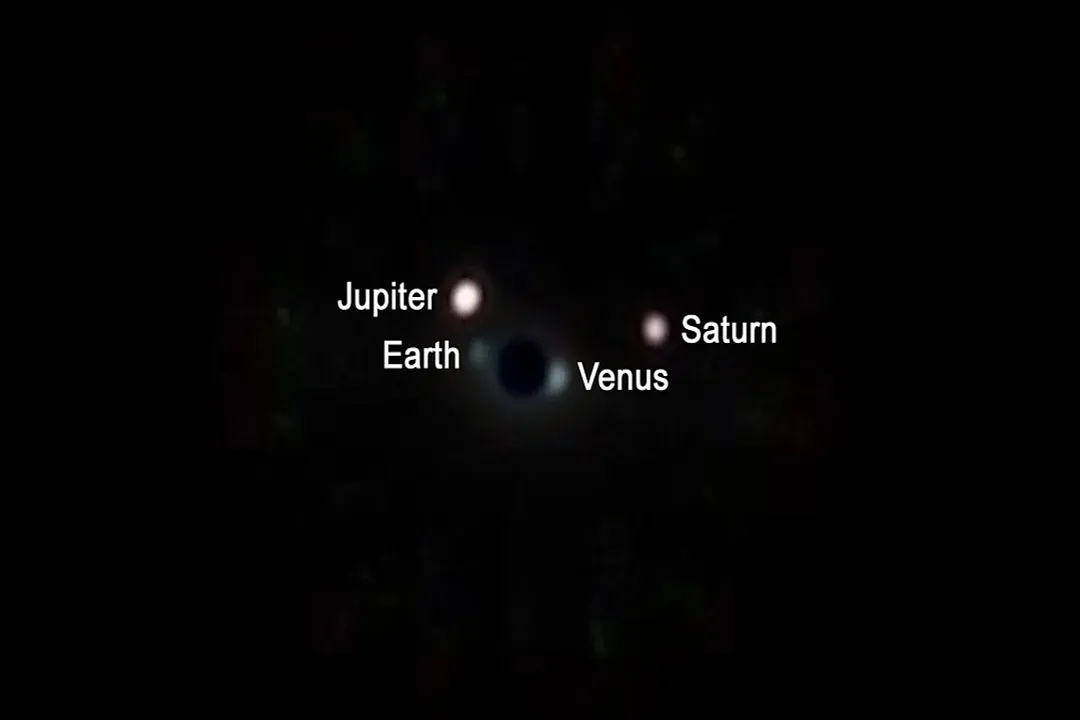
Studying analogs offers an objective lens through which to view our own planet. Earth is our only confirmed example of a living world, making it inherently difficult to separate the planet’s necessary traits from its contingent ones—the things that just happened to occur here. [7]
When scientists analyze a potentially habitable exoplanet, they are essentially running a parallel experiment to see how different inputs (e.g., a different stellar type, a different initial atmospheric composition) influence the outcome over billions of years. [2] If we find an Earth-sized world orbiting a red dwarf that has maintained a stable atmosphere for 10 billion years, that information drastically alters our understanding of atmospheric retention and magnetic field importance compared to the knowledge gleaned solely from our 4.5-billion-year-old planet. [7] This comparative planetology allows researchers to build more accurate models predicting the long-term fate of Earth itself, especially concerning climate change or future solar evolution. [2]
To put the search into perspective, consider the statistical implications of finding a handful of rocky planets in the HZ around Sun-like stars. If the universe were highly biased against life, we might expect these environments to be rare even around stable stars. However, preliminary estimates, driven by missions like Kepler, suggest that rocky planets in the habitable zone might be quite common, perhaps numbering in the billions within our galaxy alone. [8] If this abundance holds true, it shifts the scientific focus from Can these planets exist? to Why haven't we confirmed life on any of them yet? This potential commonality strongly suggests that either the emergence of life is the rare step, or our current detection methods are insufficient to spot less obvious biosignatures. [5][6]
# Technological Demands

The very act of searching for these worlds pushes the boundaries of astronomical technology. [10] Detecting Earth-sized planets orbiting distant stars is an immense technical challenge, often requiring the detection of minuscule dips in starlight as a planet passes in front of its star (the transit method) or sensing the tiny wobble a planet induces in its star (the radial velocity method). [10]
Once a candidate is found, the next step—characterization—is even harder. Scientists need to determine the planet's atmospheric composition to search for water vapor, methane, oxygen, or other potential biosignatures. [7] This requires instruments capable of analyzing light that has traveled through light-years of space, filtered through an atmosphere many orders of magnitude dimmer than its host star. [10] The development of next-generation telescopes and spectrographs is directly spurred by this goal of characterizing these faint, distant worlds. [2]
# Broader Scientific Gain
While the search for life dominates the narrative, the pursuit of Earth-like worlds yields substantial scientific knowledge even if they turn out to be sterile. Understanding how rocky planets form and evolve around different types of stars broadens our grasp of astrophysics and geology. [7]
The diversity in the exoplanet census—from hot Jupiters orbiting incredibly close to their stars to super-Earths—has already overturned previous assumptions about planetary system architecture, which were largely based only on our own Solar System. [5] Finding worlds that did form in the habitable zone but lack the conditions for life helps calibrate our models of atmospheric escape, mantle convection, and stellar influence on planetary surfaces. [2] For instance, studying a Venus-sized planet in another system's HZ, which has retained a thick CO2 atmosphere, could provide invaluable data points for refining climate models that help us better project the long-term stability of Earth’s climate. [7]
To illustrate this, imagine a scenario where multiple Earth-sized planets are found orbiting a star older than the Sun. If Planet A, which formed closer to the star, has lost most of its atmosphere but Planet B, slightly farther out, has retained significant water vapor, we gain real-world data on the critical atmospheric loss threshold for that specific stellar energy output. This is direct empirical evidence that ground truth for models developed in labs here on Earth. [6] Analyzing the frequency with which terrestrial planets form around different spectral types of stars helps planetary scientists refine core accretion and migration theories, dictating how often the initial conditions for habitability are met during star system formation. [8]
The sheer scale of the endeavor is also philosophical. The ability to detect and characterize planets orbiting other stars—worlds that were pure conjecture a few decades ago—represents a monumental achievement in human ingenuity and scientific method. [10] The search for Earth-like planets is fundamentally a high-stakes, planetary-scale comparative study, giving us the necessary context to truly appreciate the specific, fine-tuned circumstances that have allowed our own existence to unfold. [7]
Related Questions
#Citations
Why are scientists concerned with finding Earth-like planets? - Brainly
Why Do Scientists Search for Exoplanets? Here Are 7 Reasons
Why are we looking for Earth-like conditions when searching for life ...
Why is finding “potentially hospitable” planets so important if we can ...
The search for Earthlike worlds | The Planetary Society
habitable zone - Why bother looking for Earth-like planets?
How Common Are Earth-like Planets? - AAPG
In Search For Habitable Planets, Why Stop At 'Earth-Like'? - NPR
Finding Earth-Like Planets Outside Our Solar System