Is there another planet within Earth?
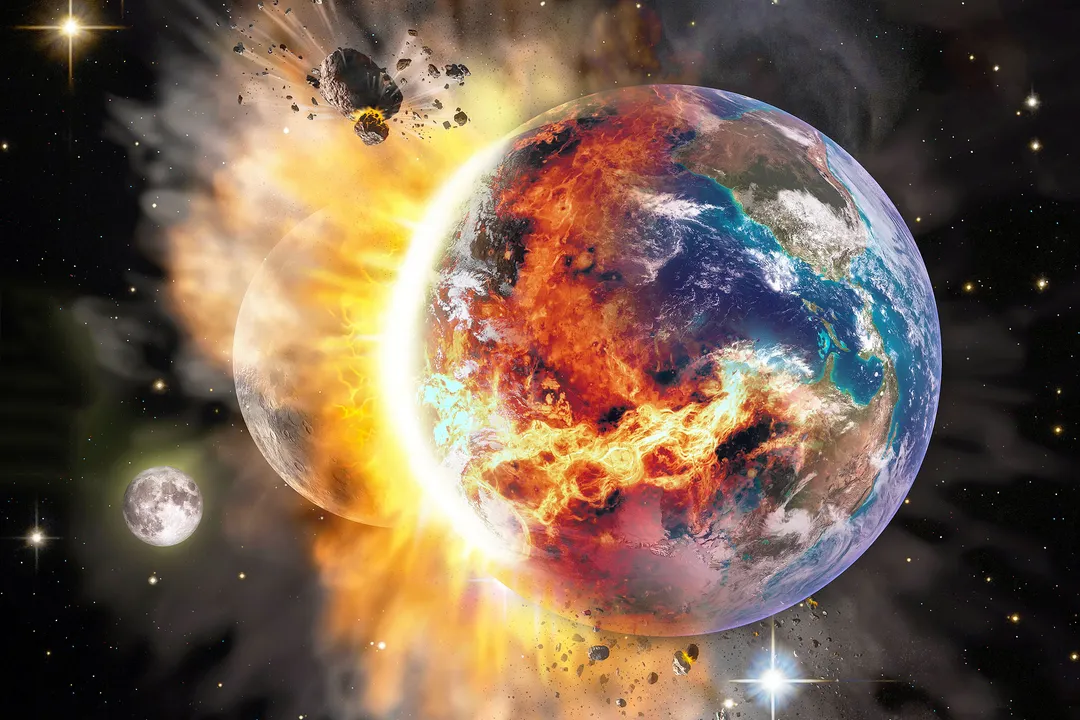
The idea of another planet sharing our solar neighborhood, or perhaps even inside our own planet, often conjures images of hidden worlds or stable co-orbiting companions. While science fiction frequently explores these notions, the most compelling and scientifically grounded answer to what might be "within Earth" points not to a separate, hidden world orbiting our Sun, but rather to physical pieces of an ancient, catastrophic encounter that are believed to be permanently embedded deep within our planet’s mantle. [4] This concept shifts the discussion from astronomical neighbors to deep-Earth geology, suggesting that a significant portion of a former planetary body remains preserved beneath our feet.
# Cosmic Collision
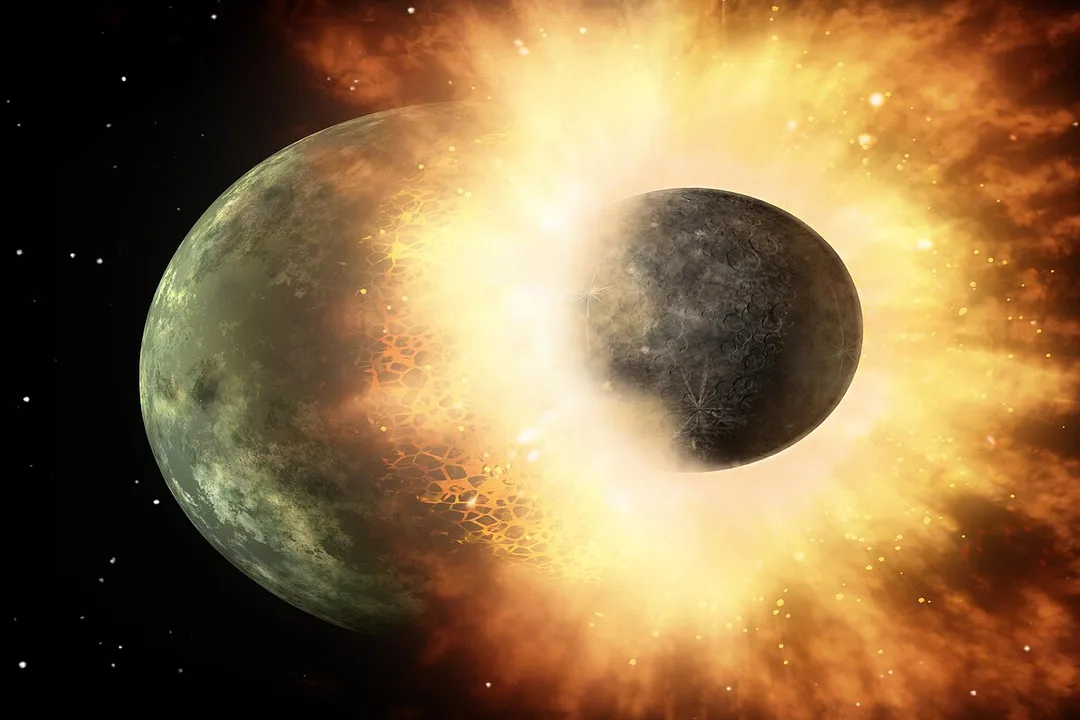
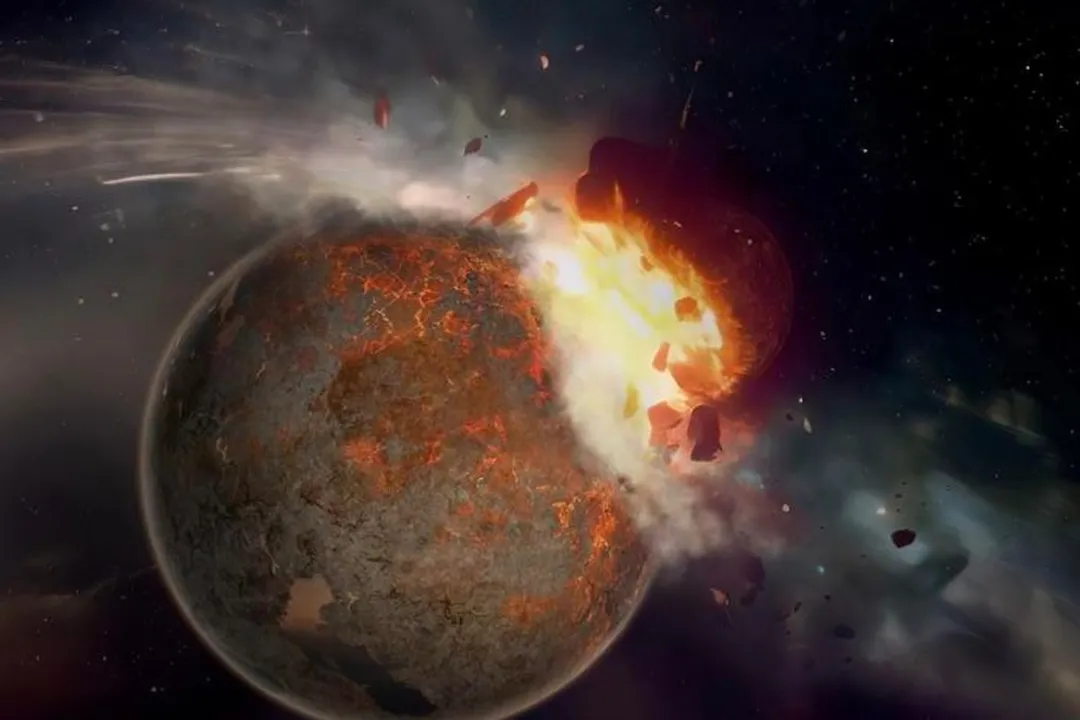
The foundation for this idea lies in the widely accepted Giant Impact Hypothesis, which explains the genesis of Earth's Moon. [6] Sometime in the solar system's violent infancy, approximately 4.5 billion years ago, a Mars-sized protoplanet is theorized to have struck the nascent Earth. [2] This hypothetical impactor has been named Theia. [2] The sheer force of this collision vaporized large amounts of material from both the Earth and Theia, which subsequently coalesced in orbit to form the Moon. [6] It was a world-shaping event, fundamentally altering Earth’s rotation, tilt, and mass distribution.
However, the collision wasn't a complete annihilation of the incoming body. Depending on the angle and force of impact, some of Theia's mass may not have been flung into orbit, but instead plunged directly into the Earth's interior. [1] If this scenario is true, the remnants of this massive collision would be chemically distinct from the native Earth material that comprised the rest of the mantle.
# Deep Mantle Blobs
Modern seismology, which uses the speed and reflection of seismic waves to map the Earth's interior, has provided the evidence suggesting these ancient pieces survived. [1] Researchers have identified unusually large, dense structures deep within the lower mantle. [3] These objects are often described as massive, slow-moving anomalies. [1]
Specifically, two colossal, chemically distinct provinces have been mapped in the deep mantle. [3] One is situated beneath the African continent, and the other lies under the Pacific Ocean. [1][3] These structures are vast, extending hundreds of kilometers in height and width. [1] They are not hot spots or magma plumes in the typical sense; rather, they are characterized by being significantly denser and chemically different from the surrounding mantle rock. [1]
The sheer size and anomalous nature of these features prompted scientists to search for an origin story that could explain their presence without violating known laws of planetary formation or mantle dynamics. [4] The leading explanation proposes that these two massive concentrations are the undigested remnants of Theia. [4][6]
# Compositional Contrast
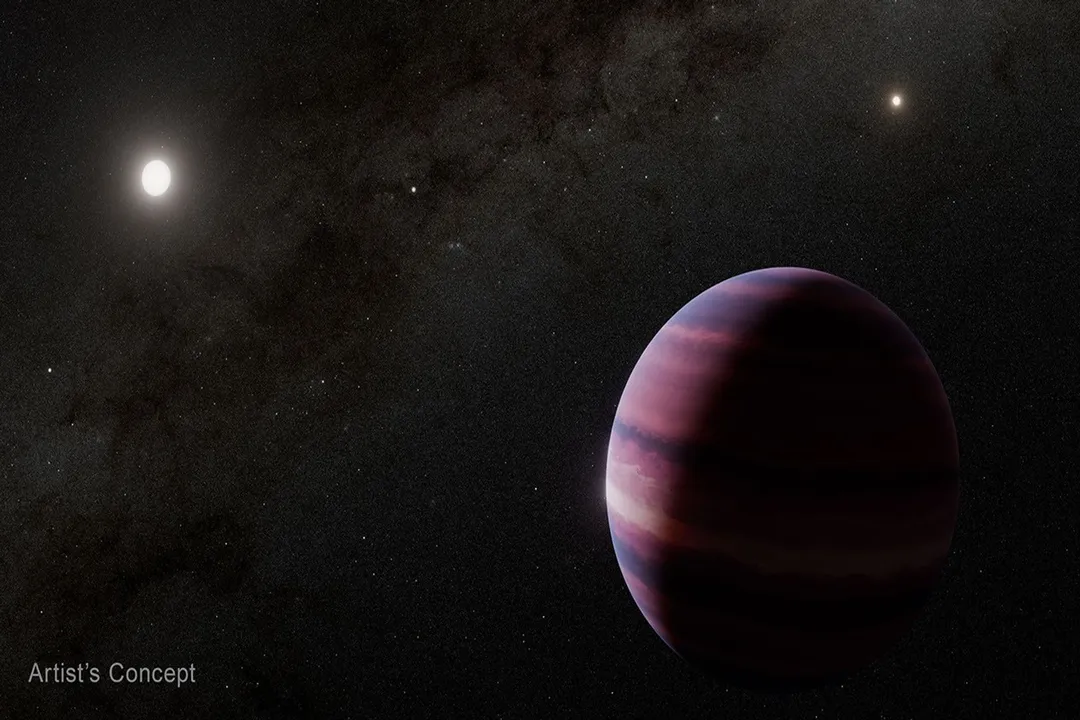
What sets these anomalies apart is their chemical signature. The general mantle material surrounding these blobs has chemical characteristics consistent with standard Earth-derived silicate rock. [1] In contrast, the remnants themselves are thought to possess a composition inherited directly from Theia. [1]
The impact would have mixed a large amount of Theia's mantle material with Earth's mantle. While most of this material would have mixed completely over billions of years, some denser, chemically unique portions might have resisted total assimilation, sinking to the core-mantle boundary due to gravity. [1] The persistence of such large, chemically isolated bodies over geologic time is a fascinating aspect of this theory. It implies that the deep mantle is not as homogenous as once assumed, but rather a layered record book of major accretion events. [1]
This concept is powerful because it provides a tangible link to the Moon-forming event. If these blobs share isotopic signatures similar to lunar samples brought back by the Apollo missions—as some research suggests—it would offer a powerful confirmation that these are indeed Theia's preserved corpse material within our planet. [1]
# Planetary Neighbors
It is important to clarify what "within Earth" means in this context, as the initial question might lead to other interpretations. When people consider another planet near or within Earth's domain, they sometimes think of Trojan bodies. [2] These are hypothetical or actual asteroids that share a planet's orbit, congregating at the Lagrange points—L4 (leading) and L5 (trailing) points, 60 degrees ahead of and behind the planet. [2] While Jupiter has numerous Trojans, and Mars has a few, Earth’s L4 and L5 points are relatively clear of large stable bodies. [2] These hypothetical bodies would orbit the Sun, just like Earth, and would not be inside the Earth itself.
Furthermore, the idea of a stable, smaller planet orbiting inside Earth's orbit is generally inconsistent with the dynamics required for long-term orbital stability within the inner solar system, especially so soon after the chaotic formation period. [2] The sources confirm that the current scientific focus is on the embedded remnants of Theia, not a secondary, co-orbiting planet. [4][6] The key takeaway is that the "other planet" is not currently a separate body but integrated into our own. [1]
# Seismic Mapping
The identification of these features relies heavily on seismic tomography, the technique that uses the travel times of seismic waves generated by earthquakes to build a 3D map of the interior structure. [1] A wave traveling through a denser, hotter, or chemically different region will slow down or speed up differently than it would in the ambient mantle.
Imagine dropping a stone into a pond with areas of still water and areas with thick mud. The ripples travel at different speeds across these surfaces. [1] Seismologists use millions of such "ripples"—earthquake waves—to measure the variations in the mantle's impedance (a combination of density and seismic velocity). The massive structures beneath Africa and the Pacific register as significant deviations in wave travel time, indicating they possess physical properties vastly different from the surrounding rock that has been churning for eons. [1][3]
# Data Point Comparison
To illustrate the stark contrast these findings represent, consider a simplified comparison of the general mantle layers versus the hypothesized Theia remnants:
| Feature | Location | Estimated Density | Seismic Velocity | Chemical Origin |
|---|---|---|---|---|
| Ambient Lower Mantle | Global | Reference Value | Reference Value | Earth/Mixed |
| LLSVPs (Remnants) | Beneath Africa/Pacific | Higher | Slower/Variable | Theia/Mixed [1] |
Note: LLSVPs stands for Large Low Shear Velocity Provinces, the seismological term for these anomalies.
This table highlights that the anomalies represent physically distinct provinces, not just temperature variations. [1]
# Reassessing Planetary Formation
The existence and preservation of these structures offer an unparalleled window into the extreme physics governing planetary accretion. If the remnants are indeed Theia, they are composed of material that experienced the heat and pressure of a "super-impact" and then settled deep into a much larger body. [1] Analyzing the exact mineralogy under the extreme pressure and temperature conditions of the lower mantle—often exceeding one million atmospheres and temperatures of 3,000 Kelvin—is the next great challenge. [1]
One interesting implication arises when considering the energy involved. The energy released during the impact that formed the Moon would have been sufficient to melt or significantly heat vast swathes of the early Earth's mantle. [1] The fact that any material survived as distinct entities suggests an extremely high degree of mixing in some areas, contrasted sharply with the near-total preservation in others. It requires a highly specific set of circumstances—perhaps a lower impact velocity or a specific angle that allowed a large, dense core or mantle fragment of Theia to plunge cleanly toward the center rather than being immediately incorporated or flung outward. [1]
This preservation challenges some models of long-term mantle convection, which often predict that enough churning should eventually homogenize even large accreted bodies over billions of years. The continued existence of the African and Pacific anomalies suggests that mantle flow dynamics might be more stratified or slower in certain deep regions than previously calculated, allowing these ancient seeds to persist relatively intact. [1]
# Interpreting the Chemical Fingerprint
The power of this theory rests on chemical forensics. The material that formed the Moon is chemically similar to Earth's mantle, but subtle differences exist. [1][6] The Giant Impact Hypothesis posits that the Moon formed from a mix of Earth and Theia material that was stripped away. If the deep anomalies are Theia remnants, they should reflect a composition similar to the Moon’s building blocks, distinct from the mantle that never participated in the impact's ejection plume.
For geochemists, these blobs are like time capsules. [4] They hold the chemical record of a planet that no longer exists independently. Understanding their precise elemental ratios—such as the abundance of certain isotopes of tungsten or other refractory elements—could definitively link them to the Moon-forming event and rule out other explanations, like simple differentiation within Earth’s mantle alone. [1] This requires highly specialized measurements that are extremely difficult to obtain, given the depth of the material.
The scientific community continues to refine models to test this identification. If the anomalies were simply denser material that sank early in Earth's history (perhaps part of the original core-forming process), their chemical signatures might match the deep Earth core or primitive, undifferentiated material. If they match the debris disk that created the Moon, the Theia hypothesis gains significant observational support from within our own planet.
# Geological Time and Preservation
Thinking about geological timescales, the time elapsed since the impact is staggering. Billions of years of convection, pressure changes, and gravitational forces have acted upon these materials. [1] The very fact that we can still map them suggests that the forces driving mantle motion are not strong enough to erase every memory of the solar system's first billion years.
Consider the sheer inertia required for these masses to resist dissolution. If we think about mixing a tablespoon of dye into a swimming pool versus a teacup, the pool eventually appears uniform. The lower mantle, being incredibly viscous, acts like a very, very slow-moving pool. The discovery implies that the volume occupied by the LLSVPs is so significant, or their sinking process so distinct, that they act as large, cohesive units that bypass the typical mixing observed in the upper mantle layers. [1] This raises an interesting question for planetary scientists: Are there other, smaller, less detectable remnants scattered throughout the mantle that we simply lack the seismic resolution to map clearly? If the two main blobs represent the largest fragments, it suggests a scale of impact debris far greater than what has been traditionally modeled, possibly requiring a reassessment of the collision's total mass transfer.
# Future Probes
Confirming the Theia origin will likely require advancements in how we study the deep Earth. Currently, seismic data provides the shape and velocity contrast, which implies density and temperature changes. [1] To move to confirmation, researchers need chemical data derived from wave behavior—something that is still an area of active development in seismology.
One potential pathway involves exploring subtle variations in the anisotropy of seismic waves passing through these regions. Anisotropy refers to the direction-dependent speed of the wave, which can be caused by the alignment of minerals under stress. If the minerals within the Theia remnants have a different alignment history—perhaps retaining a signature from the shock of the impact or the deep settling process—it could yield a secondary signature that complements the density data. [1]
This ongoing research underscores that while there isn't a little planet running around inside the Earth, there is compelling evidence that the ghost of one is still physically present, buried beneath the surface, shaping our planet's deepest layers and holding the key to how we got our Moon. [4][6] It is a confirmation that the history of Earth is written not just in its surface rocks, but in its very core structure.
#Videos
The Remains of an Ancient Planet Lie Deep Within Earth - YouTube
We Found the Remains of Another Planet Inside Earth - YouTube
Related Questions
#Citations
The Remains of an Ancient Planet Lie Deep Within Earth - Caltech
Theia (hypothetical planet) - Wikipedia
The Remains of an Ancient Planet Lie Deep Within Earth - YouTube
Scientists think they've found remnants of Theia within the Earth's ...
Does the Earth have another planet inside it? - Quora
Ancient planet named Theia is buried deep inside of the Earth
Exoplanets - NASA Science
Pieces of Another Planet Are Embedded Deep Within Earth ...