What is another name for the planet?
We often refer to our home as the planet, as if there were no need for clarification, yet the query about an "other name" opens up a fascinating discussion touching on etymology, astronomy, and human perception. While in casual conversation, "Earth" is the default, the word "planet" itself carries a host of synonyms depending on context, and our world holds a unique linguistic distinction compared to its neighbors in the solar system. [1][3]
# Planet Synonyms
When we move beyond the common term "planet," a collection of alternative words surfaces, usually drawn from older astronomical observations or more formal scientific descriptions. [5][9] These synonyms often paint a picture of a physical form or a celestial location. [1]
One of the most straightforward alternatives is simply world. [3][5] This term carries an immediate sense of place and scope, encompassing everything known or inhabited, which is precisely what we mean when we refer to Earth as "our planet". [5] In a broader astronomical sense, a planet can be described as a celestial body. [1][9] This is a more general, descriptive phrase encompassing any natural object in space, though in context, it often defaults to a major orbiting body. [9]
Other, perhaps more poetic or archaic terms, include orb or sphere. [1][3] These focus purely on the observable, near-spherical shape of these massive objects. [3] If the context leans toward the heavenly or divine origin attributed to these bodies historically, terms like heavenly body might be used. [5][9]
Here is a brief comparison of common synonyms and their typical usage:
| Term | Primary Implication | Contextual Usage |
|---|---|---|
| World | Inhabited place, scope | General, philosophical |
| Celestial Body | Location in space | Scientific, descriptive |
| Orb/Sphere | Physical shape | Descriptive, historical |
| Heavenly Body | Position in the sky | Traditional, historical |
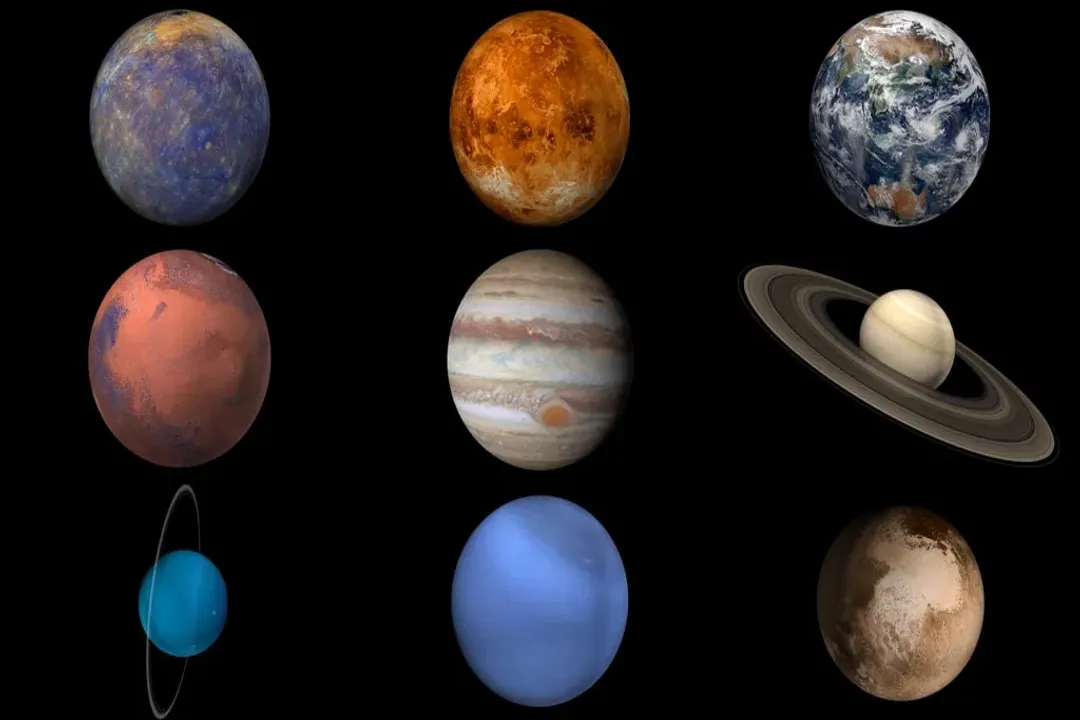
While these terms describe planets generally, the specific nomenclature for our planet is what sets it apart. For instance, NASA identifies eight major planets orbiting the Sun: Mercury, Venus, Earth, Mars, Jupiter, Saturn, Uranus, and Neptune. [8] Notice that besides Earth, all the others derive their names from Roman (and sometimes Greek) mythology. [6]
# Earth Naming
The reason "Earth" stands alone among the planets is rooted deeply in language history, specifically its connection to Germanic languages rather than the classical tradition that named its siblings. [6] Unlike Mars, Jupiter, or Venus, which were named after deities long ago, Earth comes from the Old English word eorþe, which itself is related to the Germanic ertha. [2][6] This Old English term simply meant ground, soil, or land. [2][6]
This linguistic divergence suggests an interesting pattern in early observation. The ancient observers who named the other planets saw them as distinct, bright wanderers in the night sky—gods moving across the heavens—and applied mythological names accordingly. [6] For them, Mars, Jupiter, and the rest were clearly separate celestial entities. [6]
Earth, however, was different. It was here. It was the ground beneath their feet, the environment they lived in, the source of life and sustenance. [2] The distinction wasn't between Earth and the cosmos; the distinction was between the land itself and the things up there. [6] This proximity likely prevented early naming conventions from elevating it to the status of a named mythological entity separate from the observer, unlike the far-off, mysterious lights. [6] It was the world they knew, not a distant wanderer. [2][4]
# Historical Context
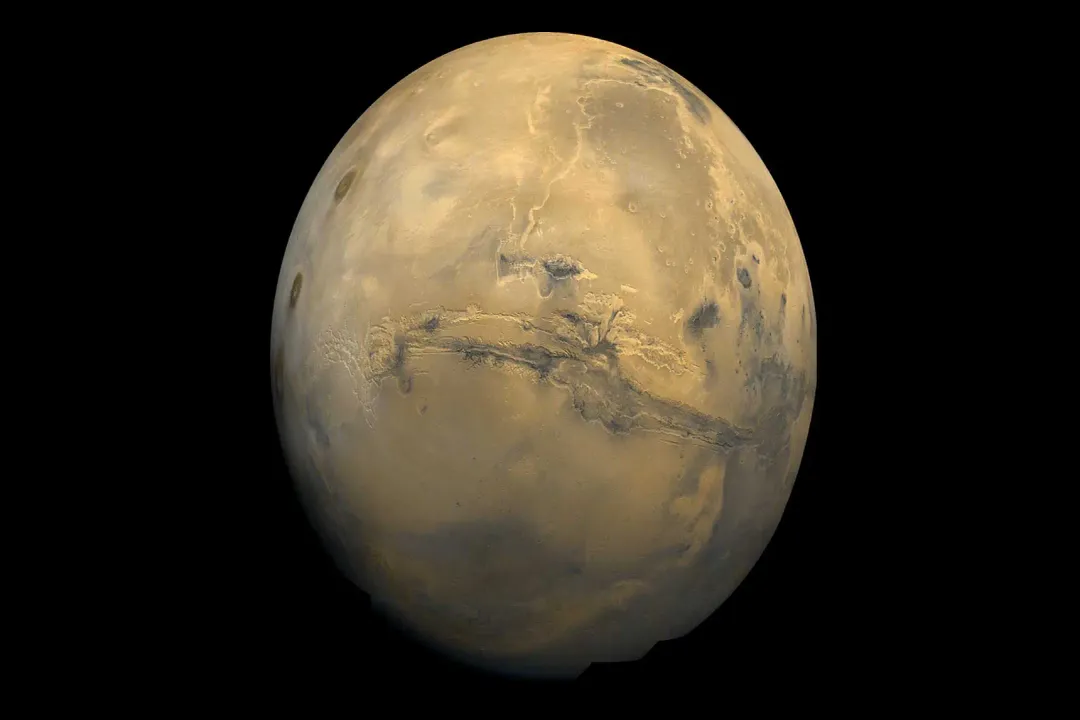
The historical context explains why we have this anomaly. When the classical names—derived from Greco-Roman mythology—were formalized for the visible planets, Earth was simply not perceived through the same lens. [6] Astronomers who mapped the cosmos later adopted these existing classical names for Mercury, Venus, Mars, and so on. [6]
It was only after the Copernican revolution, when the understanding shifted from an Earth-centric universe to a Sun-centric one, that the concept of Earth as a planet became scientifically established. [6][7] By the time science confirmed Earth was just one planet among several orbiting the Sun, its common name was already fixed in the language for millennia. [4][6] Trying to rename it "Tellus" (the Roman equivalent of Earth, which is still used in some scientific contexts, like geology) or "Terra" (Latin for Earth, often used to refer to the planet as a whole or the landmasses on it) would have meant discarding a deeply ingrained word known to every speaker of English and related tongues. [2][4]
Consider this linguistic split: If early Germanic or English speakers had adopted the Roman naming convention wholesale, perhaps our planet would be called Terra or Tellus today, just as the others have Roman deities for names. [4] The fact that it is not is a testament to how long the word "Earth" has been used to describe the ground we stand on. [2] The other planets, being visible but remote, received names that emphasized their otherness. [6]
# Planetary Definition
To fully appreciate the alternate names, it is helpful to briefly revisit what officially qualifies a body as a planet today, as defined by the International Astronomical Union (IAU). [8] Although the original query asks for another name for the planet, understanding the category reinforces why Earth is grouped with Jupiter and not with an asteroid or a moon. [8]
A celestial body must meet three main criteria to be classified as a planet in our solar system: [8]
- It must be in orbit around the Sun.
- It must have sufficient mass for its self-gravity to overcome rigid body forces so that it assumes a hydrostatic equilibrium (nearly round) shape.
- It must have "cleared the neighborhood" around its orbit. [8]
Earth satisfies all these requirements. [7] When we use terms like celestial body or orb, we are using a descriptor based on criteria #1 and #2, but the term planet adds the crucial political and orbital component of criterion #3. [8]
# Comparing Names
When we look at Earth versus, say, Jupiter, the contrast in nomenclature is stark and directly tied to human perspective. [6]
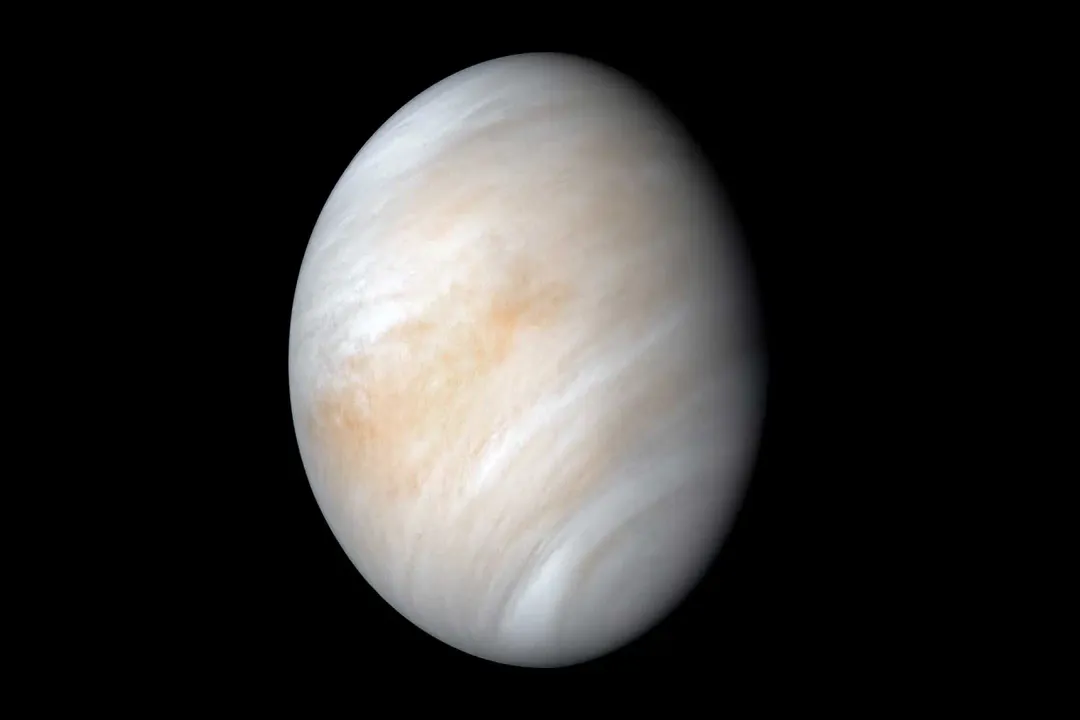
Jupiter, the largest planet, is named after the king of the Roman gods. [6] Mars is named for the god of war, often associated with its reddish hue. [6] Venus, the brightest "star" after the Sun and Moon, is named for the goddess of love and beauty. [6] These are names that imply majesty, distance, and mythological significance.
Earth, conversely, has a name that is decidedly terrestrial. [2] It translates essentially to "the dirt" or "the ground" when tracing its roots back through the Germanic languages. [2][6] This contrast offers a subtle commentary on our relationship with space throughout history. We named the distant, unknowable objects after our highest ideals and fears (gods and war), but we named the place we lived after its physical composition (soil). [4]
It’s worth noting that outside of English and the Germanic language family, other languages use derivatives of Terra or Tellus. [4] For example, in Spanish and Italian, the name for our planet is often Tierra or Terra, respectively, aligning more closely with the classical roots of the other planets, even if the word itself refers to the ground. [4] This means the "other name" depends heavily on the language you speak; for a Spanish speaker, the "other name" might be Gaia (a Greek personification of Earth) or Mundo (world), rather than the uniquely Germanic Earth. [4]
This uniqueness allows for specialized vocabulary. For example, in geology or planetary science, when specifically distinguishing our world's surface characteristics from other celestial bodies, the term Tellus might be employed, which is the Roman equivalent of Earth. [7] This usage intentionally steps away from the common name to emphasize the scientific object under study, akin to how scientists might refer to Mars as Ares in a purely mythological discussion, though Mars remains the accepted planetary nomenclature. [6]
# Modern Usage Contrast
In modern contexts, especially in science fiction or speculative writing, authors often seek a return to the classical root for Earth to make it sound more "planetary" alongside Mars and Venus. [4] This often results in the use of Terra or Gaia. [4] When an astronaut refers to the "pale blue dot," they are using a purely descriptive, observational name, much like one might refer to Jupiter as the "Great Red Spot's world," but stripped of cultural baggage. [7]
However, the most common "other name" used by those seeking an immediate, universally understood synonym for the planet remains World. [3][5] It bridges the gap between the common, ground-level understanding and the astronomical reality that this world is one of several orbiting a star. [8]
The very act of asking for an "other name" highlights the exceptional status Earth holds in our vocabulary. It is the only major solar system body that wasn't named by looking outward with mythological reverence; it was named by looking inward at what sustained life. [6] This inherent duality—being both the ground we walk on and a sphere orbiting the Sun—is what makes searching for a single, universally accepted alternate name besides "Earth" an exercise in tracing linguistic history rather than just astronomy. [2][7] While "planet" has many synonyms like orb and celestial body, [1][9] our specific world has one dominant name rooted in the very soil that defines it. [2]
Related Questions
#Citations
PLANET Synonyms: 13 Similar Words | Merriam-Webster Thesaurus
Today our planet is called Earth, but what other names for our world ...
PLANET Synonyms & Antonyms - 15 words - Thesaurus.com
What is the other name of our planet besides Earth? - Quora
PLANET - 27 Synonyms and Antonyms - Cambridge English
Earth - Wikipedia
About the Planets - NASA Science