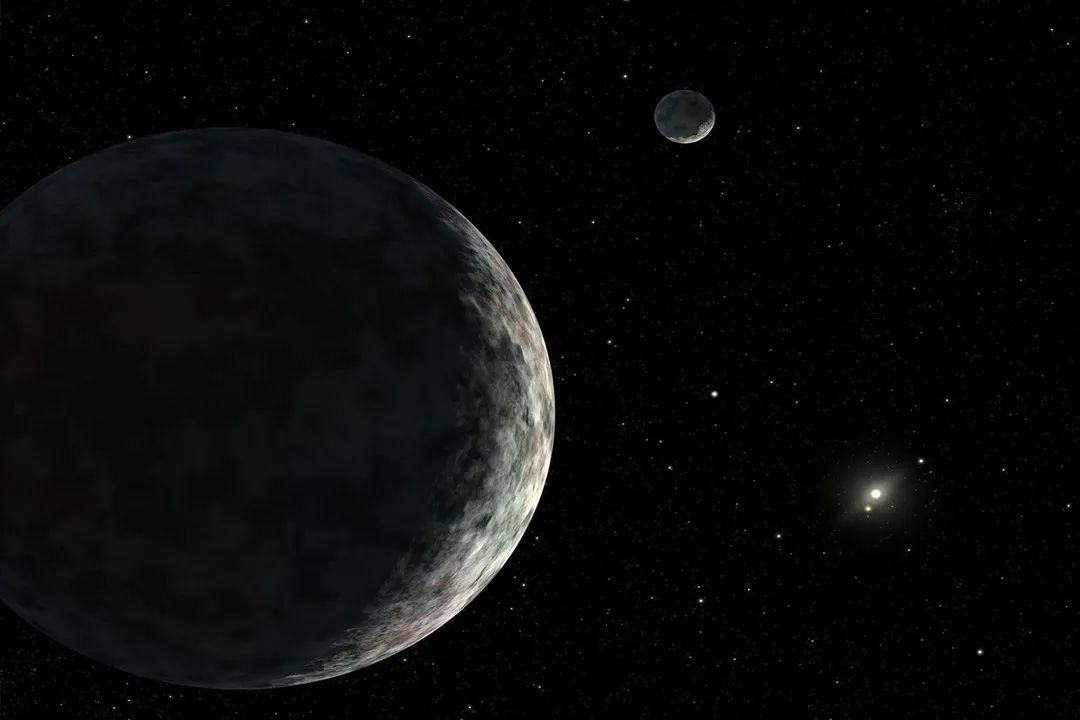
According to the IAU definition, what must a celestial body possess concerning its mass and self-gravity?
Assume a hydrostatic equilibrium (nearly round) shape
The International Astronomical Union (IAU) outlines three main criteria for a solar system body to be classified as a planet. One of these crucial requirements dictates the body's physical state achieved through gravitational influence. Specifically, the body must have sufficient mass such that its self-gravity overcomes rigid body forces, which results in it assuming a hydrostatic equilibrium, meaning it must be nearly round in shape. The other two criteria involve orbiting the Sun and having cleared the neighborhood around its orbit. Meeting this shape requirement confirms its status as a major orbiting body, grouping it correctly with giants like Jupiter and setting it apart from irregular asteroids or moons.