How does Kepler's Second Law describe object speed in an elliptical path near periapsis?
The object moves faster when it is closer to the central mass.
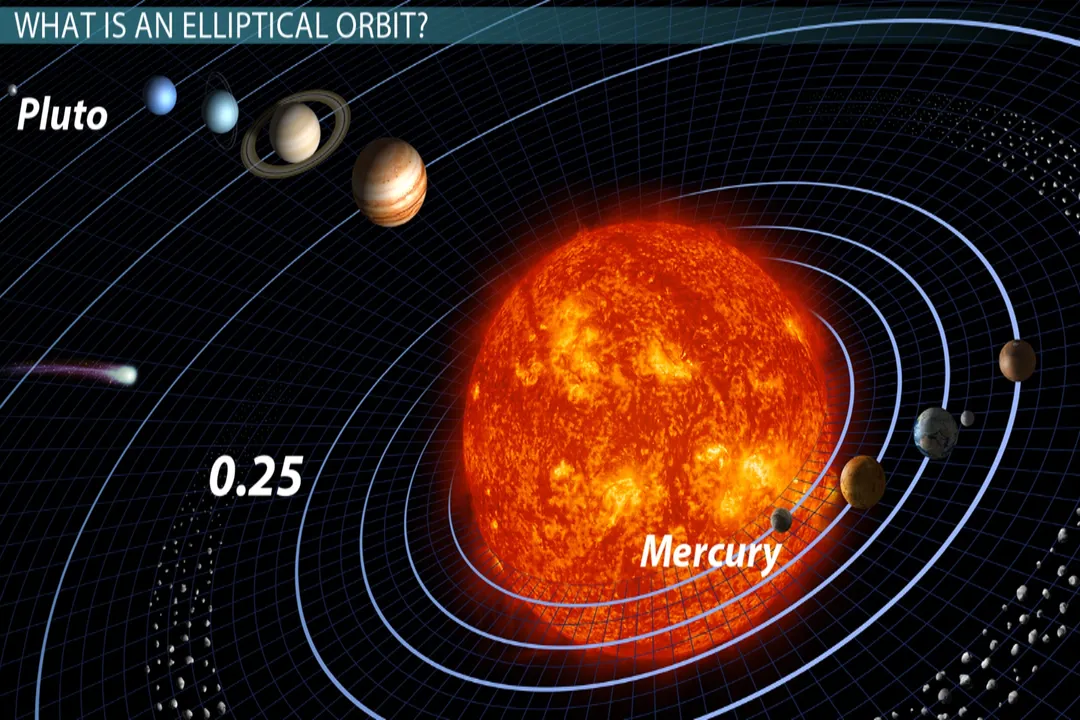
Kepler's Second Law of Planetary Motion mandates that the line segment connecting the orbiting body to the central mass sweeps out equal areas in equal time intervals. When the orbiting object is at periapsis, it is at its closest point to the central body. To ensure that the area swept out in a given time remains constant across the orbit, the object must cover a larger arc distance per unit time when it is closest to the focus. Consequently, the object's orbital speed increases significantly at periapsis (its closest approach) and decreases as it moves toward apoapsis (its farthest point), reflecting the continuous exchange between kinetic and potential energy along the non-uniform path.
#Videos
Elliptical Orbits - Brain Waves - YouTube