What is another name for the planetesimal theory?
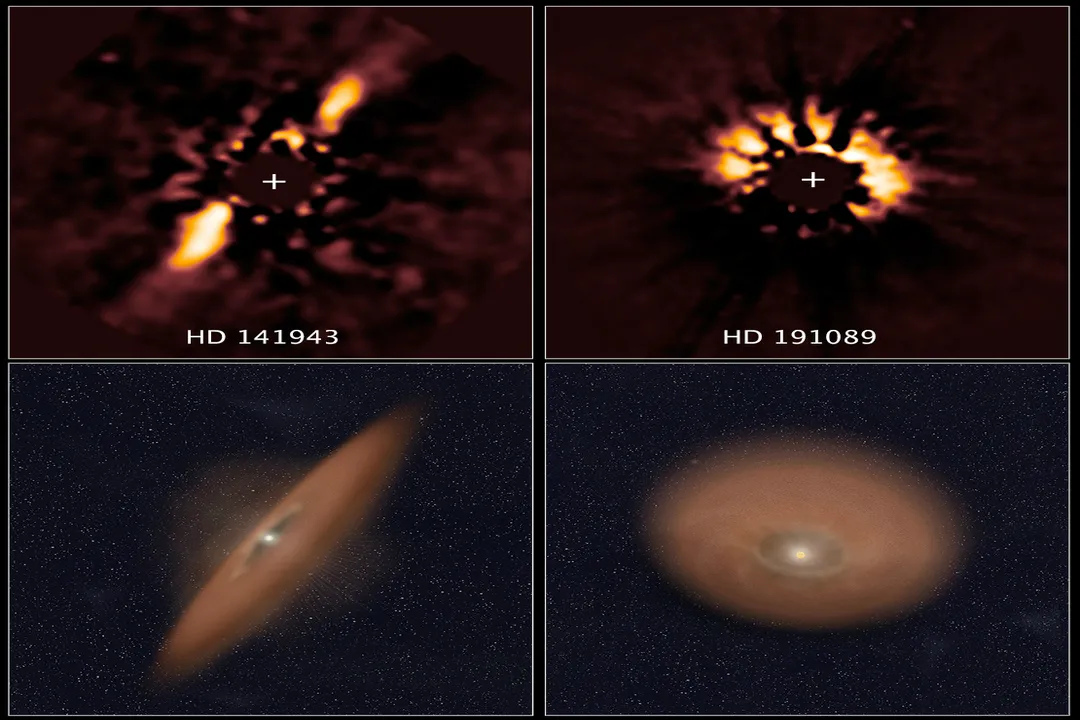
The name most frequently used as an alternative, or perhaps more accurately, the formal name for what is often called the planetesimal theory, is the planetesimal hypothesis. [5][9] While the distinction between a "theory" and a "hypothesis" in common parlance can be blurry, in the scientific context where these ideas were developed, the term hypothesis often suggested a less complete or more foundational proposal awaiting full verification. [9] Regardless of the suffix—theory or hypothesis—the concept revolves around the initial construction materials of our solar system: minute, solid particles called planetesimals. [7] This entire intellectual construct seeks to answer one of the grandest questions in astrophysics: how did the Sun, the planets, and all the other bodies we see orbiting our star actually come into being?[3]
# Alternate Naming
When scientists or historians discuss the origins of the Earth and the solar system, they often present a few competing or related ideas, such as the Nebular Theory, the Tidal Theory, or the Planetesimal Hypothesis. [3] The planetesimal concept is deeply tied to the work of two key figures: Thomas Chamberlin and Forest Moulton. [4] Therefore, you will often encounter the full nomenclature, the Chamberlin-Moulton Planetesimal Hypothesis. [4] This specific naming convention attributes the development of the detailed mechanism to their specific formulation, distinguishing it from earlier, less developed ideas about small bodies. [4] For the general reader, understanding that the planetesimal theory is the planetesimal hypothesis, particularly the Chamberlin-Moulton version, clarifies much of the historical discussion surrounding solar system formation. [5]
# Founding Ideas
The Chamberlin-Moulton formulation provided a compelling mechanism that attempted to address some of the shortcomings of purely nebulous contraction models prevalent at the time. [4] Imagine the early solar system scenario as envisioned by these proponents: the primary mass, the Sun, was already present. The critical step was the disruption of this established system to source the material for the planets. [4] Unlike a simple condensation from a cooling cloud, this hypothesis introduced a dramatic event—often involving a passing star—that gravitationally pulled out filamentary material from the Sun. [4] This material then cooled and broke up into these small, solid components, the planetesimals. [4]
This idea places a strong emphasis on gravity acting between two massive bodies—the Sun and a passing star—as the catalyst for planetary birth, followed by gravitational accretion acting locally among the planetesimals themselves. [4] It’s an interesting model because it suggests that the formation of planetary systems might not be an everyday occurrence, as the prerequisite—the close passage of another star—is a relatively rare event in galactic history. [4] Thinking about the sheer scale of cosmic events, this mechanism implies a rather violent, initiating event followed by a much slower, more gradual accumulation process. [4]
# Accretion Mechanism
The core physical insight of the hypothesis lies in what happened after the planetesimals materialized. These small fragments, born from the initial eruption or condensation, were the fundamental building blocks. [7] They were not planets yet; they were the seeds. The process of building up larger bodies from these smaller ones is called accretion. [7]
Planetesimals were constantly moving in the vicinity of the Sun, orbiting within what would become the plane of the ecliptic. Over vast stretches of time, these tiny particles would occasionally collide. Crucially, for the hypothesis to work, these collisions needed to be sticky or gently inelastic rather than completely destructive. When two planetesimals collided, instead of shattering entirely, some material would merge due to mutual gravitational attraction or simple contact, forming a slightly larger object. [7] This process was self-reinforcing: the bigger an object got, the stronger its gravity became, making it a more effective "sweeper" of the surrounding space, attracting and consuming smaller planetesimals in its path. [7] This continual, stepwise growth—from dust grain to pebble, to boulder, to planetesimal, to protoplanet, and finally to a planet—is the defining characteristic of the theory. [7]
To illustrate this step-wise growth, we can consider a hypothetical cross-section of the early solar nebula region where Mars might have formed. If we track the mass accumulation based on this model, the rates would not be uniform across the system.
| Stage | Typical Size Range | Dominant Process | Time Scale (Relative) |
|---|---|---|---|
| 1 | Micrometers to meters | Electrostatic/Gas Drag | Very Fast |
| 2 | Meters to Kilometers | Planetesimal Formation | Moderate |
| 3 | Kilometers to Moon-sized | Gravitational Accretion | Long |
| 4 | Moon-sized to Planet-sized | Runaway Growth/Oligarchic Growth | Slowest |
What's fascinating is that this hierarchical growth means that the very first large objects to form—the largest planetesimals—would have had a significant head start in gobbling up the available material in their orbital zones. [7] This introduces a competitive element to planetary formation, where early success dictates final size. It suggests that the distribution of planetary masses we observe today is a direct consequence of this initial competitive accretion race, not merely a uniform condensation based on distance from the star.
# Comparison with Nebular Models
The planetesimal hypothesis exists in a historical dialogue with the Nebular Hypothesis. [3][8] The classical Nebular Hypothesis, often associated with Laplace, proposed that the solar system formed from the gradual contraction and spinning down of a vast, rotating cloud of gas and dust, with planets forming through condensation from rings spun off by the shrinking central mass. [8]
The primary conceptual difference often pointed out is the source of the material and the mechanism of planet building. The older nebular model often struggled to explain why the angular momentum in the current solar system is so heavily concentrated in the planets rather than the Sun, which should have retained most of it if it formed by simple contraction. [6] The Chamberlin-Moulton model, by proposing an external trigger (the passing star) to eject the material, sidestepped this particular angular momentum paradox by essentially starting the planetary formation process after the Sun had already established its massive rotational momentum. [4]
However, the planetesimal hypothesis itself faced challenges, especially regarding the precise physics of forming kilometer-sized bodies from microscopic dust efficiently enough to build planets before gas drag caused everything to spiral into the Sun. [6] Modern solar system formation theories tend to reconcile aspects of both, utilizing a more evolved version of the Nebular Hypothesis where accretion proceeds via planetesimals. [6] In a sense, the modern consensus has absorbed the mechanism (planetesimal accretion) from Chamberlin and Moulton into a more refined context (a flattened protoplanetary disk fed by the original solar nebula). [6][8] It's less about one theory being entirely right and the other entirely wrong, and more about identifying the essential physical processes at play.
# Object Characteristics
To truly grasp the theory, one must visualize the planetesimals themselves. [7] These were not gas giants or even large rocky cores; they were the smallest, gravitationally significant solid objects. [7] Source material suggests these bodies ranged in size from meters or perhaps kilometers up to perhaps hundreds of kilometers across. [7] They were composed of solid material—rock and ice—that had condensed out of the hot primordial gas as it cooled in the developing disk around the Sun. [7] Their orbital paths were somewhat randomized initially, leading to the necessary, though often catastrophic, collisions that drove growth. [4] Their composition would naturally vary based on their distance from the young Sun: those closer in would primarily be rocky due to the heat driving off lighter volatile compounds, while those further out, beyond the "frost line," could incorporate substantial amounts of water ice and other frozen gases, leading to the composition of the giant planets' cores. [7]
# Evolution of Understanding
The endurance of the planetesimal concept, even if the specific Chamberlin-Moulton triggering mechanism involving a passing star is now generally discounted, speaks to its fundamental correctness regarding how planets grow. [6] The how—accretion from small solids—remains central to modern planetary science. What has changed is the why and where the initial material came from. Today, scientists generally favor the idea that the planetesimals formed in situ within a large, rotating disk of gas and dust left over from the Sun's formation, rather than being physically pulled out of the Sun itself by a passing star. [8]
This shift in context, from an externally triggered ejection event to an internally evolving disk, is significant. It connects the formation of planets much more closely to the formation of the Sun itself, suggesting a more self-contained and continuous process, which often aligns better with current observations of protoplanetary disks around other stars. [8] The failure of the tidal interaction aspect of the original hypothesis doesn't invalidate the subsequent accretion stage. If you are researching solar system formation, thinking of the early solar system as a vast, three-dimensional shooting gallery filled with these building blocks, all slowly merging, provides a powerful mental model, regardless of whether the initial scattering was caused by a neighbor or by internal disk instabilities. It highlights that accretion is the process that turns a nebula into a planetary system.
Related Questions
#Citations
Planetesimal Hypothesis - Science | HowStuffWorks
[Solved] Who postulated the 'Planetesimal Hypothesis' rel - Testbook
Which among the theories (Nebular/Tidal/Planetesimal/Binary) you ...
Chamberlin-Moulton Planetesimal Hypothesis - Geography Notes
Planetesimal hypothesis | The Solar System Wiki - Fandom
Is it possible the Nebular Hypothesis and Planetesimal Theory are ...
Planetesimal - Wikipedia
Theories of the origin of the Earth: Nebular Hypothesis, Planetesimal ...
Planetesimal hypothesis - Definition, Meaning & Synonyms