What evidence supports nebula theory?
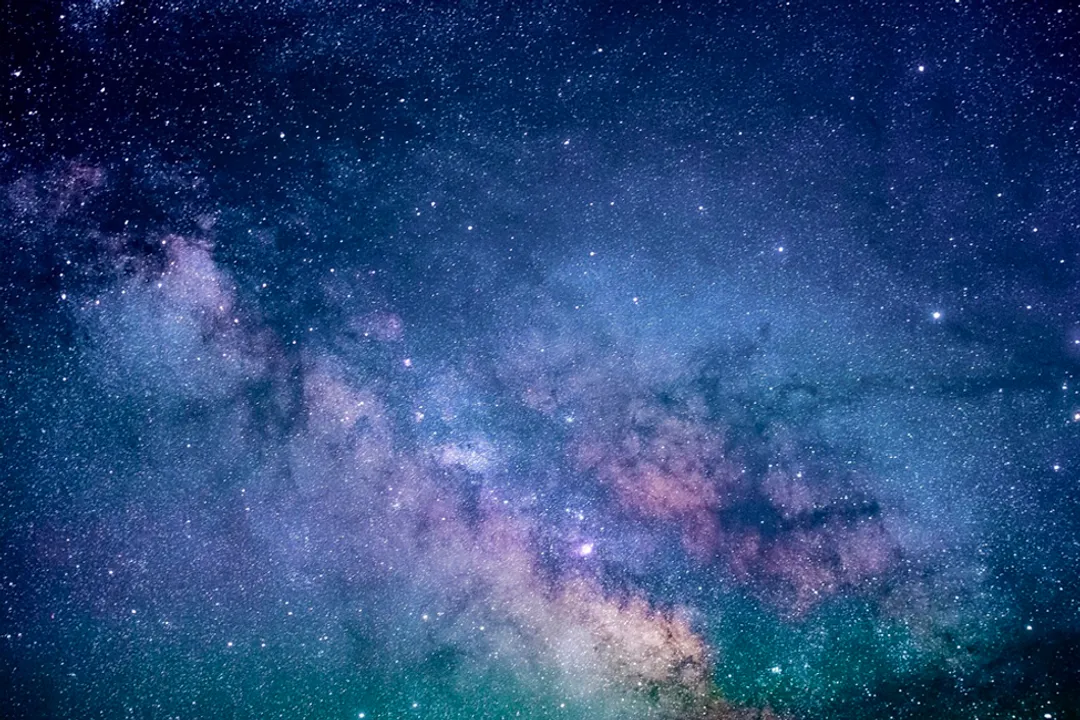
The concept of how our Solar System came to be has evolved significantly over time, but the prevailing idea, the nebular hypothesis, rests on a bedrock of consistent observational evidence gathered over centuries. This theory posits that the Sun and the planets originated from a vast, rotating cloud of interstellar gas and dust—the solar nebula—that collapsed under its own gravity. [3][6][7] The strength of this model lies not just in its narrative coherence, but in its ability to explain several fundamental, shared characteristics of everything orbiting our star.
# Motion Alignment
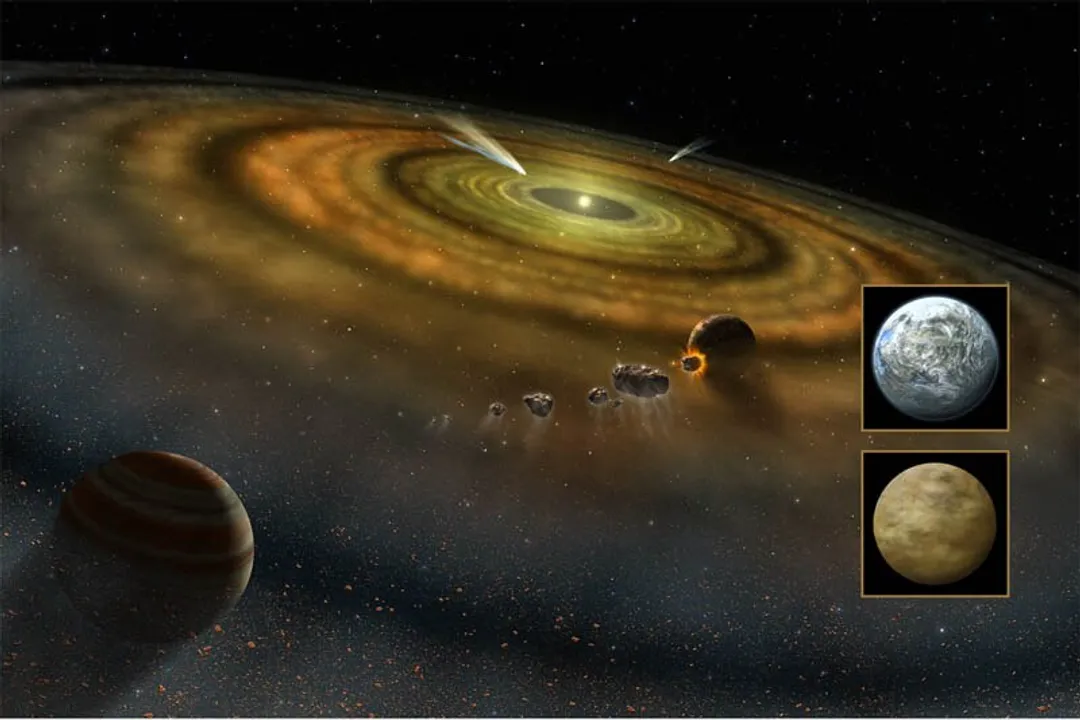
Perhaps the most compelling initial evidence supporting the nebular theory relates to the sheer uniformity present in the Solar System's dynamics. When we look at the major planets—Mercury through Neptune—they all exhibit a few striking, almost uncanny similarities. [1][2] Firstly, every planet orbits the Sun in the same direction, which is counter-clockwise when viewed from above the Sun’s north pole. [3][8] This shared directionality strongly suggests that they all formed from the same initial rotational motion inherited by the parent nebula. [2]
Secondly, these orbits are not wildly scattered across space; instead, they lie incredibly close to a single, flat plane—the ecliptic. [1][4][9] The nebular theory explains this geometric feature perfectly: as the initial, roughly spherical gas cloud contracts gravitationally, the law of conservation of angular momentum dictates that it must spin faster and simultaneously flatten into a disk shape, much like a spinning glob of pizza dough spreads out. [7] The planets then coalesce from the material within this flattened disk. [6][7] For an alternative theory to explain why Jupiter, Earth, and Mars all happen to orbit in nearly the same plane, without invoking extreme coincidence, is far more difficult than for the nebular model to accommodate naturally. [4]
This alignment extends to the Sun itself. The Sun rotates on its axis in the same direction as the planets orbit, further linking the system's rotation to the original cloud's momentum. [1][3][8] This consistency across multiple parameters—direction of spin, direction of orbit, and the shared plane—is a powerful piece of evidence for a single, common origin event rather than a series of random captures or collisions. [1]
It is worth noting the stark contrast between the nebular theory and its predecessor, the tidal hypothesis, which suggested the planets formed from material ripped from the Sun by a passing star. [4] That older model offered no satisfactory explanation for why the planets would end up moving in the same direction or residing in a flat plane; the nebular model, by contrast, predicts this outcome based on the physics of collapsing, rotating masses. [4]
# Geometric Efficiency
When we consider the mathematics of the system, the flatness of the orbits is astounding given the sheer scale of the Solar System. If the Sun and planets had formed through chaotic, high-energy collisions or gravitational captures, we would expect orbits tilted at all angles, some plunging directly toward or away from the Sun. [1] The fact that the orbits of the eight major planets are confined to a region less than 5 degrees thick, while spanning distances from Mercury to Neptune, suggests a highly organized, low-energy accretion process. This flatness isn't just a minor detail; it represents the most energetically stable configuration achievable for particles orbiting within a vast, flattening accretion disk. [7] The system organized itself into the configuration that minimized disruptive gravitational interactions over billions of years, pointing directly to the disk phase described by the nebular theory. [1][4]
# System Structure
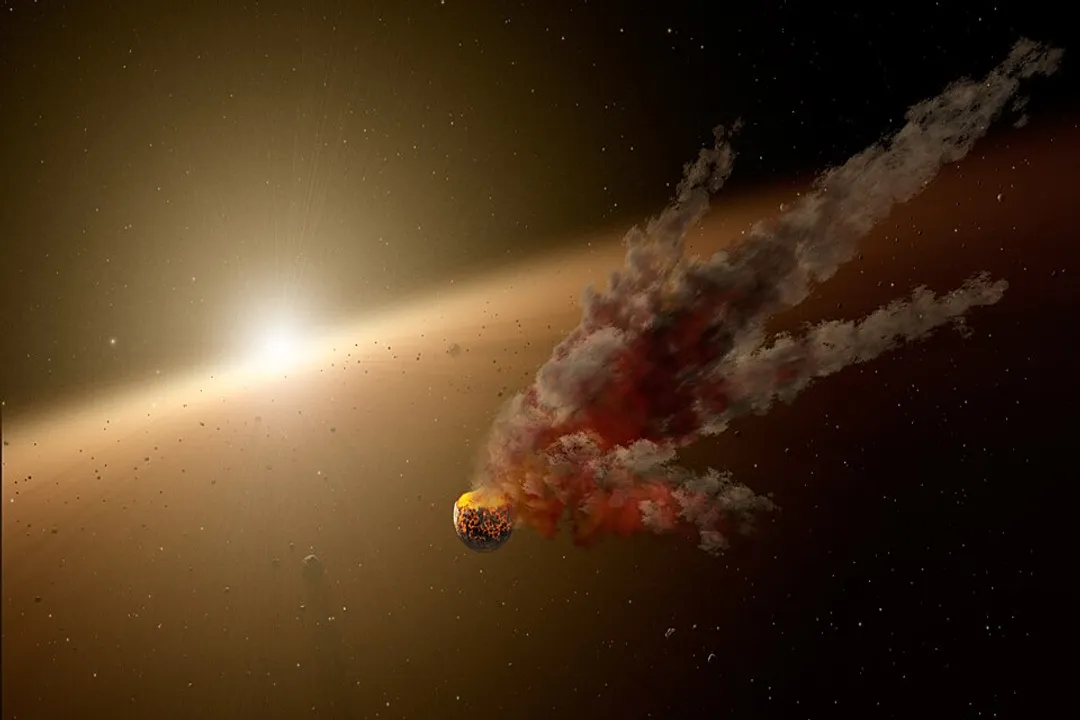
The nebular theory does more than just describe how things move; it also helps account for what things are made of and where they are located. The original solar nebula was composed primarily of hydrogen and helium, with trace amounts of heavier elements and rock-forming materials. [7] As the nebula collapsed and flattened into a disk, temperature gradients naturally arose across that disk. [6]
Closer to the forming Sun, temperatures were extremely high, meaning only materials with high melting points—metals and silicates (rock)—could condense into solid grains. [7] This explains the composition of the inner, terrestrial planets: Mercury, Venus, Earth, and Mars. [4]
Further out, beyond what is sometimes called the "frost line" or "snow line," it was cold enough for volatile compounds like water, methane, and ammonia to freeze into ices. [7] These ices, combined with rock and metal, provided far more solid material for planet formation. [4] This abundance of building blocks allowed the outer planets—Jupiter, Saturn, Uranus, and Neptune—to grow massive enough to gravitationally sweep up vast amounts of the remaining light gases (hydrogen and helium) before the young Sun blew them away. [7] The clear division between small, rocky inner worlds and large, gas/ice-rich outer giants is a direct consequence predicted by the thermal structure of the collapsing disk. [4]
# Momentum Balance
A critical challenge that any formation theory must address is the distribution of angular momentum. In physics, the total rotational energy of the system must be conserved throughout the collapse. [3] Surprisingly, the Sun, which contains over 99.8% of the mass of the entire Solar System, holds only about 1 or 2 percent of the total angular momentum. [3] The planets, which hold less than 0.2% of the total mass, contain the vast majority of the system's rotational energy. [3]
While this looks like a deficit for the simple gravitational collapse model, the nebular theory has evolved to incorporate mechanisms that successfully redistribute this momentum. Early versions of the theory struggled with this disparity. [3][4] Modern refinements suggest that early, strong magnetic fields linking the Sun's surface to the surrounding, still-accreting disk material acted as a brake, transferring momentum outward to the planetary building blocks. [3] The fact that the theory has successfully predicted and explained this unusual momentum split—even if it required later modifications to the mechanics—demonstrates its scientific depth and flexibility, making it a stronger explanatory tool than models that simply ignore this distribution. [3]
# Other Systems
Scientific theories gain immense validation when they make successful predictions about phenomena outside the immediate test case. The nebular hypothesis predicted that if the formation process seen in our Solar System was universal—governed by basic laws of gravity and fluid dynamics—then other stars must also form this way. [1]
In recent decades, astronomical observations have strongly confirmed this prediction. Astronomers have found numerous protoplanetary disks—flat structures of gas and dust—orbiting young stars across the galaxy. [1] These disks look exactly like the predicted intermediary stage of the collapsing nebula that forms a solar system. [7] Furthermore, the detection of thousands of exoplanets confirms that planet formation is not unique to our location. [1] While the specifics of those distant systems vary, the underlying mechanism appears consistent with a disk-based formation process, lending significant authority to the model derived from studying our own system. [1]
# Observational Evidence Matrix
To better appreciate the supporting data, we can summarize the key observed facts that the nebular theory elegantly accounts for, contrasting them against what a truly random formation process might yield.
| Feature | Observation | Nebular Theory Explanation | Random Formation Expectation |
|---|---|---|---|
| Orbit Direction | All major planets orbit in the same direction. [1][2] | Inherited from the initial rotation of the parent nebula. [3] | Random mixture of prograde and retrograde orbits. |
| Orbit Plane | Orbits are confined to a narrow, coplanar band. [4][9] | Result of flattening due to conservation of angular momentum during collapse. [7] | Highly varied orbital inclinations. |
| Composition | Rocky/dense inner planets, gas/ice giants outer planets. [4] | Temperature gradient in the spinning disk separating volatile and refractory materials. [7] | Mixed composition throughout, or no clear radial pattern. |
The weight of evidence supporting the nebular theory is substantial because it explains the large-scale structure, the dynamic relationships, and the chemical zoning simultaneously using a single physical mechanism—gravitational collapse of a rotating cloud. [1][4] It represents the current scientific consensus because, unlike older ideas, it is entirely consistent with the physics of rotating fluids and has been vindicated by the discovery of similar structures around other stars. [1][7]
Related Questions
#Citations
6.4: The Nebular Theory - Other Important Evidence
46. The Nebular Theory: Other Important Evidence
Nebular hypothesis - Wikipedia
Nebular theory and the formation of the solar system - OpenGeology
The Nebular Hypothesis Flashcards - Quizlet
Nebular hypothesis | The Solar System Wiki - Fandom
1.2. How did our Solar System form? - NASA Astrobiology Program
The Nebular Theory of Laplace Solar System - Unacademy
Which evidence provides support for the nebular theory? A ... - Brainly