What evidence supports the theory that comets may have contributed water to Earth?
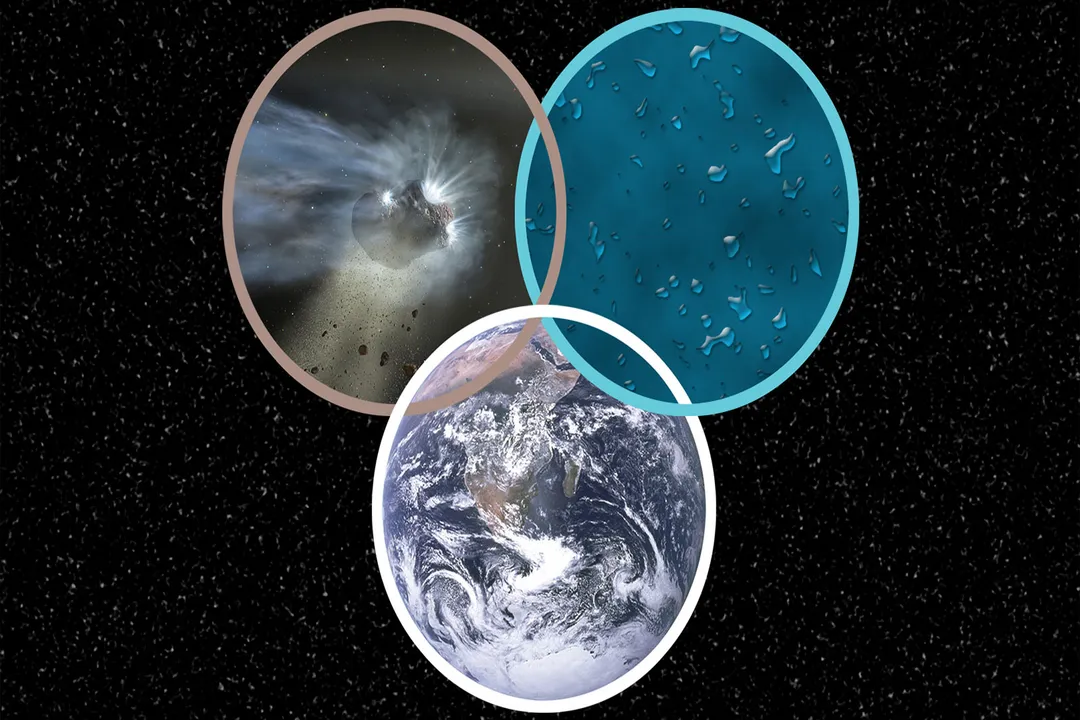
The question of how Earth became the vibrant blue world we know—71% covered in liquid water—has fascinated scientists for decades. As rocky planets forming near the Sun were expected to be hot enough to boil off any initial water, the leading theory posits that our oceans were delivered later in the Solar System’s infancy by impacts from icy space debris. This delivery mechanism has traditionally been a fierce debate between two main candidates: water-rich asteroids originating closer to the Sun, and icy comets hailing from the outer reaches. Distinguishing between these celestial haulers hinges on finding a match to the subtle chemical signature of terrestrial water.
# Chemical Fingerprints
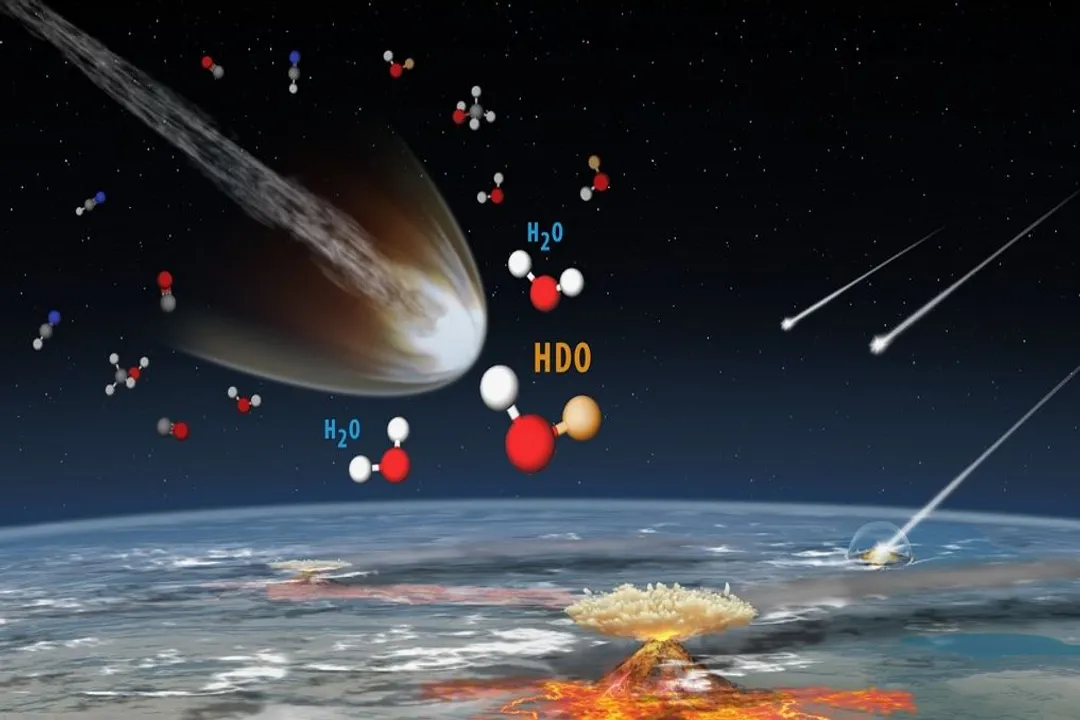
Water, or , is composed of two hydrogen atoms and one oxygen atom. However, the hydrogen itself has a heavier counterpart: deuterium (), which contains an extra neutron. When scientists compare water from different reservoirs, they look closely at the ratio of deuterium to normal hydrogen (). This ratio acts as a unique chemical fingerprint because most deuterium was fixed early on, either during the Big Bang or within supernovae, and this signature is generally preserved over eons.
Earth’s ocean water has a known ratio, precisely measured to be . This value represents the mixed history of all water contributions. Because lighter hydrogen atoms () escape into space more readily than deuterium during atmospheric loss, the current ratio is actually higher than what Earth possessed when it first formed. This loss means that any primordial water that remained locked inside the planet, perhaps in the mantle or core, might have a D/H ratio closer to the original value. Any object that delivered water to Earth must have carried ice with a ratio that, when mixed with the other sources, results in today’s oceanic value.
# Asteroids’ Strong Case
Historically, the case for comets delivering Earth’s water faced significant hurdles. Early spacecraft missions, like Giotto to Comet Halley in the , and later the Rosetta mission to /Churyumov-Gerasimenko, revealed that the water locked within those comets had a ratio roughly double that of Earth’s oceans. Such a significant mismatch suggested that, at best, comets could only account for a small fraction, perhaps less than $10$ percent, of our total water supply.
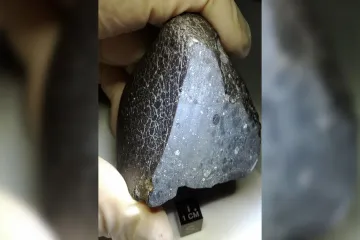
This opened the door for asteroids, whose water-bearing components originate closer to the Sun, often beyond the frost line (the boundary past which water ice can condense), which sits near the modern asteroid belt. Analyses of asteroid samples have provided compelling support for this alternative. For example, samples returned from the asteroid Ryugu by the Hayabusa2 mission showed water composition matching Earth’s oceans, with some models suggesting that water-rich chondrites—a type of meteorite—could have supplied around $30%$ of Earth’s total ocean mass. The OSIRIS-REx mission’s samples from asteroid Bennu also revealed initial findings of water and organic materials, further hinting at an asteroidal contribution. Furthermore, ancient eucrite chondrites, which originate from the asteroid Vesta in the outer asteroid belt, have a ratio that matches Earth's current ratio, strengthening the hypothesis that material from the asteroid belt was a primary source.
The early Earth environment complicated matters; the Moon-forming impact $4.5$ billion years ago vaporized much of the crust and upper mantle. The fact that geological evidence points to liquid water existing as early as $3.8$ to $4.4$ billion years ago presents a delicate timing problem. Water delivery had to occur either before the impact, or in a "late veneer" afterward, with the latter scenario requiring the incoming material to be exceptionally water-rich to replenish what was lost during the cataclysm. If an object like the hypothesized Moon-forming body, Theia, originated in the outer solar system, it could have brought significant water along with it, complicating the clean separation between "early accreted water" and "late impactor water".
# Kuiper Belt Matches
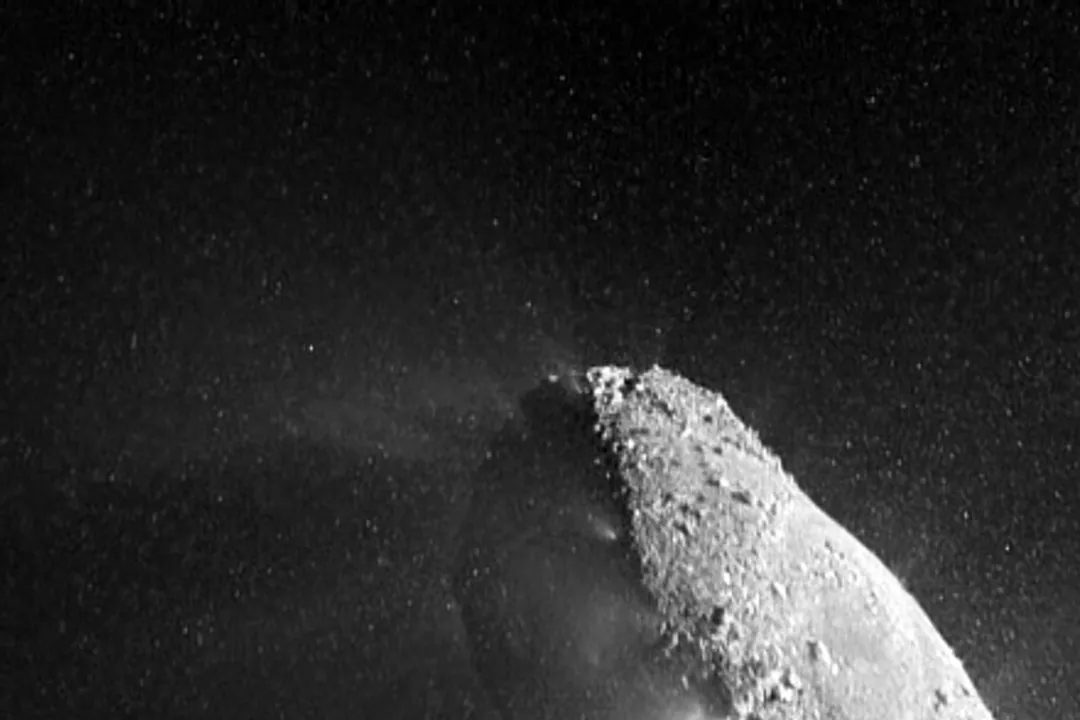
The historical doubt cast on comets was based on observations of specific types whose ratios simply did not align with Earth’s signature. However, this view began to shift with targeted observations of comets with different orbital histories.
Comet /Hartley $2$, classified as a Jupiter family comet (meaning its orbit has been influenced by Jupiter’s gravity), provided the first significant crack in the "no comets" theory. Using the European Space Agency's Herschel Space Observatory, scientists determined that Hartley $2$ possessed a ratio consistent with Earth’s seawater. Crucially, simulations suggested Hartley $2$ originated in the Kuiper Belt—the icy reservoir beyond Neptune. This finding implied that the pool of potential water-bearing comets capable of matching Earth’s signature was larger than previously assumed, suggesting that Kuiper Belt comets were a viable source.
# Devil Comet Clues
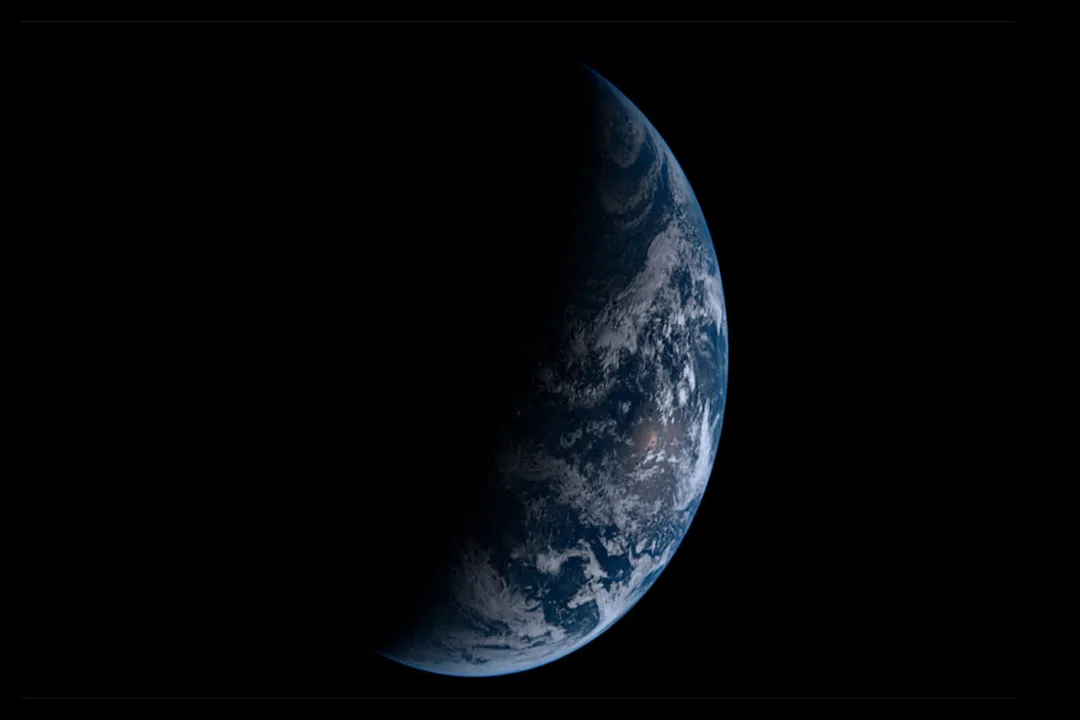
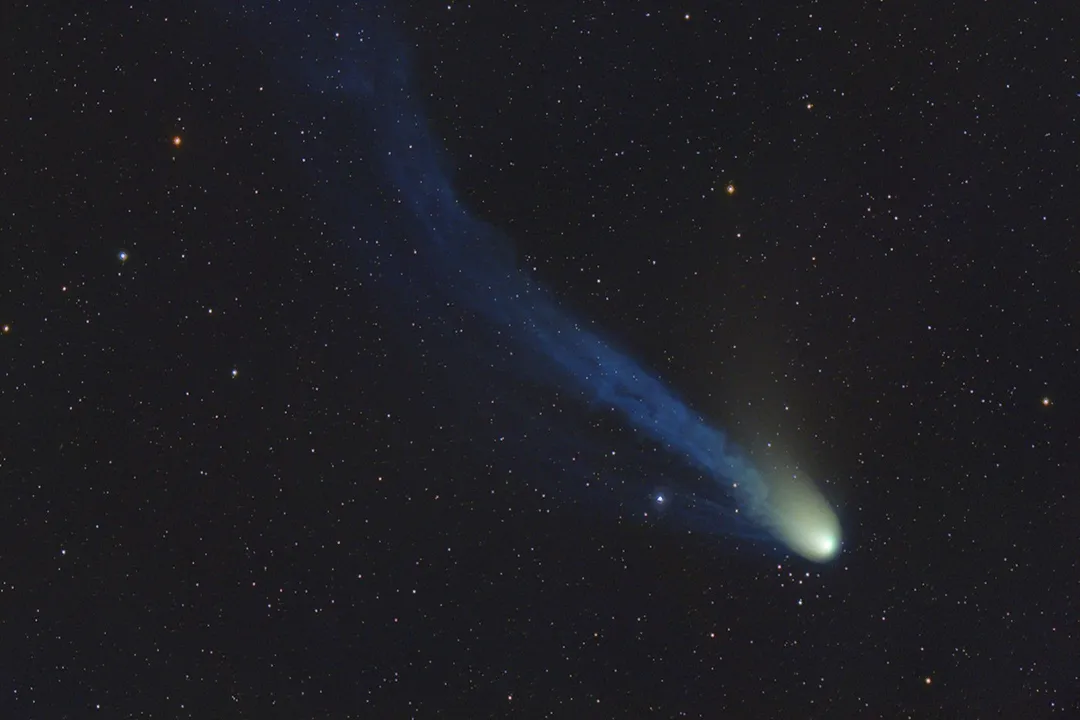
The evidence favoring comets gained substantial strength through observations of Comet /Pons-Brooks, nicknamed the "Devil Comet," which is a Halley-type comet (orbital period between $20$ and $200$ years). An international team utilized the sensitivity of the Atacama Large Millimeter/submillimeter Array () combined with NASA’s Infrared Telescope Facility () to conduct detailed spatial mapping of both regular water () and heavy water () in the comet's coma.
The measurement of the ratio in /Pons-Brooks yielded a result "virtually indistinguishable" from Earth's oceans. This was reported as providing the "strongest evidence yet" that at least some comets of this class could have delivered water with the exact isotopic signature needed to make our planet habitable. The fact that previous Halley-type comets showed different ratios made this consistency particularly noteworthy.
# Release Mechanism Matters
A deeper dive into comet composition, spurred by observations of Comet /Wirtanen by the airborne observatory , suggested that the location where a comet formed (Oort Cloud versus Kuiper Belt) might not be the primary determinant of its water ratio. Instead, the method of water release appeared to be a more important factor.
data showed that water vapor released from ice grains within the comet's coma had a ratio matching Earth’s oceans, whereas water sublimating directly from the surface ice did not. This suggests that to accurately gauge a comet’s bulk water composition, scientists should prioritize analyzing gases that originate from the comet's interior ices, rather than those immediately escaping the surface layer. If this holds true across more comets, it implies that a much larger fraction of the icy population may possess Earth-like water than previously estimated by surface-only measurements.
# Solar Wind Dust
While comets and asteroids seem to cover a large part of the story, newer analytical techniques have pointed to a third, more subtle contribution that may solve the long-standing isotopic discrepancies. While some meteorites match Earth's bulk water, Earth possesses an "additional different, slightly lighter isotopic fingerprint," indicating a source that was isotopically light.
Researchers using atom probe tomography on dust grains collected from the S-type asteroid Itokawa (by the Hayabusa probe) discovered that water was being created in situ on the dust grains themselves. This process, called space weathering, involves charged particles from the Sun—the solar wind—striking oxygen-rich minerals on the dust, ejecting oxygen atoms to form molecules trapped just below the surface. Because this water is generated directly from solar wind hydrogen, it is "isotopically light". In the dusty environment of the early solar nebula, this water would have constantly rained down onto the forming Earth, potentially filling that missing light reservoir required to balance the heavier signature seen in terrestrial mantle water. It’s a fascinating proposition: water was not just delivered pre-formed, but actively manufactured in transit by the Sun itself.
# Future Support
The ongoing pursuit to understand Earth's water origin is not merely an academic exercise concerning events $4.5$ billion years ago. The insights gained have direct practical applications for future human endeavors into space. The very process that may have supplied a fraction of our oceans—solar wind interaction with surface minerals—could be harnessed by future astronauts. If space explorers land on seemingly arid bodies like the Moon or various asteroids, assuming that the in-situ production of water via space weathering occurs there as well means that fresh supplies could potentially be processed directly from surface dust. Being able to manufacture water resources where we land, rather than carrying every drop required for survival, could fundamentally change the economics and feasibility of long-duration space exploration missions.
Related Questions
#Citations
Comet Provides New Clues to Origins of Earth's Oceans
Comet's Water Holds Clues to Life on Earth | AUI
How did Earth get its water? | The Planetary Society
'Devil Comet' contains 'strongest evidence yet' that comets delivered ...
What Created Earth's Oceans? Comet Offers New Clue
Origin of water on Earth - Wikipedia
Comet Oceans - California Academy of Sciences
Origins of Earth's water could be solved in space dust analysis