What is the evidence of the ocean on Mars?

The revelation that Mars harbors vast quantities of water today—though not in the surface rivers and seas we might easily imagine—has significantly shifted our understanding of the Red Planet’s hydrologic history. Scientists have confirmed the existence of oceans of water on Mars, but a major caveat is that this water is currently situated too deep beneath the surface to be easily tapped by current or near-future missions. This hidden bounty is not a shallow layer; rather, it constitutes a colossal ocean tucked away deep below the Martian crust.
# Deep Water
The current water inventory on Mars is stored in a massive reservoir situated hundreds of kilometers down. This deep water is thought to be a mixture of liquid water and brine, perhaps appearing as a slurry of ice and mud, trapped beneath the surface layers. Estimates suggest this subterranean storehouse holds a volume of water comparable to that found in Earth’s Arctic Ocean. It appears this enormous volume is primarily concentrated beneath the southern highlands, though its reach might extend into the northern lowlands as well.
The presence of such a significant, albeit inaccessible, reservoir suggests a different picture than one of a completely desiccated world. The water is likely retained deep underground because the atmospheric pressure and temperature conditions on the surface today would not permit liquid water to persist stably. Any surface water that existed in the past seems to have either escaped into space or, critically, sunk into the crust, becoming this deep reservoir. This deep placement highlights a crucial difference between Mars' wet past and its frigid present: the water is not gone, just relocated to an extreme depth. Considering the sheer volume—potentially hundreds of kilometers deep in some models—the challenge isn't finding water, but reaching it. If we were to imagine drawing an analogy to Earth’s major water bodies, understanding that this Martian volume rivals an entire polar ocean puts the scale of water loss into stark perspective, yet simultaneously emphasizes the immense technological gap between knowing it is there and accessing it for any form of resource utilization.
# Past Shorelines
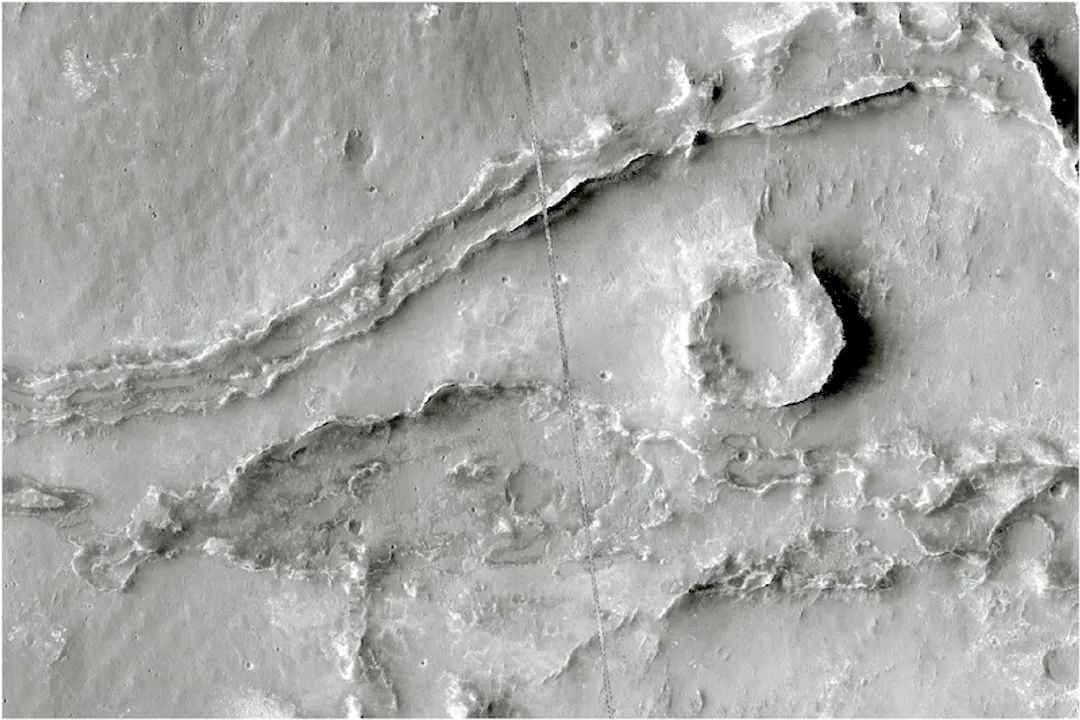
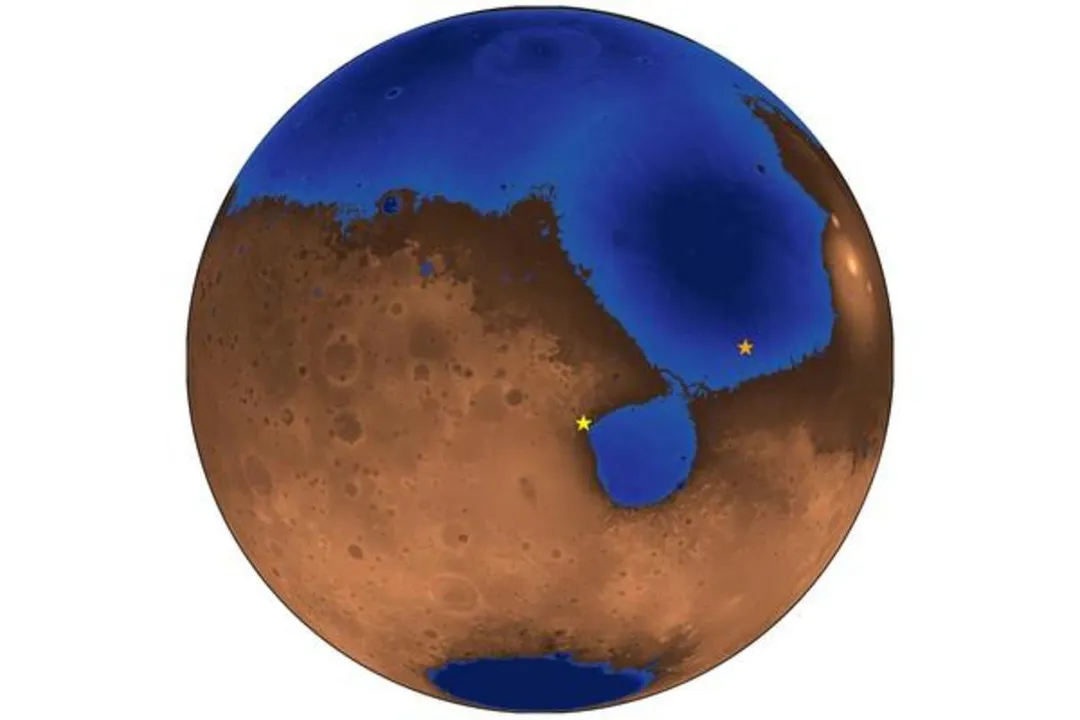
While the current water is deep, geological evidence provides a compelling narrative of a much wetter, ancient Mars that once supported surface bodies of water. These historical remnants offer a stark contrast to the deep, hidden stores we now detect. One of the most persuasive pieces of evidence comes from identifying ancient beaches. These features testify to a time when Mars possessed a long-ago ocean. Geologists have uncovered compelling geological evidence pointing to the former existence of an ancient ocean on the planet.
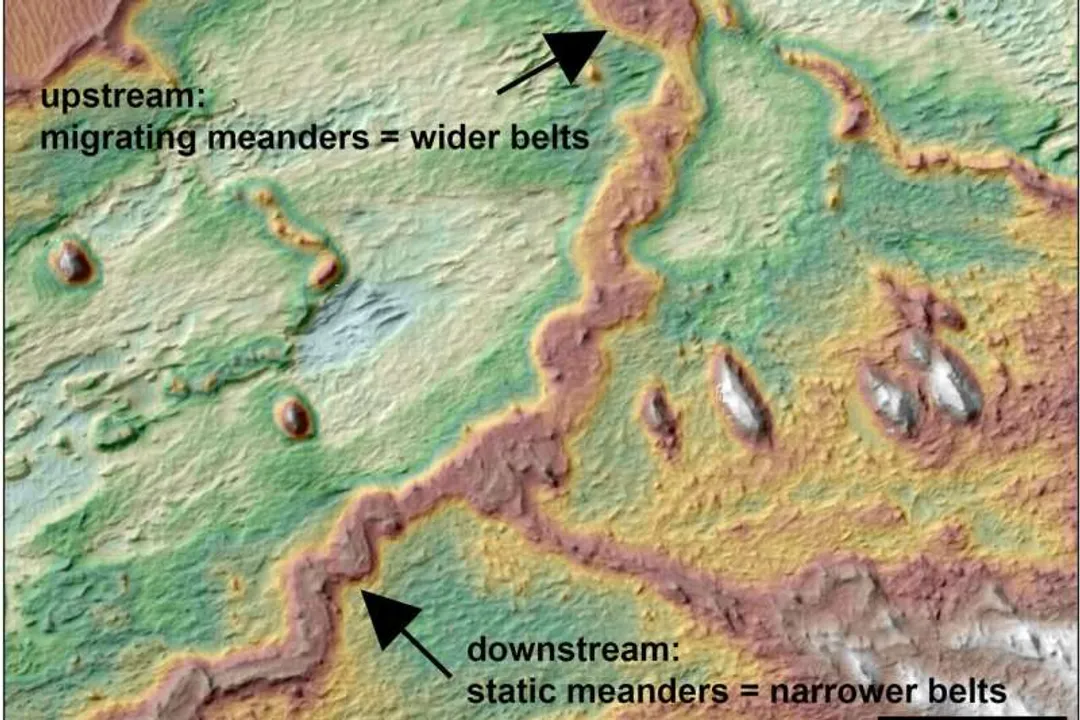
The study of these features, such as inverted ridges, provides further clues. These ridges resemble the submerged streambeds found on Earth, suggesting the past presence of flowing rivers that fed into a larger body of water. Furthermore, analysis of features like these ancient beaches suggests a Martian environment that could have sustained large, ice-free oceans across its surface. Such a scenario implies that Mars once had a significantly different climate, capable of sustaining liquid water stability at the surface, at least temporarily. The identification of these former coastlines helps map out where that ancient ocean likely resided, painting a picture of Mars as a world with distinct hydrological features mirroring early Earth.
# Evidence Comparison
It is fascinating to compare the evidence for the past and present water scenarios on Mars. On one hand, we have clear geological markers—beaches and river-like structures—that mandate a large, stable, surface-level ocean existed billions of years ago. This implies a warmer, thicker atmosphere capable of supporting that liquid state. On the other hand, the sophisticated detection methods of today reveal a colossal, liquid-rich reservoir sequestered deep within the planet's interior.
The dichotomy is striking: one dataset proves the existence of a world where water interacted with the surface and atmosphere on a global scale, while the other demonstrates that the vast majority of that water has been effectively sequestered away from the surface environment. This suggests that the transition from a relatively wet Mars to the cold desert we see now was characterized by a massive, perhaps rapid, process where surface water either escaped or was forced downward into the crust due to environmental collapse. The water itself might be substantially the same water, just moved in response to planetary cooling and atmospheric loss.
This difference in location has profound implications for habitability. Ancient shorelines tell us about the potential for life when conditions were right on the surface. The deep, modern reservoir, however, offers a protected environment where any microbial life could potentially survive today, shielded from harsh surface radiation and low pressure. The sheer mass of water preserved underground significantly boosts the case for Martian habitability across geological time.
# Geological Indicators
Beyond beaches, other geological data supports the story of ancient surface water. The data gathered provides clear indications that Mars was once a watery world. The geological record is being read like a map of ancient hydrological cycles.
One technique involves mapping ancient shorelines based on gravitational measurements and elevation data. When scientists look at how ancient sedimentary deposits are distributed, they can effectively trace the boundaries of ancient seas or oceans. The discovery of evidence for ancient coastlines means that Mars once hosted conditions capable of supporting a massive, standing body of water, which subsequently disappeared or was hidden. Furthermore, examining the distribution and morphology of valley networks and channels—the inverted ridges—helps scientists calculate the flow rates and volumes involved, giving us a sense of the ancient river systems that fed these larger bodies.
The ability to distinguish between features formed by flowing surface water and features formed by deep subsurface processes is key to this field of study. For instance, the inverted ridges mentioned earlier—streambeds that appear raised rather than incised—suggest that the channels were once filled with sediment that later hardened, forming a rock layer more resistant to erosion than the surrounding terrain; as the softer surrounding material was worn away by wind over eons, the old riverbeds stood out in relief. This preservation mechanism allows features from a very distant past to remain visible today.
# Reading the Data
The discovery of the deep water reservoir relied on seismic data from NASA’s InSight lander. Seismic waves travel through the planet’s interior, and how they change speed or amplitude as they pass through different materials allows scientists to infer the composition and state of matter (solid rock, liquid water, ice) below the surface. It is through analyzing these subtle shifts in wave propagation that researchers deduced the massive presence of water-rich layers hundreds of kilometers down.
To place this detection into context, the confirmation often comes from peer-reviewed publications in journals like the Proceedings of the National Academy of Sciences. These studies detail the complex modeling required to translate seismic noise into geological structure. The process is one of painstaking refinement, where theoretical models of Mars' interior must precisely match the observed propagation of thousands of recorded seismic events to confirm the presence of liquid brine or ice slurry at those depths.
A simple way to visualize the data interpretation involves a comparison of density layers. If a seismic wave slows down predictably as it passes a certain depth, geophysicists often attribute that slowdown to the presence of lighter, less rigid material than solid mantle rock—and a high concentration of water fits that profile perfectly, especially when mixed with salts that depress the freezing point.
# Implications and Future Study
The evidence confirming both a wet, ancient past and a significant water reserve in the present changes how we approach the search for life on Mars. If life ever arose when surface water was abundant, it would have needed a survival strategy when the climate changed. The deep, protected reservoir might represent that strategy.
This current subterranean environment, being warmer and shielded, could conceivably host extant life today. However, the extreme depth—sometimes cited as hundreds of kilometers—presents a formidable barrier to investigation. Accessing this water would require drilling technology far beyond current capabilities for planetary exploration.
Looking forward, future missions will likely focus on two parallel tracks: in situ analysis of easily accessible near-surface ice (if any can be found in accessible regions) and continued remote sensing to refine the map of the deep ocean. While the evidence of ancient beaches tells us where water used to be abundant on the surface, the seismic data tells us where the bulk of that water is now—deep and inaccessible. Bridging this gap between geological history and current planetary structure is central to understanding the complete evolution of Martian water and, consequently, Martian habitability. The planet appears to be a world where water was lost from sight, not from existence.
#Videos
Oceans on Mars: Zhurong's Unbelievable Discovery - YouTube
Related Questions
#Citations
Scientists find oceans of water on Mars. It's just too deep to tap.
Ancient ocean coastal deposits imaged on Mars - PNAS
Ancient Beaches Testify To A Long-ago Ocean On Mars - Astrobiology
Mars Hides Colossal Ocean Deep Below Its Surface
Traces of ancient ocean discovered on Mars | Penn State University
Oceans on Mars: Zhurong's Unbelievable Discovery - YouTube
New evidence for ocean on Mars found in ancient rivers - EarthSky
Evidence of Ancient Beaches Shows Us a Mars With Large, Ice-Free ...
Geological evidence points to ancient ocean in Mars' northern ...