What evidence do we have that there was water on Mars?
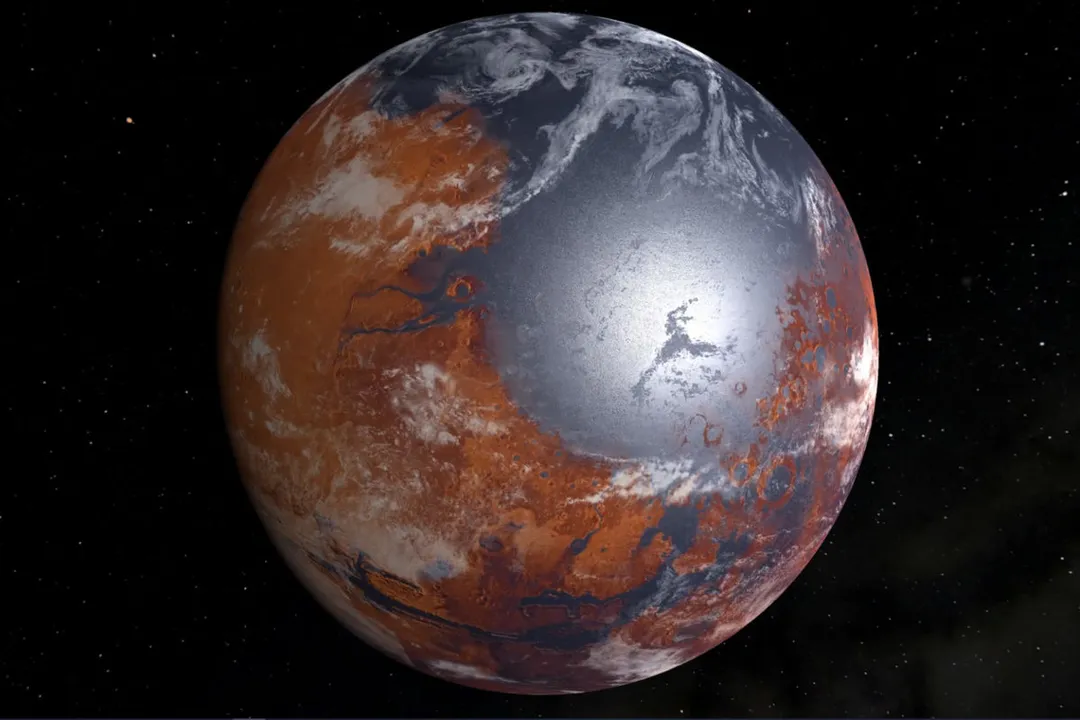
The evidence affirming that water, in nearly every state—flowing liquid, frozen ice, and chemically bound mineral—has existed and continues to exist on Mars is now substantial, moving far beyond the early fantasies of canals built by intelligent Martians. While Mars today appears as a cold, desiccated desert, vast stores of water remain hidden or locked away, painting a picture of a dynamic, once-wet world that evolved dramatically over billions of years.
# Ancient Rains and Seas
Astronomers observing Mars with early telescopes noted the presence of white polar caps that grew and shrank with the seasons, suggesting at least some water existed as snow or ice, though the exact amount was unknowable. However, the true scale of ancient Martian water became apparent through geological imaging from orbiters like the Mars Global Surveyor (MGS).
Orbital images revealed geological landforms that strongly suggest massive, flowing water events in the distant past. Features like outflow channels, valley networks, and structures resembling deltas and riverbeds indicate that water once coursed across the surface, perhaps even forming large bodies of water. Some findings suggest that a large, persistent body of saltwater may have covered parts of the planet, perhaps akin to a terrestrial salt flat. Scientists estimate that if all the ancient water were spread evenly across the planet, it could equate to a Global Equivalent Layer (GEL) between 600 and 2,700 meters deep—vastly more than what is measurable today.
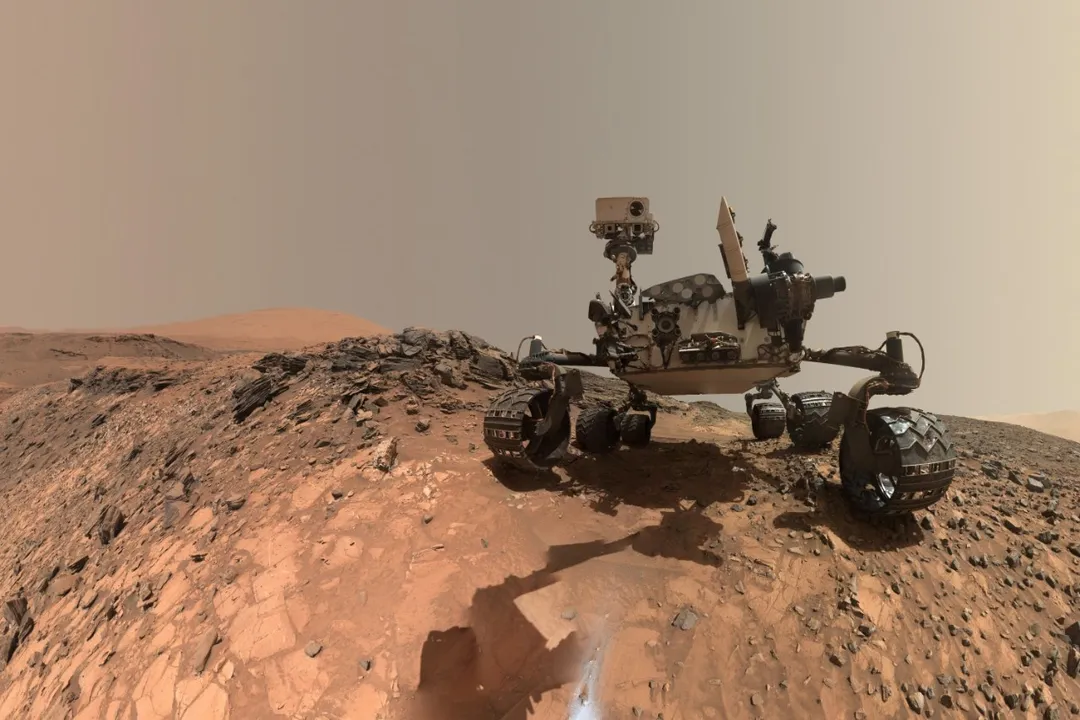
The rovers Spirit and Opportunity provided ground truth for these orbital observations. Opportunity, exploring Meridiani Planum, found evidence in the rocks themselves. It analyzed rocks containing abundant salts that, on Earth, form in water or are heavily altered by it. Another crucial piece of evidence came in the form of small, spherical mineral grains nicknamed "blueberries." These spherules, identified as containing the mineral gray hematite, typically form when minerals concreate within once-wet sediments, not from volcanic or impact events. Furthermore, Opportunity found sedimentary rocks etched with sinuous ripples, a signature of sediment laid down by shallow, moving water, leading scientists to suggest the rover was parked on what was once an ancient shoreline.
The evidence extends to more subtle features as well. Images from MGS showed steep slopes with erosion comparable to what groundwater discharges and surface runoff create on Earth. While some alternative theories suggested liquid carbon dioxide might have caused this erosion, the concurrent detection of hematite—a mineral strongly associated with an aqueous environment—bolstered the case for a wet past. Even more recently, analysis of ancient sand dunes in Gale Crater, explored by the Curiosity rover, showed they gradually turned into rock after interacting with underground water, leaving behind minerals like gypsum billions of years ago. This shows the transition from a wet to a dry planet was not instantaneous; small amounts of water continued to seep underground long after surface lakes disappeared.
# Signs of Flow Today
While the surface environment today is far too cold and the atmosphere too thin for stable surface water, compelling evidence confirms that liquid water does flow intermittently on present-day Mars, albeit in small quantities. This evidence comes in the form of Recurring Slope Lineae (RSL).
These RSLs are dark, narrow, finger-like streaks that appear on steep slopes, often darkening and flowing downhill during the warmer Martian spring and summer, only to fade in the winter. First spotted by the HiRISE camera on the Mars Reconnaissance Orbiter (MRO), these features recur in the same locations across multiple Martian years. The hypothesis that RSLs are caused by flowing water was strongly corroborated when MRO’s spectrometer detected hydrated salts—specifically perchlorates like magnesium perchlorate—on these slopes when the streaks were most prominent. On Earth, salts act as antifreeze, lowering water's freezing point, which is the likely mechanism allowing these brines to flow on the frigid Martian surface. Some perchlorates can keep liquids unfrozen even in temperatures as low as F ( C). This discovery validates the long-held suspicion that water is an active agent on the modern Red Planet, even if it is extremely salty and flows only shallowly beneath the surface.
# The Ice Reserves
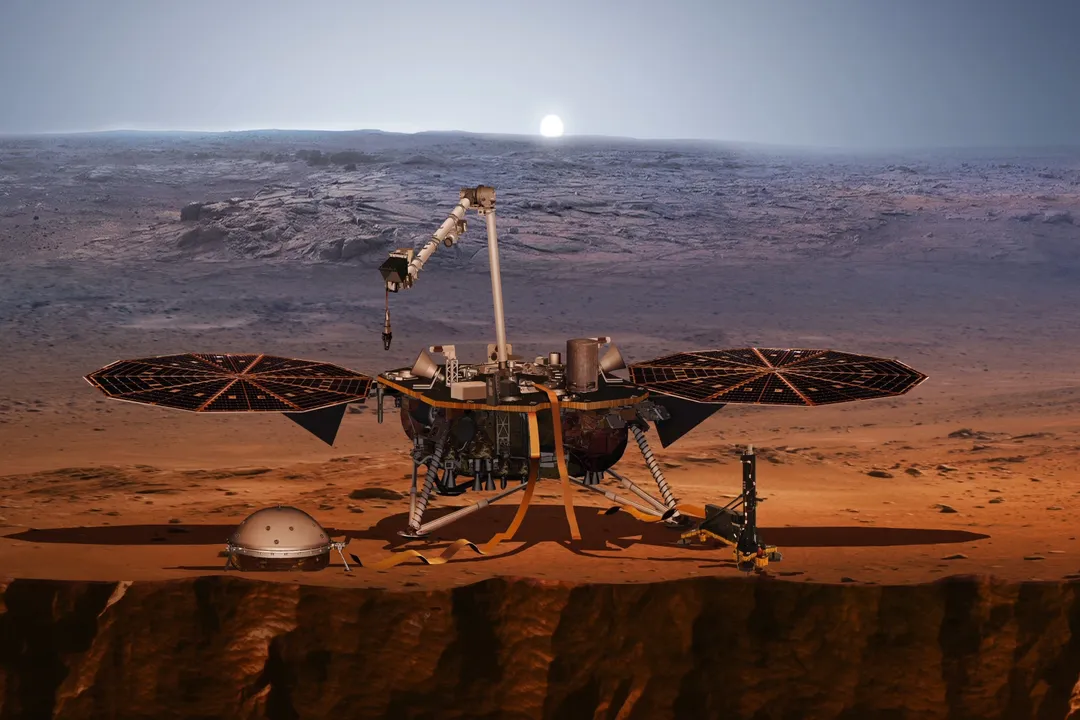
Even as the planet lost its surface water, much of that water was not entirely lost to space. Mars currently holds its water in several reservoirs: a trace in the atmosphere, ice in the polar caps, underground in the subsurface, and chemically locked in minerals.
The most easily observed reservoirs are the polar caps, which contain significant amounts of frozen water mixed with frozen carbon dioxide ("dry ice"). The Phoenix lander in 2008 provided direct confirmation when it scraped away about two inches of dry dirt at north latitude and uncovered whitish water ice, which immediately sublimated upon exposure to the thin air and sunlight. Scientists calculate that the measurable global total of Martian water today, mostly in the caps, is equivalent to a 30-meter GEL. In addition to the poles, ice is expected to be layered underground, though deeper (upwards of a kilometer) in warmer equatorial regions.
# The Hidden Oceans
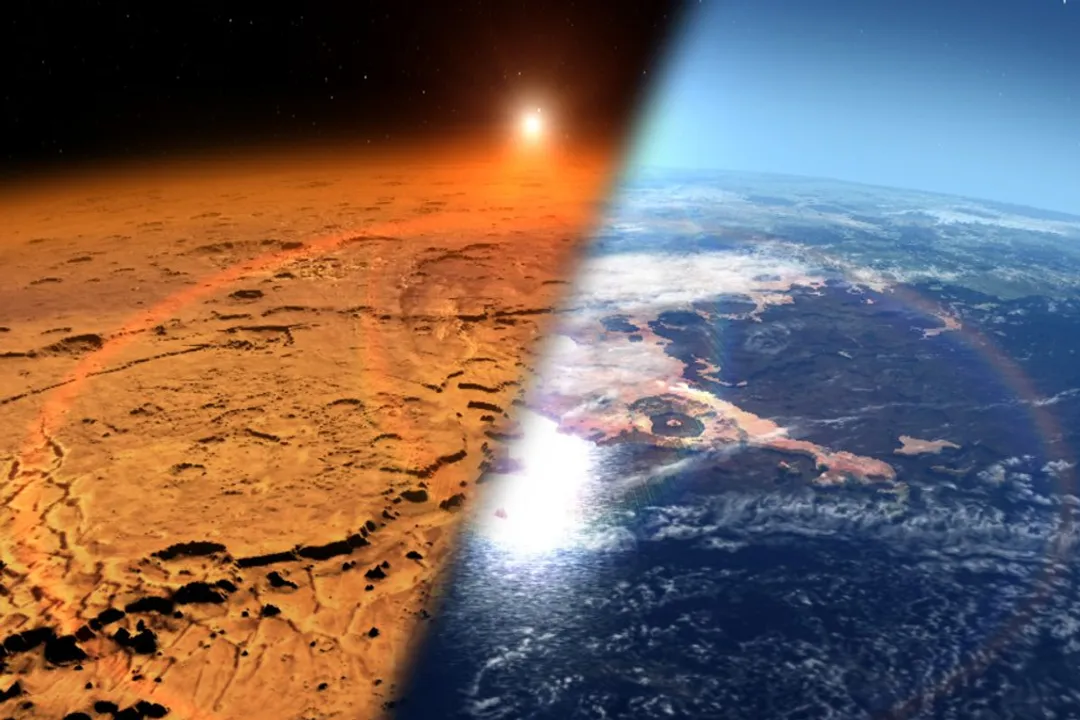
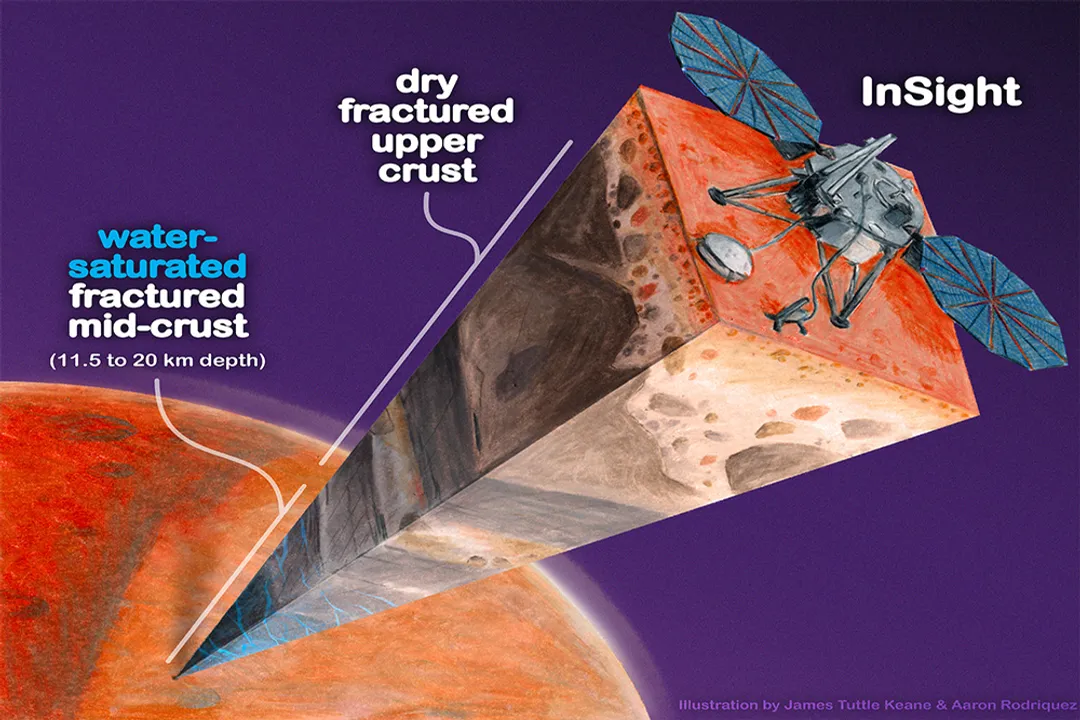
Perhaps the most surprising evidence for water relates not to the past, but to a massive, currently liquid reserve hidden deep within the planet's interior. By analyzing seismic activity—or Marsquakes—recorded by NASA's InSight lander, geophysicists were able to map the planet's interior structure.
The analysis concluded that the seismic wave patterns were best explained by a zone of fractured igneous rock saturated with liquid water in the mid-crust, located between roughly 11.5 and 20 kilometers (7 to 13 miles) below the surface. This deep zone, sealed off by the overlying cryosphere (the global layer of permanently frozen ground), is estimated to hold enough water to cover the entire planet in an ocean 1 to 2 kilometers deep. If this structure is globally representative, this underground reservoir contains more water than the volume previously hypothesized to have filled Mars's ancient surface oceans.
This finding provides a compelling answer to the question of where the water went when the surface dried up. Rather than all of it escaping into space after the magnetic field faded, a significant portion filtered down through the crust over billions of years. This geological locking mechanism is a stark contrast to Earth, where plate tectonics cycles water back to the surface. The presence of this deep liquid water means that, despite the planet’s overall coldness, it may have maintained habitable environments for microscopic life far longer than surface conditions would suggest.
A particularly interesting aspect of this deep water discovery is how it forces a refinement of our understanding of the Martian hydrological cycle. The surface layer remains dry because solar heating causes near-surface ice to sublimate directly into vapor, leading to desiccated soil. However, the existence of a massive, pressurized liquid reservoir underneath a kilometers-thick cryosphere suggests that Mars evolved into a planet where water is not lost through runoff and evaporation, but rather through slow, deep sequestration, only accessible through major geological breaches like deep impacts or volcanism. This deep hydrological trap is a testament to how physical state—liquid versus gas—is dictated not just by temperature, but by pressure gradients within a planetary crust.
# Implications for Life and Future Search
The confirmation of ancient surface water and the discovery of current liquid water drastically alters the prospects for finding life, past or present, on Mars. Water, along with heat, is fundamental for life as we understand it.
For past life, the mineral evidence left behind is key. Since minerals like gypsum formed through interaction with underground water can trap and preserve organic material, ancient, desiccated sedimentary layers are prime targets for finding fossilized microbial life. This supports the mantra that scientists must "follow the water" when searching for biosignatures.
For present life, the newly confirmed deep liquid reservoir presents a potential habitat protected from surface sterilization by cosmic rays and extreme cold. On Earth, microbes thrive deep underground in similar conditions. This means the search focus must shift: while surface missions seek ancient fossils, accessing that deep water—a task requiring technology far beyond current drilling capabilities for a 12-kilometer depth—would allow sampling of a potentially contemporary biosphere. The identification of a habitable zone deep within the crust provides a clear, if challenging, target for future subsurface exploration.
| Water State/Location | Primary Evidence Source | Estimated State/Quantity | Implication |
|---|---|---|---|
| Ancient Surface | Outflow channels, sedimentary rocks, hematite | Vast oceans/rivers (600–2,700m GEL) | Confirms warm, wet, habitable past |
| Modern Surface | Recurring Slope Lineae (RSL) | Intermittent, shallow flows of brine | Confirms modern presence of liquid water (salty) |
| Polar/Subsurface Ice | Polar caps observations, Phoenix lander | Frozen water ice | Largest measurable water reservoir (30m GEL) |
| Deep Subsurface | InSight Lander Seismology | Massive liquid reservoir in mid-crust | Potential sustained habitat for life |
As scientists piece together the story of Mars—a planet once like early Earth but which lost its protective magnetic field—the evidence overwhelmingly points to water playing a central role in its history and current structure. The quest is no longer if there was water, but where it is now, and whether that remaining water supported life that adapted to survive the planet’s dramatic environmental shift.
Related Questions
#Citations
NASA Confirms Evidence That Liquid Water Flows on Today's Mars
Scientists find oceans of water on Mars. It's just too deep to tap.
Water - Mars Education | Developing the Next Generation of Explorers
Geologists Discover Water Once Flowed on Mars | AMNH
Scientists have discovered a reservoir of liquid water on Mars - Reddit
Scientists Release Evidence of Water on Mars | Research Starters
Mars may host oceans' worth of water deep underground
Evidence of Ancient Underground Water Reveals Mars May Have ...