What evidence did Spirit and Opportunity find on Mars?
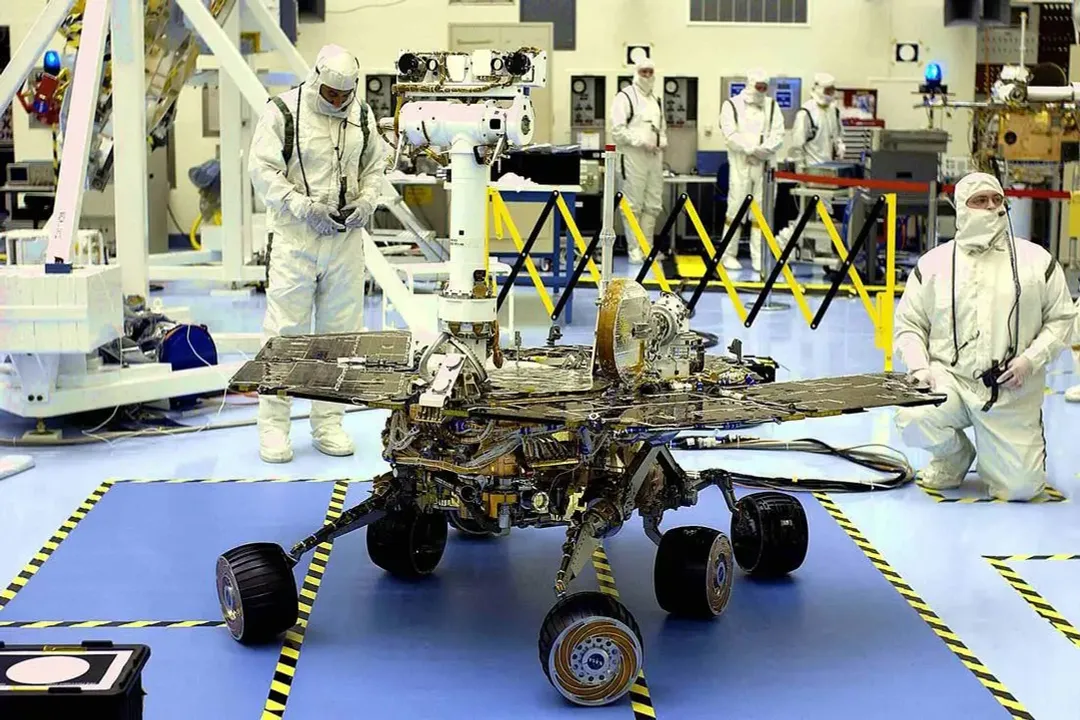
The Mars Exploration Rovers, Spirit and Opportunity, were robotic emissaries sent to the Red Planet with a singular, driving scientific question: did Mars ever have liquid water flowing on its surface? The answer, delivered through years of painstaking chemical analysis and panoramic imaging from two distant worlds, was a resounding and multifaceted yes. These two rovers, launched in 2003, were designed for a 90-sol mission, yet they fundamentally reshaped our understanding of Martian history, operating for years longer than anticipated and uncovering geological records far richer than mission planners dared to hope. Their discoveries pointed not just to water, but to a dynamic past involving different chemical environments, from acidic surface flows to potentially warm, long-lived water systems.
# Landing Sites
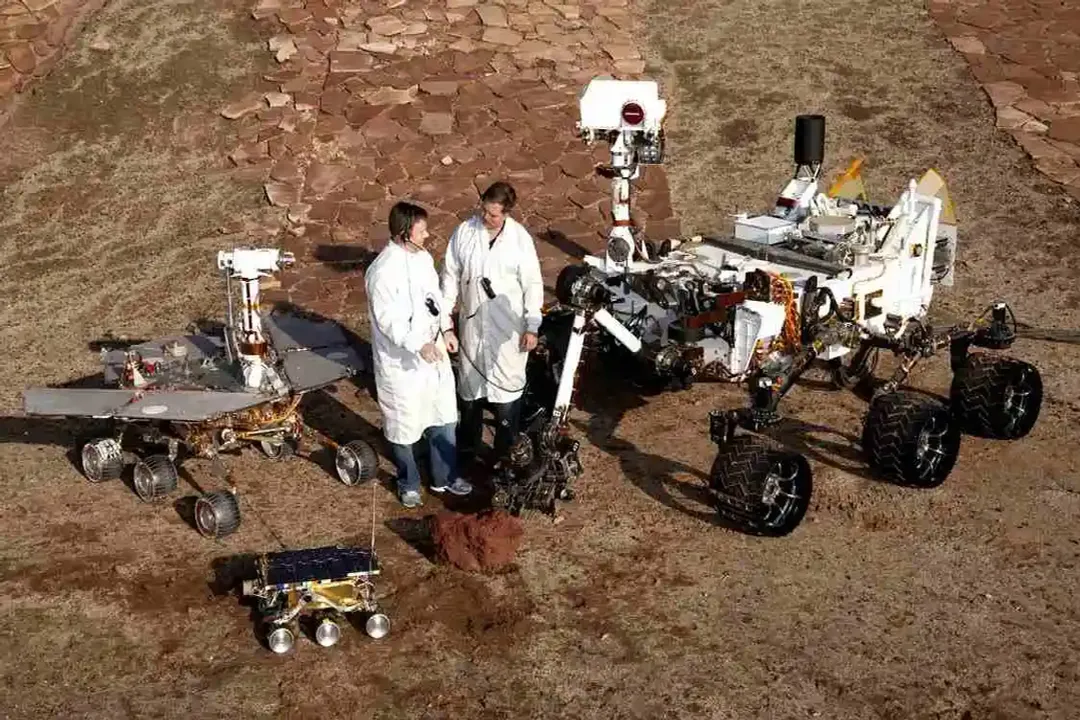
Spirit landed in Gusev Crater, a large impact basin thought by some scientists to have once held a lake. Opportunity touched down much farther west, on Meridiani Planum, a relatively flat plain near the equator. The initial photographic evidence upon landing was striking. Spirit immediately began investigating features that suggested ancient water activity, such as rounded pebbles embedded in the soil.
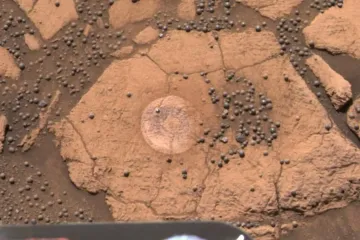
Opportunity’s landing site provided an equally compelling, though different, narrative. The first images showed the rover resting near small, spherical concretions of iron oxide, which quickly earned the nickname blueberries. These formations, along with clear layering in the surrounding rock outcrops, immediately signaled a radically different geological setting than what Spirit was encountering. The mission planners had prepared for the possibility of arriving at two distinct types of ancient water environments, and the rovers delivered exactly that contrast.
# Spirit's Findings
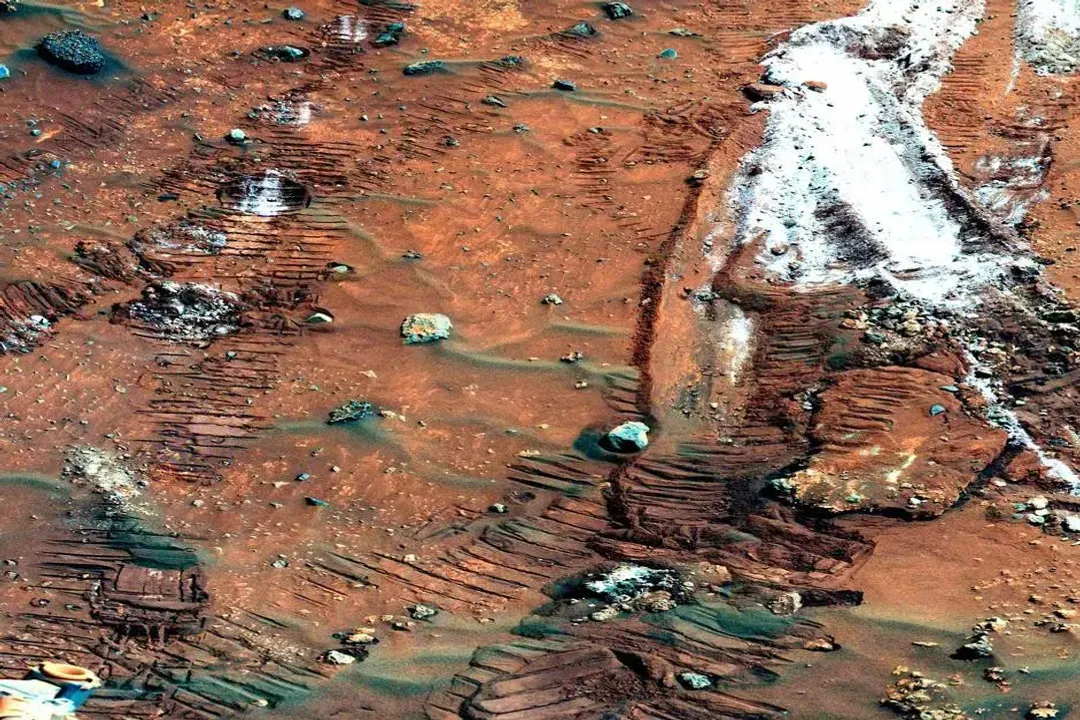
Spirit spent most of its mission exploring the foothills of the Columbia Hills within Gusev Crater. Its primary geological revelations centered on evidence suggesting past hydrothermal activity. One of the most significant discoveries involved the identification of a specific type of rock called opaline silica. On Earth, opaline silica deposits are often associated with hot springs or geothermal features where water interacts with rock over time. Spirit found these deposits in abundance, particularly near the area known as the Home Plate plateau.
This finding suggested that Gusev Crater once hosted a sustained, wet environment, perhaps long enough to support the creation of these secondary minerals, indicating warmer conditions than simple surface runoff might provide. Spirit also confirmed that some of the rocks it examined had been exposed to liquid—and the presence of sulfates in the soil pointed toward acidic water having been present at some point. The rover’s instruments, like the Alpha Particle X-ray Spectrometer (APXS) and the Miniature Thermal Emission Spectrometer (Mini-TES), were crucial in chemically characterizing these rocks and soils, moving science past mere visual confirmation to actual composition analysis.
# Opportunity's Water Trail

Opportunity’s story is one of an epic traverse, covering more than 25 miles over its nearly 15-year operational life, far exceeding its planned 373-meter driving goal. Its initial investigation of Meridiani Planum focused on hematite spherules—those small, grey, BB-like beads—embedded in the sandstone. These spherules are known on Earth to form in the presence of liquid water, often through groundwater processes that cause minerals to precipitate out of solution around a nucleus. This was compelling evidence of past water activity on the plain.
As Opportunity traveled, it found increasingly clear evidence of flowing water. When it reached Endurance Crater, the rover looked at the exposed cross-section of the crater walls, revealing distinct, thick layers. These layers, which looked like sedimentary bedding, strongly indicated deposition by flowing water, much like riverbeds or ancient shorelines here on Earth. Further along its route, specifically at Victoria Crater and later Endeavour Crater, Opportunity observed even clearer stratification and cross-bedding patterns, confirming that the area was subject to significant sedimentation by liquid water over geological timescales. The minerals identified, such as jarosite, further suggested that this water was quite acidic and salty when Opportunity was analyzing the rock record.
# Mineral Signatures

The chemical analysis performed by both rovers painted a detailed picture of the ancient water chemistry, which varied significantly between the two landing sites.
| Mineral/Feature | Rover Association | Implication for Water | Source Context |
|---|---|---|---|
| Opaline Silica | Spirit | Suggests sustained, potentially warm/hydrothermal water activity. | Likely formed underground or in long-lived hot springs. |
| Hematite Spherules | Opportunity | Formed via groundwater/surface water interaction in an arid setting. | Evidence of past aqueous alteration. |
| Jarosite | Opportunity | Indicates the presence of highly acidic, sulfate-rich water. | Suggests surface water weathering was common at this location. |
| Clay Minerals (Phyllosilicates) | Both (more complexly studied later) | Formed in neutral or near-neutral water environments. | Suggests an earlier, milder aqueous epoch existed on Mars. |
It is fascinating to compare the water environments suggested by the two rovers. Spirit’s setting implied a warmer, possibly geothermal history, indicative of sustained interaction over time within the Gusev structure. Conversely, Opportunity’s findings suggested episodic, acidic, and salty surface water flows across Meridiani Planum. The presence of sulfates, especially jarosite, which requires a highly acidic environment to form, contrasts sharply with the conditions needed for clays, which form in more benign, neutral water. The fact that both rovers found evidence of water, but pointing to different chemistries and settings, suggests Mars wasn't just wet once; it went through multiple, distinct aqueous phases across its surface history. This layered chemical record is like reading two completely different chapters of the planet’s autobiography side-by-side.
# Engineering Triumph
While the science was the primary objective, the sheer endurance of Spirit and Opportunity borders on legendary engineering success. Spirit was intended to last 90 Martian sols (sols are Martian days) and lasted over 2,200 sols, traveling about 4.8 miles. Opportunity shattered all records, operating for almost 15 years and covering a distance of approximately 26.2 miles (42.15 kilometers). This incredible distance, more than a full marathon, speaks volumes about the quality of the engineering and the sheer luck involved in their landing sites and subsequent navigation.
Thinking about that longevity reveals an interesting metric often overlooked: the ratio of data returned versus expected operational time. If Spirit only managed 2,200 sols when budgeted for 90, that is over a 24-fold life extension. For Opportunity, which was similarly budgeted for 90 sols, the extension to nearly 5,500 sols is an over 60-fold increase in operational lifespan. This margin of success allowed the science teams to take chances, drive into craters, and pursue leads that would have been impossible under the original, tight mission parameters. The mission engineers deserve credit not just for building durable hardware, but for adapting operational procedures on the fly to manage dust accumulation and power fluctuations over so many years.
# Endings and Legacy
Spirit’s end came in 2010 after it became permanently stuck in soft soil at a location dubbed Troy. Despite persistent efforts to free it, the rover eventually succumbed to dust accumulation blocking its solar panels, leading to a final loss of communication in 2011.
Opportunity, however, met a more dramatic end. In June 2018, a massive, planet-enveloping dust storm engulfed Mars, blocking out the sun and cutting off the rover’s primary power source. Mission control waited patiently for the storm to clear, hoping the batteries would recharge, but Opportunity never sent another signal. Its final transmission was recorded on Sol 5,352.
The collective scientific output from these twin missions fundamentally altered Mars exploration strategy moving forward. They provided empirical proof that liquid water once existed in multiple forms across the Martian surface, setting the stage for subsequent missions, like Curiosity and Perseverance, to look for signs of habitability—the conditions necessary for life. The evidence they painstakingly collected—the layers, the minerals, the chemical signatures—established Mars as a world with a complex, wet, and dynamic past, far removed from the cold, dry desert it appears to be today. Their findings, summarized through images like the famous "blueberries" and the layered cuts in the crater walls, remain foundational texts in planetary science.
Related Questions
#Citations
Mars Exploration Rovers: Spirit and Opportunity - NASA Science
Scientific information from the Mars Exploration Rover mission
The Weirdest Mars Discoveries by Opportunity and Spirit Rovers
Mars Rovers Spirit, Opportunity Exceeded Expectations
Inside the Mars Rover Missions – NSS - National Space Society
Mars Exploration Rover | Facts, Spirit, & Opportunity - Britannica
The greatest discoveries from NASA's Mars Opportunity Rover
Mars rover retrospective