What is the evidence of past water on Mars?
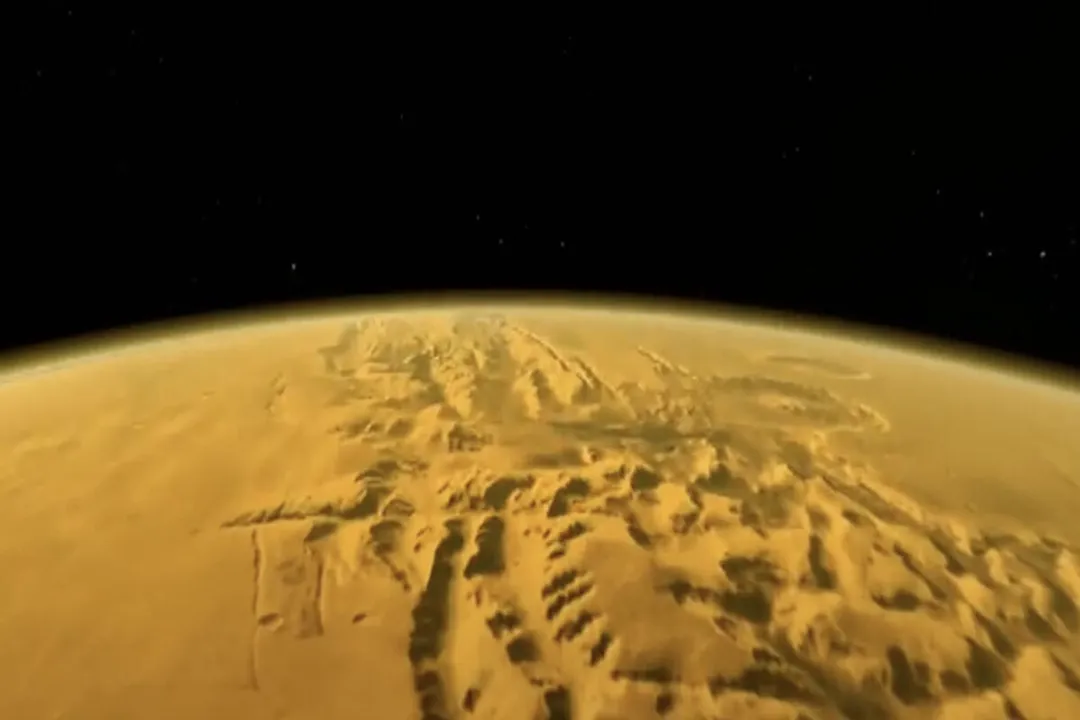
The question of Mars’s hydrological past has captivated scientists for decades, evolving from speculation about faint polar caps to concrete proof of extensive, flowing water across the planet’s surface and deep within its crust. Initial observations hinted at a dynamic, wet environment long ago, a stark contrast to the cold, arid world we see today. Now, the evidence is overwhelming, painting a picture of a planet that once held surface rivers, lakes, and perhaps even vast, deep oceans, with tantalizing suggestions that liquid water persists even now. [7][4]
# Ancient Surface Signs
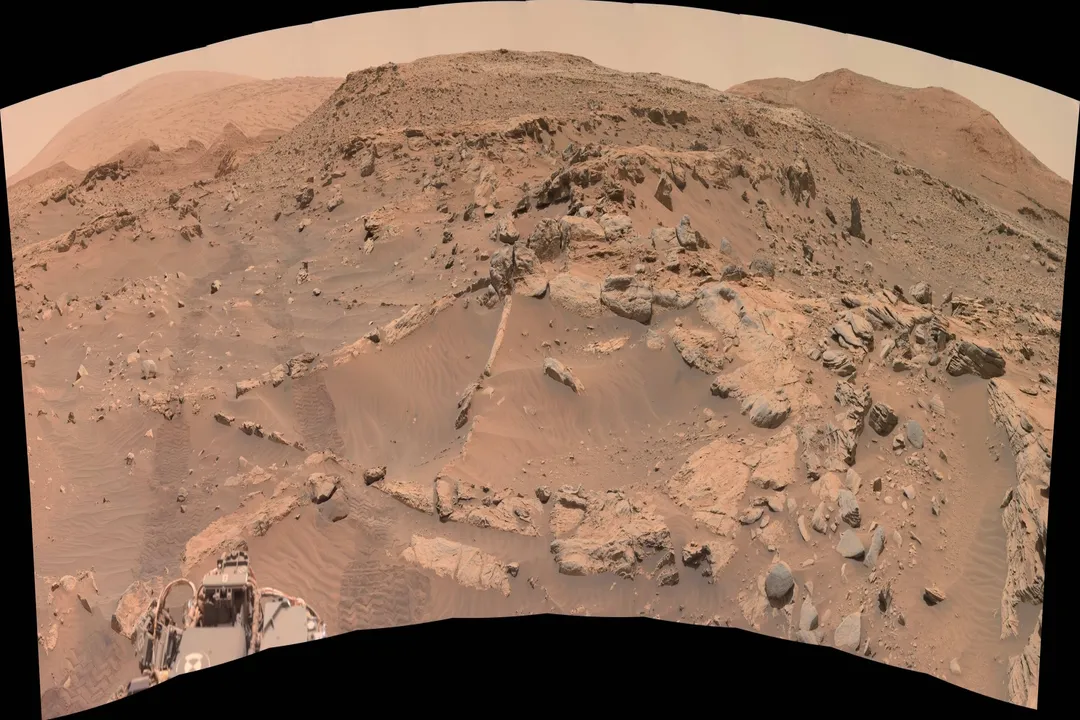
The most evocative evidence points to Mars having a significantly warmer and wetter history billions of years ago. [8] Geologists interpret numerous surface features as signatures of ancient fluvial processes—the work of flowing water. [7] Ancient stream beds, deltas, and channel networks scar the Martian landscape, features that on Earth are undeniably sculpted by liquid water carving paths through rock and soil. [5] These systems suggest a planet where water once gathered, flowed across the surface, and pooled in basins before either escaping to space or sinking into the ground. [8]
For instance, features previously ambiguous—perhaps even attributed to slow-moving lava flows—are now being re-examined and identified specifically as evidence of water-transported sediments. [9] The US Geological Survey has noted that many features once considered grainflows—sediments moved by wind or gravity—are now better explained as products of water activity. [9] This recalibration of geological interpretation across the board strengthens the case for a pervasive hydrological cycle in Mars's past. [9]
# Vast Subsurface Water
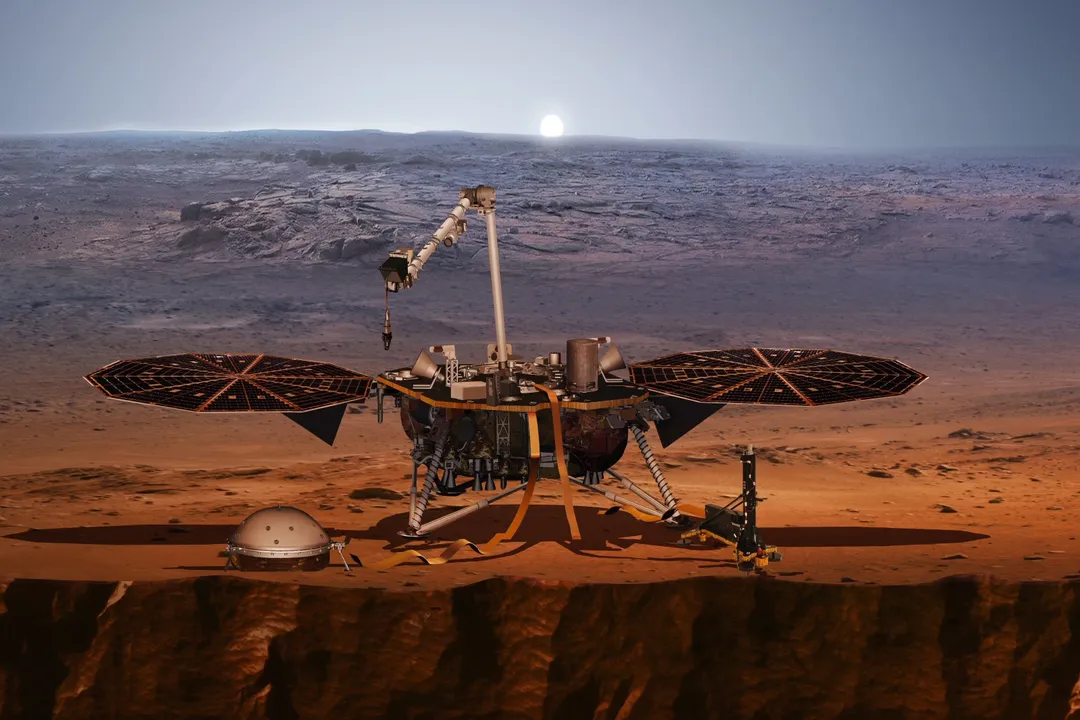
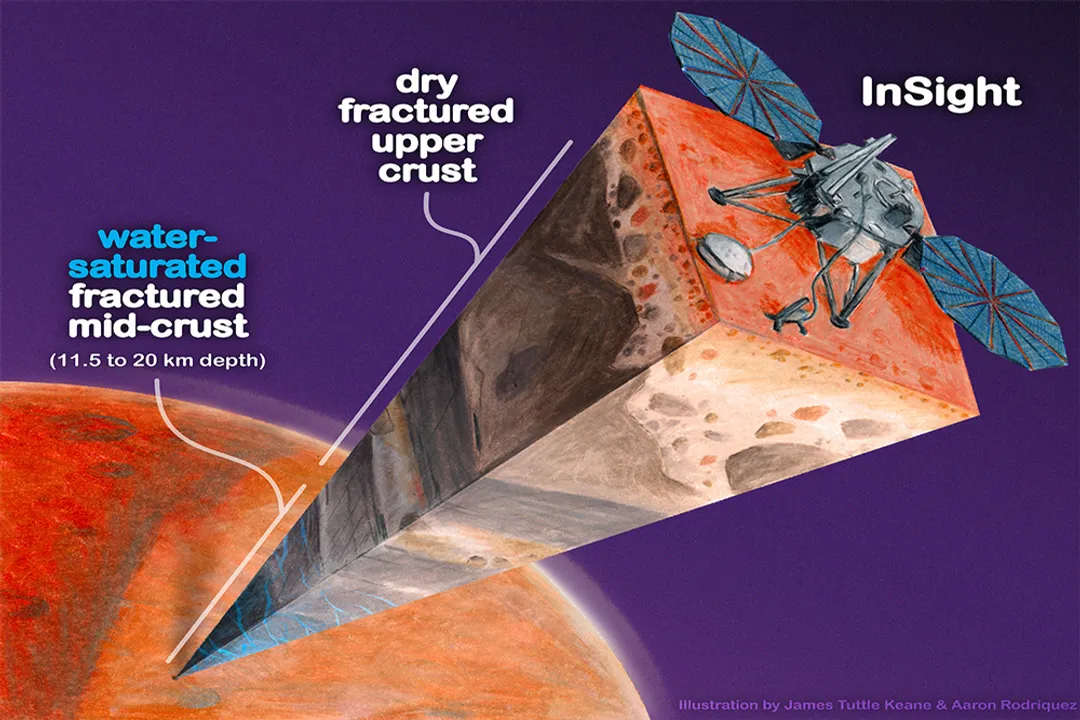
While surface evidence establishes ancient streams, deeper investigations suggest the scale of past water might have been far grander. Modern research indicates the presence of enormous, ancient reservoirs located deep beneath the planet’s surface. [2] These massive stores, potentially equivalent to large terrestrial seas or even oceans, are locked away far below the ice caps or within the crust itself. [2]
This deep water is not merely a remnant of ancient puddles; it represents volumes so significant that they challenge our understanding of Mars's climatic evolution. [3] Scientists hypothesize that this water accumulated underground, perhaps insulated from the harsh surface conditions that caused the atmosphere to thin and the surface water to evaporate or freeze. [3] The existence of such deep, substantial water systems implies that the transition from a wet Mars to a dry one was not simply a matter of surface loss, but also involved a massive sequestration of resources below the regolith. [2][3] Thinking about the sheer volume required to fill oceans—even if they existed for only a short geological time—puts the scale of water loss into perspective. If Earth’s oceans were poured onto Mars, they would only cover a fraction of the planet, but the deep reservoirs indicated by current research suggest Mars once held a truly significant amount of its own. [2]
# Modern Liquid Confirmation
The narrative of Mars as entirely frozen today has also been complicated by direct, modern observations. NASA confirmed evidence indicating that liquid water flows on present-day Mars, albeit not in the form of vast rivers or lakes. [1] This water is currently present in the form of briny flows, specifically related to recurring slope lineae (RSL) observed on Martian slopes. [1]
The mechanism involves highly concentrated salt solutions, or brines, which have a lower freezing point than pure water, allowing them to remain liquid even in the cold Martian environment. [1] These flows are transient, appearing seasonally or cyclically, and are crucial because they represent active water, not just ice or ancient residue. [1] While the volume is small—evaporating or soaking into the ground relatively quickly—the fact that water is cycling in liquid form today is a monumental finding, suggesting that the Martian subsurface may still harbor conditions conducive to liquid states. [1]
This distinction between the ancient, voluminous surface water and the modern, ephemeral brines is key to understanding the planet's full hydrological timeline. The ancient periods were likely characterized by stable, planet-wide liquid conditions; today, the stability is gone, forcing water into concentrated, transient states governed by temperature and salt content. [5][1]
# Geological Feature Reassessment
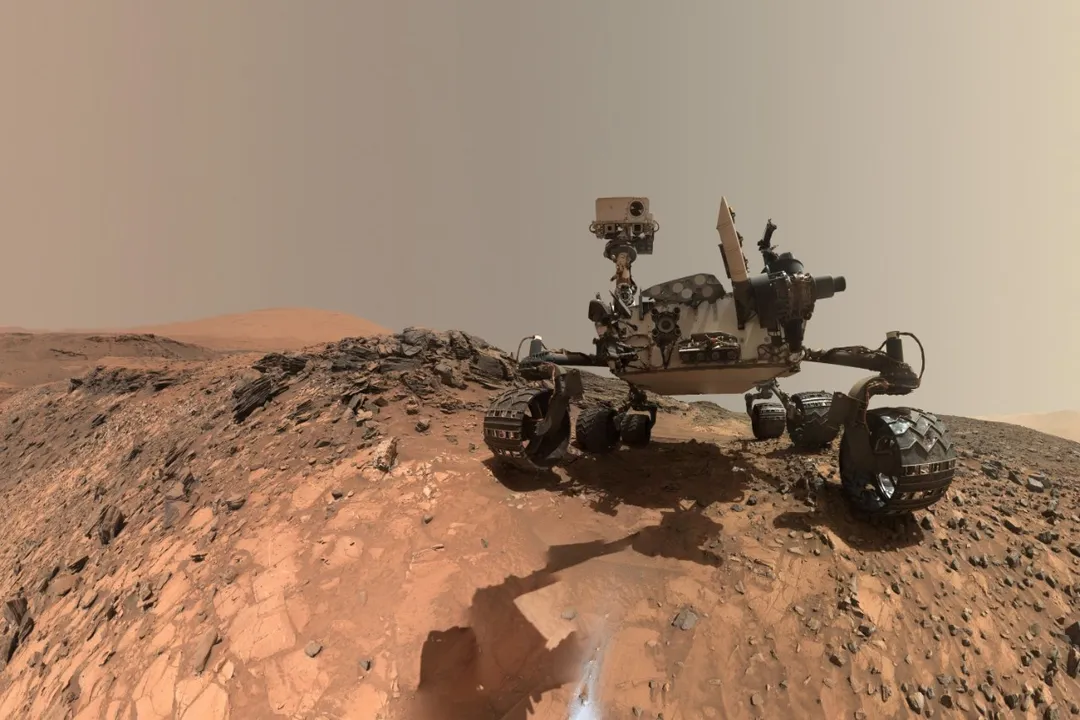
The ability to distinguish between different geological transportation mechanisms has dramatically advanced our understanding of past water distribution. One of the critical areas of reassessment involves ancient flow deposits. [9] Features identified in ancient Martian terrains, which might have been formed by the movement of dry granular material downhill, are now being re-interpreted. If these features were grainflows driven by wind, they suggest arid conditions at that time. However, if they are actually water-lain deposits, they pinpoint specific epochs and locations where saturation and flow were dominant forces. [9]
The ongoing analysis of sediment transport mechanisms—be it wind, lava, or water—is fundamental to dating and characterizing different wet periods on Mars. [5] For example, understanding the difference between a muddy debris flow (water-driven) and a dry avalanche (wind/gravity driven) helps map out when the planet could support surface moisture versus when it was too cold or the atmosphere too thin. [9] This detailed geological forensics allows scientists to build a more precise chronology of when and where water was abundant enough to radically reshape the surface. [8]
# Synthesis and Implications
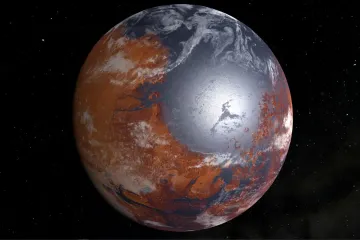
When synthesizing the findings, we see a dramatic arc: a geologically active, wet past featuring surface rivers and potentially global oceans locked deep underground, leading to a current state where liquid water exists only temporarily in highly localized, briny seeps. [2][3][1] The sheer contrast between the evidence for ancient, stable liquid environments and the modern, unstable flows suggests a catastrophic, rather than gradual, transition to the current climate. [8] The deeper oceans likely represent the largest surviving repository of that original water mass, possibly providing a localized environment where subsurface microbial life could persist today, shielded from surface radiation. [3]
Another way to view this accumulation of data is through the lens of comparative planetary science. If we look at the initial reports from the mid-2010s confirming recurring slope lineae as brine flows, [1] we can see how quickly scientific consensus adapted. In less than a decade, the focus shifted from "Did water ever exist?" to "How much water existed, where is it now, and is any of it still liquid?" This rapid refinement, driven by missions like those managed by NASA, demonstrates the accelerating pace of discovery in planetary exploration. [1][6] The historical record on Earth often relies on deciphering sedimentary rocks over millions of years; on Mars, new orbiter data can immediately shift the interpretation of entire terrains, offering a near-real-time scientific debate on a planetary scale. [7] The search is no longer just for evidence of water, but for the habitable windows that water created, both past and present. [5]
Related Questions
#Citations
NASA Confirms Evidence That Liquid Water Flows on Today's Mars
Scientists find oceans of water on Mars. It's just too deep to tap.
Evidence of ancient underground water reveals Mars may ... - Phys.org
Scientists Release Evidence of Water on Mars | Research Starters
Water - Mars Education | Developing the Next Generation of Explorers
The day scientists found evidence of water on Mars - ABC News
Geologists Discover Water Once Flowed on Mars | AMNH
Evidence of Ancient Underground Water Reveals Mars May Have ...
Previous Evidence of Water on Mars Now Identified as Grainflows