Has liquid water ever existed on Mars?
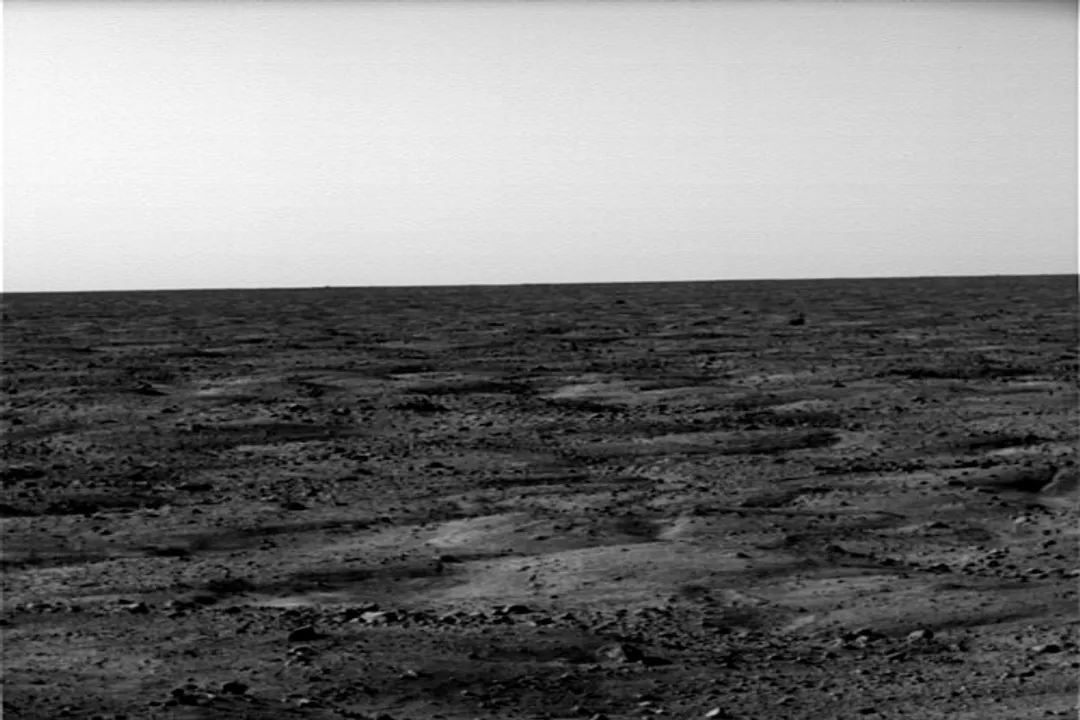
The evidence is overwhelming that Mars was once a far wetter world than the cold, arid planet we see today. Ancient geological formations scattered across the Martian surface—features like ancient riverbeds, extensive deltas, and the dried-out remains of large lakebeds—paint a picture of a time when liquid water flowed freely, collecting in vast basins and perhaps even forming oceans. [1] This isn't just speculation based on erosion patterns; the scale of these features suggests a substantial, planet-altering hydrological system was once active. [1]
# Ancient Water Worlds
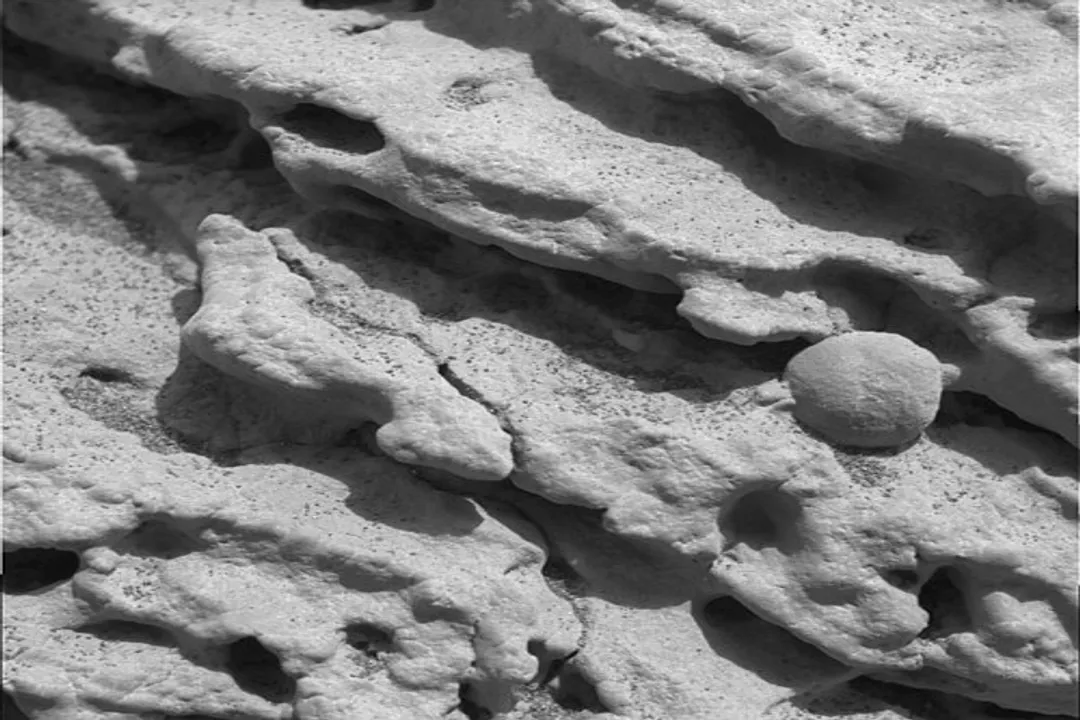
Billions of years ago, Mars possessed an atmosphere thick enough and temperatures warm enough to support stable bodies of surface water. [1] This liquid water phase is critical because, on Earth, water is the fundamental ingredient for life as we know it. Seeing the clear signatures of massive, long-lived water systems radically shifts our perspective on the planet's early habitability. [6] While the exact extent of the ancient oceans remains debated, the presence of water-formed minerals and sediments provides geological proof that liquid water was a dominant agent shaping the landscape for significant periods. [1]
What’s fascinating is that the timeline for this watery past appears longer than previously assumed. New studies suggest that large-scale liquid water persisted on Mars for a much longer duration than earlier models predicted. [6] Instead of drying up quickly after the planet lost its protective magnetic field, water may have continued to flow, perhaps in smaller, localized systems, for a billion years longer than previously thought, surviving in sheltered areas or the subsurface. [6] This extension of the wet period into a later epoch raises the potential window for microbial life to have taken hold, assuming the other necessary chemical ingredients were also present. [6]
# Climate Transformation
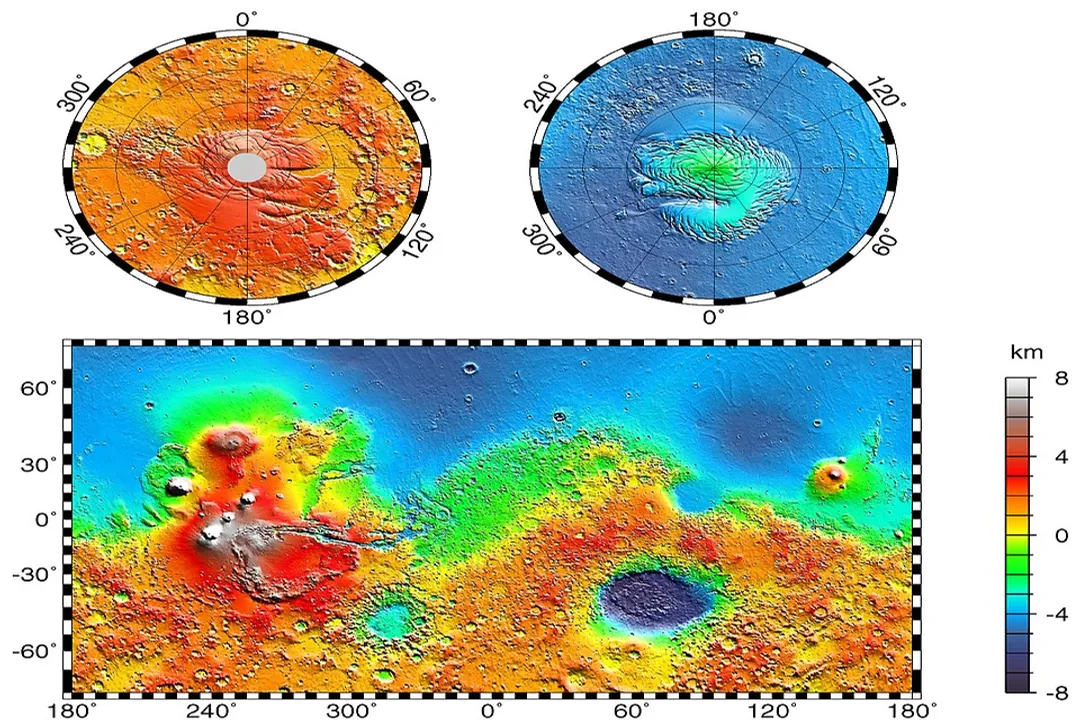
The shift from a wet, potentially warm Mars to the frozen desert of today involved a catastrophic loss of atmosphere and a resulting drop in surface temperatures and pressure. [1] When the pressure drops too low, pure liquid water cannot exist stably on the surface; it either freezes instantly or sublimates—turning directly from ice into water vapor without passing through a liquid phase. [1] This fundamental physical constraint explains why we don't see Earth-like rivers running across the plains today. [1]
However, the planet is not entirely static. Scientists have worked hard to understand how liquid water might exist now, given the current hostile conditions. The breakthrough came with the confirmation that water, in some form, is active on the surface even in the modern era. [2] This confirmation moved the discussion from purely ancient history to present-day processes. [2]
# Present Surface Streaks
The most compelling evidence for contemporary liquid water involves dark, finger-like streaks observed flowing down slopes, known as Recurring Slope Lineae (RSLs). [2] These features appear seasonally and fade away, suggesting a transient presence of liquid moisture tied to seasonal temperature changes. [2] The observation of RSLs has led NASA to confirm evidence that liquid water does indeed flow on present-day Mars. [2]
These streaks are not massive torrents; they are thin flows, perhaps only millimeters deep. [2] Their appearance and disappearance strongly suggest that a liquid agent is responsible for the etching on the Martian surface. [2] If we chart the known periods of surface water activity, we see a timeline that spans from the ancient past, evident in rocks and valleys, to these very recent, seasonal events etched into the regolith. [1][2] When we compare the geological evidence from orbit with the physical observations of RSLs, we see a transition: vast, stable water bodies giving way to ephemeral, localized dampness. [1][2]
# Salty Secrets
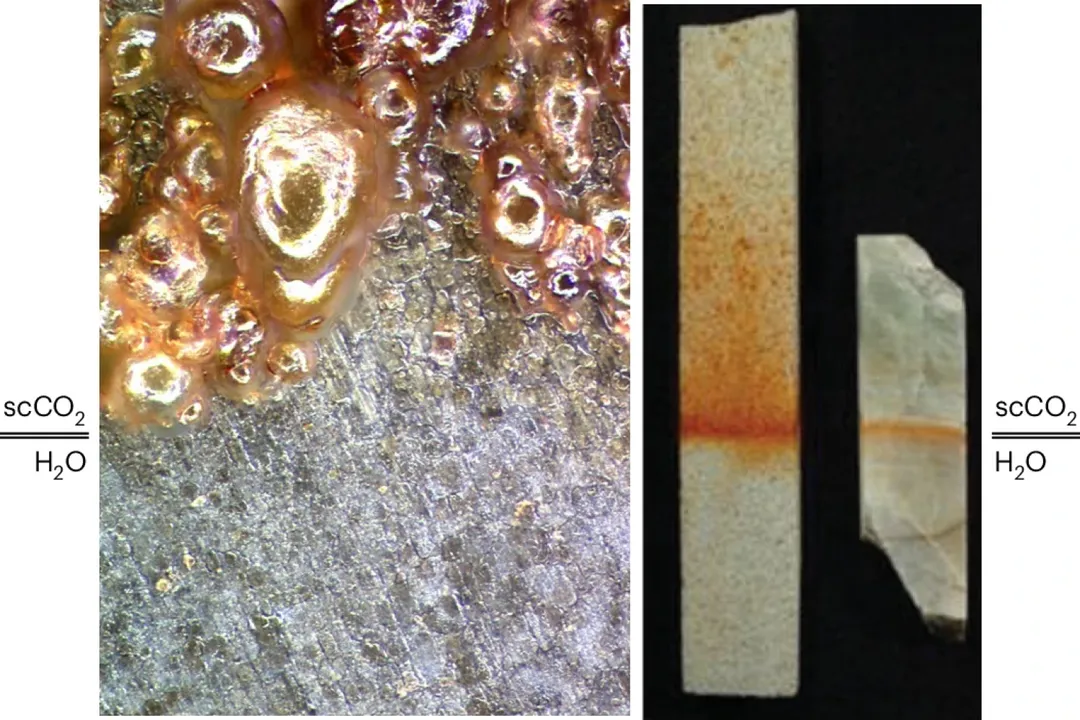
If pure water cannot remain liquid on the Martian surface due to the extreme cold and near-vacuum pressure, then the water observed in the RSLs or other shallow flows must be heavily contaminated. [1][5] This is where the science gets particularly interesting. Pure water would quickly freeze or vaporize, but adding salts—specifically perchlorates—drastically lowers the freezing point of water, allowing it to remain liquid at much colder temperatures. [1][5]
Therefore, the liquid flowing on Mars today is almost certainly brine, a highly saline solution. [1][5] This is a critical distinction for astrobiology. While liquid water is essential for life, the extreme salinity could be detrimental to many terrestrial life forms. [5] However, the existence of brine opens the door to the possibility of extremophile life—organisms adapted to survive in very salty environments, similar to some found in Earth’s harshest places. [5]
For instance, if we were to estimate the salt concentration required to keep water liquid near the equator during a warm Martian afternoon, we might find concentrations high enough to inhibit many known microbial processes, yet low enough for some salt-tolerant organisms to function. [5] The water that flowed in the ancient past, perhaps less salty, likely offered a much more permissive environment for life to begin. [1]
# Deep Ice Holds
While the RSLs represent surface activity, perhaps the largest reservoirs of modern Martian water are hidden from direct view. Much of the planet's water is locked up as ice in the polar ice caps and scattered just beneath the surface globally. [1][9] The potential for larger, more stable bodies of liquid water lies deep underground, insulated from the harsh surface environment. [3][8]
Using orbiting radar instruments, scientists have detected radar reflections beneath the southern polar ice cap that strongly suggest the presence of large, stable bodies of liquid water, possibly situated at the interface between the ice sheet and the bedrock below. [3][8] These underground lakes are likely kept liquid by geothermal heat and the pressure from the overlying ice. [3] Like the surface flows, these deep reservoirs are also hypothesized to be extremely salty, functioning as brine lakes. [3][8]
It is worth noting the difference in evidence quality here: the RSLs are observed visually through their effect on the surface appearance, [2] whereas the deep water is inferred from radar reflectivity, which points to a strong dielectric contrast consistent with liquid water or highly conductive brines. [3][8] This distinction highlights the scientific need to employ multiple lines of evidence when confirming the physical state of water in a hostile environment. These deep, stable pockets of liquid could represent the last refuges for any native Martian biology that managed to survive the planet’s global drying trend. [3]
# Habitability Clues
The persistence of liquid water, whether as transient surface brines or deep subsurface lakes, continually feeds the search for extant or extinct Martian life. [1][9] The question has evolved from Did Mars ever have water? to Where is the water now, and in what state?. [1]
If we consider the vastness of time involved, the fact that liquid water (even brine) has been confirmed to flow on the surface today is a significant finding. [2] It tells us that the ingredients for liquid water are still being cycled, even if infrequently and under extreme conditions. [2] For astrobiologists, the implication is that if life did arise during Mars's wet past, life might still persist today in the liquid zones underground. [3] Any future missions targeting extant life would likely be directed toward these deep, relatively stable liquid environments rather than the ephemeral surface features. [3][8] The ability to confirm these subsurface lakes using radar represents a major technical achievement in planetary science, providing concrete targets that were previously only theoretical possibilities. [3][8]
The historical evidence, spanning billions of years of liquid water existence, shows that Mars was once an analog to early Earth, capable of supporting complex hydrological cycles. [1][6] The current findings—seasonal brine flows and deep subsurface reservoirs—show that Mars is not entirely geologically and hydrologically dead, but rather exists in a state where water is extremely scarce and restricted by pressure and temperature, yet still present in liquid form. [2][3] The scientific endeavor now focuses on probing these liquid pockets to determine if any biological signatures remain or arose there. [5][9]
#Videos
They Finally Found Liquid Water on Mars - YouTube
Related Questions
#Citations
Water on Mars - Wikipedia
NASA Confirms Evidence That Liquid Water Flows on Today's Mars
Scientists have discovered a reservoir of liquid water on Mars - Reddit
Mars water: Liquid water reservoirs found under Martian crust - BBC
Liquid on Mars was not necessarily all water | MIT News
Large-Scale Liquid Water Existed on Mars Much Longer ... - Caltech
They Finally Found Liquid Water on Mars - YouTube
Liquid water found beneath the surface of Mars
Your guide to water on Mars | The Planetary Society