Who discovered that Mars had water?

The question of who discovered water on Mars is less a matter of a single name and more a chronology of evolving scientific understanding, driven by successive generations of spacecraft and increasingly sensitive instruments. For centuries, our best glimpse of the Red Planet came through increasingly powerful telescopes, leading to grand, if incorrect, assumptions about its habitability. Early observers noticed seasonal changes and dark markings they interpreted as surface features, culminating in the infamous canali observations.
# Telescopic Canals
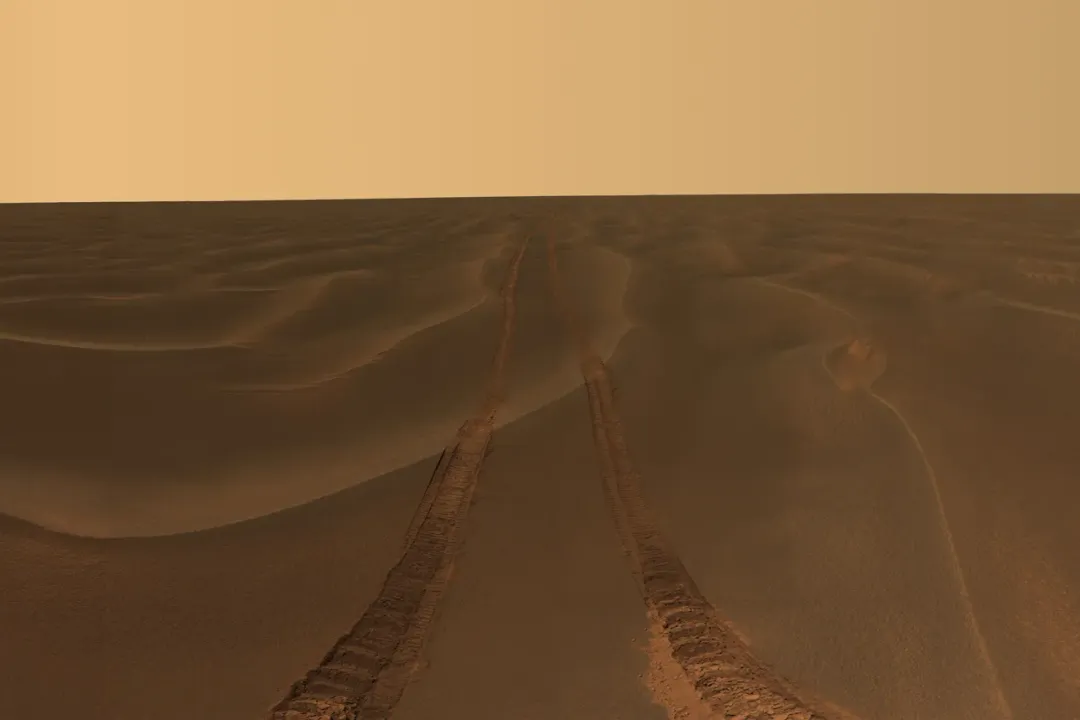
In the late 19th century, the perception of Mars shifted dramatically toward the possibility of life, fueled by optical illusions and wishful thinking. The Italian astronomer Giovanni Schiaparelli famously mapped features he called canali in 1877, a term that was mistranslated in English as "canals," implying artificial construction by intelligent beings. This idea gained significant traction, particularly in the United States, when figures like Percival Lowell championed the view that these were irrigation systems built by a dying civilization trying to preserve its remaining water. This era was defined by observation without direct physical evidence; the "discovery" was one of tantalizing, yet ultimately mistaken, hope built on visual interpretation.
# Proof of Past
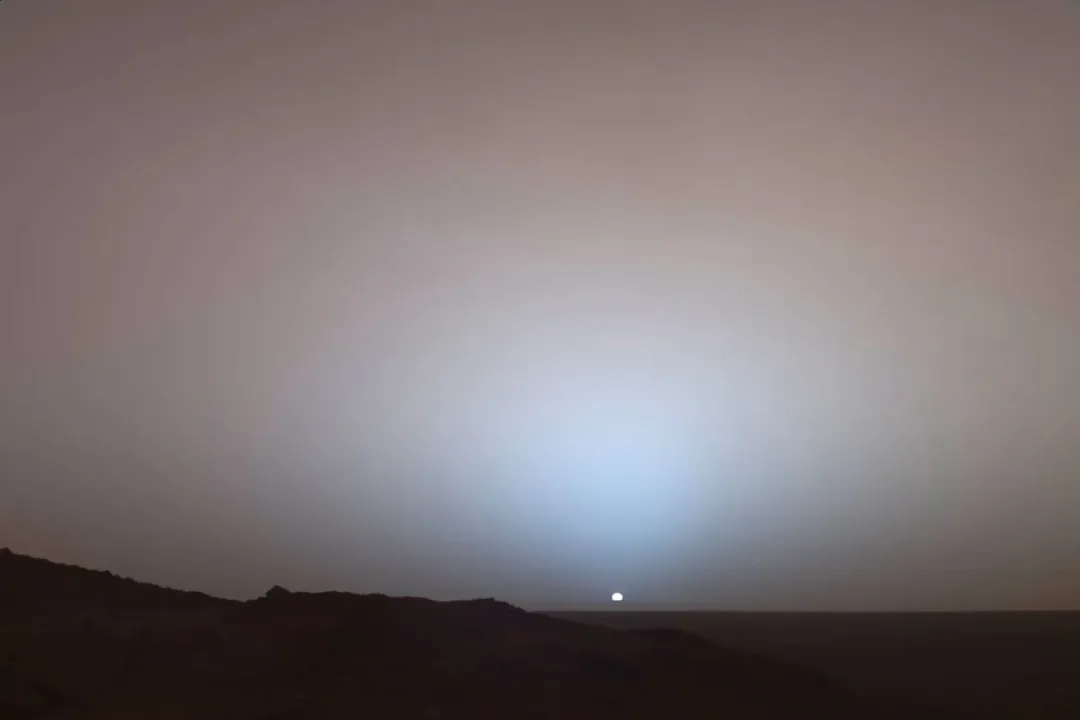
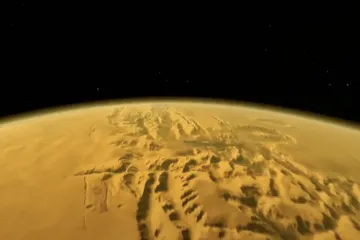
The space age delivered the first hard evidence, shifting the narrative from speculation to geology. When NASA’s Mariner 9 arrived in 1971, it became the first spacecraft to orbit another planet, revealing a world far more scarred and dry than expected, yet covered in features that strongly indicated ancient liquid water. Mariner 9 mapped vast outflow channels, valley networks, and outflow features suggesting catastrophic flooding events long ago.
Following Mariner 9, the Viking orbiters in the mid-1970s provided further confirmation. While Viking did not find flowing liquid water, its imagery strongly supported the geological history of water erosion. Crucially, these missions confirmed that massive volumes of water had once existed on the surface, sufficient to create features like deltas and ancient lake beds visible today, even if that water had long since vanished or become locked away. Geologists studying these images recognized that the key evidence lay in the landforms—sedimentary rocks, the remnants of riverbeds, and features resembling dried lake bottoms—all pointing to a warmer, wetter past.
# Subsurface Ice

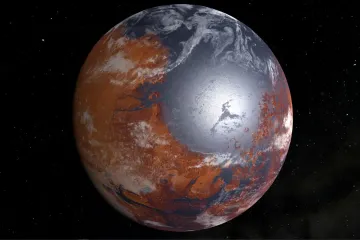
The confirmation that water was not just a feature of Mars's deep past but existed today required instruments capable of peering beneath the dusty surface. This came much later through the European Space Agency’s (ESA) Mars Express mission. In 2004, the Mars Express orbiter, using radar sounders, delivered conclusive proof of vast reservoirs of water ice buried near the planet's south pole. This was a major step forward, moving the discovery from inferred geological evidence to direct detection of extant water storage. The Mars Express team continued to refine the understanding of where this ice was located, mapping its distribution across different latitudes.
It is worth noting the methodological shift here. Early astronomers relied on visual morphology, interpreting shapes on the surface. The Viking and Mariner missions relied on photographic evidence of erosion. Modern missions, like Mars Express, moved into remote sensing through the ground, using radar to detect changes in dielectric properties indicative of ice layers. This progression demonstrates how the definition of "discovery" changed from seeing evidence of past activity to physically measuring present reservoirs.
# Flowing Brines
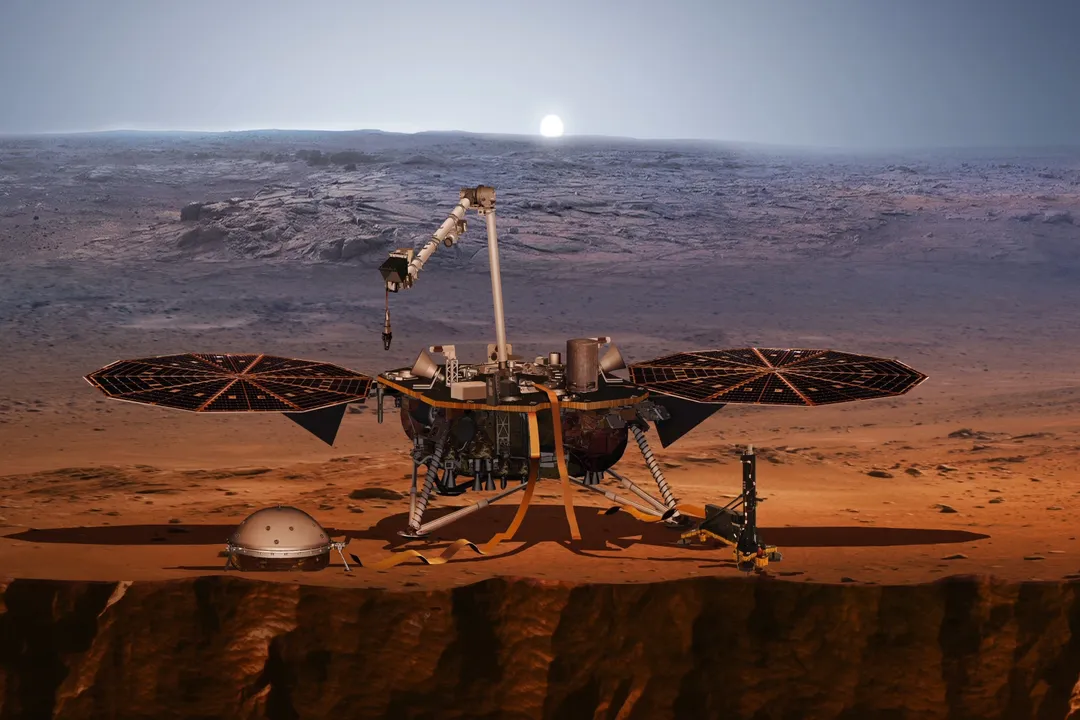
The most startling recent discovery involved evidence suggesting that liquid water, albeit salty, might not be entirely confined to subsurface ice or past epochs, but could be interacting with the surface today. In 2011, data from NASA’s Mars Reconnaissance Orbiter (MRO), specifically its Compact Reconnaissance Imaging Spectrometer for Mars (CRISM) instrument, provided the critical spectral signatures.
Scientists analyzing images of Recurring Slope Lineae (RSL)—dark streaks that appear seasonally on Martian slopes—detected spectral evidence of hydrated salts, specifically perchlorates and chlorates. The presence of these salts lowers the freezing point of water significantly, meaning that temperatures slightly above the Martian frost point could allow for transient flows of liquid brine on the surface. The confirmation that liquid water, even extremely salty brine, flows intermittently on contemporary Mars is attributed to the team analyzing the MRO data, marking a breakthrough in understanding the modern Martian water cycle. This challenges the older model where water was simply frozen solid or entirely lost to space.
If we consider the state of water, the findings represent three distinct discoveries tied to different entities:
| Water State | Discovery Epoch | Key Evidence Type | Primary Discoverer (Mission/Era) |
|---|---|---|---|
| Ancient Liquid | 1960s - 1970s | Geological Landforms (Valleys, Deltas) | Mariner 9 / Viking Program |
| Current Ice | Early 2000s | Radar Sounding (Subsurface) | ESA Mars Express (2004) |
| Transient Liquid | Early 2010s | Spectral Signatures (RSLs) | NASA MRO Team (2011+) |
# Modern Reservoir
More recently, the focus has turned to the sheer volume of water locked away and how long Mars retained the conditions for liquid environments. Sophisticated analysis of data, including that from the Mars Express MARSIS instrument, has indicated the existence of large-scale liquid water reservoirs beneath the southern polar ice cap. These are not simply pockets of melted ice, but potentially extensive bodies of highly saline water, kept liquid by geothermal heat and the immense pressure of the overlying ice.
Furthermore, analysis by scientists, including those at UC Berkeley, has suggested that the window for large-scale liquid water on Mars extended much longer than previously modeled. Based on new models, liquid water may have persisted up to a billion years longer than the commonly accepted date, perhaps remaining in reservoirs for as long as 3 billion years ago. This extends the period during which the planet could have been potentially habitable, even if that water was deep underground. The work by these researchers indicates that a significant portion of Mars's water is not simply gone, but trapped in deep, inaccessible reservoirs.
To truly contextualize these findings, it helps to remember the scale. Early estimates, based on the size of the ancient ocean basins, suggested Mars once held a volume equivalent to the Arctic Ocean. While much of that was lost to space, the ongoing inventory—spanning surface ice, trapped hydrated minerals, and deep brines—suggests the total amount of H₂O is substantial, perhaps amounting to several hundred meters of water if it were all melted and spread across the surface today. The key realization is that the discoverers are not singular people, but global scientific collaborations working across decades, each one refining the portrait of Martian water from a misty dream to frozen ice, and finally, to flowing brine and deep, hidden oceans.
#Videos
Just in: NASA Has Found Oceans of Liquid Water on Mars...For Real
Related Questions
#Citations
Chronology of discoveries of water on Mars - Wikipedia
NASA Confirms Evidence That Liquid Water Flows on Today's Mars
A Brief History of the Search for Water on Mars - Time Magazine
Scientists find oceans of water on Mars. It's just too deep to tap.
Mars Express and the story of water on Mars - ESA
Scientists have discovered a reservoir of liquid water on Mars - Reddit
Large-Scale Liquid Water Existed on Mars Much Longer ... - Caltech
Just in: NASA Has Found Oceans of Liquid Water on Mars...For Real
Geologists Discover Water Once Flowed on Mars | AMNH