Who discovered that the Moon has craters?
The moment the imperfections of the Moon were revealed to the world, our entire conception of the heavens fractured. This pivotal shift in understanding—the realization that our celestial neighbor was not a flawless, ethereal orb but a scarred, rocky world—did not come from ancient texts or philosophical debate, but from a focused gaze through a newly invented instrument. The person credited with this world-altering discovery is, without question, Galileo Galilei.
# Ancient Ideals
For centuries, Western thought, heavily influenced by Aristotelian cosmology, held that the celestial realm—everything above the sphere of the Earth—was perfect, unchanging, and entirely spherical. This view meant the Moon had to be smooth. While casual observers might notice darker and lighter areas visible to the naked eye, often called the "Man in the Moon," these were typically attributed to variations in illumination or the reflection of the Earth’s seas, not physical indentations. Even in antiquity, thinkers like Plutarch discussed theories regarding these visual markings, suggesting uneven terrain caused by the reflection of sunlight off varying depths of water or murky air on the Moon. However, these were intellectual exercises rooted in optics, not empirical observation of the actual surface topography. The dominant scholastic view through the Middle Ages, even when adapted for Christian theology, maintained the Moon’s perfection as part of the heavens.
# Telescope Revolution
The paradigm held firm until the very beginning of the seventeenth century. The invention of the telescope, first credited to figures like Hans Lippershey, provided the tool that extended human senses beyond their natural limits. Galileo Galilei, having refined his own telescope, turned it toward the Moon for the first time in late November 1609. His observations, detailed in his famous 1610 publication Sidereus Nuncius (The Starry Messenger), immediately shattered the Aristotelian ideal.
Galileo reported that the lunar landscape was far from smooth; it was characterized by "indentations and cup-like depressions". He saw a world of mountains and valleys, much like Earth itself. Contemporaries, such as Thomas Harriot, were also making early, crude maps of the Moon using telescopes around the same time. Yet, it was Galileo’s published findings and the subsequent uproar they caused that cemented his role as the discoverer of these features.
It is worth noting a subtlety in terminology. While Galileo was the one who observed and described these features, he initially referred to them as hollows or depressions. The specific term "crater"—derived from the Greek word for "vessel"—was officially adopted and extended to these lunar features later, in 1791, by astronomer Johann Hieronymus Schröter.
# Naming Surfaces
The mapping and naming of the Moon’s features began in earnest shortly after Galileo’s initial sketches, signaling a shift from philosophical acceptance to rigorous study. In 1651, the Jesuit priest and astronomer Giovanni Battista Riccioli published a map that established a naming convention for features on the nearside, dividing it into octants. Riccioli named the dark, smooth areas mare (seas) after mythological qualities, and he assigned names to the circular depressions—the craters—after deceased scientists, philosophers, and religious figures. This tradition, which dictates that named craters honor those no longer living, remains in effect today under the regulation of the International Astronomical Union.
# The Origin Dispute
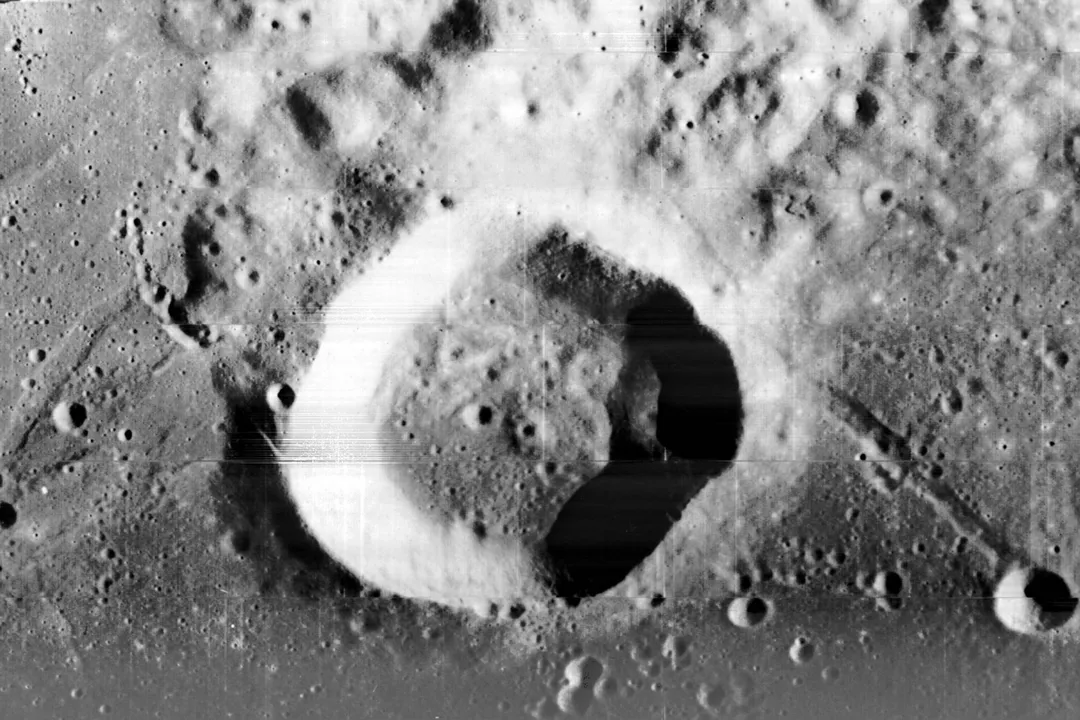
Once the craters were confirmed as physical structures rather than optical illusions or blemishes, the next critical question arose: How were they formed? This became a long-running scientific contest. As early as 1665, the English scientist Robert Hooke, using detailed observations documented in his work Micrographia, proposed two leading hypotheses: either the craters were the product of projectile bombardment from space or they resulted from subterranean lunar volcanism.
For centuries, scientific opinion swung between these two main camps: impacts versus volcanoes. The theory advocating for impacts, known as Welteislehre, gained some traction in Germany between the World Wars. However, the volcanic explanation remained strongly supported by many observers, as volcanic craters are common on Earth and the lunar features visually resembled terrestrial calderas. It was not until the evidence collected during the Apollo Project and through uncrewed probes in the 1960s that the debate was settled. Samples returned to Earth proved conclusively that the vast majority of lunar craters—especially the large ones—were formed by high-velocity impacts from asteroids and comets.
This realization had profound implications. Observing the Moon, which lacks water, wind, or tectonic activity, offered a pristine record of the history of impacts in the inner Solar System, a history largely erased on Earth by erosion and plate tectonics.
One subtle, yet significant, point in the narrative is the difference between seeing the features and understanding them. While Galileo saw the pits and called them the features we now study, the modern scientific consensus on their impact origin only cemented about 1960, thanks to the work of scientists like Gene Shoemaker, reviving and proving the theory first systematically hypothesized by Hooke decades earlier. The initial discovery was the observation of texture; the scientific breakthrough was the identification of their violent cause.
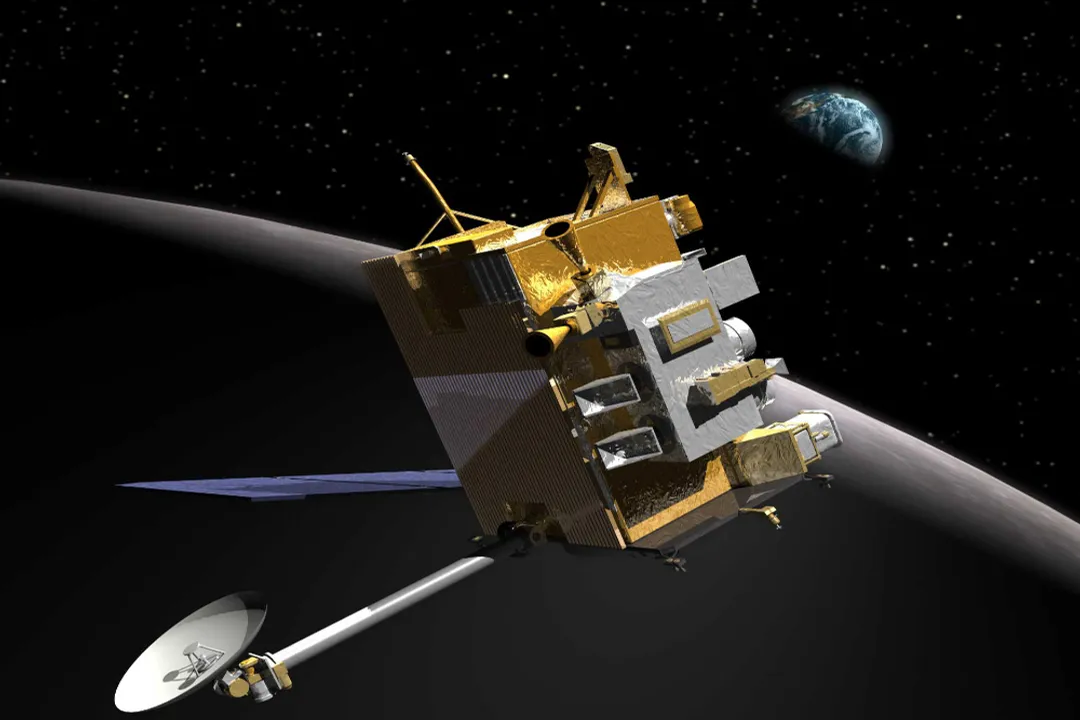
The persistence of craters is a direct benefit to modern science. Because the Moon is geologically quiet, the older a region, the higher the density of craters it has accumulated, a method called crater-counting used to date surfaces. Galileo’s initial discovery of indentations 400 years ago set the stage for this technique. Modern researchers, using data from orbiters like the Lunar Reconnaissance Orbiter, are still refining these counts, recently finding that new craters are forming at a faster rate than previously expected, which has real-world implications for protecting future lunar bases from high-speed debris spray. It is fascinating to consider that the shadows Galileo first resolved are now being used by computer models to simulate impact physics, bridging his simple visual assessment with complex numerical simulations four centuries later.
In short, the discovery that the Moon has craters belongs to Galileo Galilei in 1609/1610 via telescope. However, the naming was advanced by Riccioli in 1651 and formalized by Schröter in 1791, while the explanation for their formation required the technological leaps of the Space Age to confirm the early impact hypothesis proposed by Robert Hooke in 1665.
Related Questions
#Citations
Why Study Moon Craters? - NASA Science
Lunar craters - Wikipedia
What secrets lie hidden in the craters of the Moon? - Titan.uio.no
What did ancient people (BCE) think about the craters on the moon?
Lunar craters | Research Starters - EBSCO
A History of Lunar Science - Lunar Reconnaissance Orbiter Camera