How cold are the craters on the Moon?
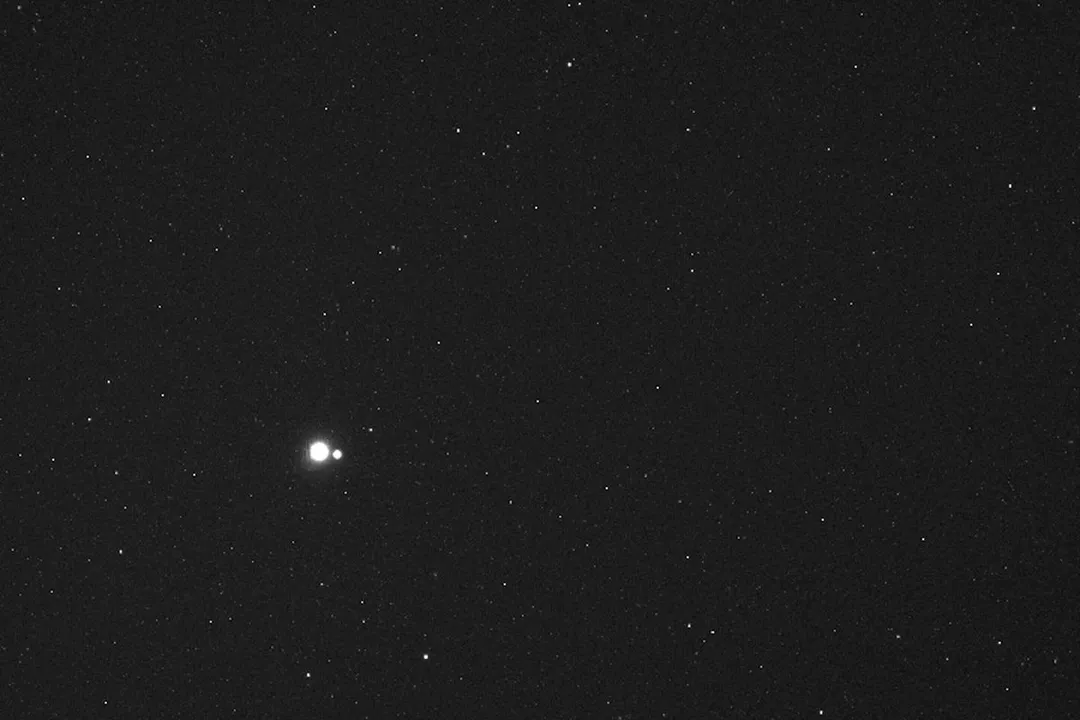
The Moon, our familiar nightlight, is a world defined by savage thermal extremes. While textbooks often cite the surface temperature, the most compelling data reveals locations so profoundly cold they beggar belief, existing in stark contrast to the scorching sunlight that bakes the lunar equator. These frozen pockets aren't just slightly chilly; they represent the absolute coldest temperatures ever recorded anywhere in our solar system, holding secrets that could redefine our ability to live and work off-world.[4]
# Surface Swings

The key to understanding the lunar temperature profile is the almost total absence of a thick atmosphere. On Earth, air acts as a global insulator and blanket, absorbing, distributing, and radiating heat, keeping our surface temperatures within a manageable range. The Moon possesses only a tenuous layer called an exosphere, composed of trace gases like argon, neon, and helium, which offers virtually no thermal buffering. This lack of insulation means that whatever energy the sun imparts is absorbed intensely, and whatever heat is radiated away escapes instantly into the vacuum.
The result is a pendulum swing that is arguably more dramatic than anything experienced on Earth. During the lunar day, which lasts about two Earth weeks, the equatorial surface temperature can soar to a blistering 127° Celsius (257° Fahrenheit) or even 250° F (120° C). This is well above the boiling point of water. Conversely, when the Sun finally sets, that same surface radiates its heat away rapidly, causing temperatures to plunge to about -173° C (-279° F) in shadowed areas, or even lower within craters. For perspective, the difference between the daytime high and nighttime low near the equator is nearly 300 degrees Celsius. Think of it as moving from the heat of a steam oven to the chill of dry ice—but across a barren, airless plain where there is no convection to temper the change.
# Record Cold
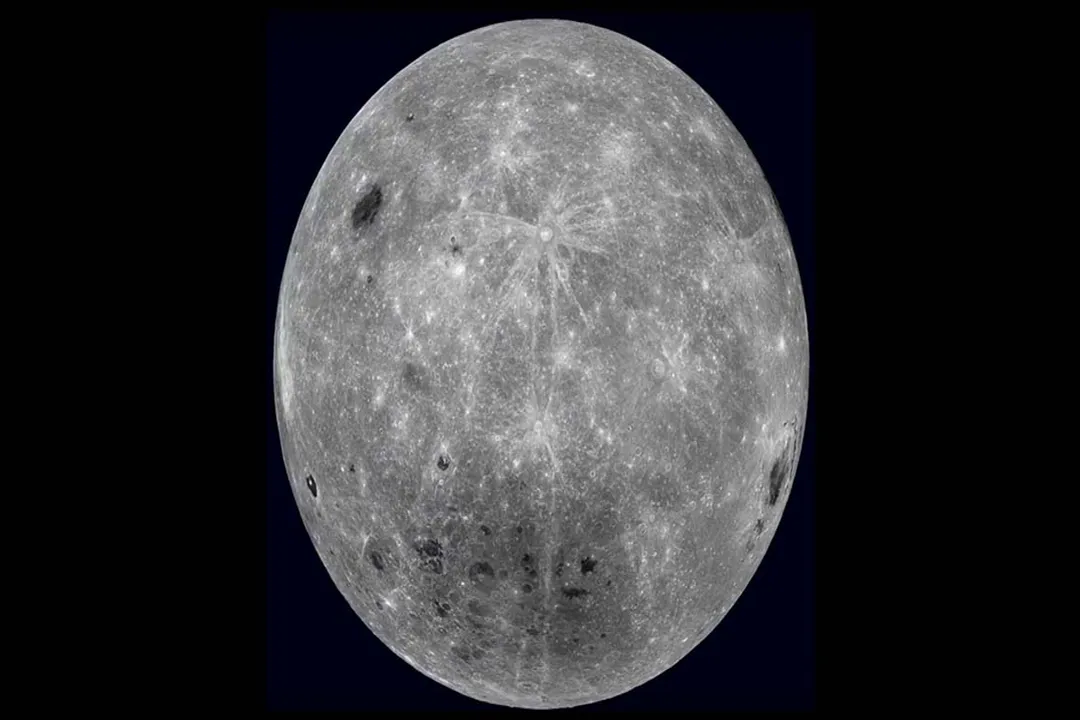
While the standard lunar night is frigid, the true cosmic deep-freeze occurs not just during the long night, but in places that have not seen direct sunlight for eons. These are the Permanently Shadowed Regions (PSRs), and they are where the coldest measured spots in the entire solar system reside. [2]
The undisputed champion of cold is Hermite Crater, a massive, 108-kilometer-wide impact feature situated near the Moon’s north pole. [2][3] Data gathered by NASA's Lunar Reconnaissance Orbiter (LRO) in 2009, using its Diviner instrument, identified specific areas within Hermite that had plunged to temperatures as low as 26 Kelvins (a temperature scale where zero is absolute zero). [1][3] Converting this gives us a reading of approximately -249 degrees Celsius (or -413 degrees Fahrenheit). [1][3] This astonishing cold has even been documented as being colder than the surface temperatures measured on Pluto. [1][2] Other areas near the poles, while not quite Hermite-level, can still see temperatures dip to -253° C (20 K). [4]
This extreme cold is a persistent phenomenon. Models suggest that portions of the southwestern wall inside Hermite Crater remain perpetually shaded over timescales stretching into millions of years. [3]
# Physics of Shadow Traps
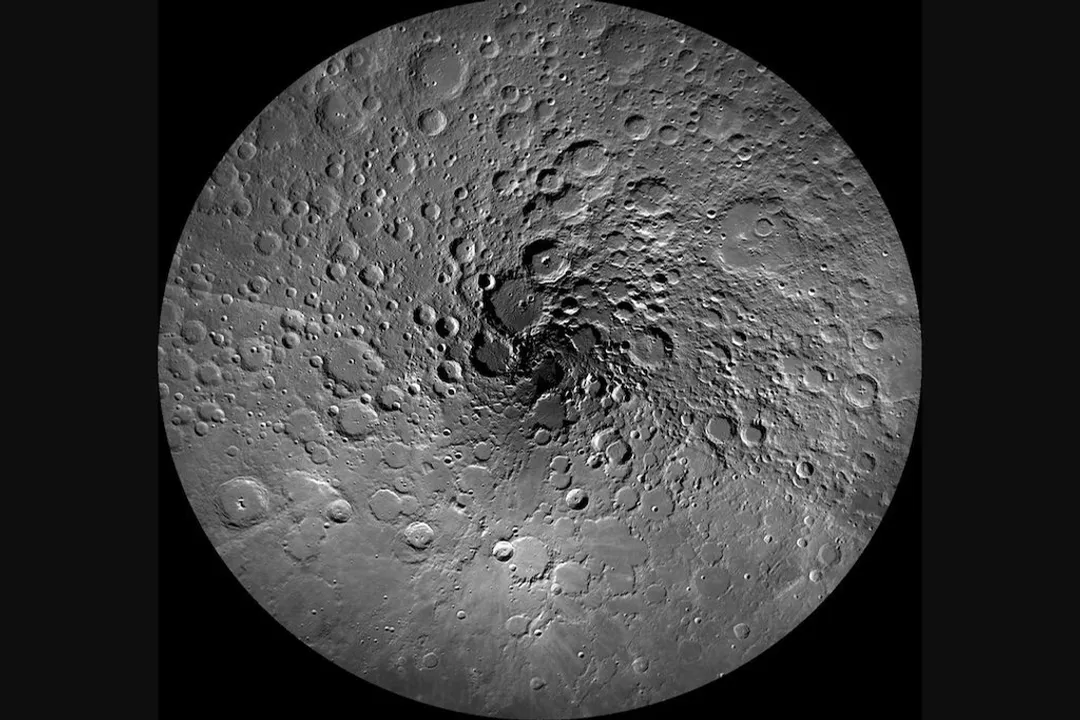
The conditions that create these ultra-cold zones are fundamentally linked to the Moon's lack of atmosphere and its axial tilt. Because the Moon’s rotational axis is nearly perpendicular to its orbital plane, the Sun’s light only grazes the poles, creating terrain where crater floors and the shadowed undersides of ridges never receive direct solar illumination. [4]
These PSRs act as cold traps. Any volatile material—such as water molecules—that lands in these zones is irradiated by cosmic rays or micrometeorites, causing them to sublimate (turn directly from solid to gas) from warmer surface areas and drift toward the coldest accessible spots. Once a water molecule settles in a region below a few tens of Kelvins, it becomes essentially kinetically immobile; it is too cold for it to gain enough energy to jump out of the trap and escape into space. [3] It becomes permanently sequestered.
The presence of this trapped water ice is one of the major scientific drivers for returning to the Moon. [4] Studies, including those using data from India’s Chandrayaan-1 orbiter, have indicated that water ice might exist in varying amounts within the PSR of Hermite A, a smaller crater within Hermite. [5][3] However, detecting this frozen water is complex; different analytical methods have produced conflicting or inconclusive results, suggesting that while the regions are cold enough to hold ice, confirming its presence requires increasingly sophisticated remote sensing techniques. [3]
# Exploration Challenges
For any crewed or robotic mission aiming to establish a long-term presence on the lunar surface, especially near the poles where water resources might be accessible, these temperature gradients present immediate, tangible engineering problems. It is one thing to design a rover to function at 120° C; it is another entirely to design a system that can survive moving from a sunlit area into a PSR.
Consider the transition zone, known as the terminator, the boundary between day and night. A piece of equipment traveling across this line might experience a temperature drop of over 300 degrees Celsius in just a few meters or hours, depending on the rate of movement. Equipment must be designed to handle the resulting massive thermal stresses without fracturing or seizing up. Any moving parts, seals, or sensitive electronics must be heavily insulated and actively heated just to keep them from becoming brittle and inoperable when passing through the shade of a crater wall. [4] For a permanent habitat, this means designing structures that can maintain internal temperatures without massive energy expenditure, likely requiring robust internal heating systems drawing power from solar arrays positioned strategically outside the shadowed zones. [4]
The Moon’s subsurface temperature, which is less influenced by the surface swings, is also important. While the core of the Moon is hot, the top few meters of the regolith (lunar soil) are influenced by the day/night cycle, but deeper down, the temperature stabilizes around -20° C (-4° F). This subsurface layer is slightly warmer than the coldest PSRs and could potentially offer a modest thermal buffer for underground installations, though the extreme surface conditions remain the dominant challenge for any surface operation.

# Implications for Resources
The search for water ice in craters like Hermite is directly tied to the viability of sustainable lunar bases under programs like Artemis. [4] If significant, accessible water ice exists, it represents an in situ resource that can be mined and processed. Water can be separated into its constituent parts: hydrogen and oxygen. Hydrogen is an extremely effective rocket fuel when combined with an oxidizer, and oxygen is essential for both breathing and for use as an oxidizer in return-trip propellant. [4]
Therefore, the coldest place in the solar system is not just a scientific curiosity; it represents a potential fuel depot for deep space exploration. Any base established near a pole would likely be strategically sited at the crest of a sunlit ridge—a location that receives near-constant sunlight for power generation—while scientific or resource-gathering outposts would need to venture into the permanently cold, dark crater floors to harvest the water ice trapped there for billions of years. [3][4] The ability to manage those harsh, contrasting environments is what will determine success or failure for humanity's return to the Moon.
Related Questions
#Citations
TIL that the Hermite crater on the Moon is the coldest place ... - Reddit
Hermite (crater) - Wikipedia
What is the temperature on the moon? | Space
The Moon | Natural History Museum
Hermite Crater - NASA Science