Who discovered the Moon has craters?
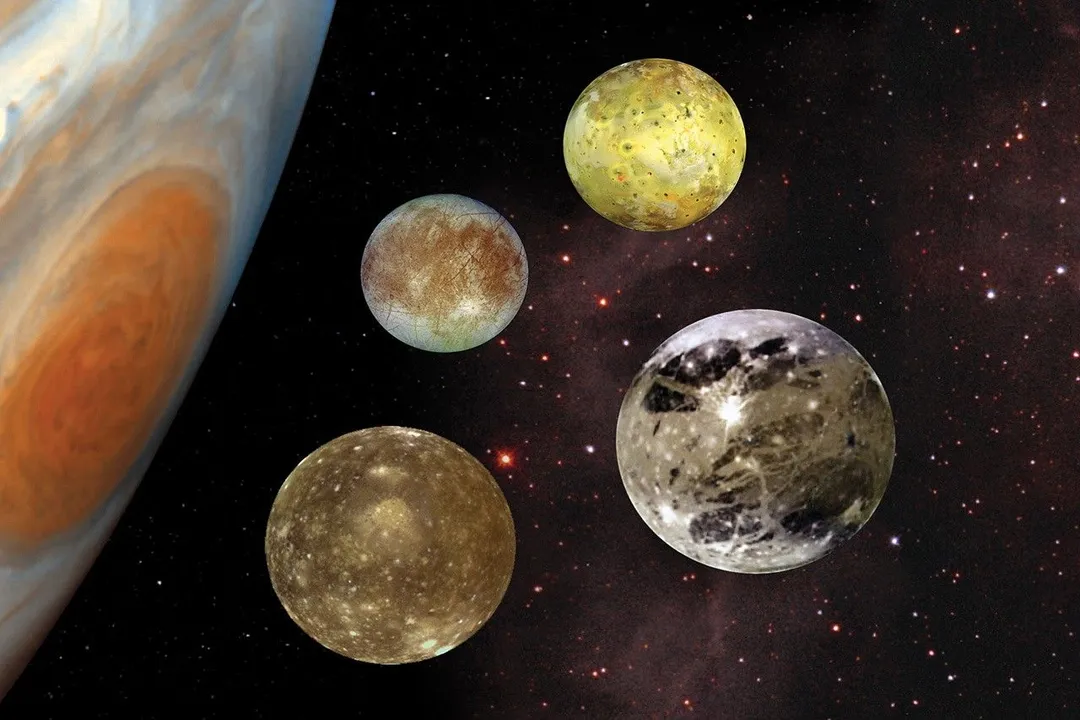
The celestial body visible in the night sky, the Moon, was, for centuries, held by many traditions to be a perfect, smooth orb, an entity crafted from a divine, unblemished substance unlike the rough and changing Earth. [6] This philosophical conviction, deeply rooted in Aristotelian cosmology, meant that any perceived blemishes or variations on its surface were often dismissed as optical illusions, flaws in the observer's eye, or perhaps atmospheric interference. [6] The notion of mountains or valleys on the Moon simply did not fit the accepted model of the heavens, which demanded celestial objects be perfect geometric shapes.
# Perfect Sphere
Before the early seventeenth century, visual evidence, even when suggested, was overridden by established doctrine. To suggest the Moon was imperfect was not merely an astronomical error; it was a profound challenge to the prevailing worldview that separated the immutable, perfect cosmos from the flawed, corruptible terrestrial realm. [6] This consensus meant that the discovery of any surface variation was not just an observation but an act of conceptual defiance.
# New Optics
The change in perspective required more than just a new idea; it demanded a new instrument. The breakthrough came around 1609 when Galileo Galilei turned an early version of the newly invented telescope skyward. [3][6] This technological advancement granted unprecedented magnification, allowing him to look at the Moon with detail previously unimaginable. [3]
Galileo’s observations were immediately transformative. He did not merely see a slightly brighter or dimmer surface; he observed distinct topographical features that looked remarkably familiar. [3] He saw shadows cast by features near the line dividing light and dark on the Moon—the terminator—which confirmed the presence of height variations. [3] If the Moon were perfectly smooth, the transition from light to dark would be gradual, but the sharp shadows indicated vertical relief, much like mountains casting shadows on Earth. [3]
# Galileo's View
Galileo documented seeing mountains and valleys on the lunar surface. [3] This observation directly contradicted the notion of a perfect sphere made of a quintessence wholly different from Earth’s rocky composition. [6] The implication was staggering: the Moon was not an ethereal, flawless body, but a world, bearing the scars and features of geological processes, just like our own planet. [3] His meticulous drawings and descriptions, published in his 1610 treatise Sidereus Nuncius (Starry Messenger), provided concrete visual evidence that shattered centuries of astronomical consensus. [2][6]
While we now use the term "crater" to describe these dominant features, Galileo’s immediate description centered on these relief features—mountains and depressions—which are, in essence, the visible result of immense impacts. [3] The concept of a feature being formed by an object striking the surface, leading to an impact basin or crater, would be solidified later, but Galileo identified the evidence of that unevenness. [1]
The power of Galileo’s finding wasn't just in seeing the features, but in the interpretation of those features. It required a person steeped in observation to synthesize the visual data and conclude that these irregularities were not illusions, but actual physical structures. [3]
The shift in thinking catalyzed by these observations marks one of the most significant pivot points in the history of science. Before Galileo, astronomy was often a pursuit rooted in philosophical mathematics; after Galileo, it increasingly became an observational science demanding empirical proof. [6] This transition, spurred by seeing the Moon's imperfect face, opened the door for studying other celestial bodies with the same critical, hands-on approach. [6]
# Surface Record
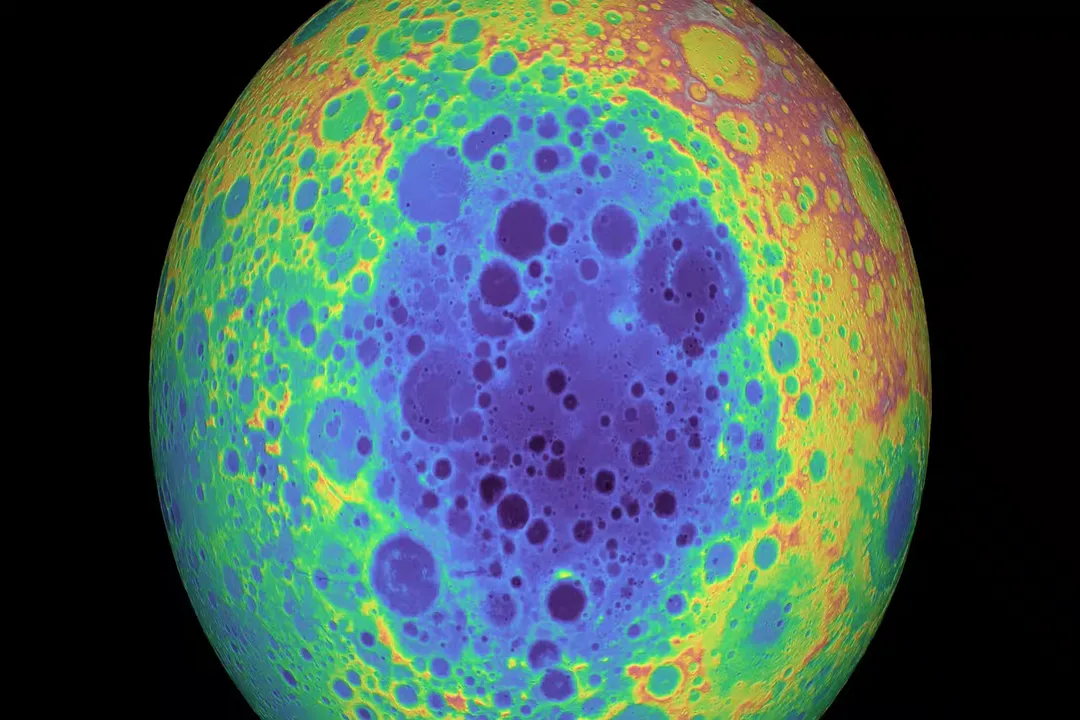
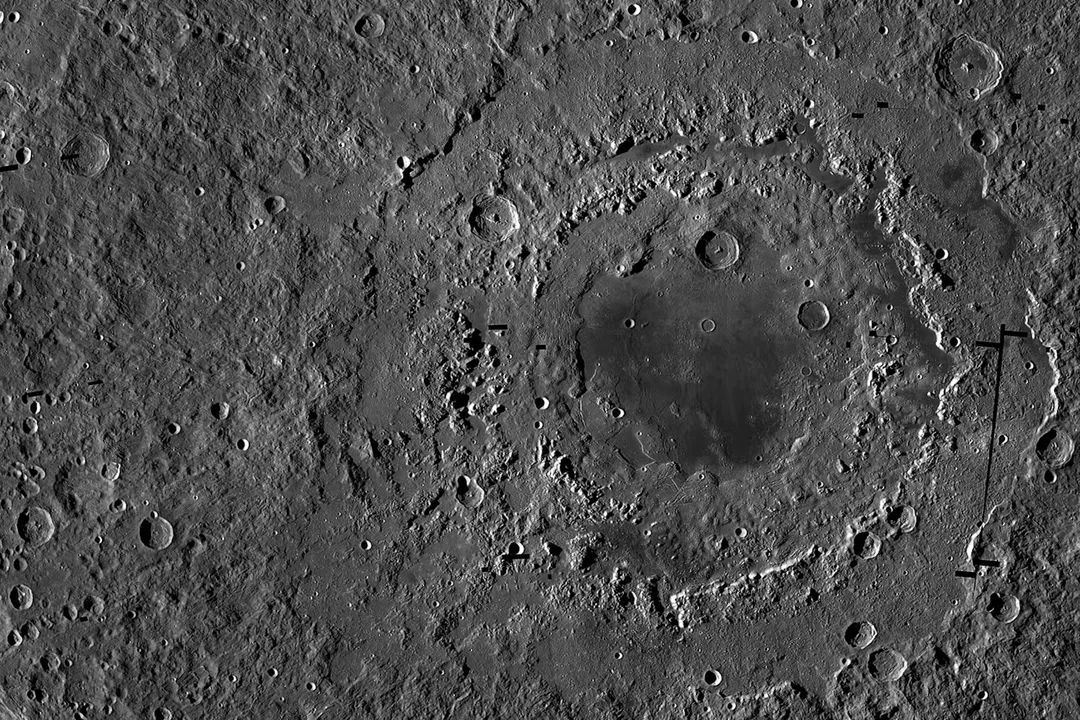
Understanding who first saw these features is important because these marks—the craters—are vital scientific archives. The Moon’s surface acts as a silent recorder of the bombardment history of the inner Solar System. [1] Because the Moon lacks an atmosphere, wind, or flowing water, these impact features are preserved over billions of years, unlike on Earth where erosion and geological activity quickly erase such evidence. [1][10]
The density and depth of these markings allow scientists to date the lunar surface regions, effectively providing a timeline for solar system development. [1] For instance, the heavily pockmarked, older highlands look markedly different from the smoother, younger maria (the darker, flatter plains). [10] A quick comparison reveals a dramatic difference in surface age, simply by counting the overlapping impact scars. [10]
| Lunar Region Type | Visual Characteristic | Implied Age | Dominant Process Evident |
|---|---|---|---|
| Highlands | Heavily cratered, bright | Oldest surfaces | Intense, early bombardment |
| Maria (Seas) | Smoother, darker plains | Younger surfaces | Volcanic resurfacing over impacts |
| Impact Craters | Circular depressions, ejecta rays | Varied | Asteroid/Comet Impacts |
The ability to discern surface age by counting these impacts highlights a key difference in scientific approach over time. While Galileo saw the result—the mountains and valleys—modern science uses the pattern of the craters to reconstruct history. [1] It's a fascinating progression: from recognizing that the surface is rough to understanding why it is rough and what that roughness tells us about the entire neighborhood of planets.
# Ancient Impressions
It is worth noting that earlier observers, even before the telescope, sometimes registered impressions of lunar features, perhaps noticing variations in brightness or texture without the capacity for true resolution. [9] However, these vague perceptions lacked the definitive proof required to overthrow established scientific and religious belief systems. [9] The critical step was not just noticing something different, but proving that difference was real topography.
For example, some sources suggest that ancient Greek philosophers like Anaxagoras hypothesized about mountains on the Moon, but these ideas were not supported by repeatable, verifiable observation and were often suppressed or ignored in favor of established models. [8] The true discovery, the one that stuck and forced a paradigm shift, rests squarely with the man who put the instrument to his eye and recorded what he saw in the early century. [2][6] The legacy of that initial observation is why we can today study the Moon’s surface to understand planetary formation, treating it as a geologic museum preserved in vacuum. [1]
The introduction of the telescope in Galileo’s hands turned what was once an object of philosophical contemplation into a genuine, measurable world. This single act—the clear, undeniable observation of rugged terrain—fundamentally redefined humanity's place in the cosmos by proving that the heavens were subject to the same imperfect, dynamic rules as Earth itself. [6]
#Videos
Why Were Galileo's Lunar Crater Discoveries Important ...
Related Questions
#Citations
Why Study Moon Craters?
Galileo Galilei
How Galileo Discovered Mountains On The Moon
Craters On The Moon From Galileo To Wegener: A Short ...
Craters On The Moon From Galileo To Wegener: A Short ...
Why Were Galileo's Lunar Crater Discoveries Important ...
What secrets lie hidden in the craters of the Moon? - Titan.uio.no
Moons of our Solar System: Week 2: 2 | OpenLearn
Why the Moon is such a cratered place