Are there any active craters on the Moon?
The seemingly unchanging, battered surface of our closest celestial neighbor often leads people to assume the Moon is a completely static world, a geological relic frozen in time. However, asking if there are active craters on the Moon requires us to define what "active" means in a lunar context. Are we searching for a Mount St. Helens style eruption spewing ash and lava across the dark plains, or do we mean any process that recently changed the surface, whether from internal heat or external bombardment? The reality is far more nuanced than a simple yes or no, suggesting that while the Moon isn't bustling with tectonic life like Earth, it may have only recently quieted down, and it is certainly still being reshaped today.
# Ancient Fires
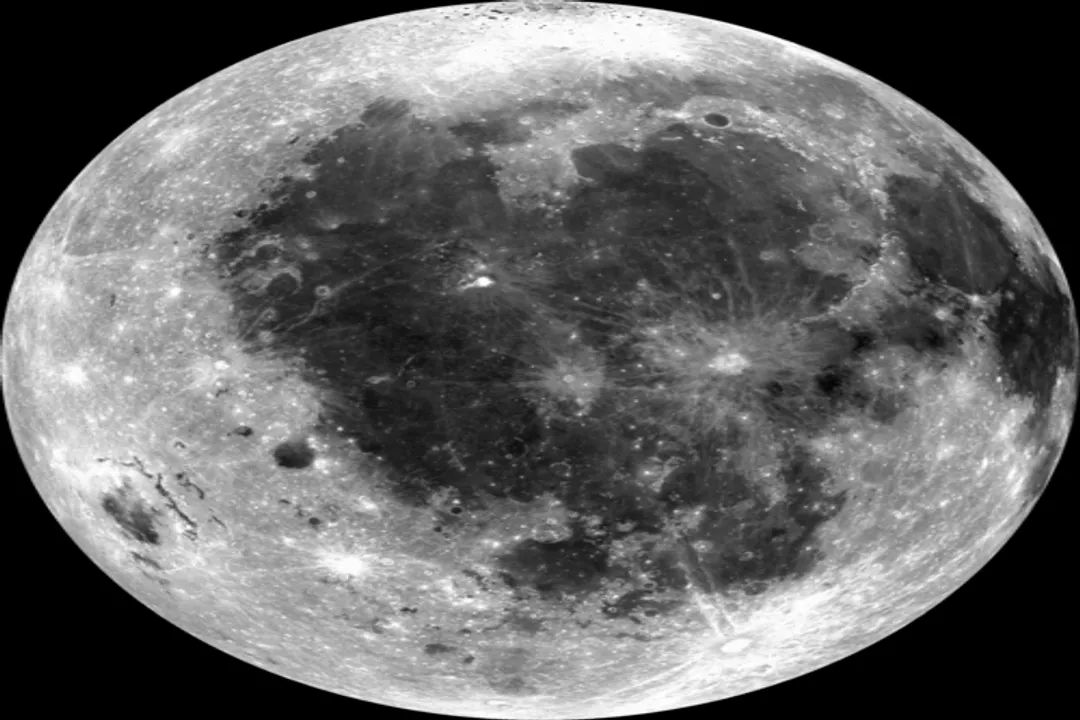
For billions of years, the Moon experienced significant internal heat, leading to massive volcanic episodes that dramatically altered its face. These events were responsible for creating the vast, dark plains we see from Earth, known as maria, which are ancient basaltic lava flows that filled in massive impact basins. When the Moon was younger, perhaps during the period known as the Late Heavy Bombardment, molten rock rose to the surface through fissures and weak spots in the crust, drowning out older, heavily cratered highlands. This process, lunar volcanism, was driven by residual heat from the Moon’s formation, though unlike Earth, the Moon lacks the global plate tectonics and abundant water necessary to recycle its crust and sustain volcanism over eons.
The consensus for a long time was that lunar volcanism ceased around 3 billion years ago. Features like the Imbrium Basin lava flows, which cover enormous areas, were historically dated to this era. This made the Moon appear geologically inert for the majority of its subsequent history.
# Recent Activity Signs
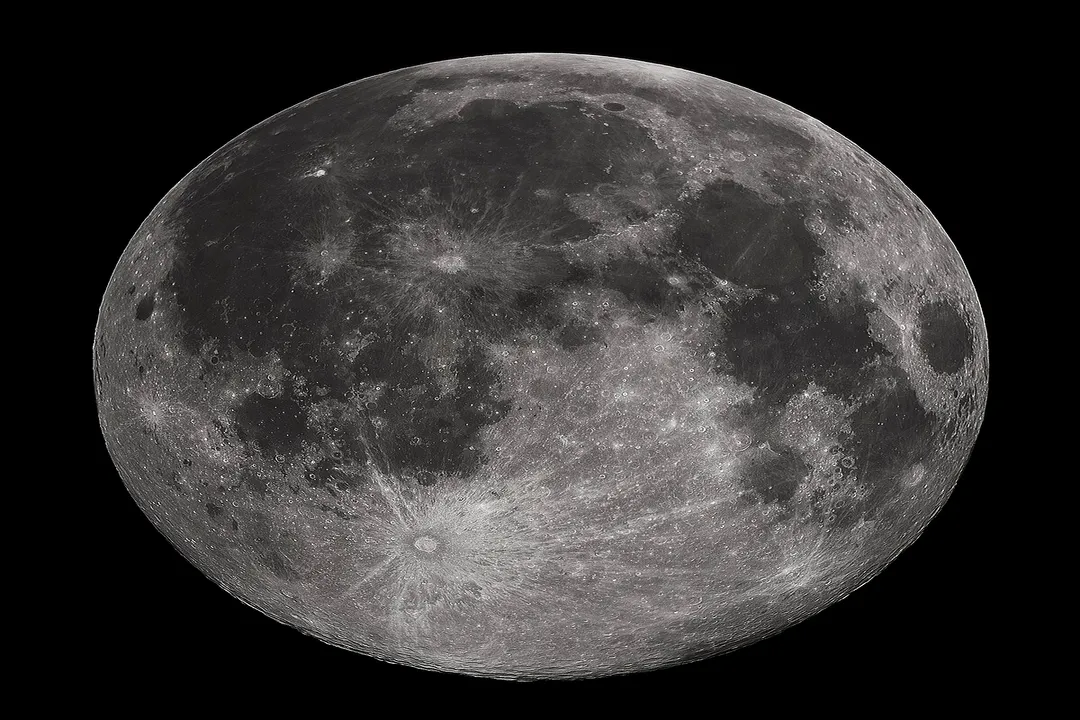
More recent scientific inquiries, however, have peeled back this timeline, revealing a Moon that took its time cooling off. Sophisticated dating techniques applied to lunar samples and orbital mapping data suggest that some of these vast basaltic plains are significantly younger than previously estimated. Some flows within the Imbrium Basin may be as young as 100 million years old. To put that scale into perspective, 100 million years ago, dinosaurs still dominated Earth; our own planet was actively forming mountain ranges and undergoing profound biological evolution while the Moon was still having major volcanic events. This realization fundamentally changes our perception of the Moon’s geological lifespan.
The mechanism for this late-stage activity is still debated. It may involve smaller, more isolated pockets of magma near the surface that found a way to escape long after the main engine of lunar volcanism had stalled. Scientists have looked for evidence of features that result from explosive, gas-driven eruptions, such as maars. Maars are broad, low-relief volcanic craters formed when rising magma interacts explosively with ground ice or surface water, creating a vent that often collects pooled lava. While maars are common on Earth, identifying definitive, fresh lunar maars has been complex, though features resembling them exist and suggest a different style of eruption than the gentle, effusive flows that built up the maria.
# Volcanic Features
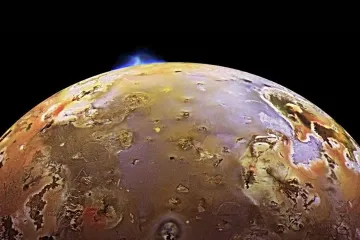
When people think of an "active crater," they might imagine a constantly smoking caldera. On the Moon, the closest analogue to ongoing or very recent activity relates to these surprisingly young volcanic features. It is important to distinguish between impact craters—formed by objects hitting the surface—and volcanic craters, which are formed by material erupting from below. The volcanic craters, or vents, are the spots where we might look for the last whispers of internal heat.
NASA researchers have used data from the Lunar Reconnaissance Orbiter (LRO) to map mineralogy across the Moon's surface, which helps track the history of eruptions. For instance, studies focusing on volcanic regions in Idaho have helped scientists understand how the processes that create lunar features might relate to terrestrial ones, even though the Moon lacks the necessary water for true Idaho-style hydrovolcanism. This comparative geology helps model the potential thermal state of the Moon's interior.
The existence of these relatively young lava flows suggests that while the Moon is mostly solidified now, the last eruptions occurred within a geological blink of an eye—a significant finding for understanding how planetary bodies evolve and cool over time.
# Impact Dynamics
If we expand our definition of an "active crater" to include any crater formed by an external event, then the Moon is definitely still active. Impacts from asteroids and meteoroids are continuous processes across the solar system, even if the frequency of massive, landscape-altering impacts has dropped drastically since the Moon’s formation.
The Moon’s thin or non-existent atmosphere means there is no protection; any object large enough to survive entry—which is nearly all of them—will strike the surface, creating a new, active impact crater. These events are happening all the time, but they are generally small and difficult to spot unless observed in real-time or if they are fresh enough to have bright ejecta blankets that contrast sharply with the surrounding ancient regolith.
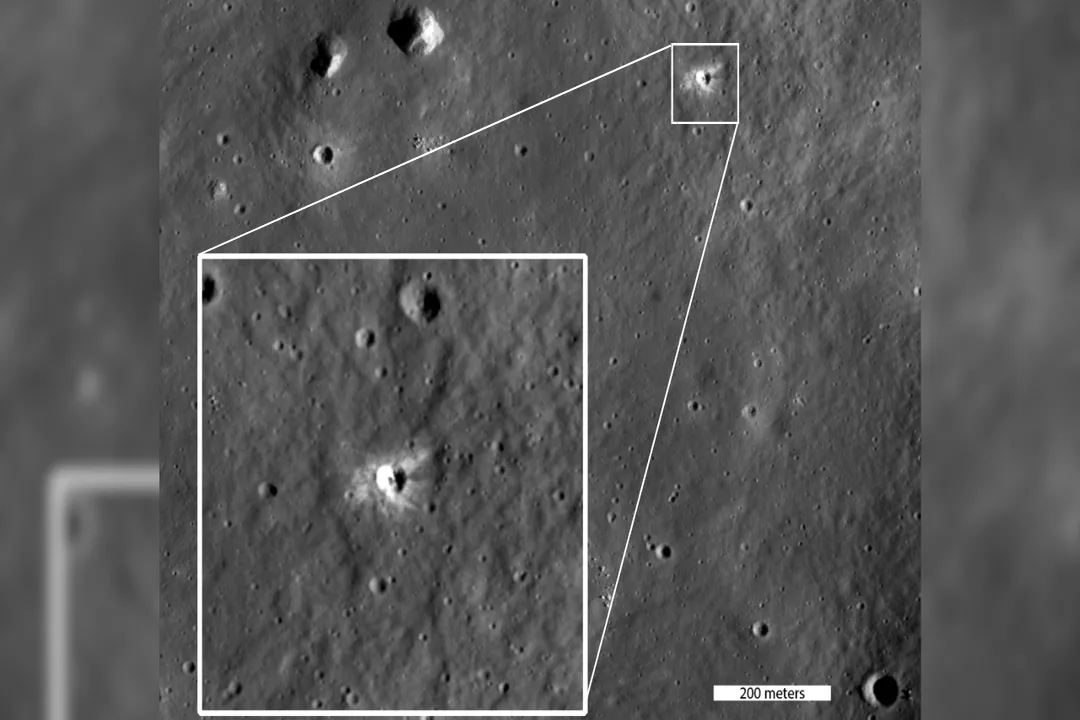
Astronomers and planetary scientists actively monitor the Moon for these fresh scars. In fact, scientists recently identified a feature they dubbed a "freckle". This wasn't an ancient, eroded basin but a brand new mark on the lunar surface, believed to be the result of a recent impact event. These discoveries confirm that the Moon is actively acquiring new craters every day, even if they are microscopic or only visible for a short time before erosion blurs the edges.
When did the last major impact crater form? That’s harder to pin down precisely, but the rate of impacts has slowed considerably since the early history of the Solar System. We know impacts are ongoing, but major, observable events are infrequent compared to, say, the rate of volcanic resurfacing billions of years ago.
# Spotting Fresh Scars
Observing a new impact crater forming is rare, requiring precise timing and observation across different wavelengths. The Lunar Reconnaissance Orbiter (LRO) has been instrumental in capturing images of these relatively fresh features by comparing images taken years apart. A fresh impact site will often feature a splash of brighter material—ejecta—that hasn't yet darkened due to space weathering, making it stand out starkly against the older, darker terrain. If you were stationed on the Moon right now, you would witness new craters forming regularly, a constant, albeit low-level, geological process driven by debris in orbit.
When considering this continuous bombardment, one might wonder about the scale. While a major basin-forming impact might happen once every few million years or longer, smaller impacts creating craters a few meters wide could occur much more frequently, perhaps on a monthly or yearly cycle, depending on the current debris field density. This stands in contrast to volcanism, which appears to have ceased entirely in the last few tens of millions of years across the entire Moon, though the dating remains subject to refinement.
# The Definition Test
The core of the answer rests on definition. If "active crater" means a volcanic vent that is currently erupting or has erupted within the last few million years, then the Moon is mostly dormant, but we have evidence suggesting it was active surprisingly recently (on a geological scale). If "active crater" means any crater being formed by external forces right now, then the answer is an emphatic yes, as impact events are continuous.
This distinction is vital for planetary science. The late-stage volcanism tells us about the thermal history and interior dynamics of a small, tidally locked body orbiting a massive planet. Impact craters, while constant, tell us about the debris environment we currently inhabit. For instance, while the Moon lacks the erosion mechanisms of Earth—no wind, water, or plate tectonics to wipe away craters—the constant small impacts do contribute to space weathering, slowly degrading the sharpness of all existing features. This gradual darkening and homogenization is itself a sign of ongoing surface activity.
It's interesting to compare the Moon's state to that of Mars, which also has extinct volcanism but shows evidence of recent, albeit rare, impact events that have modified its surface. The key difference is the scale of past volcanic activity; the Moon's maria represent one of the largest volcanic provinces in the entire Solar System, dwarfing anything seen on Earth in the last few hundred million years.
# Geothermal Insights
A fascinating angle arises when we consider the implications of late-stage volcanism on the Moon’s current geothermal state. If magma was still moving near the surface as recently as 100 million years ago, it implies that residual heat sources were far more effective at staying localized than models predicted. This has tangible implications for future lunar exploration, particularly regarding In-Situ Resource Utilization (ISRU). If pockets of localized, shallow heat exist, even if they don't manifest as visible lava flows today, they represent potential thermal energy sources for future bases. The search for active volcanism is thus intrinsically linked to the search for accessible heat. This contrasts sharply with Earth, where the accessible heat is deep within the mantle, requiring drilling miles down. On the Moon, any remaining warmth might be concentrated closer to the surface due to the lack of deep convection mechanisms.
# Impact Frequency Data
To solidify the continuous nature of impact activity, we can look at the frequency of events. While the sources don't provide a precise, up-to-the-minute rate, they confirm that the bombardment is persistent. Imagine observing the Moon over a span of a human lifetime. You would not see a major new crater form, perhaps, but you would certainly see smaller features appear and older features degrade. This steady state of erosion by impact ensures that the Moon's surface is always, technically, active.
Consider a hypothetical measurement: if a square kilometer of the lunar surface were perfectly smooth, how long would it take for a one-meter-diameter crater to form upon it? While specific calculations are complex and dependent on orbital debris models, the rate is high enough that new features are constantly being superimposed on the old ones. The difference between a feature appearing yesterday and one appearing a billion years ago is often just the amount of subsequent space weathering it has undergone.
| Feature Type | Primary Formation Cause | Activity Status (Current View) | Time Scale of Last Event |
|---|---|---|---|
| Impact Craters | External Bombardment | Active (Continuous) | Seconds to years ago |
| Volcanic Vents/Maars | Internal Heat/Magma | Mostly Extinct (But recently active) | Tens of millions of years ago |
| Maria Plains | Effusive Lava Flows | Extinct | Approximately 100 million years ago |
This table summarizes the dual nature of lunar activity. We have confirmed, ongoing impact activity creating active craters, set against a backdrop of volcanism that only recently faded into dormancy.
# Final Assessment
The Moon is not Earth. It lacks the dynamic churning that causes continuous, observable volcanic eruptions, so we won't find a freshly formed, steaming caldera in the traditional sense. However, the latest science tells us that the Moon’s volcanic phase did not end with a sudden stop three billion years ago; it tapered off over a long period, with the last large-scale resurfacing events occurring within the last 100 million years. Therefore, the Moon has recently had active volcanic craters, but likely none are active right now.
Conversely, the Moon is perpetually active on its exterior. Every day, micrometeoroids and space dust strike the surface, forming microscopic, freshly minted impact craters. The discovery of features like the "freckle" crater confirms that we are still witnessing the birth of new surface topography. If you define "active crater" as a feature currently being formed by external forces, then the Moon’s surface is incredibly active, just on a scale that is often too small for the naked eye or even initial orbital surveys to easily detect, requiring careful comparison of long-term image archives. It is a world primarily shaped by past internal violence and continuous external punctuation.
#Videos
Something Weird Is Happening in the Moon's Biggest Crater -
The Active Volcano in Idaho; Craters of the Moon - YouTube
Related Questions
#Citations
The moon had volcanos? And why are there no craters on ... - Reddit
Volcanism on the Moon - Wikipedia
Scientists just discovered a new crater on the moon - Space
Craters of the Moon: Idaho's last (and next?) volcanic eruption
Moon Craters - NASA Science
The presence of maars on the Moon - Astronomy Stack Exchange
Something Weird Is Happening in the Moon's Biggest Crater -
Why isn't there any other new impact craters on the Moon ... - Quora
A scientific look at volcanoes on the Moon