When did the Moon stop being geologically active?
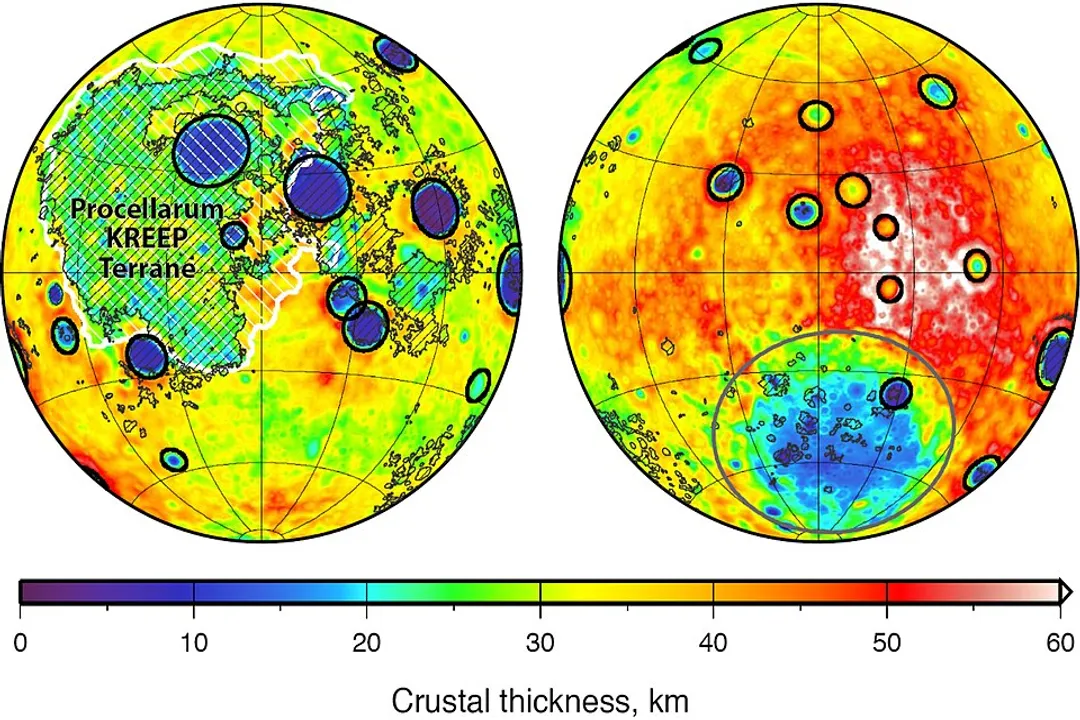
The story of the Moon’s geological life is one of gradual fading, a process far more complex than a simple on/off switch. For a long time, the scientific consensus, based on early Apollo sample returns, suggested that the Moon had gone cold and quiet relatively early in its history. However, modern remote sensing technology has dramatically revised this timeline, pushing the estimated end of significant activity much closer to the present day than once imagined. The core question—when did it stop?—doesn't have a neat year attached; instead, it's a story of epochs ending at different times.
# Ancient History
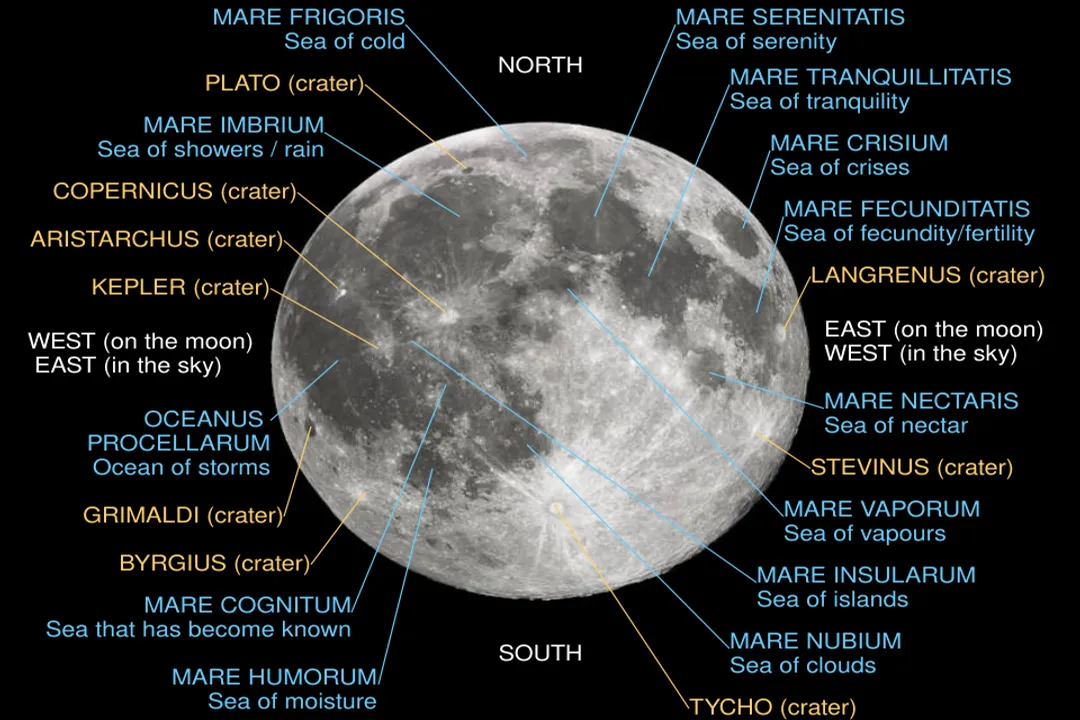
The Moon began its life undergoing rapid differentiation, separating its interior into a core, mantle, and crust, a process indicative of intense early heat and activity. This early furnace powered the most dramatic phase of its existence: massive volcanism. These eruptions spewed out vast quantities of dark, basaltic material that flooded the large impact basins, creating the smooth, dark plains we see from Earth—the maria (seas).
# Eruptions Cease
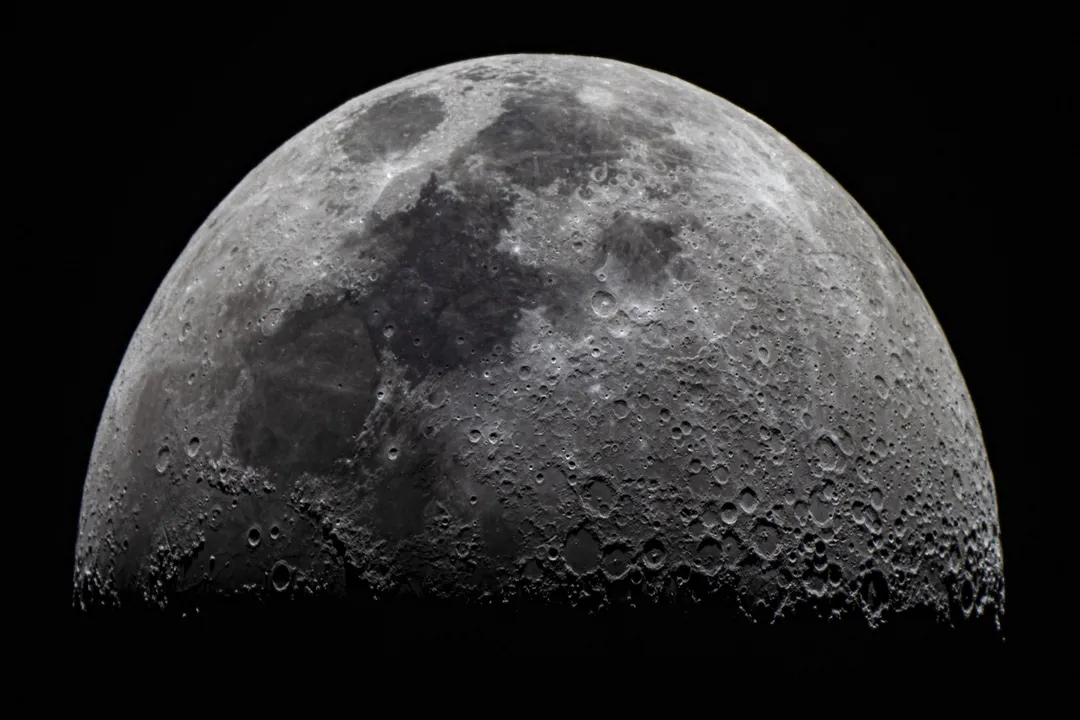
The era of the grand lunar resurfacing, the formation of these extensive lava plains, drew to a close significantly earlier than the Moon's total geological silence. Most sources agree that the bulk of this major volcanism, which laid down the most visible features of the modern lunar face, essentially stopped around 3 billion years ago. In fact, experts in the early 1970s often quoted this 3-billion-year mark as the point when the Moon became geologically "dead".
However, that timeline has proven too neat. Subsequent analysis of collected rocks and later orbital data suggests that lava flows didn't all cease simultaneously across the entire satellite. Evidence points to some isolated volcanic episodes continuing long after the bulk of the mare volcanism ended, with the latest flows possibly extending to as recently as 1 billion years ago. This means that for roughly two billion years after the Moon's "main event," pockets of residual heat were still capable of driving magma to the surface, albeit on a much smaller scale.
# Wrinkle Ridges
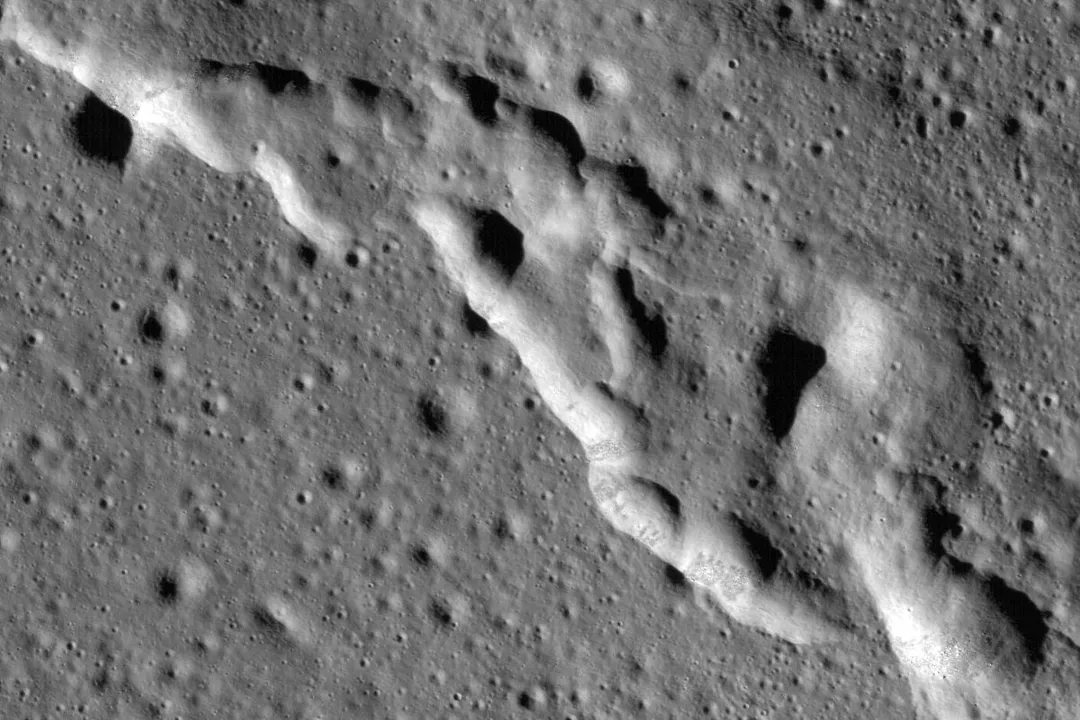
If the Moon were completely inactive, its surface should remain static. Yet, detailed imaging from orbit suggests otherwise. A key piece of evidence pushing back the date of the Moon's "death" comes from studying wrinkle ridges. These features are essentially compressional thrust faults—cracks and folds in the surface crust caused by the Moon slowly contracting as its interior cools.
The Lunar Reconnaissance Orbiter (LRO) has captured high-resolution imagery revealing many wrinkle ridges that appear surprisingly fresh. Geologists estimate that the most recent of these tectonic features formed within the last billion years. This observation is crucial because it tells us that the internal engine responsible for contracting the Moon has not yet fully powered down. The very fact that these features are young means that even in the last billion years, the Moon's crust was actively deforming under internal stress. It is a shift from the dramatic, fluid geology of its youth to a slow, persistent internal squeeze.
# Seismic Whispers
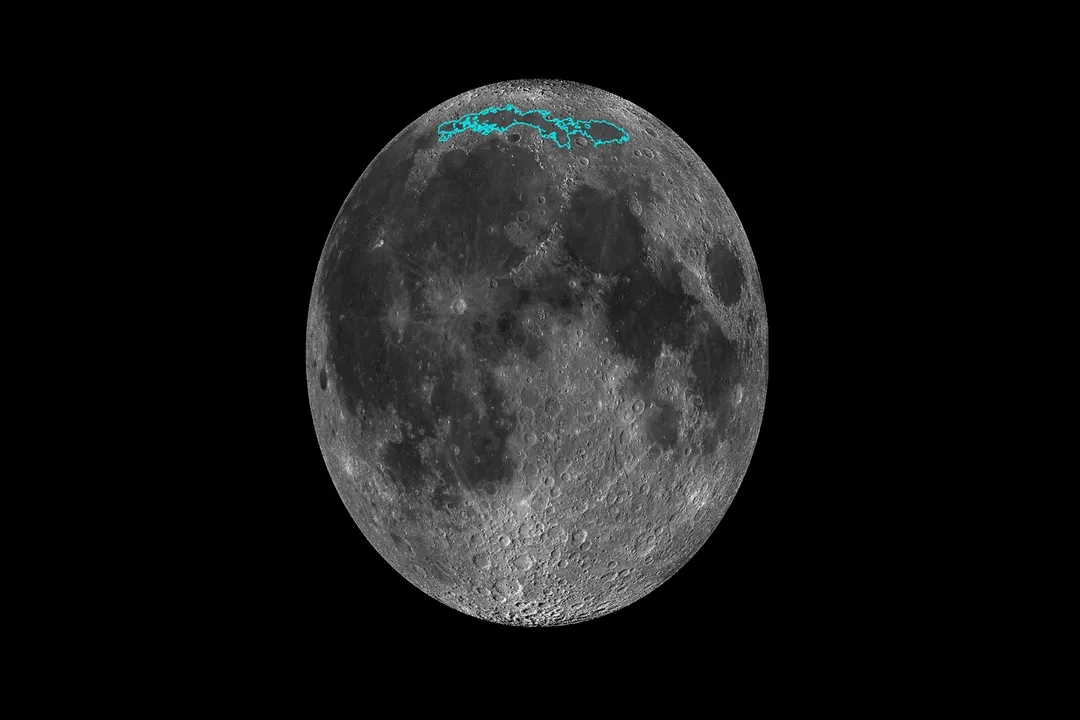
Beyond visible surface features, the Apollo missions left behind seismometers that provided an intimate look at the Moon's internal vibrations. While we often think of geological activity as requiring flowing magma or massive quakes, the Apollo data revealed the presence of shallow moonquakes. These quakes are thought to be caused by the tidal flexing of the Moon due to Earth's gravity, combined with the ongoing contraction squeezing the crust.
While not a sign of explosive volcanism, the detection of these ongoing seismic tremors implies that the Moon remains physically dynamic today, even if on a very minor scale. If the Moon were entirely geologically dead—meaning the interior had fully solidified and cooled to a stable state—such continuous, albeit small, tectonic stresses would likely not be generating detectable seismic energy. Thus, the Moon's "activity" has transitioned from widespread lava flows to minor, continuous adjustments in its solid shell.
# Activity Timeline
To synthesize these findings, we can map out the Moon's geological life not as a single event, but as a sequence of transitions. The cessation of major resurfacing happened around 3 billion years ago, though some isolated lava flows may have trickled out as late as 1 billion years ago. What we are certain of now is that the tectonic response to cooling—the formation of wrinkle ridges—was still occurring within that last billion-year window.
It is fascinating to compare the relative timescales. The Earth is still highly active, with plate tectonics constantly recycling its crust over timescales of tens to hundreds of millions of years. The Moon’s most recent, dated significant activity (the latest wrinkle ridges) occurred over a period that is, by comparison, very recent in cosmic time, yet it involves processes billions of times slower than Earth's own surface changes. If we look at the scale of activity, the Moon is in a state of near-cessation, yet the evidence shows it hasn't fully crossed the threshold into permanent geological inertness. Framing this simply: the Moon experienced a transition from a hot, fluid body to a cold, shrinking one, and the shrinking phase is demonstrably younger than we once thought.
# Surface Stability
The implications of this drawn-out geological death are not just academic; they have practical relevance for future exploration. If a feature like a wrinkle ridge can form within the last billion years, it suggests that the crust is still under enough thermal and gravitational stress to fracture. For astronauts planning to build permanent bases, understanding the current state of internal stress is key. A world perceived as completely stable might, in fact, still be undergoing slow, subtle deformation.
Imagine a potential lunar habitat constructed on what appears to be a flat, ancient basalt plain. If that plain is crisscrossed by faults that are only a few hundred million years old, those faults might still be slowly creeping or prone to sudden small slips caused by tidal loading or residual thermal stresses. This forces a subtle but important shift in planning: instead of assuming a static environment akin to an ancient, cold asteroid, we must consider the Moon as a slowly settling body, requiring structural engineering to account for possible subtle ground movement over multi-century timescales. This is a consequence of the Moon’s thermal inertia—it is simply taking an extraordinarily long time to fully cool down compared to smaller, more rapidly cooling bodies in the solar system.
Related Questions
#Citations
Moon - Wikipedia
When did the moon lose mantle activity(active tectonic plates)???
Is the moon still geologically active? Evidence says it's possible
Is the moon geologically dead? Maybe not, says new evidence
Study Finds New Wrinkles on Earth's Moon
Moon Not as 'Geologically Dead' as Previously… - Maryland Today
Moon Dead for 3 Billion Years, Experts Say - The New York Times
Moon remained geologically active longer than expected - Facebook