What term describes the dark, extensive lava plains visible on the Moon's face?
Answer
maria
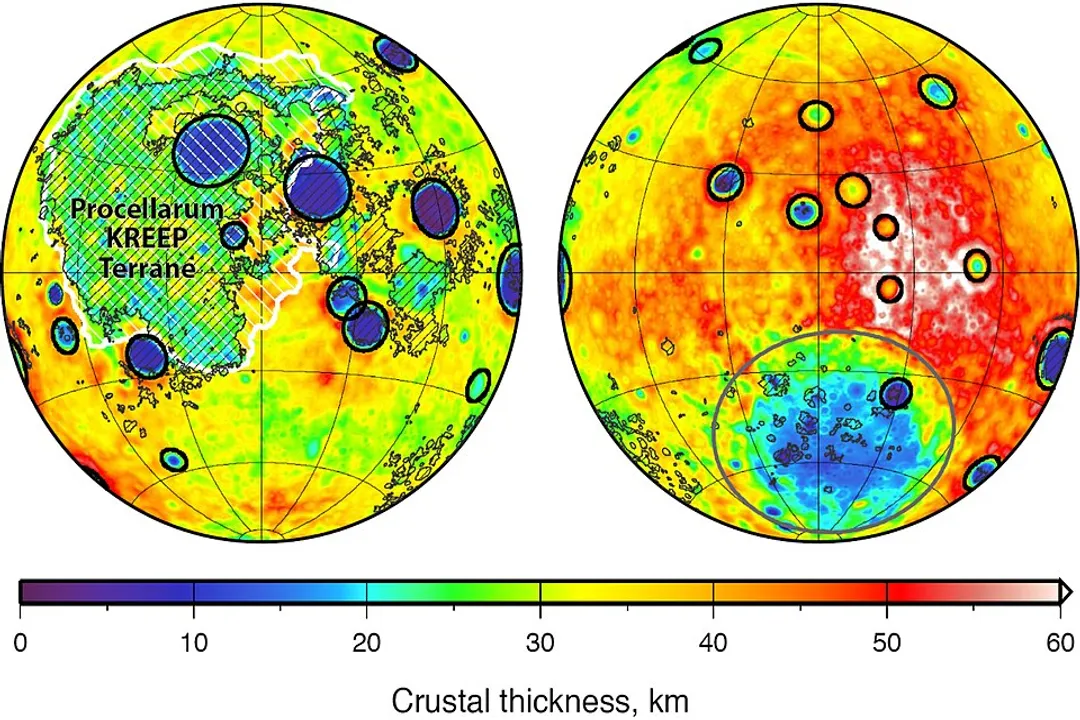
During the Moon's most active ancient history, intense internal heat powered massive eruptions. These eruptions expelled vast quantities of dark, low-viscosity basaltic material. This molten rock flowed out, flooding the enormous impact basins on the surface. When this material eventually cooled and solidified, it formed the smooth, dark plains that are easily visible when observing the Moon from Earth. These plains are scientifically designated by the Latin term *maria*, which translates to 'seas'.
Related Questions
What revised the estimated end of significant lunar activity compared to early consensus?When did the bulk of major lunar volcanism, forming the maria, essentially stop?How recently might isolated volcanic episodes have extended after the main resurfacing ended?What geological features provide evidence that the Moon's crust was actively deforming within the last billion years?What phenomenon causes the formation of wrinkle ridges on the lunar surface?Which orbiter provided crucial high-resolution imagery demonstrating recent tectonic activity?What primary mechanism is thought to cause the shallow moonquakes detected by Apollo seismometers?What term describes the dark, extensive lava plains visible on the Moon's face?What geological implication must future lunar habitat planning account for due to recent wrinkle ridge formation?What process is slowing the Moon's geological activity compared to Earth's crustal recycling?