What moons are geologically active?
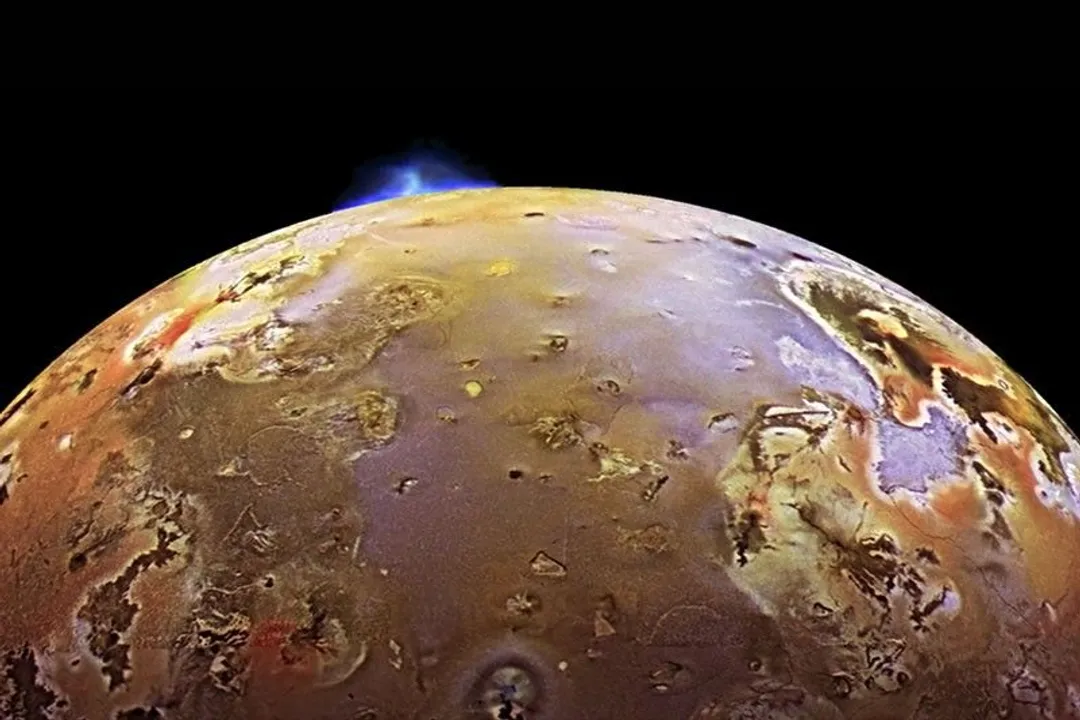
The presence of geological activity on a moon fundamentally requires an internal heat source sufficient to drive processes like volcanism, cryovolcanism, or significant tectonic movement. While our Solar System boasts a multitude of satellites orbiting the giant planets, only a select few possess the thermal engine necessary to maintain a dynamic surface, making them prime targets for planetary geologists. Most moons, like Earth's Moon or Jupiter's distant Callisto, cool over eons, leaving behind heavily cratered, static surfaces. However, a handful of worlds defy this expected orbital cooling, displaying signs of ongoing change driven by powerful, external forces.
# Volcanic Inferno
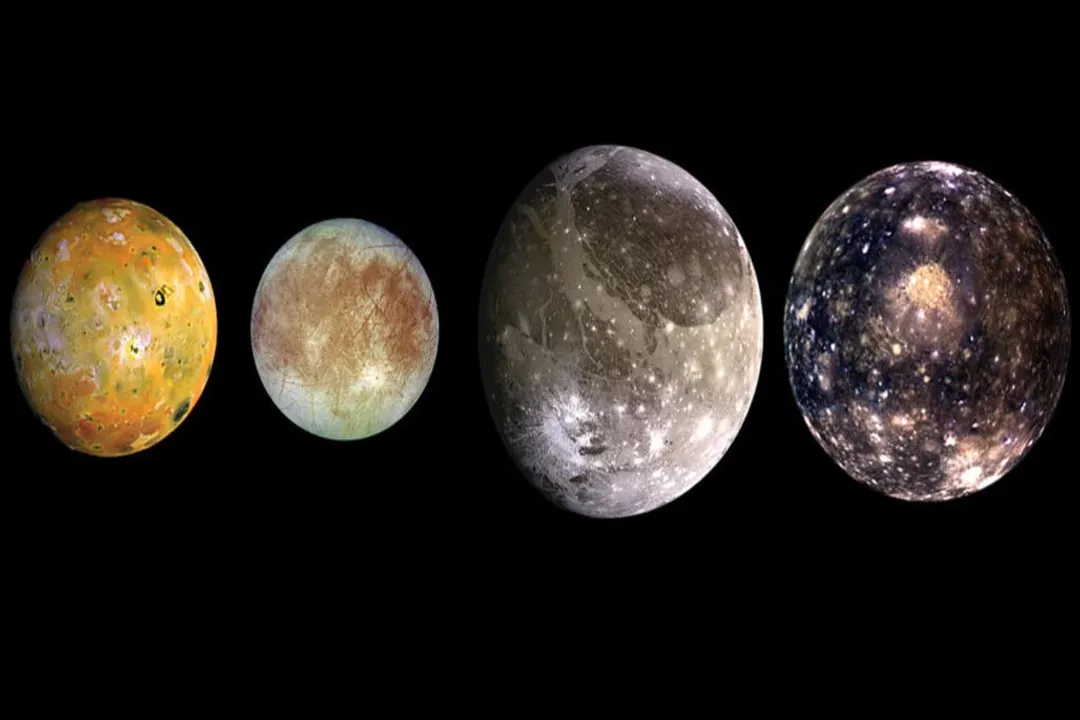
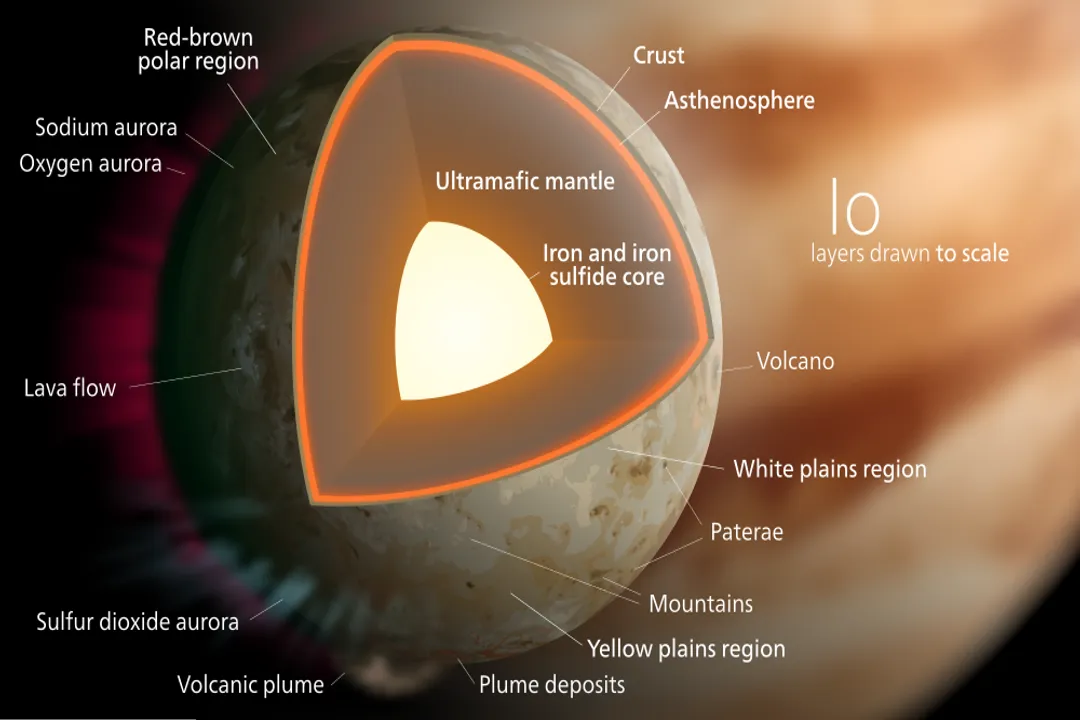
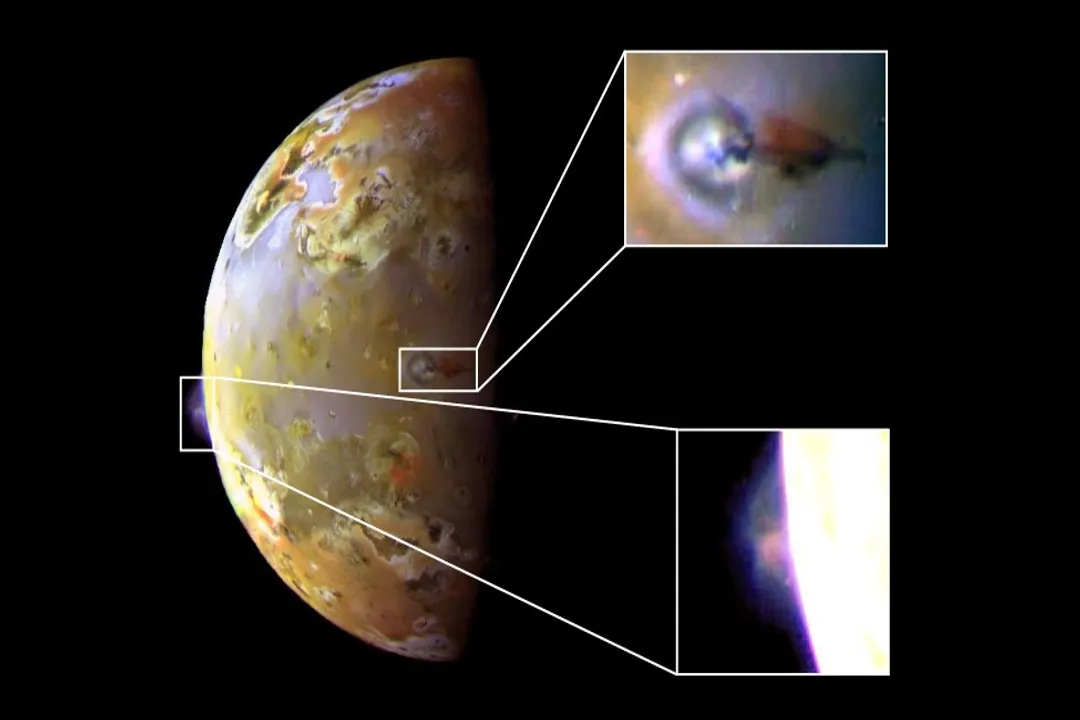
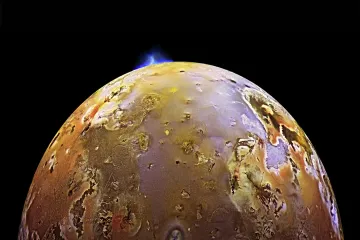
Io, the innermost of Jupiter's four largest moons, stands alone as the most violently geologically active body in the entire Solar System. Its surface is almost entirely covered by sulfurous deposits, the result of hundreds of active volcanoes constantly reshaping the landscape. This extreme activity is not powered by radioactive decay within Io itself, but rather by the relentless gravitational tug-of-war exerted by Jupiter and its siblings, Europa and Ganymede.
This mechanism is known as tidal heating. Jupiter’s immense gravity stretches and squeezes Io as it orbits, generating internal friction that manifests as extreme heat. The orbital resonance between Io, Europa, and Ganymede locks their orbits into a specific pattern, ensuring this flexing never stops. Because this heating has been sustained for billions of years, Io shows remarkably few large impact craters; anything that lands on the surface is quickly covered by fresh lava flows. This constant resurfacing means that Io acts as a laboratory for observing high-energy planetary geology driven purely by external mechanics, offering a unique comparison against worlds heated primarily by internal decay.
# Ocean Shells
Moving outward from Io, the next Galilean moon, Europa, presents a different flavor of geological dynamism. While Io cooks with silicate lava, Europa’s activity centers around its substantial subsurface ocean, which is thought to be maintained by the same tidal flexing mechanism originating from Jupiter. Evidence suggests Europa’s icy shell is actively being cracked, stretched, and resurfaced.
The features seen on Europa—chaotic terrain, crisscrossing lineaments, and potential plumes venting material into space—imply that warmer, perhaps slushy or liquid material from the deep ocean is migrating upward. This is a key distinction from Io: where Io’s energy output melts rock, Europa’s energy output melts water ice, leading to cryovolcanism rather than traditional volcanism. This continuous exchange between the liquid interior and the frozen surface makes Europa one of the most compelling places in the Solar System to search for extant life.
# Icy Eruptions
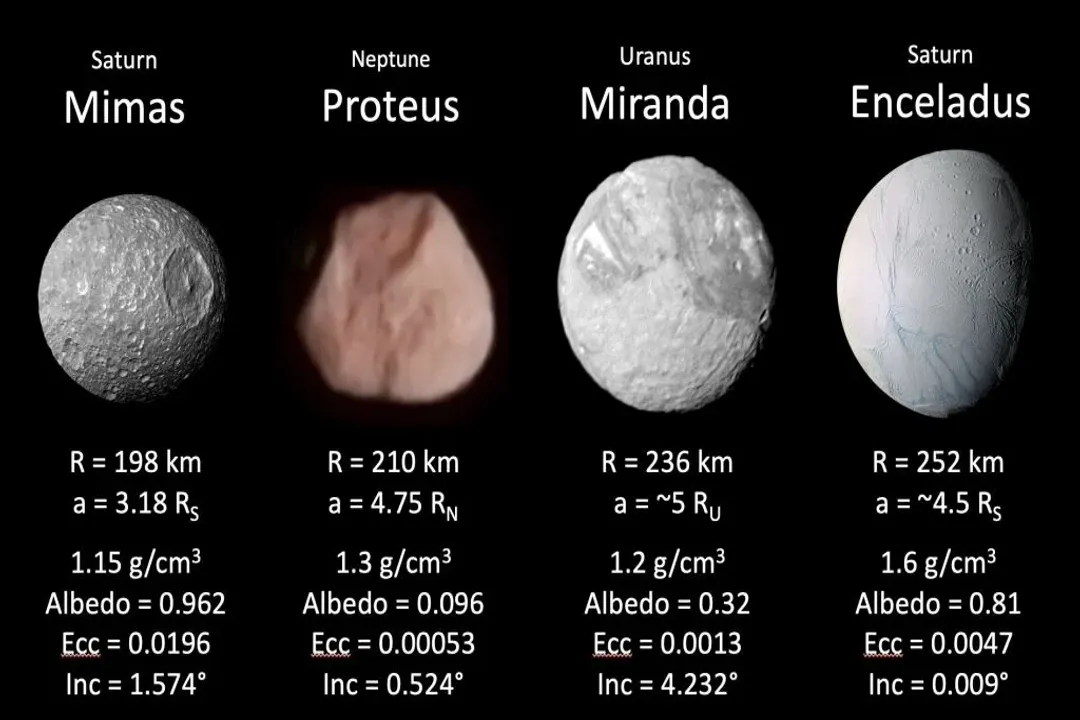
Beyond the Jovian system, the moons of the outer planets also host geologically active worlds, often exhibiting cryovolcanism driven by their own planetary resonances or remnant heat. Saturn’s moon Enceladus is famous for the massive plumes erupting from its south pole, specifically from fissures informally called "tiger stripes". These plumes confirm the presence of a warm, salty liquid water ocean beneath its icy crust, making Enceladus a major focus for astrobiology. The energy keeping this water liquid, like Europa’s, is largely derived from tidal forces exerted by Saturn.
In contrast, Neptune’s largest moon, Triton, shows evidence of past or current nitrogen cryovolcanism. While its heat source is less definitively understood than the tidally locked worlds, its young surface features suggest geological processes are ongoing, perhaps powered by residual heat from its formation or tidal interaction with Neptune.
# Volatiles World
Saturn’s largest moon, Titan, displays a fascinating, though slower, form of geological activity that involves hydrocarbons rather than water or silicates. Titan possesses a thick atmosphere and stable bodies of liquid on its surface, but this liquid is primarily methane and ethane. Its geology involves cycles of freezing, thawing, and flow, analogous to Earth's water cycle but using different chemical components. While active volcanism might not be its dominant process, the chemical cycling and movement of surface materials qualify it as geologically dynamic over its own timescales.
When comparing the drivers of activity across these diverse worlds—from Io’s magma to Europa’s water and Titan’s methane—it becomes apparent that the type of surface geology is directly correlated with the chemical composition of the layer being heated. A world with a rocky mantle and active silicates will erupt lava; a world with an ice shell over a water ocean will vent water vapor or slush; and a world with surface methane ice will drive methane flows. This correlation helps researchers predict where specific geological processes might be found on distant, unobserved icy worlds.
# Differentiation Patterns
Not all large moons share the same fate, even within the same planetary system. Consider Jupiter's third-largest moon, Ganymede. It possesses its own intrinsic magnetic field, which strongly suggests that it still harbors a molten, electrically conducting layer deep inside, pointing toward active internal differentiation or at least recently past activity. Evidence of grooved terrain and tectonic features suggests resurfacing events occurred, though perhaps less frequently or violently than on Europa.
This contrasts sharply with Callisto, the outermost Galilean moon. Callisto is often described as a heavily battered, geologically dead world. Unlike its inner siblings, Callisto has not experienced significant tidal heating due to its greater distance from Jupiter and its orbital path, which lacks the tight resonant coupling experienced by Io, Europa, and Ganymede. Its surface is ancient and cratered, representing the long-term, quiet state expected of most large satellites once their initial formation heat has dissipated.
In examining these systems, it is clear that mere size or proximity to a gas giant is insufficient to guarantee activity; the precise geometry of orbital mechanics dictates which moons receive the necessary energy input. Of the major satellites orbiting the gas giants, only a small fraction are currently recognized as geologically vibrant, underscoring how specific the conditions required for internal dynamism truly are.
# Heat Endurability
The ability of a moon to sustain activity is tied directly to its size, which influences how quickly it loses its initial heat, and the efficiency of its specific heating mechanism. Ganymede, being the largest moon in the Solar System, retained enough mass to perhaps maintain internal differentiation and a magnetic field even as tidal forces waned. Io is a special case; its extreme tidal heating overrides any cooling effect from its size, keeping it molten.
For bodies like Europa and Enceladus, the required heat budget to maintain a liquid ocean is surprisingly small compared to what is needed to maintain a molten silicate mantle like Io’s. This means that while Io is demonstrably the most active, worlds like Europa and Enceladus can sustain activity, marked by subtle resurfacing or episodic plume events, over timescales that make them viable candidates for harboring life today. The data gathered from missions observing these active worlds—from the plumes of Enceladus to the plumes hinted at on Europa—provides planetary scientists with crucial benchmarks for understanding thermal evolution across diverse celestial bodies.
Related Questions
#Citations
Io (moon) - Wikipedia
The Favorite Solar System Moons of Planetary Geologists
Are moons geologically active? - Astronomy Stack Exchange
The Galilean Moons of Jupiter | Astronomy - Lumen Learning
Io - NASA Science
Why is Jupiter's moon Callisto geologically dead, when smaller icy ...
Geomorphic Features Of Europa - NMSU Astronomy
Jupiter's Moon Io has been Volcanically Active for Billions of Years
Io: Jupiter's Volcanic Moon - Facebook