How does the geological activity on Io compare to the activity on other moons?
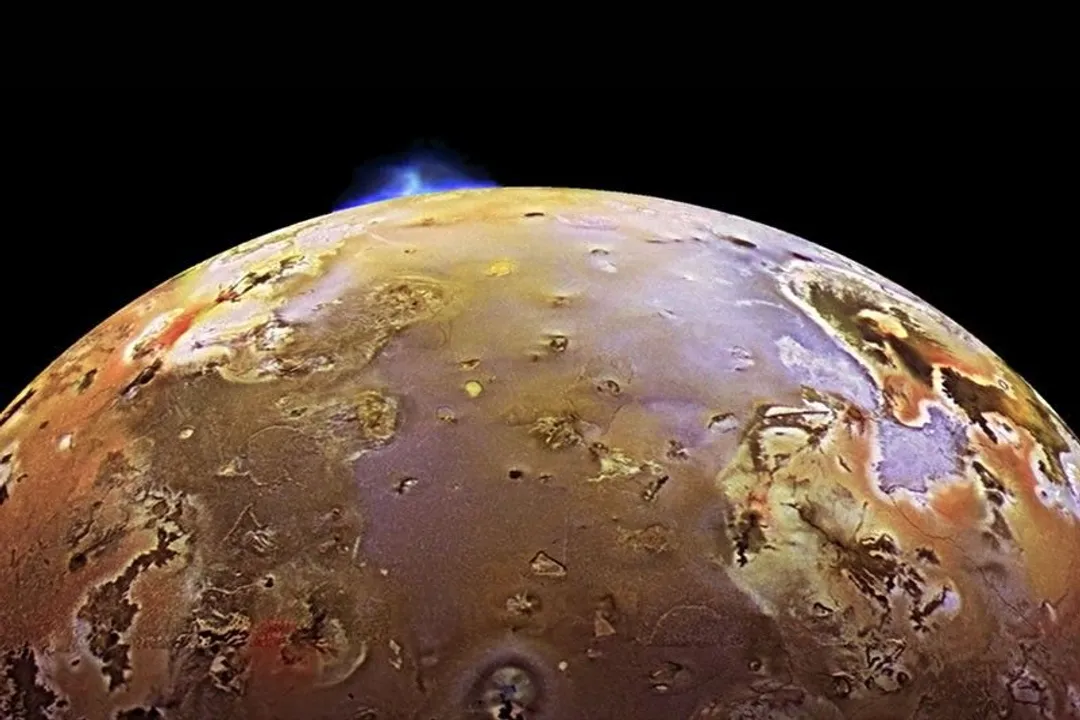
Jupiter's moon Io stands alone in the solar system as a world defined by ceaseless, violent geological activity. [3] While other celestial bodies, like Earth, exhibit volcanism, the sheer scale and persistence of Io’s eruptions dwarf those found anywhere else within our planetary neighborhood. [8] To understand Io is to confront the most extreme manifestation of internal energy release known on any moon, prompting a necessary comparison with its quieter, or differently active, neighbors. [5]
# Io's Intensity
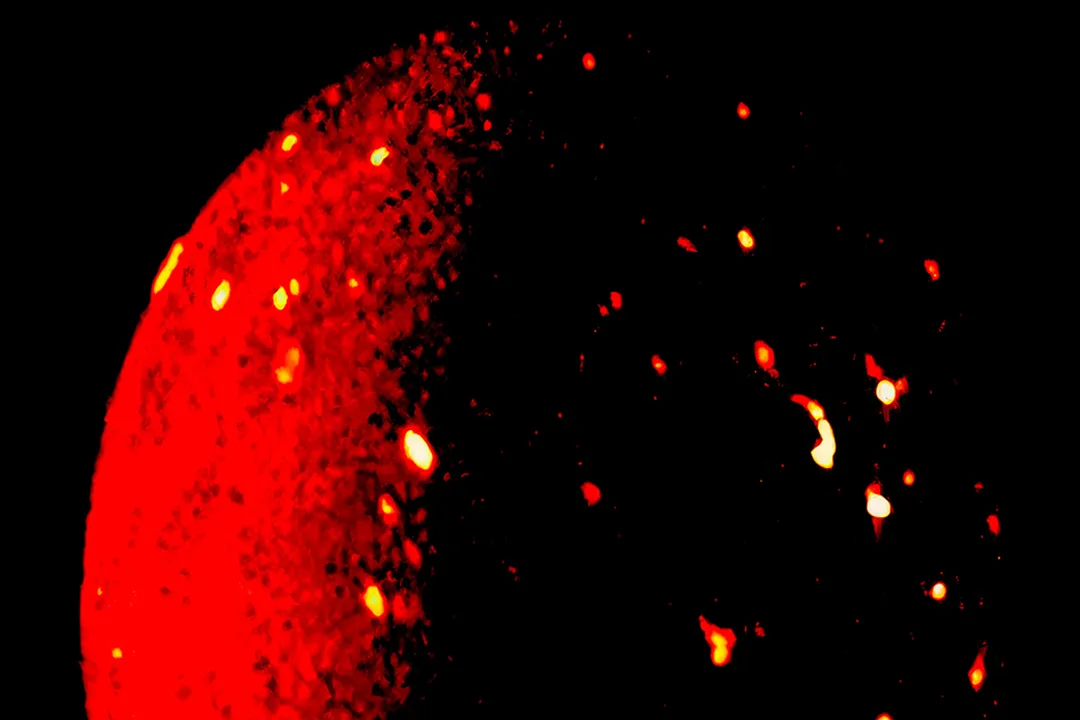
Io is arguably the most volcanically active world known. [3][9] It hosts hundreds of volcanoes, some of which spew sulfur and sulfur dioxide hundreds of kilometers high into space, forming massive plumes. [3] This activity results in a surface that is constantly being erased and redrawn; virtually no impact craters survive for long because lava flows resurface the entire moon remarkably quickly. [9] Io's surface is not just dotted with active vents; it is a dynamic landscape where volcanic deposits often cover more than 90% of the surface. [3]
When we place Io next to other moons, the difference is stark. For instance, when looking at the icy satellites of the outer solar system, activity often manifests as cryovolcanism—the eruption of water, ammonia, or methane ices rather than molten rock. [7] While moons like Enceladus show evidence of subsurface liquid water venting through cracks in the ice, Io is actively ejecting molten silicates and sulfur compounds from deep within its interior. [5] The energy driving Io’s geology is simply orders of magnitude greater than the subtle flexing that might maintain subsurface oceans elsewhere. [7]
Consider a rough comparison of resurfacing timescales. If Earth’s resurfacing were solely driven by volcanism at Io's present rate, our entire planet’s crust would be completely replaced in an astonishingly short time frame. Based on models of Io’s energy budget, scientists estimate that its entire surface undergoes resurfacing perhaps every few thousand years. [9] In contrast, Earth's geological cycles, involving plate tectonics, operate over tens to hundreds of millions of years. This difference highlights that Io is not just more active; it operates on an entirely different, much faster, geological clock due to the extreme heat generation occurring beneath its crust. [5]
# Tidal Power
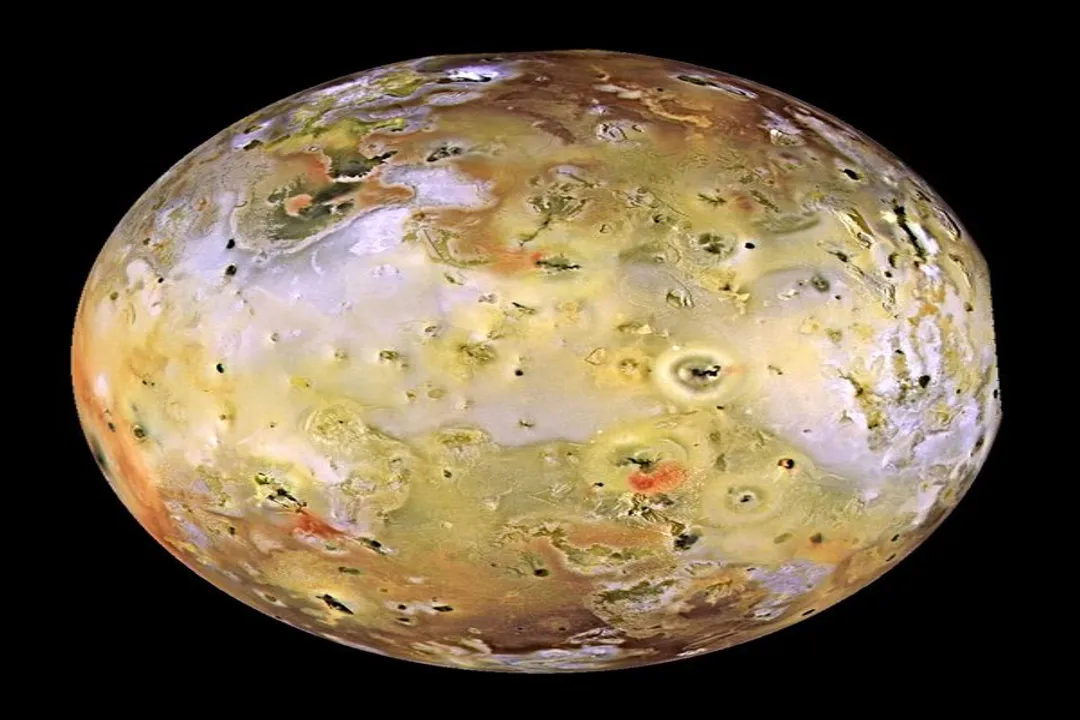
The primary reason for Io's spectacular geological differences lies in its intense heating mechanism: tidal flexing. [3][7] Io is locked in a gravitational tug-of-war, caught in a resonance orbit with Europa and Ganymede, Jupiter’s other large moons. [3][7] As Io orbits Jupiter, this gravitational interaction constantly squeezes and stretches the moon’s interior. [3]
This continuous deformation converts orbital and rotational energy directly into heat, essentially cooking the moon’s interior. [5][7] This mechanism is a major departure from the internal heating sources that drive activity on other bodies. Earth’s internal heat, for example, primarily comes from the slow decay of radioactive isotopes within its mantle and core. [7] While radioactive decay is a factor everywhere, on Io, the tidal heating vastly overshadows it, providing the massive, continuous energy required to keep hundreds of volcanoes erupting. [5]
The Quora discussion comparing Io and Europa explicitly notes this distinction in heat sources, pointing out that while Europa likely has tidal heating sufficient to maintain a liquid water ocean beneath its ice shell—a significant geological feature—Io receives far more energy. [7] This disparity in heating means Europa's energy budget supports liquid water, whereas Io's budget supports molten rock on a global scale. [7]
# Comparing Worlds
The contrast between Io and the icy satellites is perhaps the most telling comparison when assessing geological activity across the Jovian system. [7]
# Icy Shells
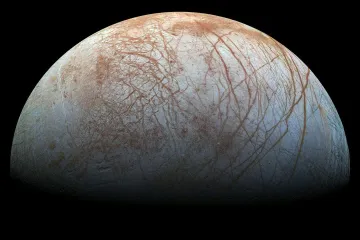
Moons like Europa and Enceladus possess thick, cold, fractured ice shells that hide vast liquid water oceans. [7] Their geological activity is defined by cryovolcanism, where liquid or slushy material erupts through cracks, often seen as plumes venting into space. [3] The geological action on these worlds is about maintaining a liquid layer and exchanging material between the interior ocean and the surface ice. [7] The surface features are dominated by linear fractures, chaos terrains, and relatively few impact features, suggesting ongoing resurfacing via ice movement, but at a pace that allows features to persist for millions of years. [7]
# Io's Surface
Io, by contrast, is completely devoid of surface water ice. [3] Its surface is hot, volcanic rock and sulfur compounds. [3] Its activity is driven by magma, not brine. This means that while Europa’s geology is about freezing and thawing, Io’s geology is about melting and erupting. [5]
| Feature | Io | Europa | Earth (Analogue) |
|---|---|---|---|
| Primary Heat Source | Intense Tidal Flexing [3][7] | Tidal Flexing [7] | Radioactive Decay [7] |
| Dominant Activity | Silicate and Sulfur Volcanism [3] | Cryovolcanism/Ice Tectonics [7] | Plate Tectonics [7] |
| Resurfacing Rate | Extremely fast (thousands of years) [9] | Slow/Moderate (millions of years) [7] | Very Slow (tens of millions of years) [7] |
| Surface State | Molten/fresh volcanic deposits [3] | Water ice shell [7] | Silicate rock crust [7] |
This data table illustrates how Io’s energy input dictates a fundamentally different geological outcome than that seen on other moons, even those experiencing significant tidal forces like Europa. [7]
# Activity Timeline
The sheer duration of Io’s volcanic regime is another remarkable point of comparison. Geological evidence suggests that Io has been volcanically active for a very long time. [9] Models indicate that its high level of activity is not a recent phenomenon, but rather has been sustained for potentially billions of years. [9] This longevity suggests that the orbital resonance that generates the massive tidal forces has been stable for most of the solar system’s history, keeping Io in a perpetual state of near-melting. [9]
Many other moons that show activity might be experiencing transient episodes. For example, a moon might exhibit plume activity for a period due to a specific orbital shift or a temporary localized heat source, but Io’s activity is systemic and global, fueled by the constant gravitational interaction with Jupiter. [5] The continuous nature of Io's volcanism, demonstrated by the lack of any truly ancient terrain, makes it a unique laboratory for studying long-term geological energy maintenance. [9]
# Implications for Research
Io’s extreme state provides a vital reference point for planetary science that goes beyond simple comparison. For those studying the internal structure of icy satellites, Io serves as the ultimate high-energy calibration point. If scientists detect signs of heating or minor plume activity on a distant, cold moon, they can use the physics derived from Io’s massive tidal energy generation to estimate the maximum possible output from tidal forces in that system. [5]
Furthermore, the processes observed on Io—the rapid cycling of material from the interior to the surface and back—offer insights into how planetary interiors differentiate and evolve under extreme thermal stress. While we cannot directly sample the interior of Io, observing the chemistry of its volcanic plumes, which bring deep material to the surface, gives researchers clues about the composition of its mantle and core that would be impossible to obtain from a geologically quiescent world. [3] In essence, Io’s dramatic geological engine acts as an accelerated model of planetary evolution, albeit one driven by gravity instead of radioactive decay or initial accretion heat. [7] The geological history visible on Io is written in days and years, not epochs. [9]
Related Questions
#Citations
astronomy chapter 11 review Flashcards | Quizlet
How does the geological activity on Io compare to the ... - Brainly
Io - NASA Science
Jupiter's moon Io as seen by the Galileo spacecraft. Io is the most ...
What's Going On Inside Io, Jupiter's Volcanic Moon?
Volcanic Activity on Jupiter's Moon Io - Facebook
What are the main differences in the internal heat sources of Io and ...
Are moons geologically active? - Astronomy Stack Exchange
Jupiter's Moon Io has been Volcanically Active for Billions of Years