What makes Io different from the other moons of Jupiter?

The solar system's grand tour often focuses on the search for water and life, making moons like Europa or Enceladus headline grabbers. However, Jupiter’s innermost large moon, Io, stands apart in spectacular, fiery contrast to its icy neighbors. While Europa, Ganymede, and Callisto are famous for their frozen crusts, potential subsurface oceans, and ancient, icy terrains, Io offers a raw, unfiltered view of geological violence unlike anything else in the known solar system. It is the most volcanically active world we have ever observed, a place where the term "geologically dead" is utterly meaningless.
# Volcanic World
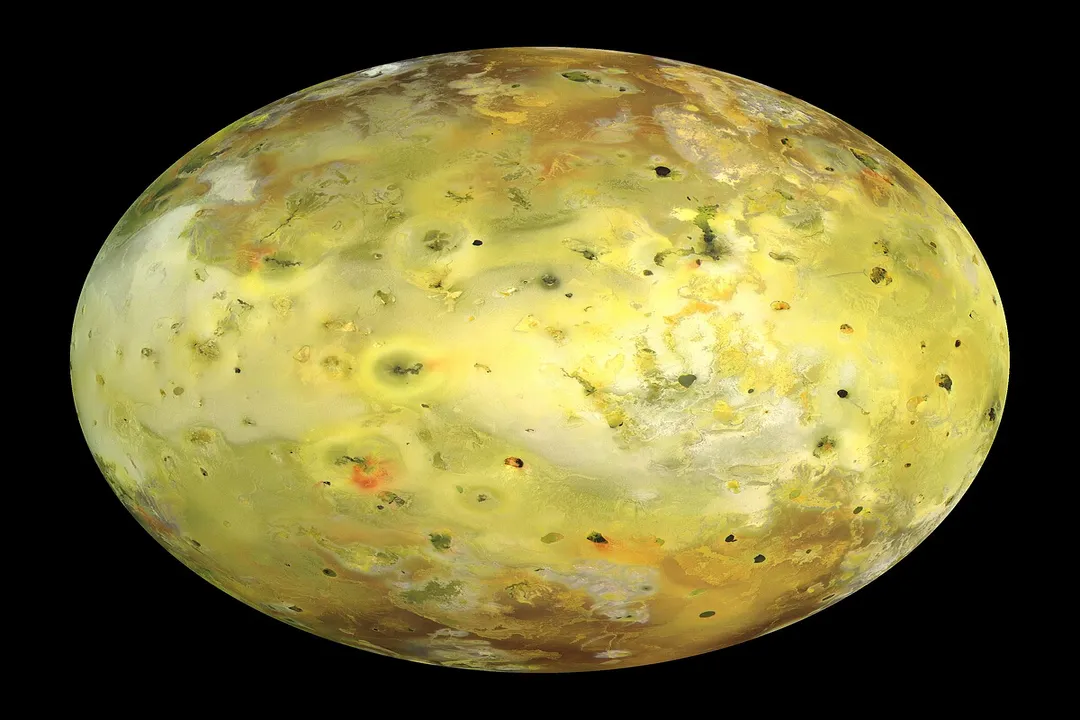
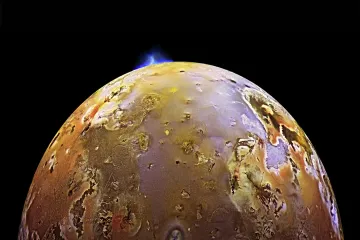
What immediately sets Io apart is its sheer, relentless output of magma and gas. Io hosts hundreds of volcanoes, many of which spew material dozens, sometimes even hundreds, of miles high, lofting plumes visible even from Earth-based telescopes over vast distances. These eruptions are not the slow, effusive flows we see on Earth; they are incredibly energetic events driven by extreme internal heating.
The surface of Io is a chaotic landscape of lava flows, mountains, and plains, constantly being remade. It has the youngest surface of any known solar system body, with estimates suggesting that its entire crust is completely resurfaced in fewer than one hundred million years. To put that timeframe into perspective, a large portion of Earth’s continents have remained relatively stable for much longer periods, and the ice shells of Europa and Callisto appear ancient in comparison, pockmarked with impact craters that Io has long since erased from its own face. This rapid turnover means that any ancient impact craters, or evidence of early solar system bombardment, are quickly buried under fresh volcanic deposits.
# Compositional Difference

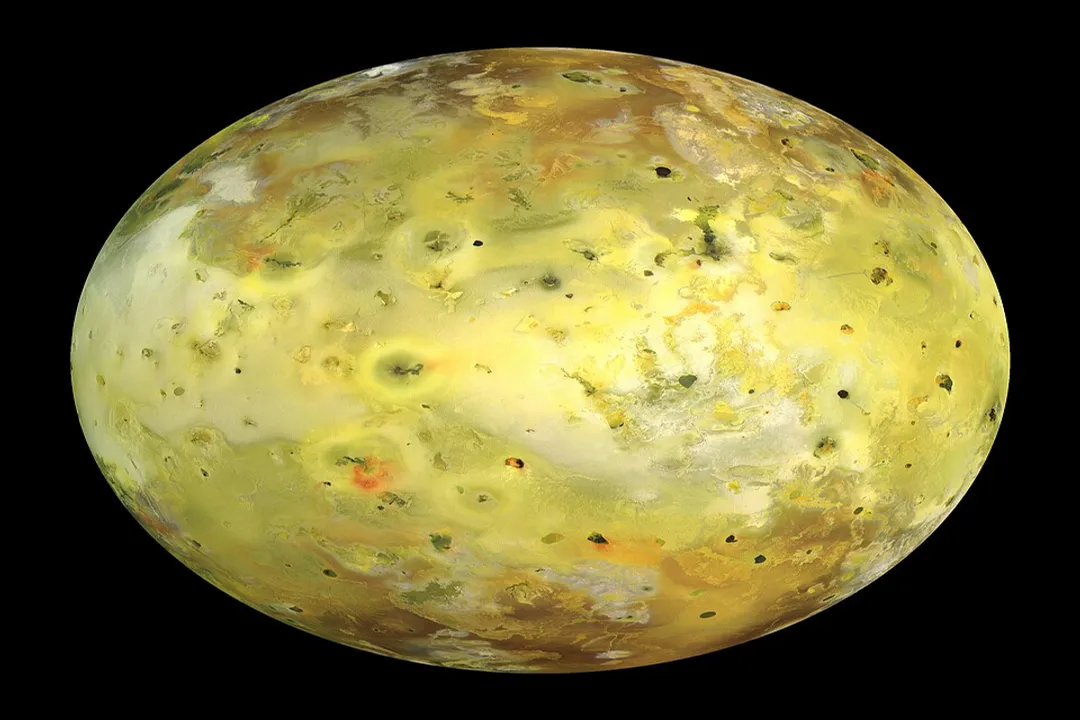
The chemical makeup of Io’s surface is a direct consequence of its intense heat. Unlike the other three Galilean moons, which are composed largely of silicate rock mixed with substantial amounts of water ice, Io is almost entirely rock and molten sulfur. The colorful surface hues—yellows, oranges, reds, and blacks—come primarily from various allotropes of sulfur and sulfur dioxide frost.
The other major moons of Jupiter—Europa, Ganymede, and Callisto—are considered "ice moons". Even where silicate rock may form a core, the outer layers are dominated by frozen water. Europa, for example, is believed to harbor a vast, salty ocean beneath its ice shell, making its environment conducive to the chemistry of life as we know it. Io has essentially no water ice; the extreme temperatures generated internally melt out any volatiles that might otherwise form ice crusts, forcing them out as volcanic gases. This lack of water ice and the dominance of sulfur compounds make Io chemically and geologically alien compared to its three larger siblings.
# The Engine Heat
The fundamental difference between Io and the others lies in why it is so hot. While all the Galilean moons experience some degree of tidal flexing due to Jupiter's massive gravity, Io experiences it in an extreme, focused way. This mechanism is known as tidal heating.
Io orbits Jupiter at a distance of about 422,000 kilometers, placing it closer to the giant planet than any of the other three major moons. This proximity means the gravitational gradient across Io—the difference in pull between its near and far sides—is immense. Furthermore, Io is locked in a crucial orbital relationship with Europa and Ganymede, known as the Laplace resonance. This means that for every one orbit Io completes, Europa completes exactly two, and Ganymede completes exactly four.
This precise 1:2:4 ratio causes Io's orbit to be constantly nudged into a slight eccentricity—meaning it doesn't orbit in a perfect circle. As Io swings closer to Jupiter, it gets squeezed harder, causing its interior to flex and generate frictional heat. As it swings farther out, the squeeze lessens, and then the cycle repeats, over and over again. This constant kneading generates internal heat estimated to be 100 times greater than the heat generated by radioactive decay in Earth's interior.
It is fascinating to consider the delicate balance required for Io’s present state. The tidal heating is so intense that it keeps the entire moon partially molten, yet the system is stable enough to persist over geological timescales. If Io’s orbit were only slightly less eccentric—perhaps 10,000 kilometers further away or closer—the tidal dissipation might drop below the threshold needed to power such prolific volcanism, turning it into a cold, geologically dormant world similar to Callisto.
# Orbital Dance

The orbital characteristics directly dictate Io's thermal state, distinguishing it sharply from Callisto and Ganymede, which are further out and less affected by this precise resonance.
| Moon | Average Distance from Jupiter (km) | Primary Surface Composition | Notable Feature |
|---|---|---|---|
| Io | ~422,000 | Silicates and Sulfur | Extreme Volcanism |
| Europa | ~671,000 | Water Ice | Subsurface Ocean Potential |
| Ganymede | ~1,070,000 | Water Ice | Largest moon in solar system |
| Callisto | ~1,883,000 | Water Ice/Rock Mix | Heavily Cratered Surface |
While Europa and Ganymede are also tidally affected, their orbits are more circular, and their greater distances from Jupiter mean the flexing forces, though sufficient to maintain liquid water interiors, are not strong enough to melt their icy shells completely or drive surface volcanism on Io’s scale. Callisto, the outermost of the four, orbits far enough away that it remains largely geologically inactive, preserving one of the oldest surfaces in the solar system. Io essentially gets the extreme end of Jupiter's tidal flexing, while Callisto gets the mildest effective treatment.
# Magnetosphere Interaction
Io’s extreme environment also results in a dramatic interaction with Jupiter’s powerful magnetic field, something less pronounced for the other moons. Io is embedded deep within Jupiter’s magnetosphere. The moon’s proximity and its electrically charged volcanic plumes—which inject huge amounts of sulfur dioxide into space—create a tremendous electrical current that flows from Io to Jupiter along the magnetic field lines.
This interaction forms an "Io Flux Tube," a magnetic connection that funnels plasma back toward Jupiter’s poles. The sheer scale of this electrical phenomenon is a defining characteristic of Io, effectively making it an integral, massive electrical component of Jupiter’s planetary environment, an interaction far exceeding the magnetic interplay experienced by the more distant, less geologically active icy satellites.
# The Implication for Exploration
When planning missions to Jupiter’s system, Io presents a unique challenge and opportunity compared to its siblings. For missions focused on habitability, like those targeting Europa, the concern is penetrating the ice shell without contamination. For Io, the concern is surviving the volcanic fallout.
The extreme resurfacing rate, while erasing a detailed geological record of Io's past, offers a phenomenal case study in planetary differentiation and the sheer power of tidal mechanics. Any lander sent to Io, such as those planned for future missions, must be designed to withstand intense heat, corrosive sulfur compounds, and the continuous threat of fresh, fast-moving lava flows. It functions as a natural laboratory demonstrating how a world can be kept hot enough to be completely molten internally without relying on internal radioactive decay alone, a powerful testament to the influence of nearby companions in a multi-body system. Understanding Io is key to understanding the full range of activity possible within an orbiting planetary system, proving that "cold and icy" is not the only destiny for moons orbiting gas giants.
Related Questions
#Citations
Io (moon) - Wikipedia
Io: Facts - NASA Science
Why is Io so different compared to other Jovian moons? - Quora
Given they formed in relative proximity to one another, why are some ...
Exploring Jupiter's Moon Io - Elements Magazine
How was Io not torn apart by tidal forces during its formation?
[PDF] Io: A Unique World in our Solar System
The Galilean Moons of Jupiter