What is the most likely origin of the Galilean moons of Jupiter?
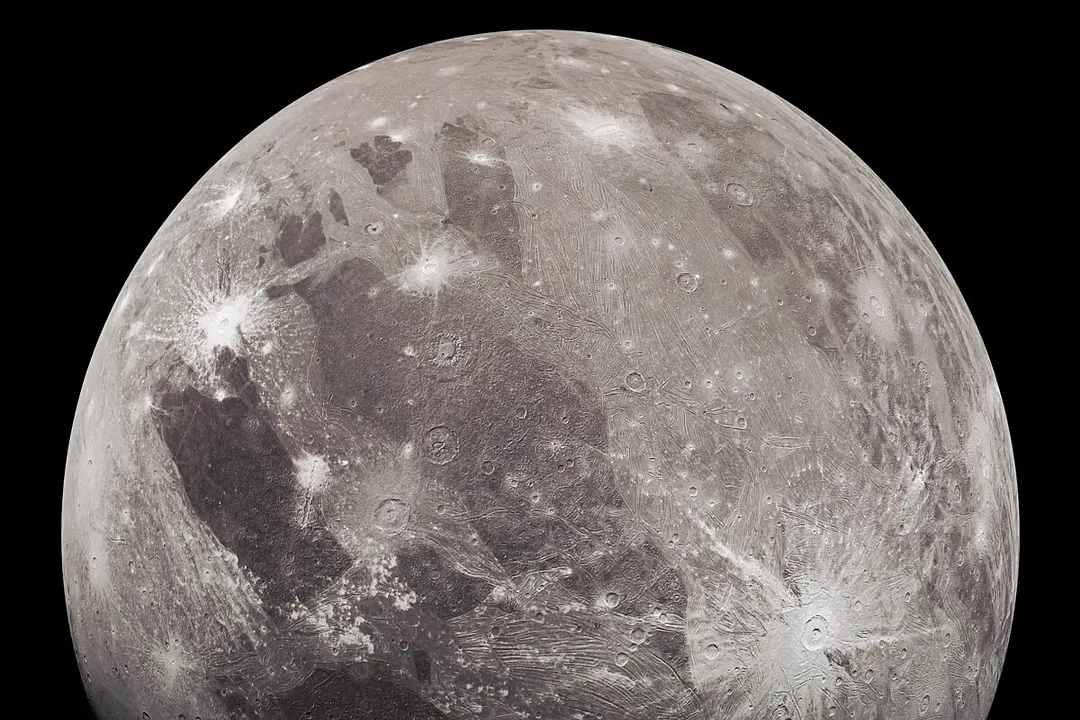
The first clear observations of Jupiter's four largest satellites—Io, Europa, Ganymede, and Callisto—were made by Galileo Galilei in early . This discovery was revolutionary, providing irrefutable evidence that not everything in the heavens orbited the Earth, which significantly undermined the prevailing, Earth-centric model of the cosmos. These worlds, now known as the Galilean moons, are substantial bodies in their own right; Ganymede, for instance, is larger than the planet Mercury. Understanding how these four major moons came to orbit Jupiter has been a central focus of planetary science, leading to a robust, evidence-based model for their creation.
# Galileo's Sighting
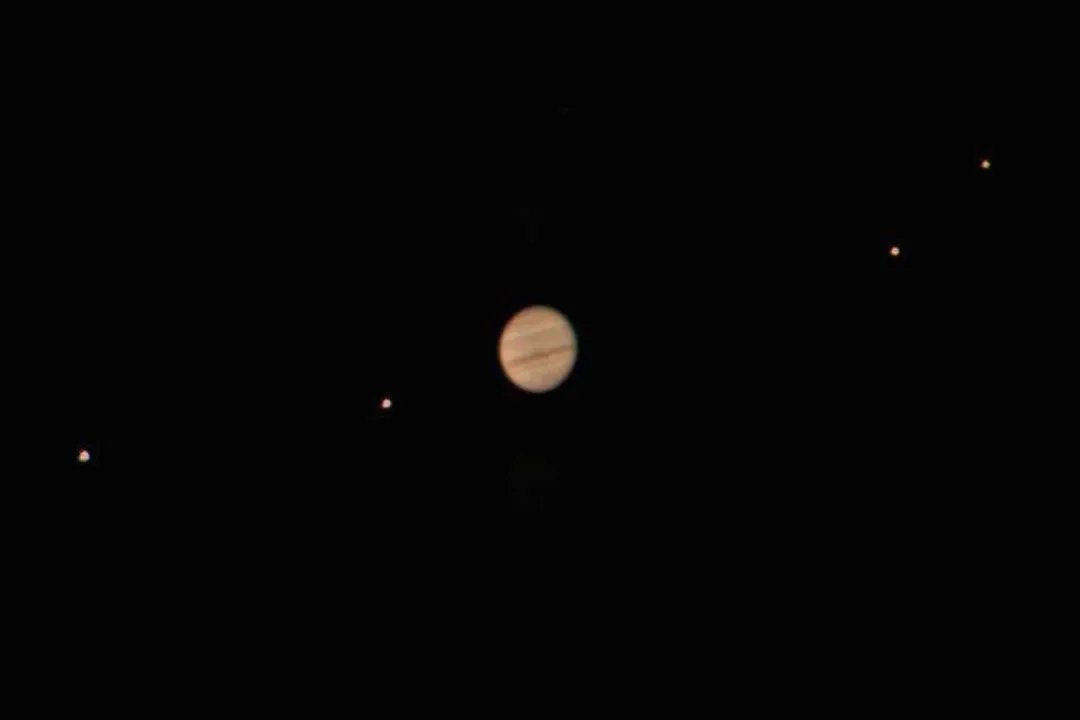
While Galileo is credited with first spotting these celestial companions through his telescope, the method by which they formed had to wait centuries for more advanced theories and spacecraft data to be formulated. These four worlds are massive enough that they were gravitationally bound to Jupiter relatively early in the solar system’s history. The key to their origin lies in recognizing that Jupiter, after condensing from the solar nebula, retained its own significant cloud of gas and dust, a miniature version of the solar system's birth environment.
# Mini Solar System
The overwhelmingly favored scientific explanation for the origin of the Galilean moons is the circumjovian disk (CJD) model, often described as a "mini solar system" scenario. This theory posits that shortly after Jupiter itself formed, it was surrounded by a spinning disk of material, composed of gas and dust, much like the solar nebula that formed the Sun and the planets. The moons then accreted—grew by gradual accumulation of smaller particles—within this disk, orbiting their massive parent planet.
The basic process mirrors planetary formation: material within the CJD clumped together gravitationally over time, starting with dust grains and growing into larger planetesimals, eventually leading to the four major moons we observe today. This process suggests that the four largest moons formed in situ, meaning they formed relatively close to their current orbital distances from Jupiter, though their positions likely shifted over time as the disk evolved.
For instance, the inner three moons—Io, Europa, and Ganymede—are locked in a precise orbital dance known as Laplace resonance, where their orbital periods are in a simple integer ratio ($1:2:4$). This strong, stable configuration is a hallmark of systems that form together within a single, evolving disk, providing powerful evidence for the CJD model over processes that might add moons randomly over billions of years.
# Compositional Divide
While the accretion disk model explains their shared origin framework, the moons are not identical, which suggests the disk itself was not uniform in composition as it orbited Jupiter. The primary compositional difference seems to be related to the ice line—the distance from the young, hot Jupiter where water ice could condense and remain solid.
| Moon | Primary Component | Estimated Compositional Feature |
|---|---|---|
| Io | Rock/Sulfur | Almost entirely refractory/rocky material |
| Europa | Ice/Rock | Significant deep water ocean beneath an icy shell |
| Ganymede | Ice/Rock | Largest, contains significant ice, possibly an internal ocean |
| Callisto | Ice/Rock | Rich in volatile ices, very ancient surface |
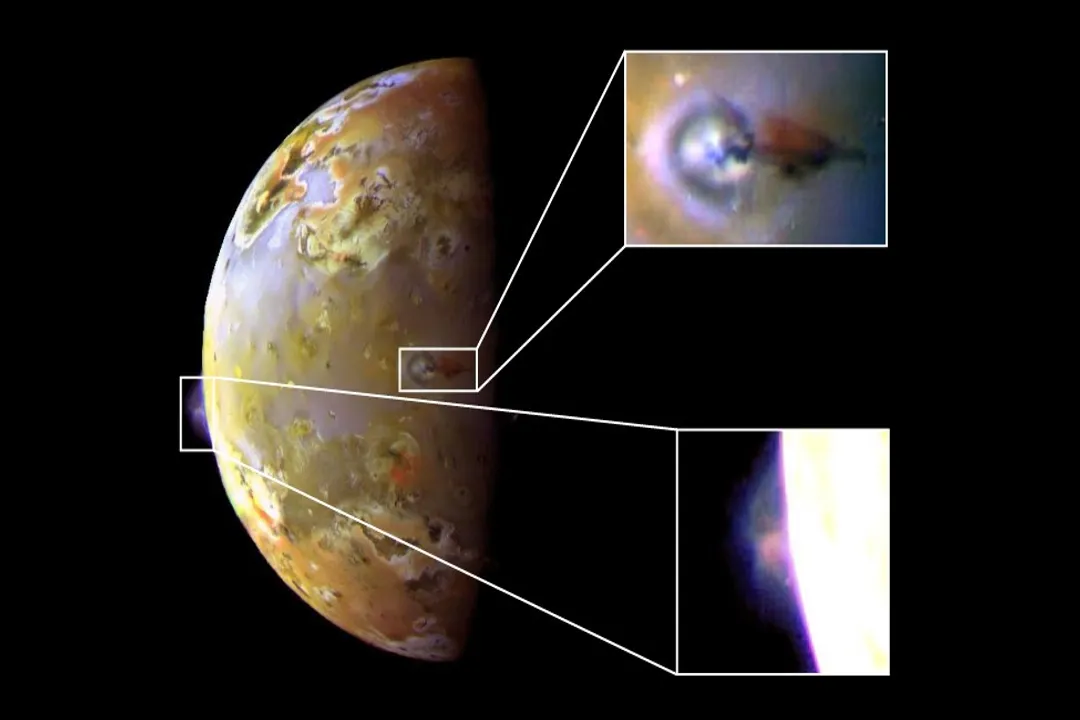
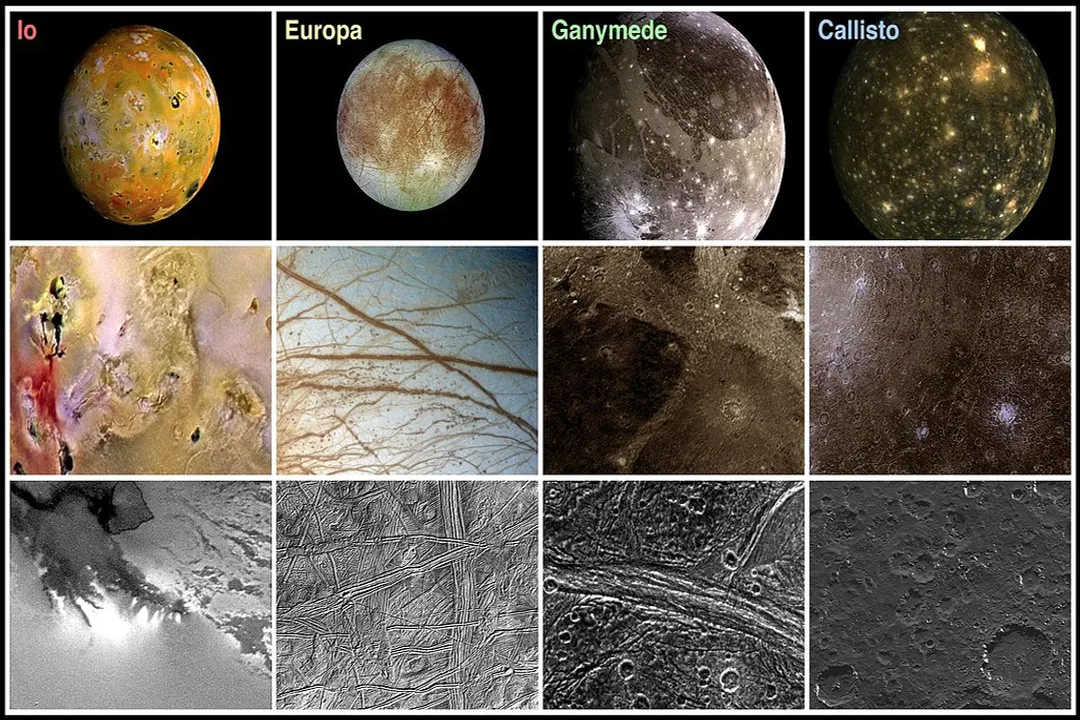
Io, being the innermost of the four, likely formed in a region too hot for significant amounts of water ice to condense and survive; thus, it is primarily composed of rock and sulfur compounds. Moving outward, the temperatures drop, allowing water ice to become a major constituent of the surrounding disk material. Europa, Ganymede, and Callisto all possess substantial ice components in their makeup. Europa and Ganymede are thought to harbor large, subsurface liquid water oceans, while Callisto, the farthest out, is considered a mixture of rock and ice, perhaps the least differentiated of the group. This distinct gradient in composition—rocky inside, icy outside—is precisely what one would expect from accretion within a disk that had a temperature gradient, much like the asteroid belt versus the outer planets in our own solar system.
An interesting consequence of this formation history, which reflects expert thinking in the field, is that the total mass of the current moons is significantly less than what the original circumjovian disk must have contained. This implies a massive loss of material over time. One highly plausible mechanism for this loss involves the intense gravitational influence of Jupiter causing the inner moons, particularly Io, to lose vast amounts of their initial volatile materials through tidal heating and outgassing, effectively shrinking their ice envelopes over eons. The loss of the original gaseous envelope surrounding the moons after their formation is also a critical step in reaching their current state.
# Alternative Capture
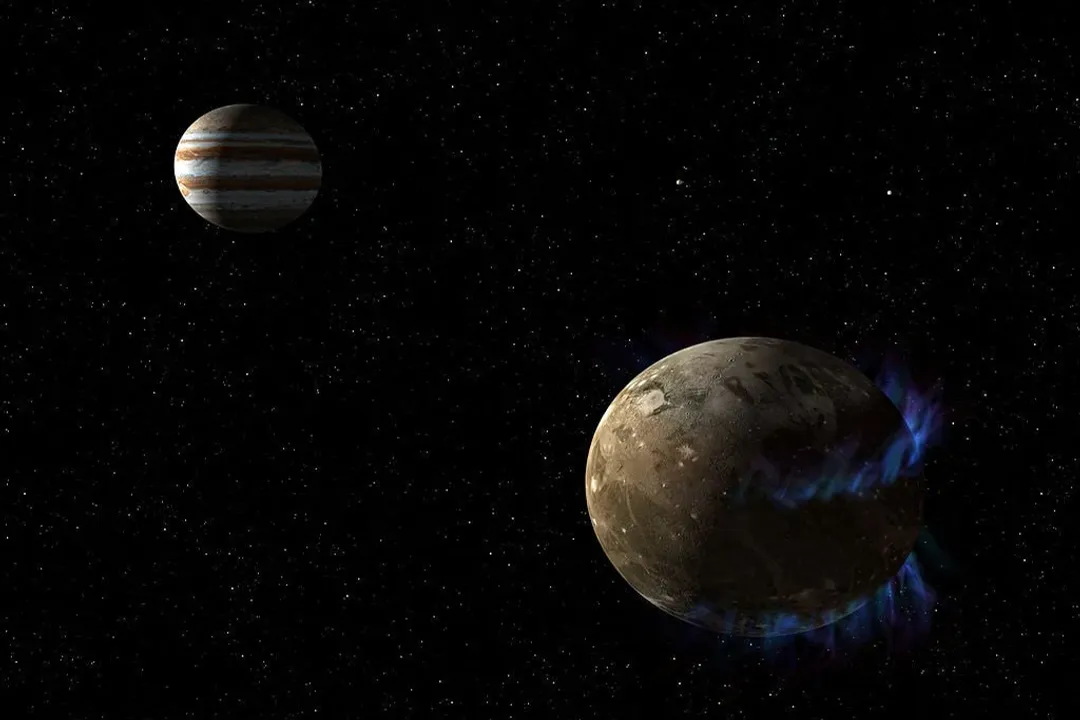
Before the CJD model became dominant, an alternative theory suggested that some or all of the Galilean moons might have been captured by Jupiter's immense gravity after forming elsewhere in the solar system, similar to how many of Jupiter's smaller, irregularly shaped moons are thought to have originated.
For a large, spherical object to be captured into a stable, near-circular orbit like those of the Galilean moons, the physics required are incredibly stringent. A passing body needs to shed a tremendous amount of orbital energy very precisely at the moment of closest approach to Jupiter. Typically, this requires the body to interact with a third body (like another moon or a gas cloud) to act as a brake. While capturing a massive object is physically possible, the probability of capturing four such large, regularly orbiting bodies into nearly coplanar orbits is statistically very low. Furthermore, capture events would likely result in highly elliptical or retrograde orbits, which do not match the observed, stable, prograde orbits of Io, Europa, Ganymede, and Callisto.
The sheer size of these four moons also argues against capture. They are too large to have been rogue planetary building blocks captured easily. Therefore, while capture explains Jupiter's smaller satellites, it does not adequately explain the four large, dynamically linked worlds.
# Orbital Linkages
The orbital resonance linking Io, Europa, and Ganymede is perhaps the most compelling piece of evidence favoring an in-situ formation within a disk. This resonance means that for every one orbit Ganymede completes, Europa completes almost exactly two, and Io completes almost exactly four.
This configuration is not accidental; it suggests a common evolutionary path where the moons migrated together gravitationally as the circumjovian disk slowly dissipated. As the gas in the disk thinned, the moons' orbital distances changed in concert until they settled into this stable, resonating pattern. Io’s extreme tidal heating, which makes it the most volcanically active body in the solar system, is also a direct result of this resonance, as Europa and Ganymede gravitationally tug on it with perfect timing over millions of years, flexing its interior.
Considering the initial mass of the CJD versus the current mass of the moons presents an interesting problem for modelers. If we compare the structure of the Jovian system to our own solar system, where terrestrial planets formed close to the Sun where it was hot, and icy giants formed farther out where volatiles were abundant, Jupiter’s system offers a unique, scaled-down laboratory. The clear break between the inner, rocky/sulfurous Io and the outer, icy-dominated worlds strongly suggests that the formation timescales were rapid enough that the initial heat from Jupiter’s formation dictated where the ice line settled, influencing the final chemistry of each moon based on where it condensed in that primordial environment. This process likely occurred over a timescale of only a few million years following Jupiter's own birth, a truly rapid construction period for such large worlds.
Related Questions
#Citations
What are Jupiter's Galilean moons? | The Planetary Society
Galilean moons - Wikipedia
[PDF] Galilean Moons of Jupiter
How Did Jupiter's Galilean Moons Form? - Universe Today
The Galilean Moons of Jupiter
Formation of Jupiter's four largest moons explained - Facebook
Formation of the Galilean Moons | astrobites
The Galilean Moons of Jupiter – MCC AST
409 years ago today, Galileo Galilei discovered the first three moons ...