How did Galileo's discovery of the Galilean moons of Jupiter impact our understanding of the universe?
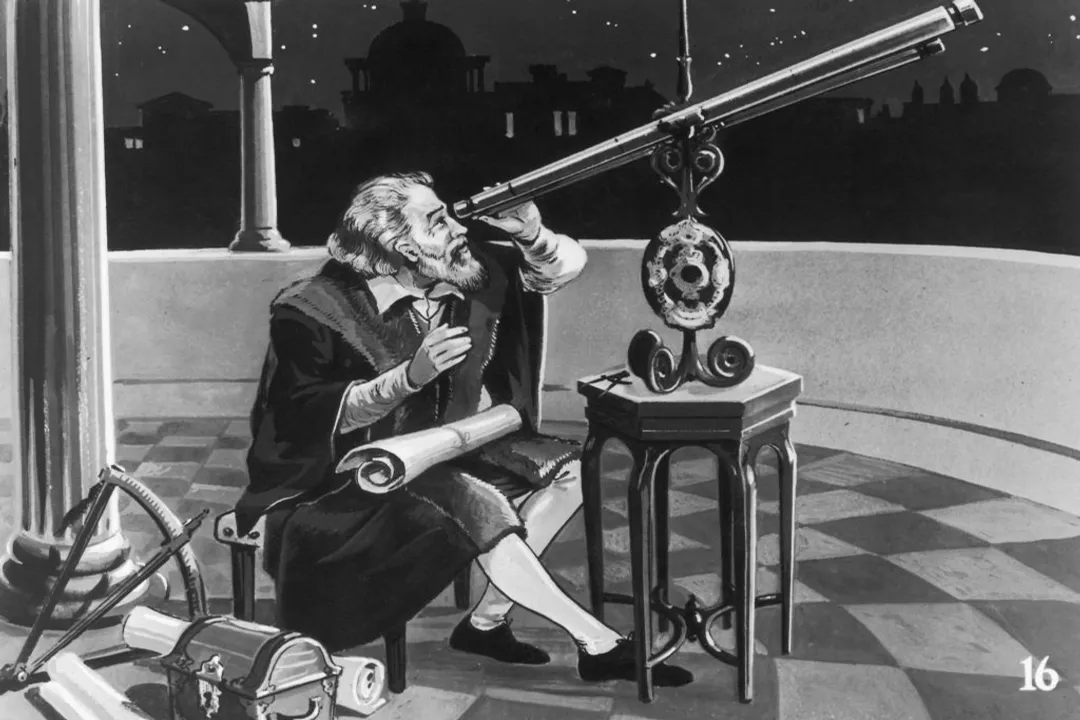
The initial flicker of light Galileo Galilei noticed in January of 1610, when pointing his newly improved telescope toward Jupiter, irrevocably altered humanity’s perception of its place in the cosmos. For centuries, the accepted model of the heavens, rooted in the teachings of Aristotle and codified by Ptolemy, placed the Earth immovably at the center of all celestial motion. The heavens were comprised of perfect, crystalline spheres, and everything, from the Moon to the furthest known planet, orbited our terrestrial home. Galileo’s precise, persistent observations over several nights revealed four small, star-like points hugging the giant planet, which shifted position relative to Jupiter day by day, proving they were not fixed stars but companions.
# Initial Sightings
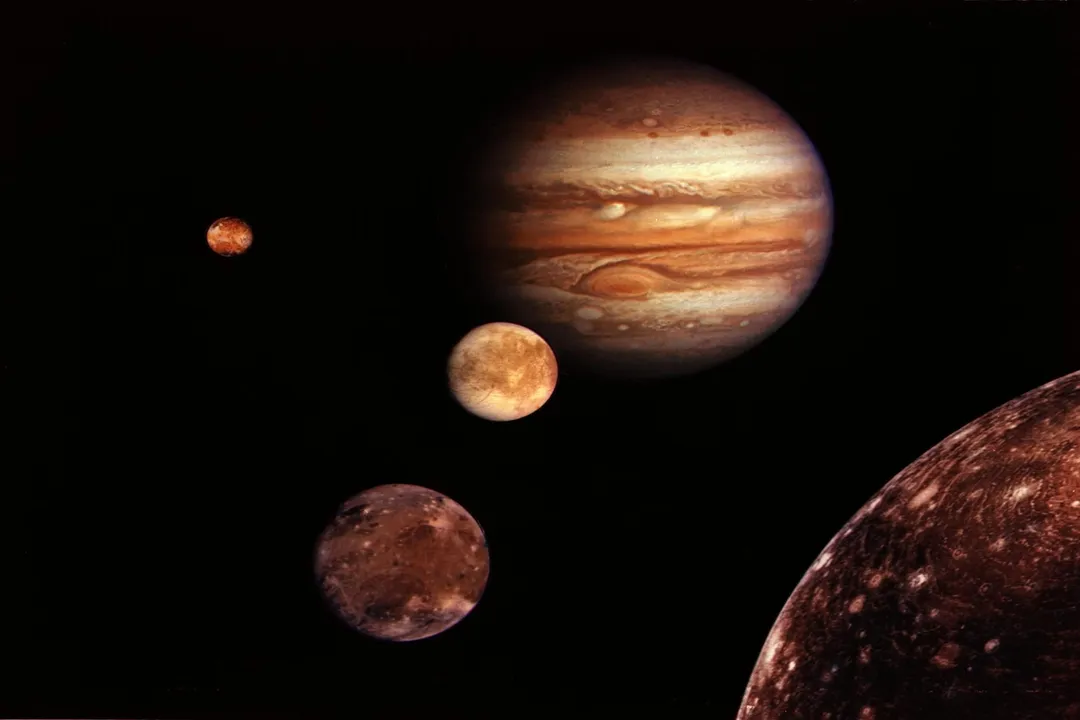
When Galileo first charted these companions, he documented their changing positions, realizing they were circling Jupiter rather than the Earth. He called them the Medicean Stars, in honor of his patron, Cosimo II de' Medici, Grand Duke of Tuscany. While we now recognize them as Io, Europa, Ganymede, and Callisto—the four largest moons—Galileo’s discovery was less about naming and more about mechanics. He observed these objects occasionally disappear, suggesting they were being eclipsed by Jupiter itself, an observation that confirmed they were orbiting the planet. This was revolutionary because it provided tangible, visible proof of a system where movement in the heavens did not center on Earth.
# Challenging Cosmos
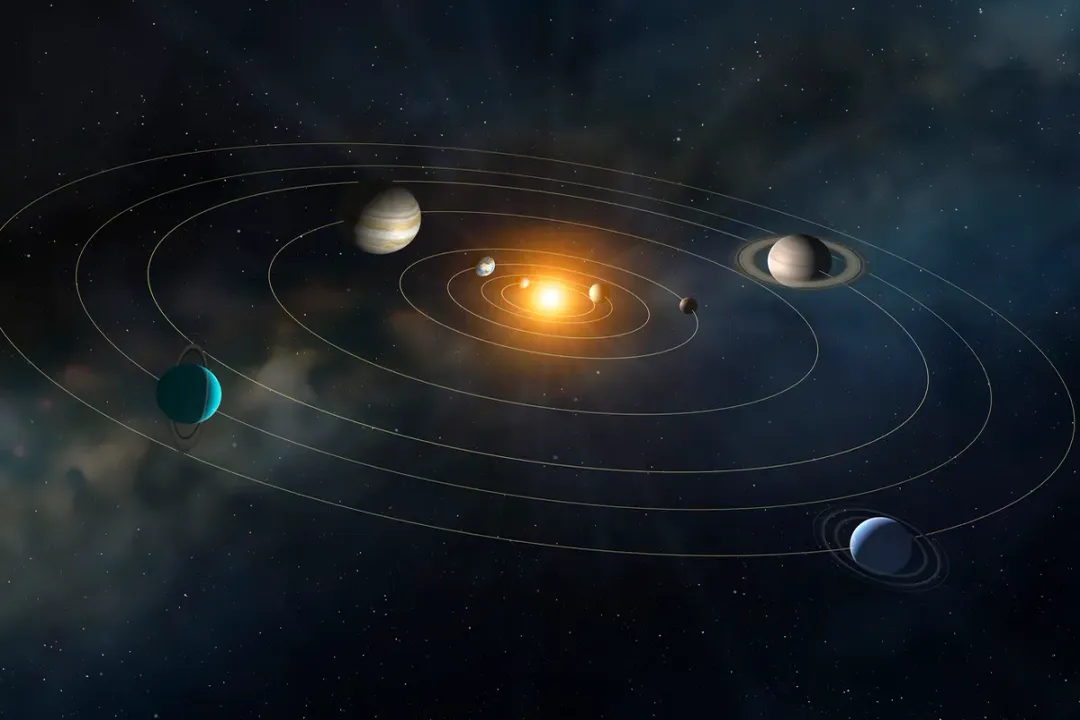
The impact of seeing bodies orbiting something other than Earth cannot be overstated in the context of the reigning scientific and philosophical structure. The Ptolemaic system demanded that Earth hold a unique, central status; this uniqueness was a bedrock of both cosmology and theology. If Jupiter, a celestial body, possessed its own satellites, the necessity for everything to circle Earth dissolved. It demonstrated that the solar system, or at least that part of it visible through the telescope, featured multiple centers of motion, not just one.
While Galileo did not "discover" the Copernican (Sun-centered) model, his observations provided the first strong, direct observational evidence supporting the idea that Earth was merely another planet orbiting the Sun. If celestial bodies could orbit a planet, it supported the physical possibility of Earth itself orbiting the Sun, dismantling the core objection that a moving Earth would cause the stars to shift their positions in ways that were not observed. The discovery forced astronomers to confront a cosmos far more complex and less Earth-centric than previously imagined.
# Structure Comparison
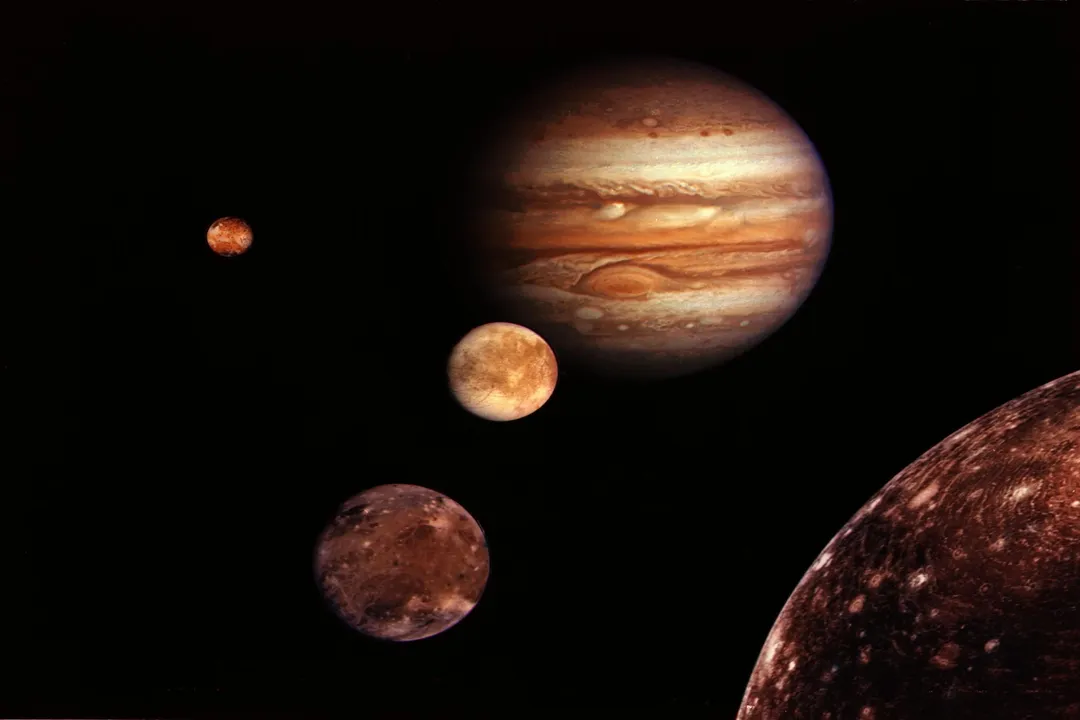
To grasp the magnitude of this conceptual shift, one can compare the systems. The ancient, Earth-centered model required incredibly intricate mathematical constructs—epicycles, deferents, and equants—a series of interlocking circles upon circles designed solely to explain away the observed wanderings of the planets from Earth’s perspective. This complexity was the price paid for maintaining Earth’s centrality. Galileo’s view of Jupiter and its moons, however, presented a much cleaner, nested, and easily modeled reality. You had a primary body, Jupiter, with a miniature system revolving around it, all while Jupiter itself moved through space relative to the Sun. This offered a tangible, observable example of a secondary orbital center, suggesting the universe operated on simpler, more universal laws of motion rather than a specific arrangement designed solely for our advantage.
We can consider the scale jump this discovery represented. Before 1610, the visible ‘planets’ were the Sun, Moon, Mercury, Venus, Mars, Jupiter, and Saturn. Suddenly, Galileo proved that the seemingly simple point of light known as Jupiter was, in fact, host to a complex, orbiting entourage, instantly doubling the number of known centers of motion in the solar system visible to the naked eye (with aid). This implied that the true arrangement of the cosmos might be governed by rules of gravity and centers of mass, not simply by terrestrial hierarchy.
# The Instrument's Role
The impact of the moons was intrinsically linked to the instrument that revealed them. Galileo did not invent the telescope, but he took an existing spyglass and quickly improved its magnification, transforming it from a novelty into a scientific instrument capable of revealing worlds. This event cemented the idea that direct, evidence-based observation, enhanced by technology, held precedence over ancient deduction or philosophical authority. The discoveries made using the telescope—the mountains and craters on the Moon, the phases of Venus (also observed by Galileo), and now the moons of Jupiter—collectively chipped away at the idea of an unblemished, perfect celestial realm.
While the scientific implication of orbital mechanics was immediate for the few who could verify the observations, the societal and institutional acceptance lagged severely behind. The physical evidence—the positions of the four points of light recorded night after night—was undeniable fact once charted. Yet, fully incorporating the reality that Earth was not the center required confronting powerful entrenched interests. The speed of the scientific observation vastly outpaced the speed at which dogma could be reformed, leading to decades of intellectual conflict.
# Enduring Scientific Echoes
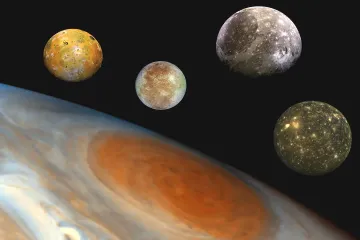
Galileo's initial sight in 1610 established the foundation for modern astrophysics and planetary exploration. The legacy of that discovery persists in how we study giant planets today. For example, the Galileo spacecraft, which studied Jupiter and its moons extensively beginning in the late 1990s, was named in direct homage to the astronomer whose work first opened up that system to scrutiny. Missions like Galileo confirmed that the four main moons are not just points of light but complex worlds, with bodies like Europa potentially harboring vast subsurface oceans. The initial act of seeing them orbit Jupiter spurred the entire field of comparative planetology that continues to this day.
Galileo's cataloging of the four companions provided the first real astronomical data set in centuries that definitively broke free from the Earth-centered paradigm. He didn't just see moons; he saw a model of orbital mechanics operating outside our own terrestrial frame of reference, establishing a new, verifiable grammar for understanding the universe.
#Videos
How Galileo Transformed Our Understanding of the Universe
Related Questions
#Citations
415 Years Ago: Astronomer Galileo Discovers Jupiter's Moons - NASA
Galileo Discovers Jupiter's Moons - National Geographic Education
Galileo at 30: How a mission transformed our understanding of Jupiter
Galileo's Legacy: How the Discovery of Jupiter's Moons 415 Years ...
Galileo: Discovering Jupiter's Moons | PBS LearningMedia
We figured out exactly what Galileo saw when he discovered the ...
History | The Galileo Project
How Galileo Transformed Our Understanding of the Universe
How Galileo changed the way we look at the Universe