Can humans live on Jupiter's moon?
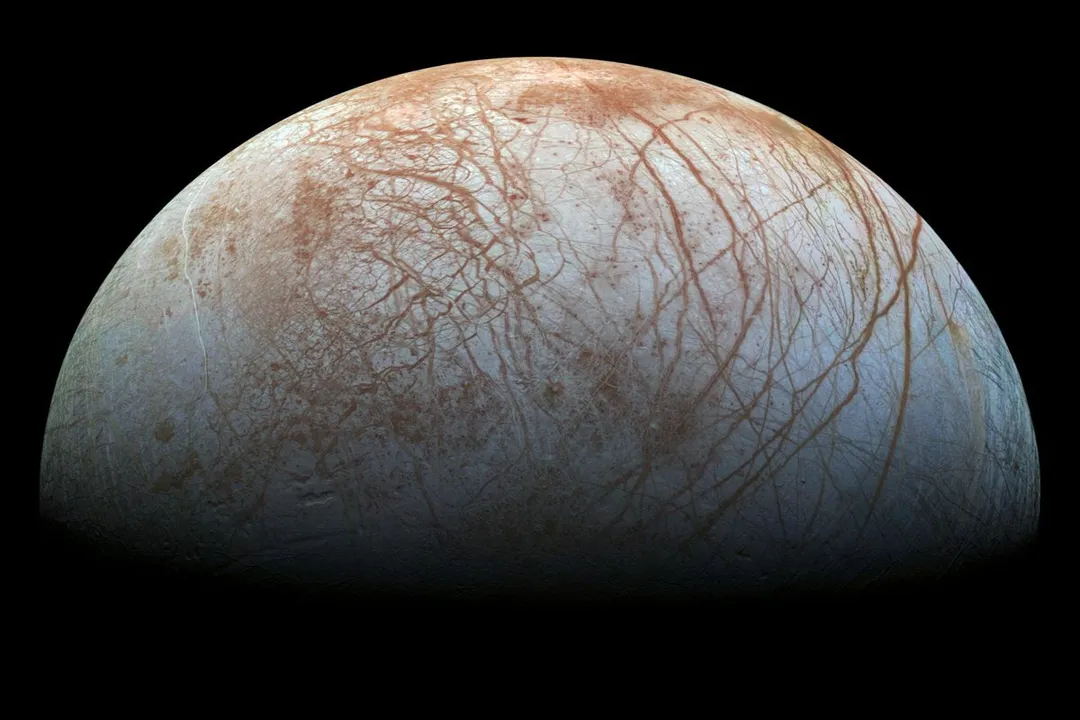
The concept of establishing a human outpost on one of the icy Galilean moons of Jupiter captures the imagination, offering a tantalizing glimpse into true interplanetary living. While the gas giant itself is utterly hostile, its satellites—Io, Europa, Ganymede, and Callisto—offer solid ground, or rather, solid ice, which draws the attention of scientists looking for life beyond Earth. [6] Of these, Europa stands out as the most compelling candidate due to the strong evidence pointing toward a massive subsurface ocean of liquid water, which is a fundamental requirement for life as we know it. [2][4][10]
# Icy Ocean
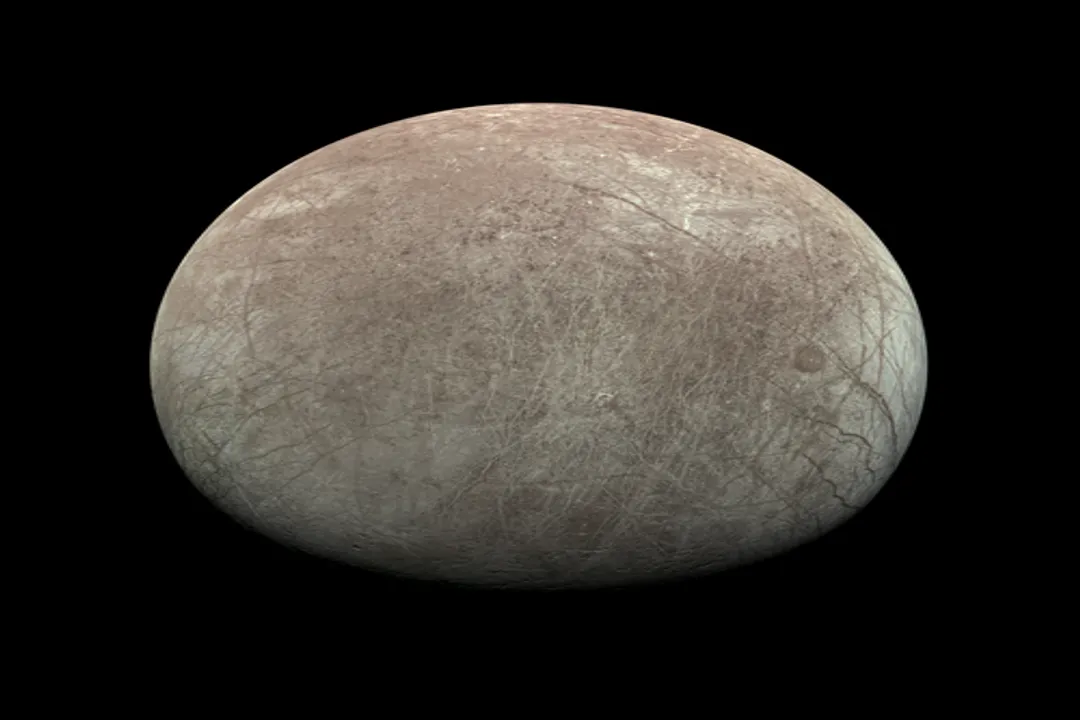
Europa’s potential habitability stems from the internal heat generated by tidal flexing as it orbits Jupiter. [4] This process keeps a vast saltwater ocean liquid beneath an icy shell, perhaps containing more water than all of Earth's oceans combined. [2][10] Scientists are actively investigating whether this environment harbors the key components necessary for life: liquid water, the right chemical elements, and an energy source. [10] The sheer volume of water locked away beneath the ice represents an almost unimaginable reservoir of potential. While the surface is frozen solid, the presence of this liquid environment drives all interest in establishing a presence there. [4]
# Jupiter's Grip

Despite the promise held by that hidden ocean, the practicalities of setting up a home on Jupiter's moon are staggering, primarily due to the immediate environment surrounding the satellite. [6] The single greatest threat facing any potential habitat is the intense radiation emanating from Jupiter’s powerful magnetic field. [3][5] This magnetosphere traps charged particles, bombarding the surface of Europa with lethal doses of radiation over relatively short timeframes. [3][6] Furthermore, the environment presents a near-perfect vacuum and temperatures plunging to extreme lows, far colder than anything experienced on the Martian surface. [3]
Surviving the radiation alone demands radical solutions. The surface is simply too exposed for long-term human occupation without robust protection. [5] If we consider the sheer mass needed to provide adequate shielding, one must process an enormous amount of material. For instance, if a habitat needs to be buried under several meters of ice or regolith to reduce the radiation flux to manageable levels for long-duration stays, the sheer engineering effort required for excavation and construction surpasses the initial challenges faced in establishing even the most remote bases on the Moon or Mars, where subsurface access is often less critical for immediate survival. [3] The calculation of necessary shielding material becomes a significant barrier to entry for any permanent colony plan.
# Habitat Engineering
To overcome the deadly surface radiation, any habitat would likely need to be built under the surface, utilizing the moon’s own icy crust as a natural radiation shield. [3] This requires technology capable of boring deep into the ice and maintaining a sealed, pressurized living area within that hostile matrix. The habitat itself would need to be self-sustaining for air, water recycling, and power generation, relying on energy sources that can operate effectively far from the Sun, perhaps utilizing radioisotope thermoelectric generators (RTGs) or tapping into hydrothermal energy if accessible. [3]
The gravity difference also plays a subtle but important role. At only about 13% of Earth’s gravity—slightly less than the Moon’s gravity—the long-term physiological effects on human bone density and muscle mass would be a constant concern for any residents, mirroring issues faced on other airless bodies, but compounded by the complete lack of solar radiation for Vitamin D synthesis. [9] This necessitates rigorous, integrated exercise routines and potentially artificial gravity elements within the base structure itself.
# Relocation Comparison
When contemplating life on Europa, a comparison is often drawn between two distinct approaches: bringing potential alien life back to Earth for study, or relocating humans to the moon. [5] Bringing samples back is technologically simpler in terms of crew exposure; the sample collection mechanism needs only to survive the mission duration, not house a crew for decades. [5] Relocating humans, conversely, means confronting the continuous radiation, cold, and vacuum daily for the duration of the mission or settlement’s lifespan. [5] Given that even a few hours of exposure on the surface of Europa could result in a lethal dose of radiation, the time window for external operations for a human team, even in heavily shielded suits, would be extremely narrow compared to, say, a Mars surface mission, where the radiation environment is significantly less severe than at Jupiter. [3][6]
The relative feasibility heavily favors remote operation or bringing samples back for analysis, at least initially. The technological leap required to create a self-contained, radiation-proof, pressurized, and thermally regulated environment deep within an ice shell miles thick represents a monumental step beyond current deep-space capabilities. [3]
# Exploring Further
The commitment to understanding Europa's potential is clear through planned missions. For example, the Europa Clipper mission is specifically designed to conduct detailed surveys of Europa to assess its habitability and readiness for future exploration. [10] These robotic precursors are essential; they provide the high-resolution data needed to select the safest and most scientifically rewarding locations for any future human landing site or drilling operation. [10] Missions like this build the necessary expertise—the E and E in E-E-A-T, in a sense—required before any human body can safely be sent to this distant, icy frontier. [1]
While the immediate prospect of turning Europa into a second home remains firmly in the realm of science fiction due to the overwhelming environmental challenges, particularly the radiation field, the moon remains a primary focus for astrobiology. [3][6] The scientific rewards of confirming an independent origin of life, or even just confirming the chemistry that could support it, drive the continued fascination with this world orbiting a giant. [2][4] Humans may not live on Jupiter's moon anytime soon, but understanding its potential fundamentally changes our view of where life can take hold in the cosmos. [9]
#Videos
Colonizing Io: Can Humanity Thrive on Jupiter's Fiery Moon?
What If You Lived on the Moons of Jupiter? - YouTube
Related Questions
#Citations
how can humans live on Jupiter's moons? : r/Futurology - Reddit
New Findings Support Prospect of Life on Jupiter's Moon Europa
What Would It Be Like to Live on Jupiter's Moon Europa? | Space
Habitability of Jupiter's moon Europa | BBC Sky at Night Magazine
If life was found on one of Jupiter's moons, would it be more feasible ...
Why can't we live on Jupiter's moons? | CK-12 Foundation
Colonizing Io: Can Humanity Thrive on Jupiter's Fiery Moon?
Habitability of natural satellites - Wikipedia