Could humans live on asteroids?
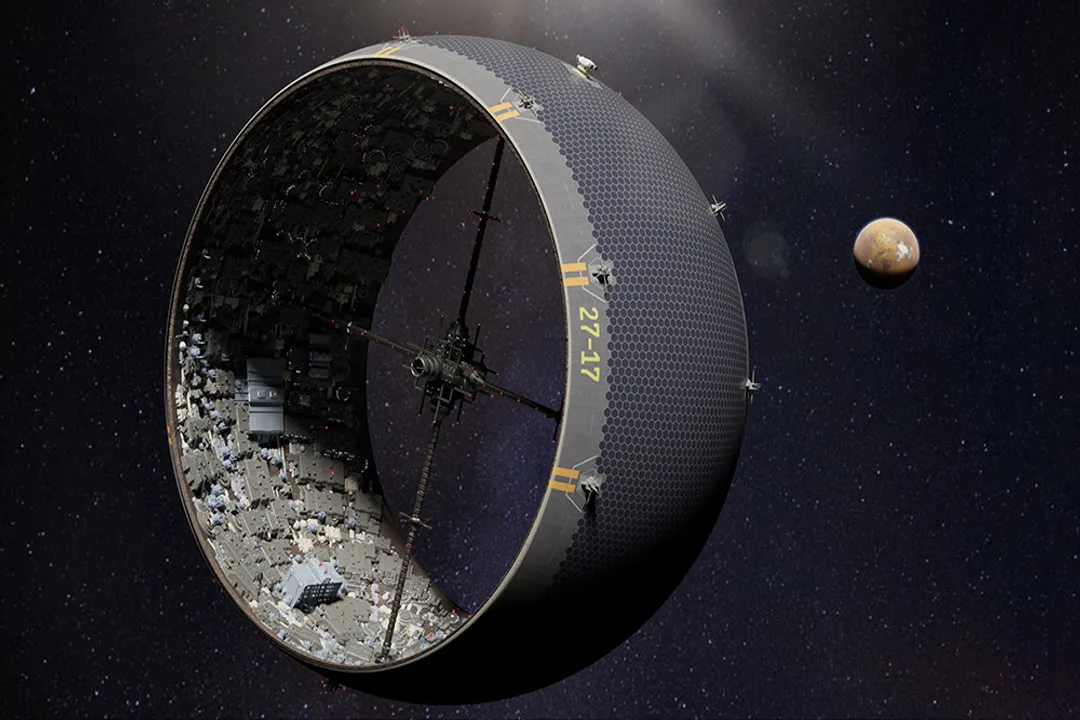
The idea of setting up permanent homes among the rocky remnants orbiting the Sun has moved from the realm of pure science fiction into serious, albeit preliminary, scientific discussion. Asteroids, often viewed simply as space debris or potential hazards, present a surprisingly compelling case study for humanity's next great expansion beyond Earth, offering not just a stepping stone but potentially self-sufficient outposts for an interplanetary species. [1][4] While Mars often grabs the headlines, these smaller bodies possess unique characteristics that could make them more accessible or even more survivable in the long run, provided we can solve some significant engineering puzzles first. [2]
# Resource Wealth
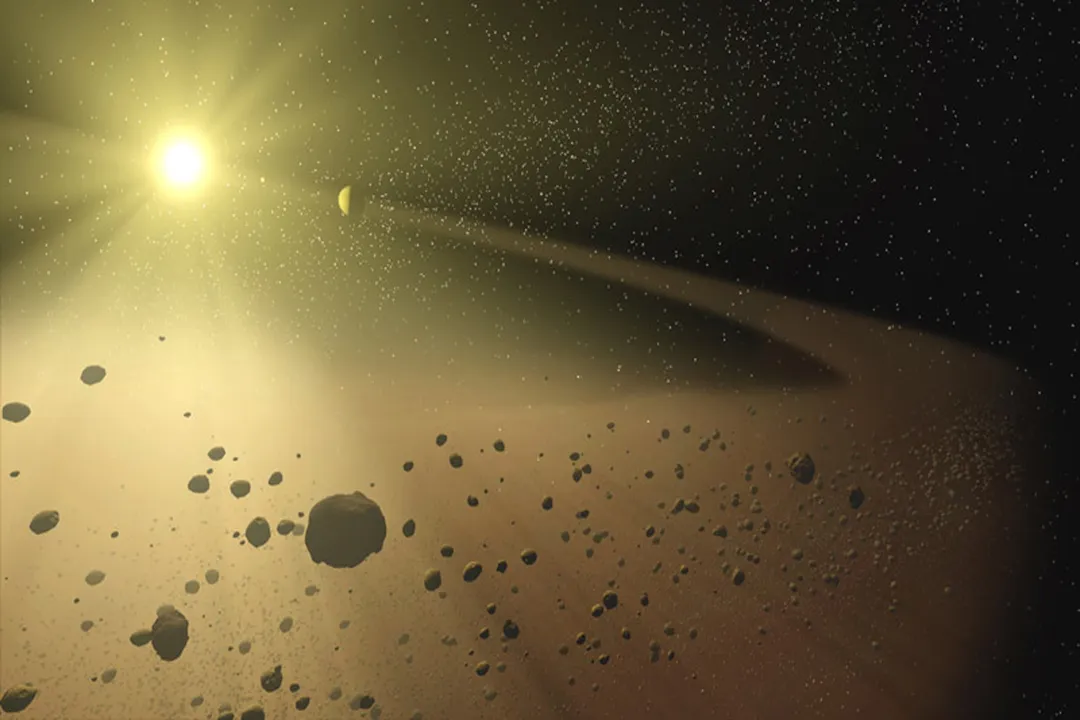
One of the most immediate attractions of colonizing an asteroid lies in the vast material wealth scattered throughout the main belt and near-Earth populations. [8] Unlike establishing a base on a planet, which requires bringing nearly everything with you or engaging in complex atmospheric processing, an asteroid is essentially a giant, pre-packaged industrial complex floating in space. [2]
Asteroids are not uniform; they are classified into main types that dictate their potential utility. C-type (carbonaceous) asteroids are rich in volatile compounds like water ice, carbon, and organic materials, which are vital for both life support and rocket propellant. [2][8] S-type (stony) asteroids contain silicates and metals, while M-type (metallic) asteroids are dense with iron, nickel, and precious metals. [2] This variation means that a carefully selected asteroid could potentially provide all the raw ingredients needed for construction, fuel production, and even closed-loop life support systems with minimal reliance on resupply missions from Earth. [8]
For instance, water ice, easily extracted from certain primitive, icy asteroids, can be cracked into hydrogen and oxygen—the primary components of chemical rocket fuel—and also provide drinking water and breathable air for a colony. [2] The ability to "live off the land," or in situ resource utilization (ISRU), is the bedrock of making any off-world settlement economically and logistically viable, and asteroids offer the most concentrated, varied raw material source outside of planetary surfaces. [8]
An interesting comparison emerges when considering the sheer volume of material available. While a single large near-Earth asteroid (NEA) might contain enough raw metal to construct thousands of Earth-sized ships, the key challenge is processing that material in a vacuum with minimal gravity and power, a far cry from our terrestrial foundries.
# Shelter Design
The challenge of building on an asteroid immediately brings up the question of where inhabitants would live: on the surface or deep inside? Living on the surface exposes colonists directly to the harsh vacuum of space, extreme temperature swings, and constant bombardment by micrometeoroids and cosmic radiation. [2]
The most frequently proposed solution involves excavation and creating subsurface habitats. By digging into the asteroid's interior, colonists gain immediate protection from radiation—a major concern for long-term human health in space—and benefit from the thermal stability provided by the surrounding rock mass. [2] Furthermore, the excavated regolith (loose surface material) itself becomes the perfect shielding layer when piled back over the pressurized interior living quarters. [7]
This leads to a fascinating architectural concept: the hollowed-out asteroid city. [7] Instead of trying to build domes on the exterior, the interior space could be carved out to form vast, sheltered caverns. Rochester researchers have theorized about this, suggesting that very large asteroids, perhaps a kilometer or more in diameter, could be hollowed out to create environments large enough to host small, functional cities under artificial light, shielded entirely by meters of solid rock. [7] This concept minimizes the need to transport massive shielding materials across interplanetary distances, relying instead on the asteroid's inherent mass.
# Gravity Solution
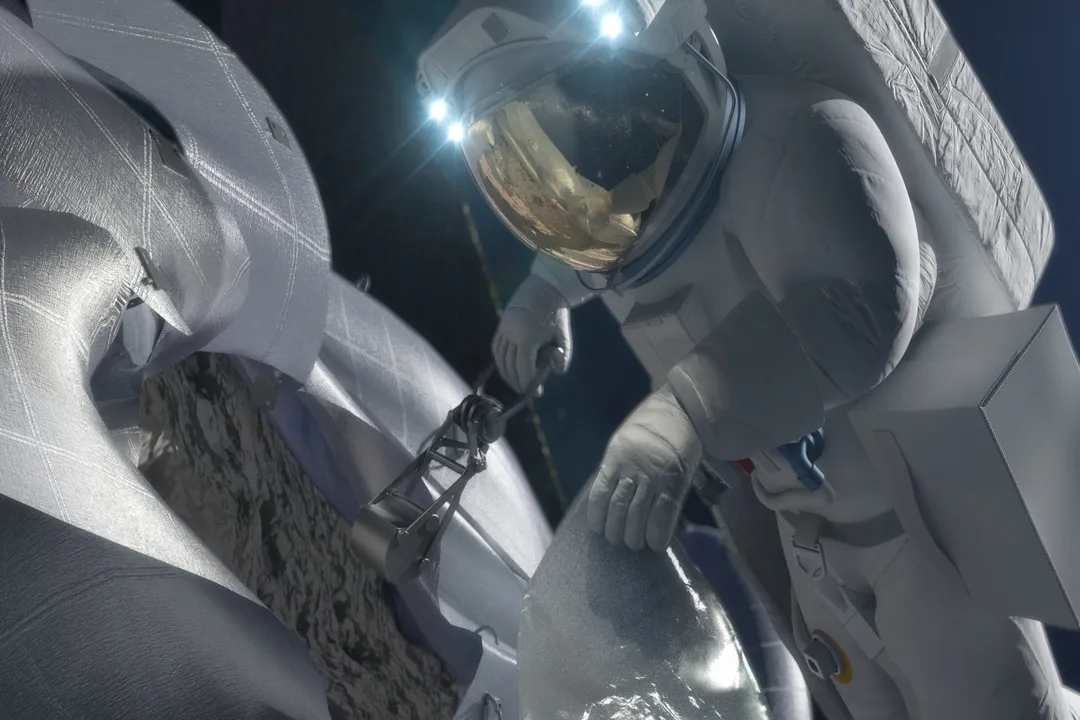
One of the most fundamental differences between living on a planetary surface and living on a small asteroid is gravity. Most asteroids are too small to retain a significant atmosphere, and their surface gravity is negligible—often less than one-thousandth of Earth's gravity. [4] Prolonged exposure to microgravity has severe, well-documented negative effects on the human body, including bone density loss, muscle atrophy, and changes in cardiovascular function. [2]
To counteract this, the habitat structure itself must generate simulated gravity. The most scientifically sound method for this is rotation, a principle already widely discussed for space stations. [7] By spinning the asteroid or a section carved out of it, centrifugal force pushes the internal surfaces outward, mimicking gravity.
The technical specifics of this are crucial. If a city is carved into the interior of a large asteroid, engineers would need to ensure the rotation rate is sufficient to produce near-Earth gravity (1g) without causing physical discomfort due to Coriolis effects. [7] For a habitat just a few kilometers wide, the required spin rate might be fast enough to cause motion sickness or make objects feel unnaturally heavy near the walls, depending on the radius of the carved space. [7] This dictates a trade-off: a smaller rotational radius requires a faster spin, which is more disorienting, while a larger radius requires a more massive structure to maintain stability. [7]
Considering the physics of human biology, while 1g is the standard we evolved for, research suggests that even partial gravity—perhaps 0.3g to 0.5g, similar to Mars—might be sufficient to mitigate the worst long-term health crises associated with zero-g environments, potentially easing the engineering constraints on the required rotation speed for large asteroid structures.
# Cosmic History
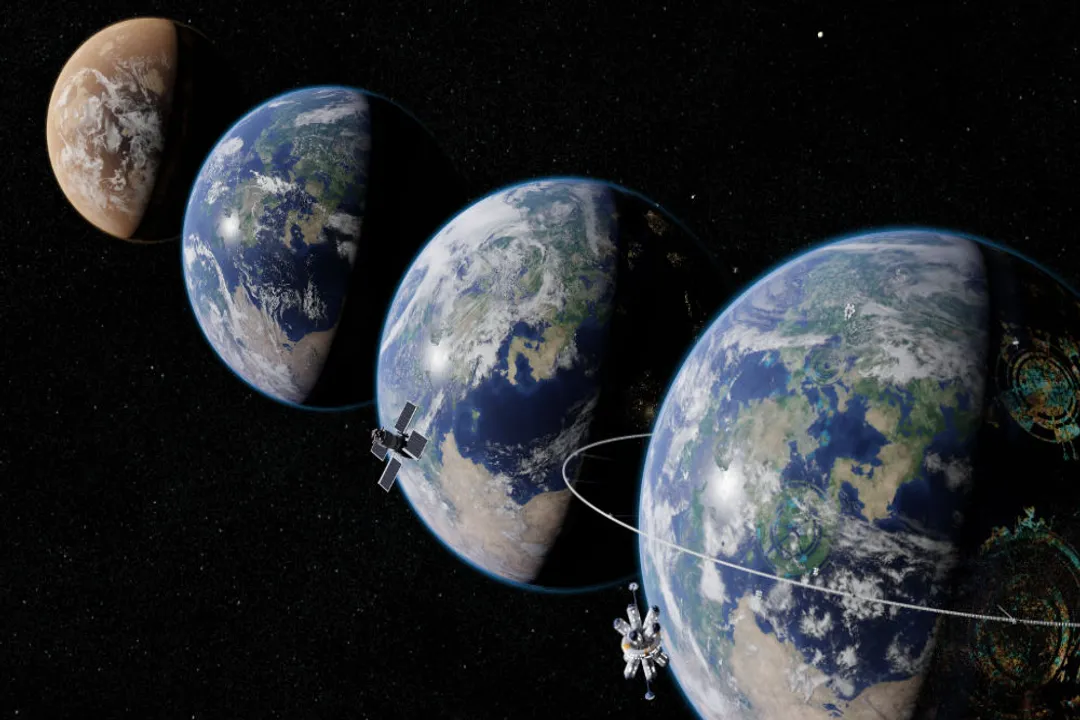
Beyond the practicalities of resource extraction and shelter construction, asteroids hold a profound historical significance that ties them directly to our own existence. Some of the most primitive asteroids, particularly the carbonaceous chondrites, are thought to be remnants from the very beginning of the solar system, largely unchanged since planet formation began. [5]
Scientists hypothesize that these space rocks were the delivery vehicles for the essential building blocks of life. [5] Analysis of primitive meteorites and simulation experiments suggests that the complex organic molecules necessary for biology—amino acids, nucleobases, and sugars—could have been synthesized on these parent bodies through chemical reactions driven by water and energy from impacts or solar radiation. [5][9] If true, the chemical precursors that started life on Earth were essentially shipped here via asteroids. [5] Living on an asteroid, therefore, might feel less like colonizing a sterile rock and more like moving back into the original cosmic nursery that seeded our planet. This connection gives the endeavor a deeper, almost philosophical layer, linking human expansion to the origin of biology itself. [5][9]
# Hazards and Challenges
While the potential rewards are immense, the obstacles to establishing an asteroid colony are severe and demand expert mitigation. [4] The most immediate and persistent threat is radiation. [2] Unfiltered solar and galactic cosmic rays pose significant cancer risks and can damage biological systems over extended periods. [2] As discussed, thick shielding, best achieved by burrowing deep, is non-negotiable for long-term residency. [7]
Another key challenge is logistics and energy. Launching missions from Earth is expensive, meaning any early colony must be exceptionally self-sufficient. [4] While they possess raw materials, the energy required to mine, process, and refine those materials—especially in a low-gravity environment where conventional machinery might struggle or require complex anchoring—represents a massive initial hurdle. [8] Furthermore, navigating space is inherently risky; even large asteroids are small targets, and while the main belt is relatively empty, the risk of impact from other space debris remains. [2]
The sheer psychological toll of living in a confined, artificial environment, potentially kilometers below the surface of a slowly spinning rock, cannot be overstated. [3] Earth's natural cycle of day, night, weather, and expansive horizons provides deep psychological grounding that a human-made, closed-loop system must struggle to replicate. [3] Overcoming the isolation and the constant reliance on complex, life-sustaining machinery will require a new kind of human resilience.
# Path Forward
The process of making humans an interplanetary species, which necessarily includes asteroid settlement, is seen by some experts as inevitable, driven by survival instinct and scientific curiosity. [1][4] The current academic consensus is that initial steps will involve robotic missions focused purely on resource assessment, mapping the distribution of water and metals within the asteroid belt. [8]
Once resources are confirmed and the engineering for basic ISRU is perfected, the next phase would likely involve establishing automated, uncrewed processing plants, essentially automated mining outposts that produce fuel or construction materials for transfer vehicles. [8] Only after the technology is proven and resource extraction is demonstrably sustainable would the first human crews arrive, initially for short-duration stays focused on habitat construction and system maintenance. [4]
The transition from a temporary research station to a permanent colony requires solving economic viability. If asteroid-derived materials can be processed cheaply enough to refuel spacecraft heading to Mars or the outer planets, the economics of space travel shift dramatically, creating a self-sustaining economy separate from Earth's subsidies. [4] This economic driver, more than abstract survivalism, is likely what will push the concept toward reality.
The time scale remains highly debatable, stretching from decades to centuries, but the foundational knowledge—how to live in space, how to process rock, and how to build shielded habitats—is actively being developed through orbital stations and planned lunar bases. [1][4] Asteroid colonization is less about discovering new science and more about applying known engineering principles under extraordinarily demanding circumstances. [2]
#Videos
Could Asteroids Be Humanity's New Home?! | Science Channel
Related Questions
#Citations
Could humans live in the asteroid belt? With the right technology ...
How we could survive on an asteroid - BBC
Can people live on asteroids? If so, why don't people colonize them ...
How Space Shapes Human History and Why the Future May Be in ...
Could the Blueprint for Life Have Been Generated in Asteroids?
Could Asteroids Be Humanity's New Home?! | Science Channel
Cities on asteroids? It could work—in theory - University of Rochester
Could humans live in the asteroid belt? - Interesting Engineering
Humanity extinction by asteroid impact - ScienceDirect