Are there stars that live forever?
The concept of a star living forever seems to clash with our observations of exploding supernovae and dimming remnants, yet the question of stellar immortality touches upon the very limits of physics and time scales that dwarf human comprehension. To be clear, no star fueled by conventional nuclear fusion, like our Sun, can genuinely last forever; they are finite cosmic engines running on stored fuel. [2][5] However, the timescales involved are so vast that for all practical purposes within the current epoch of the universe, some stars might as well be eternal. [3]
# Mass Determines Fate
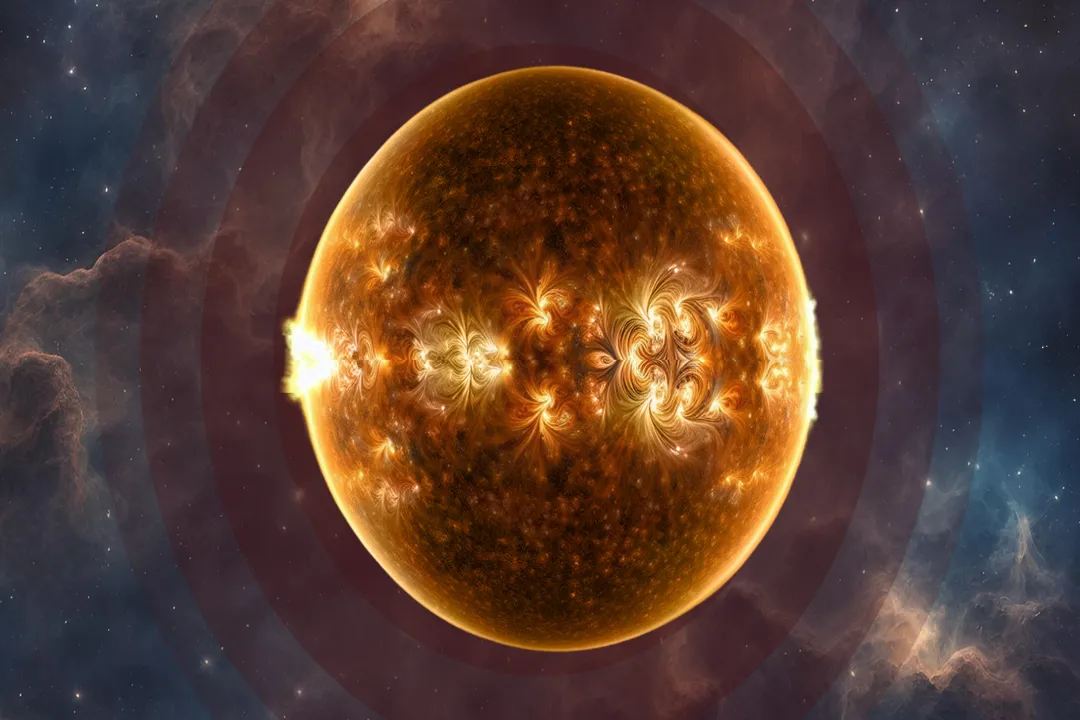
The primary factor dictating how long a star spends shining is its initial mass. [3][5] This relationship is quite counterintuitive to our everyday experience: the biggest stars live the shortest lives. [5] Imagine a massive star as an enormous, incredibly bright bonfire. Because it is so large, its core pressure and temperature are significantly higher, driving nuclear fusion at a furious, ravenous rate to counteract its immense gravity. [3] These high-mass stars burn through their hydrogen fuel supply incredibly quickly, sometimes lasting only a few million years before they meet a dramatic end, perhaps as a supernova. [3][5]
Conversely, a star with a very low mass, like a red dwarf, operates more like a tiny, carefully tended candle flame. [3] The lower gravity means the core operates at much cooler temperatures and pressures, resulting in an extremely slow, methodical rate of hydrogen fusion. [3] This slow consumption rate is the secret to their longevity. [5]
This fundamental difference in fuel consumption rate gives rise to truly staggering figures when calculating the remaining time in the universe. For instance, a star similar to our Sun, a G-type main-sequence star, is expected to live for about 10 billion years. [2] This is already a span of time difficult to grasp, but when compared to the smaller stars, it feels fleeting.
# The Longest Starlight
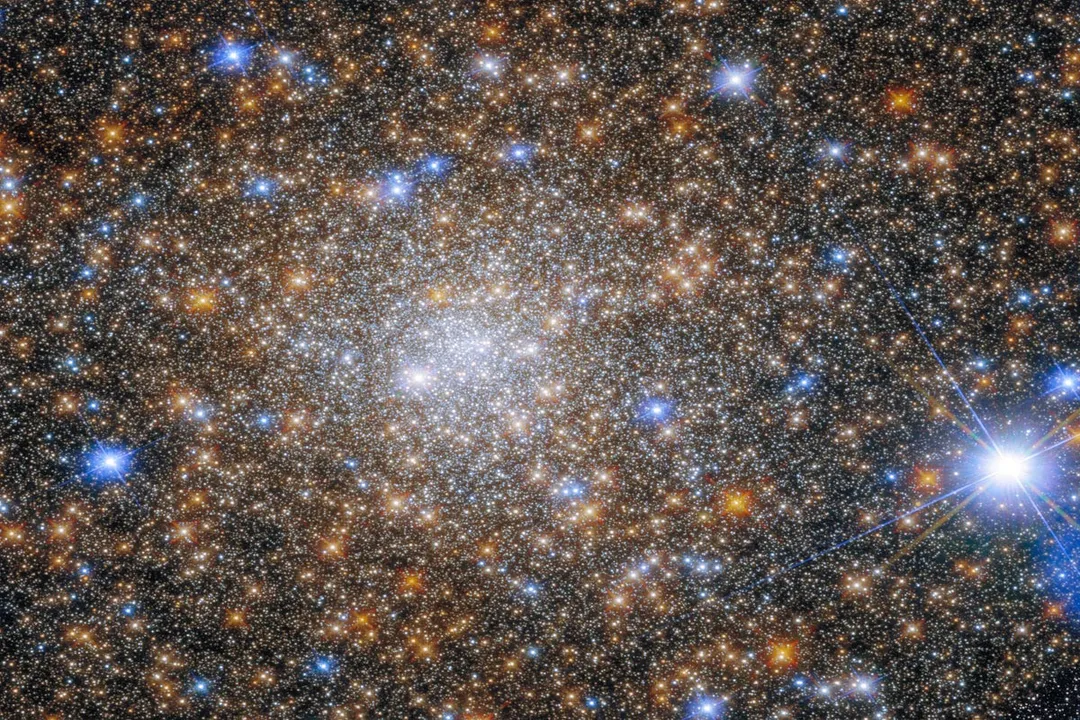
When considering which normal stars live the longest, the answer lies firmly with the smallest members of the stellar family: red dwarfs. [3][5] These stars are cool, dim, and extraordinarily efficient. [5] A red dwarf might only have about 8% of the Sun's mass, yet it possesses an engine that can sustain itself for trillions of years. [3][5]
If we consider that the current age of the universe is estimated to be around 13.8 billion years, a red dwarf with a potential lifespan of several trillion years has an existence that stretches far beyond the current cosmic era. [2] This suggests a profound cosmic separation: all the massive stars that have ever existed, including those we see brightly now, will be long dead and gone before the smallest red dwarfs even begin to dim substantially. In the context of the universe as we know it, these faint objects represent near-immortality.
This longevity hinges on their ability to efficiently access their entire fuel supply. Unlike larger stars that can only fuse hydrogen in their cores, red dwarfs are fully convective. [3] This means that the helium "ash" produced in the core is constantly mixed with the outer hydrogen layers, allowing the star to use virtually all of its available hydrogen fuel over its lifespan, rather than just the fuel in its central region. [3]
# Theoretical Immortality
If we move away from stars powered purely by standard hydrogen fusion, the theoretical possibilities for sustained existence broaden considerably. Some thought experiments suggest ways for objects resembling stars to persist indefinitely by tapping into other energy sources or being composed of exotic matter. [7]
# Dark Matter Stars
One fascinating, though purely hypothetical, concept involves dark matter stars. [6] These theoretical objects would form in the early universe and sustain themselves not through nuclear fusion, but by the annihilation of dark matter particles in their cores. [6] If the supply of dark matter available for annihilation is effectively inexhaustible or replenishes itself slowly over cosmological timescales, such an object could, theoretically, shine for an extremely long duration, effectively achieving a form of practical eternity. [6] The defining characteristic would be that their primary energy source is not the standard stellar fuel, hydrogen, but rather the unknown substance that makes up most of the universe’s mass. [6]
# White Dwarf Persistence
Another path to extended existence involves the remnants of stars like our Sun—white dwarfs. After exhausting their fuel, Sun-like stars shed their outer layers and contract into a hot, dense core composed mostly of carbon and oxygen. [2] These remnants no longer generate new energy through fusion; they simply cool down over incomprehensibly long periods. [2] While they are technically "dead" stars, their cooling process takes so long—trillions of years, perhaps even longer—that they remain visible, albeit dimly, for an epoch far exceeding the current age of the universe. [7] It is interesting to note that the eventual fate of these white dwarfs—cooling into "black dwarfs"—requires an amount of time so vast that no black dwarf is thought to exist yet in the current age of the cosmos, meaning every white dwarf formed so far is still emitting heat.
# Cosmic Interactions and Life Extension
Stellar existence is not always a quiet, isolated affair. Interactions with extreme gravitational sources can sometimes alter a star's expected lifespan in unusual ways, leading to brief periods of renewed activity or simply delaying its demise. [9]
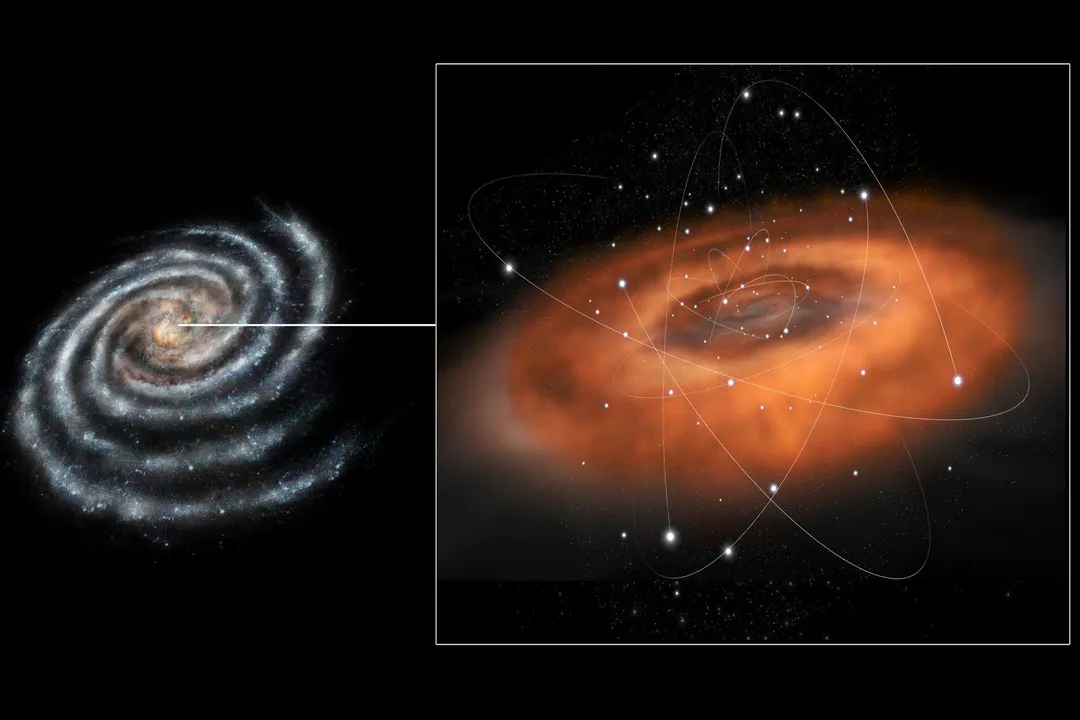
Stars that occasionally brush close to a supermassive black hole, such as Sagittarius A* at the center of our Milky Way, can undergo dramatic tidal stripping. [9] When a star passes too close, the immense tidal forces can rip away material from the star, potentially creating a transient flare or explosion as the material is accreted by the black hole. [9] While this process is inherently destructive, removing outer layers might expose fresh fuel or temporarily stabilize the core in a way that alters its fusion timeline compared to an isolated star of the same initial mass.
Furthermore, in binary systems or dense star clusters, stars can experience interactions that lead to what is sometimes described as a "second chance" or at least a significant change in their late-stage evolution. For example, accretion from a companion star can rejuvenate a stellar core, forcing it back onto the main sequence or altering its path toward a white dwarf or supernova. [4] Even a relatively common event like a nova, caused by accretion onto a white dwarf in a binary system, represents a dramatic, albeit temporary, resurgence of luminosity fueled by external material. [4] This is not eternal life, but rather a temporary reprieve from the final cooling phase.
# The End State Comparison
To truly appreciate the difference between a finite life and a hypothetical eternal one, it helps to compare the final stages of stars of varying masses:
| Initial Mass Classification | Typical Lifespan (Approx.) | Final State | Time to Final Fade (Estimated) |
|---|---|---|---|
| Massive Stars () | Millions of years | Supernova, then Neutron Star or Black Hole | N/A (Immediate collapse/remnant formation) |
| Sun-like Stars () | Billion years | White Dwarf | Trillions of years (cooling) [7] |
| Red Dwarfs () | Trillions of years | Slowly cooling, fading star | Far longer than current cosmic age [3] |
When looking at this table, the path for the red dwarf seems the closest to true perpetuity within the framework of known physics, even if technically it must eventually cool. [3] The universe hasn't been around long enough to see the end of even the oldest red dwarfs. [2]
Ultimately, the stars that live "forever" are those whose expected lifetimes exceed the projected lifespan of the universe itself, which is a testament to the incredible efficiency of low-mass nuclear reactions. [3] They are the universe’s true marathon runners, while the giants are merely sprinters in the grand cosmic race.
#Videos
What Is The Longest A Star Can Live? - YouTube
Related Questions
#Citations
Is there anyway to maintain a star forever (or at least much longer ...
Do stars last forever? - StarChild - NASA
What is the longest a star can live? | by Ethan Siegel - Medium
The Life and Times of Immortal Stars - NASA ADS
Why don't stars live forever? Which stars live the longest? - Quora
'Immortal stars' could feast on dark matter in the Milky Way's heart
Can there be eternal stars? - Physics Stack Exchange
What Is The Longest A Star Can Live? - YouTube
Stars that brush past black holes live longer, stranger lives after their ...