What type of stars are short-lived?
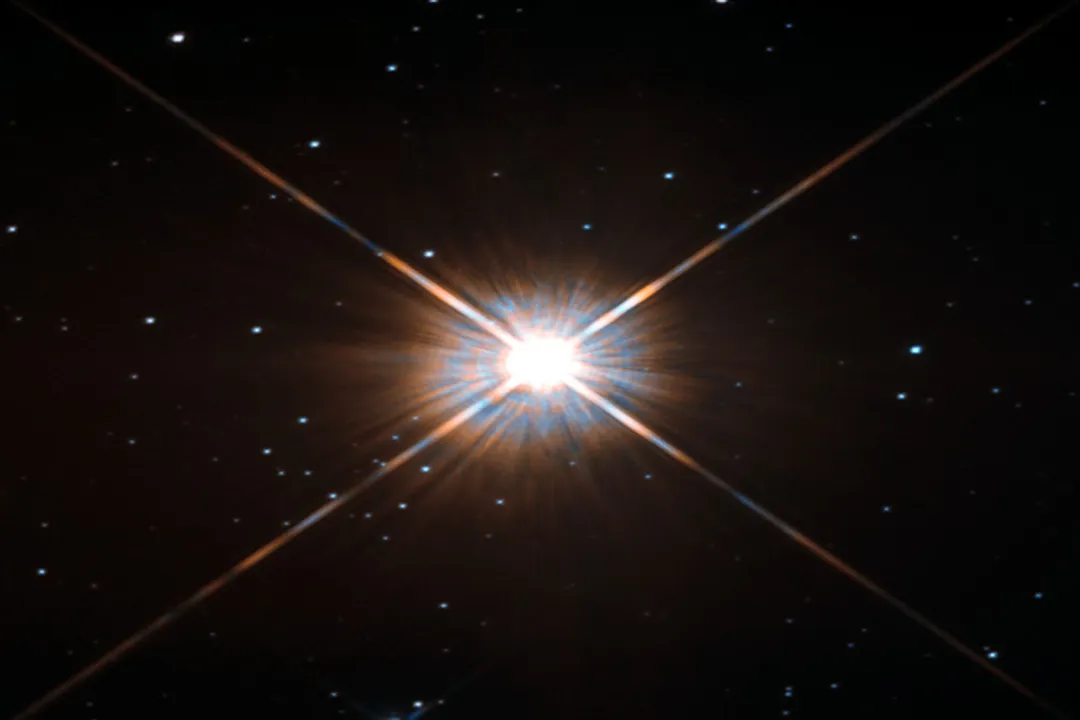
The stellar populations across the cosmos exhibit an astonishing range of lifespans, some measured in mere millions of years, while others are destined to shine for trillions. The primary factor dictating how long a star will remain on the main sequence, diligently fusing hydrogen in its core, is its initial mass. [3][4] Simply put, the most massive stars are the ones with the shortest existence. [2][4]
When we look for the universe's quickest-burning candles, we find them among the hottest, largest, and most luminous stars known: the O-type and B-type stars. [6] These stellar behemoths race through their fuel reserves at an incredible pace, resulting in main-sequence lives that can be astonishingly brief when measured against cosmic timescales. [3][8]
# Mass Rules
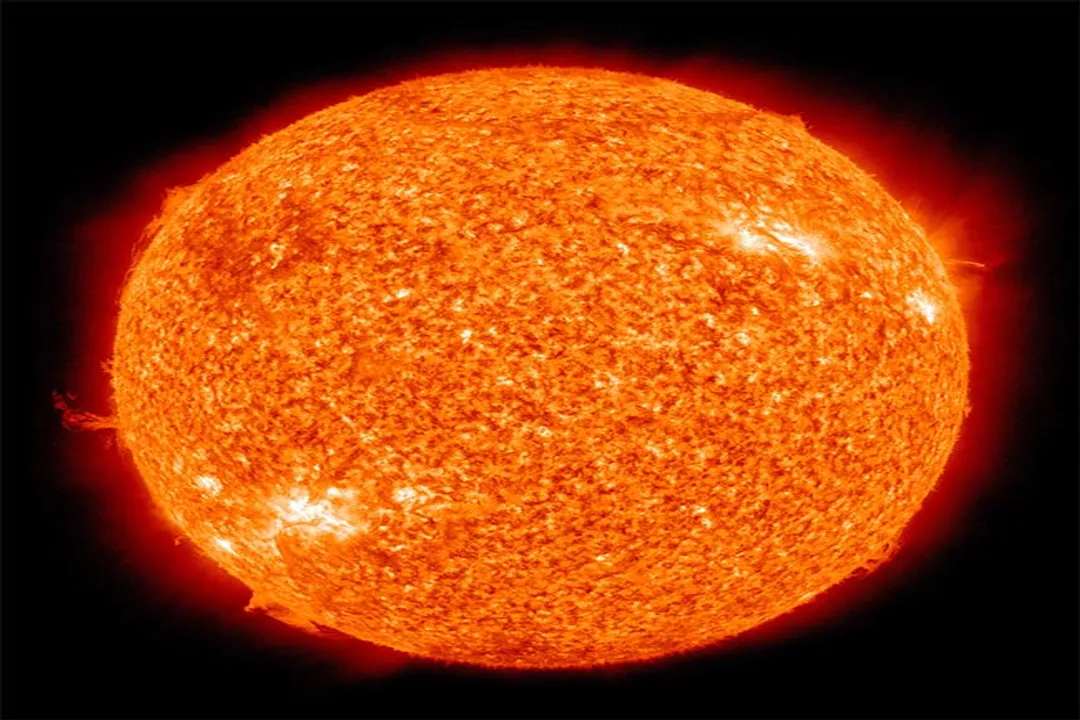
The relationship between a star's mass and its life expectancy is fundamentally governed by the physics of gravity and nuclear fusion. [3] A star’s mass dictates the gravitational pressure exerted inward on its core. To counteract this immense inward squeeze and maintain hydrostatic equilibrium, the core temperature and pressure must be significantly higher in a massive star than in a smaller one, like our Sun. [8]
This heightened core temperature translates directly into a dramatically accelerated rate of nuclear fusion. [8] High-mass stars are far more luminous than low-mass stars because they consume their fusible material—hydrogen—at an exponentially higher rate. [4][6] While more massive stars possess more total fuel, the rate at which they burn that fuel overwhelms their larger supply, leading to a life span measured in millions of years, rather than the billions that characterize their smaller relatives. [3][4]
The sheer scale of this difference is staggering. Stars significantly more massive than the Sun might only endure for a few tens of millions of years on the main sequence. [4] In astronomical terms, this is the blink of an eye, a rapid burst of brilliance followed by a swift, often violent, demise. [9]
# Giant Types
The O-type stars sit at the very top of the stellar mass spectrum. They are characterized by their extreme heat, massive size, and intense blue-white light. [6] Because of their prodigious fuel consumption, they are the shortest-lived stars known. [2][8] O-type stars can have main-sequence lives lasting only a few million years. [2]
Following closely behind in terms of brevity are the B-type stars. [6] While still far more massive and hotter than our Sun, their lifespans are slightly longer than the O-types, though still incredibly short compared to the vast majority of stars in the galaxy. [3][6]
For context, consider the Sun. Our G-type star is expected to live for about ten billion years. [6] This gives us a baseline for what is considered a standard, moderate life. When we compare this to the life of an O-type star, which might last only one million years, [2] we see that the Sun has potentially another five billion years left, while the massive blue giant has already lived through a significant fraction of its entire existence in the time it takes for a geological epoch to pass on Earth. [4]
This rapid burning means that while O and B stars are incredibly bright and easily visible across vast interstellar distances, they are also rare—not only because massive stars are less common to form, but also because they don't last long enough in that bright state to be numerous in any given snapshot of the universe. [6]
| Star Type | Relative Mass (vs. Sun) | Approximate Lifespan | Fuel Consumption Rate |
|---|---|---|---|
| O-Type | > 16 | Few Million Years | Extremely High |
| B-Type | 2 - 16 | Tens of Millions of Years | Very High |
| G-Type (Sun) | Billion Years | Moderate | |
| M-Type (Red Dwarf) | < 0.5 | Trillions of Years | Extremely Low |
| [3][6][4][7] |

# Long-Lived Contrast
To truly appreciate how short-lived these massive stars are, it is helpful to look at their polar opposites: the Red Dwarfs. [1] Red Dwarfs are the smallest, coolest, and least massive stars in the universe, classified as M-type stars. [6][7] They are the universe's slow-burn lanterns. [7]
Because their core fusion operates at a drastically reduced rate—owing to much lower core temperatures and pressures—Red Dwarfs consume their hydrogen fuel over immense timescales. [3][7] Instead of millions or billions of years, their predicted main-sequence lives extend into the trillions of years. [1] Since the universe is only about 13.8 billion years old, every Red Dwarf that has ever formed is still shining today, and they will continue to shine long after stars like our Sun have exhausted their fuel and entered their final evolutionary stages. [7]
This contrast is fundamental to stellar evolution theory: high mass trades longevity for immediate brilliance, whereas low mass sacrifices brightness for unparalleled endurance. [3][6]
# Evolution's Price Tag
The very mechanism that makes O and B stars short-lived also ensures their significant role in the cosmic narrative. [8] Their high mass allows them to reach temperatures high enough to fuse elements heavier than hydrogen and helium in their cores, a process that smaller stars cannot sustain for long, if at all. [9] These massive stars quickly burn through the initial hydrogen, then contract and ignite helium fusion, and continue fusing heavier and heavier elements right up to iron. [8]
This rapid, high-energy lifecycle culminates in spectacular, universe-altering events. While the sources don't dwell on the specific end stages, the implication of such swift, energetic burning is that these stars end their lives suddenly, often through catastrophic supernova explosions. [4] It is precisely these explosions that enrich the interstellar medium with the elements necessary for rocky planets and life—elements like carbon, oxygen, and iron.
Thus, the short-lived, massive stars are the galaxy's primary factories for heavy elements. They spend only a fraction of the time our Sun will spend shining, but their intense activity ensures that the raw materials are synthesized and scattered throughout space, setting the stage for the formation of later, longer-lived generations of stars, like the Sun, and the planets that orbit them. [9] In a sense, the universe must sacrifice its biggest, brightest stars quickly to seed the environment for everything else to follow.
#Videos
Which Type Of Star Has The Shortest Life Span? - Physics Frontier
Related Questions
#Citations
Red dwarf - Wikipedia
Shortest lived stars | Guinness World Records
Flexi answers - What type of star has the shortest lifespan? - CK-12
What is the shortest lifespan of a star created during the big bang ...
Which Type Of Star Has The Shortest Life Span? - Physics Frontier
Types of Stars | Stellar Classification, Lifecycle, and Charts
Red dwarfs are the smallest and coolest stars in the universe, and ...
There are different star types but what makes O-type stars so short ...
Massive, short-lived stars may still form like the Sun