Which type of galaxy often contains older stars and little gas?

When we survey the vast cosmic landscape, astronomers categorize galaxies into several major families based on their visual appearance and internal composition. The three main classifications usually discussed are spiral, irregular, and elliptical galaxies. [3][5] While spiral galaxies, like our own Milky Way, are known for their beautiful, rotating arms teeming with blue, active star-forming regions, one specific type stands out for being much quieter: the elliptical galaxy. [3][5] These systems are the ones most often characterized by their ancient stellar populations and a significant lack of the cold gas needed to fuel new star birth. [1][4]
# Shape Description
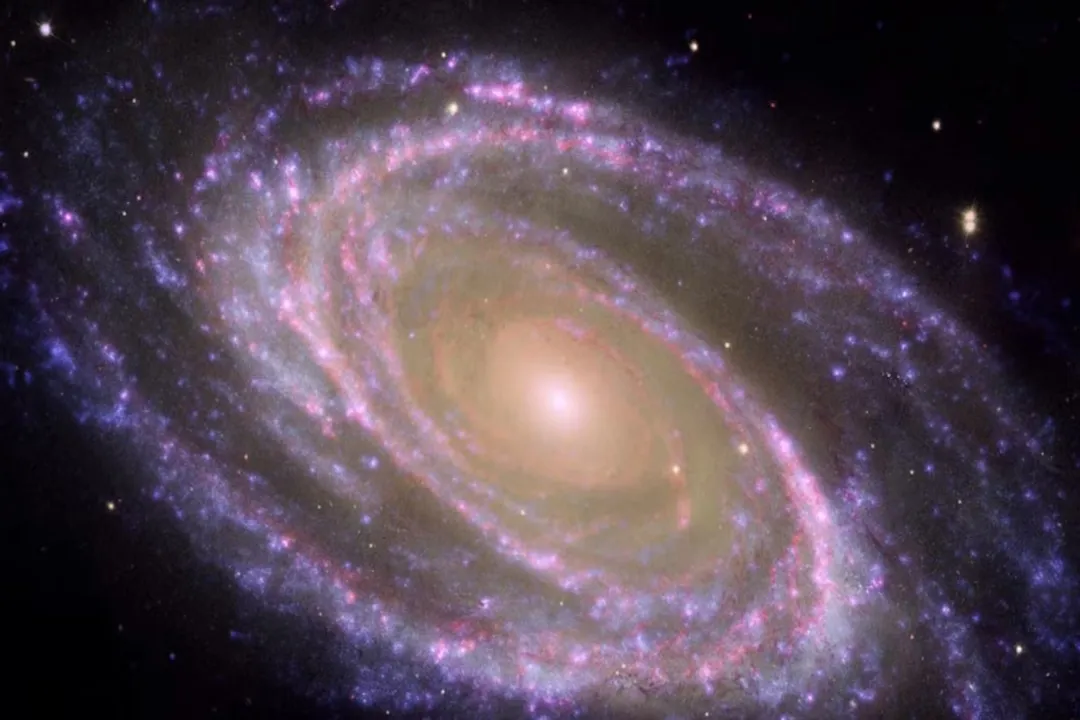
Elliptical galaxies present a stark visual contrast to the pinwheel structure of spirals. [5] They possess a smooth, featureless appearance, often looking like a giant, hazy, luminous blob of light. [1][4] Their light profile gradually fades outward from a bright core, lacking the distinct spiral arms or defined central dust lanes seen in other types. [1] This smooth distribution is because their stars orbit the galactic center in somewhat random, three-dimensional paths, rather than the organized, flat rotation plane typical of spiral disks. [1][4]
# Stellar Age Profile
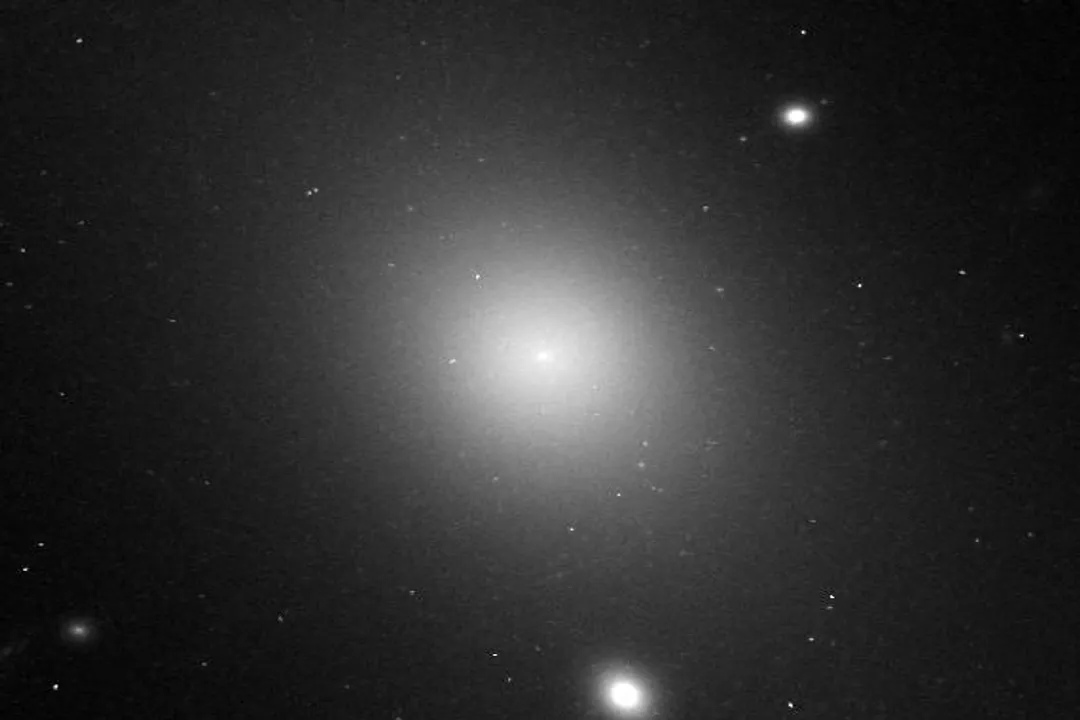
The defining characteristic that separates ellipticals in terms of stellar content is age. These galaxies are overwhelmingly dominated by old, red stars, often referred to as Population II stars. [1][5] This population signifies that the galaxy has already gone through its most vigorous period of star formation long ago. [5] In fact, in most mature elliptical galaxies, the rate of new star creation is virtually zero. [4][5] When a galaxy stops making new stars, the massive, short-lived blue stars quickly die off, leaving behind the longer-lived, cooler, and inherently redder stars, which gives the entire galaxy a characteristic reddish-yellow hue. [5]
Consider a vast elliptical galaxy residing in the center of a large cluster. If we could observe its history, we would likely see a violent past—perhaps a massive collision or merger between two or more large spiral galaxies—that triggered an immense, fast burst of star creation, rapidly consuming all available raw material. [1][4] Once that fuel is spent, the galaxy settles into a long, slow decline, aging gracefully without replenishment.
# Missing Ingredients
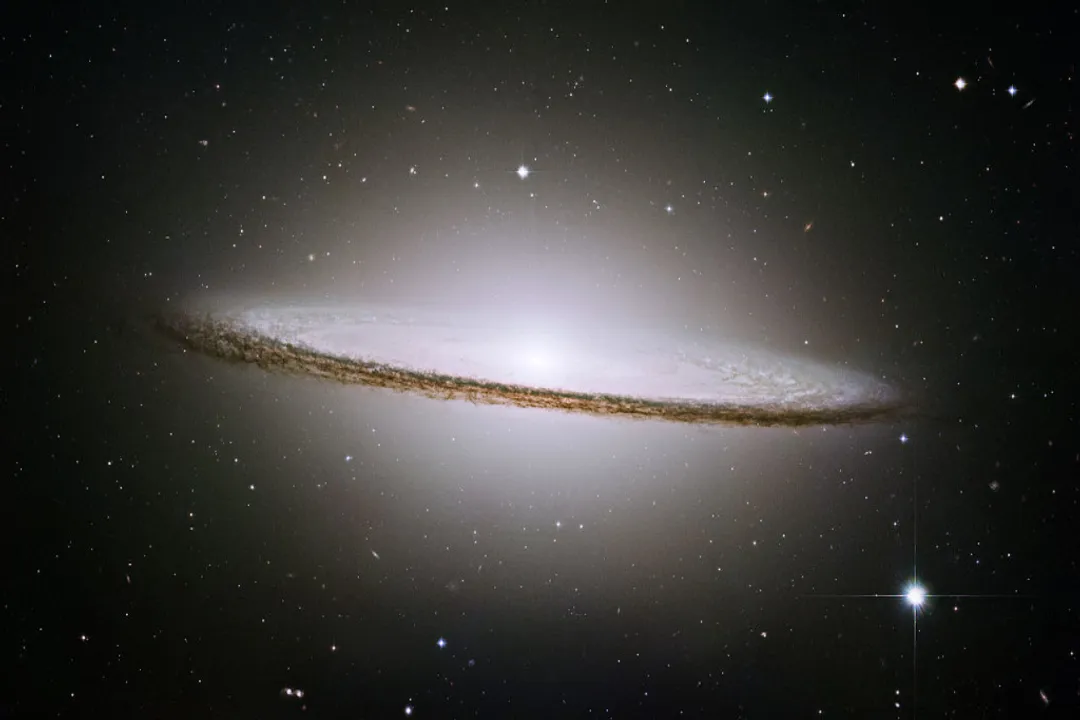
What fuels the creation of a new star? Primarily, it is vast reserves of cold, molecular gas and dust. [4] The fact that elliptical galaxies have little gas and dust is the direct reason for their lack of ongoing star formation. [1][5] Unlike spirals, which maintain vast reservoirs of cool hydrogen in their disks, ellipticals appear to have been thoroughly cleansed of this material. [4] They do possess gas, but it tends to be extremely hot, ionized gas that emits X-rays, which is too energetic to condense and collapse into new stars. [1]
It is insightful to compare this situation to the environments in which these galaxies reside. While the merger hypothesis explains past fuel consumption, the location of large ellipticals in the cores of dense galaxy clusters suggests an environmental effect might also play a role in their current barren state. [1] In these crowded cosmic neighborhoods, the hot gas in a galaxy can be violently stripped away by the surrounding intra-cluster medium as the galaxy speeds through it—a process called ram-pressure stripping. A galaxy that might have started as a gas-rich spiral could be transformed into a gas-poor elliptical simply by residing in a dense cluster for billions of years, effectively having its cosmic fuel source blown away. [1] This dual mechanism—internal consumption via mergers followed by external environmental stripping—ensures a near-total absence of cold fuel.
# Galactic Scale
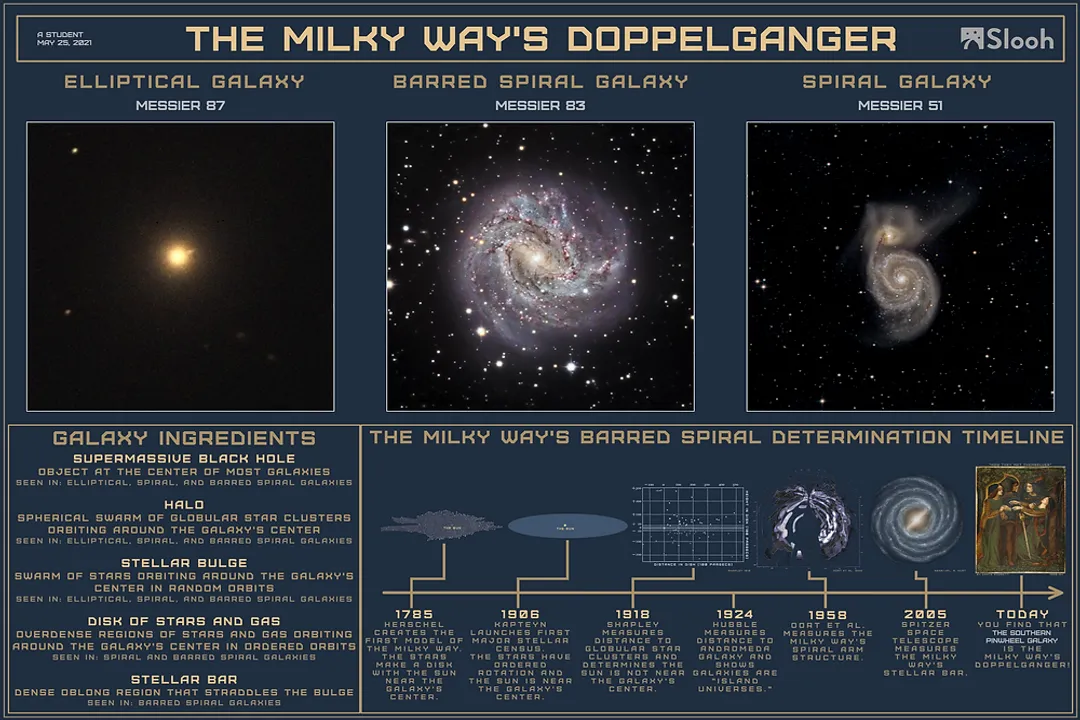
Elliptical galaxies exhibit the widest range in physical size of any galaxy type. [1] On one extreme, we have dwarf ellipticals, which are the smallest and most numerous galaxy type in the universe. [1] On the other end are the giant ellipticals, some of which are the largest single galaxies known, sometimes reaching millions of light-years across and containing far more stars than the Milky Way. [1] These giants are nearly always found at the very center of massive galaxy clusters. [1]
To better visualize the differences in evolutionary states across the galaxy family, one can organize their key attributes:
| Galaxy Type | Dominant Stellar Age | Cold Gas Content | Typical Structure |
|---|---|---|---|
| Elliptical | Old (Red) | Very Little | Smooth, featureless ellipsoid [1] |
| Spiral | Mixed (Young blue, Old red) | High | Flattened disk with arms [5] |
| Irregular | Young (Often blue) | High | Lacks defined shape [3] |
This table shows that the defining traits—old stars and low gas content—are inextricably linked in the elliptical category, representing a state of gravitational maturity and energetic quiescence. [4]
# Formation Pathways
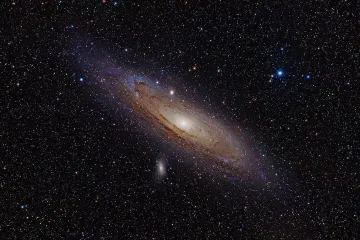
The general consensus among astrophysicists is that the history of an elliptical galaxy is often one of dramatic violence and eventual calm. [4] While some smaller ellipticals might have formed similarly to spirals, the most massive ellipticals are widely believed to be the products of galactic cannibalism—the merging of two or more smaller galaxies, frequently spirals. [1][4]
When two spiral galaxies collide, the gravitational disruption is immense. Stars are tossed into new, randomized orbits, destroying the organized spiral structure. [1] Crucially, the huge clouds of gas also interact, often leading to a spectacular, short-lived burst of star formation—a "starburst" event—that rapidly uses up the remaining cold fuel. [1] After this violent merger and subsequent burst, the resulting galaxy settles into the smooth, gas-poor state characteristic of a mature elliptical. This process is an irreversible step away from the gas-rich, star-forming state seen in spirals. [4] Therefore, finding an elliptical galaxy rich in young, blue stars would be extremely unusual, suggesting it is either very young itself or located in a region where gas inflow is currently overcoming the consumption rate, which is rare for this galaxy type. [5]
Related Questions
#Citations
Elliptical galaxy - Wikipedia
Elliptical Galaxy | ESA/Hubble
The Three Types of Galaxies - Slooh
Elliptical Galaxy - Universe Today
Types of Galaxies | Physical Geography - Lumen Learning
Galaxies are classified into three main types based on their shape ...
Elliptical Galaxy | Definition, Characteristics & Examples - Study.com
Galaxies—facts and information | National Geographic
Ellipticals - A Universe of Galaxies