How do we determine the age of older stars?

Determining the exact age of a star is one of the most challenging feats in astronomy. Unlike dating a tree by counting its rings or a rock using radioactive decay, we cannot simply observe a star and read off its age. Stars are not born with a visible expiration date, and their life cycles span billions of years, making direct measurement impossible for most objects. [2][3] Instead, astronomers rely on a suite of indirect methods, each serving as a proxy measurement, piecing together the stellar timeline based on what we know about physics and stellar evolution. [7]
# Mass Lifespan
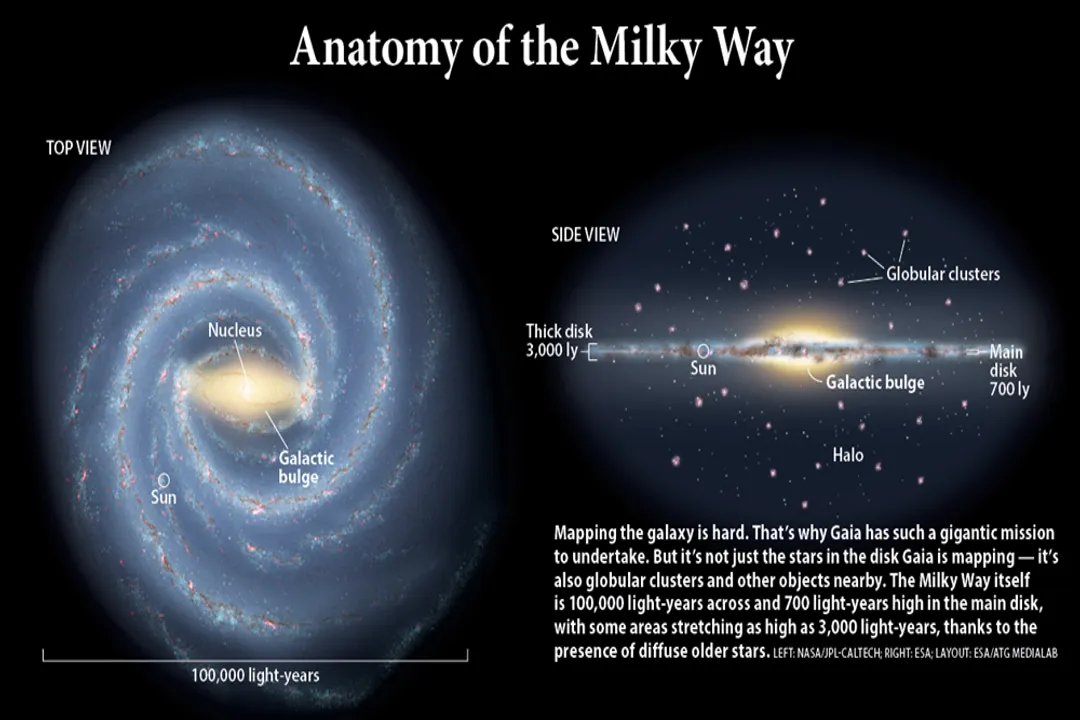
The most fundamental relationship governing a star’s life is its mass. A star’s mass dictates its luminosity and, critically, how quickly it burns through its nuclear fuel. [3][6] More massive stars are incredibly luminous and burn their hydrogen fuel at a ferocious rate, leading to very short lives—perhaps only a few million years. [1][6] Conversely, low-mass stars, like the Sun, are frugal with their fuel, allowing them to reside on the main sequence for billions of years. [1][6] For relatively young or middle-aged stars, if we can accurately measure the star's mass and its current stage of hydrogen burning (its position on the main sequence), we can estimate its age based on established mass-luminosity relationships. [3][7] However, this method quickly loses precision as a star ages and moves off the main sequence, or when attempting to date very low-mass, long-lived stars where the uncertainty in mass translates to enormous uncertainty in age. [1]
# Theoretical Models
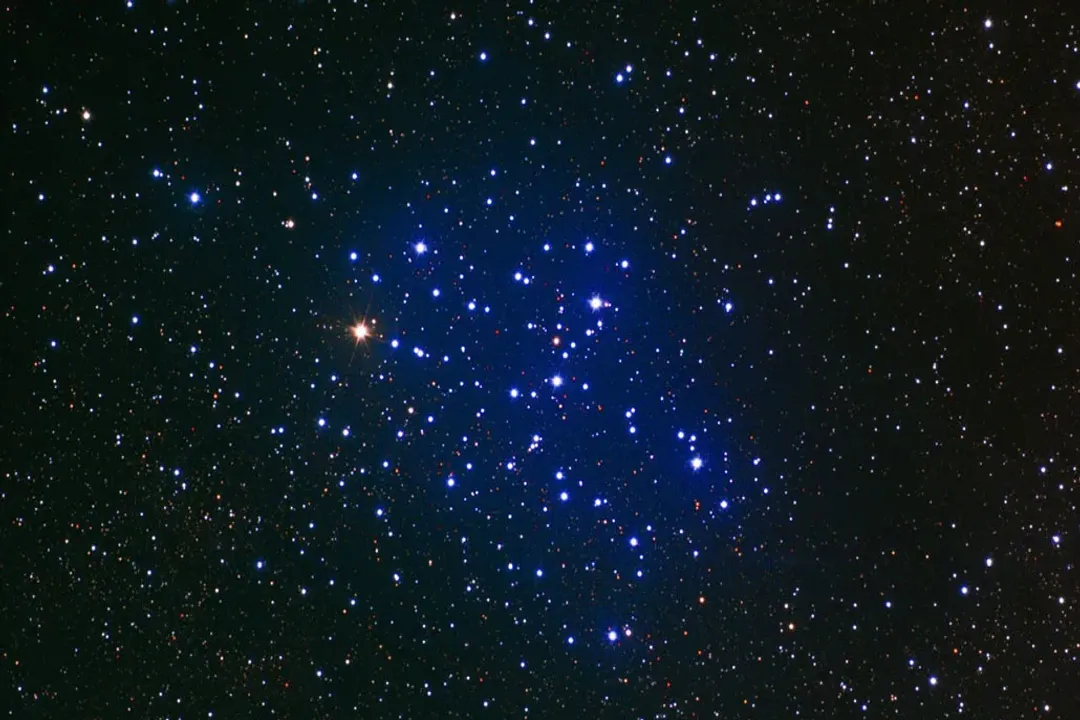
To move beyond the main sequence, astronomers turn to theoretical stellar models, often visualized as tracks on a Hertzsprung-Russell (H-R) diagram. [6] These models, called isochrones, map out the theoretical positions of stars of a specific initial mass and chemical composition as they age over time. [1][3] By observing a star's current color (temperature) and brightness (luminosity), astronomers can compare its location on the H-R diagram to these calculated isochrones. [6] The isochrone that passes through the star’s measured position gives an estimate of its age. [1] This technique is particularly helpful for stars that have already evolved away from the main sequence, such as those becoming subgiants or red giants. [3] The accuracy hinges entirely on the underlying physics coded into the models and the initial chemical composition, which must be known or accurately inferred. [6]
A helpful way to conceptualize this is to think of the H-R diagram as a map showing where every possible star should be at every possible age. If we know the star’s chemical fingerprint (metallicity), it’s like knowing the starting point on the map; its current position then tells us how long it took to travel there along its evolutionary path. [1]
# Cluster Dating
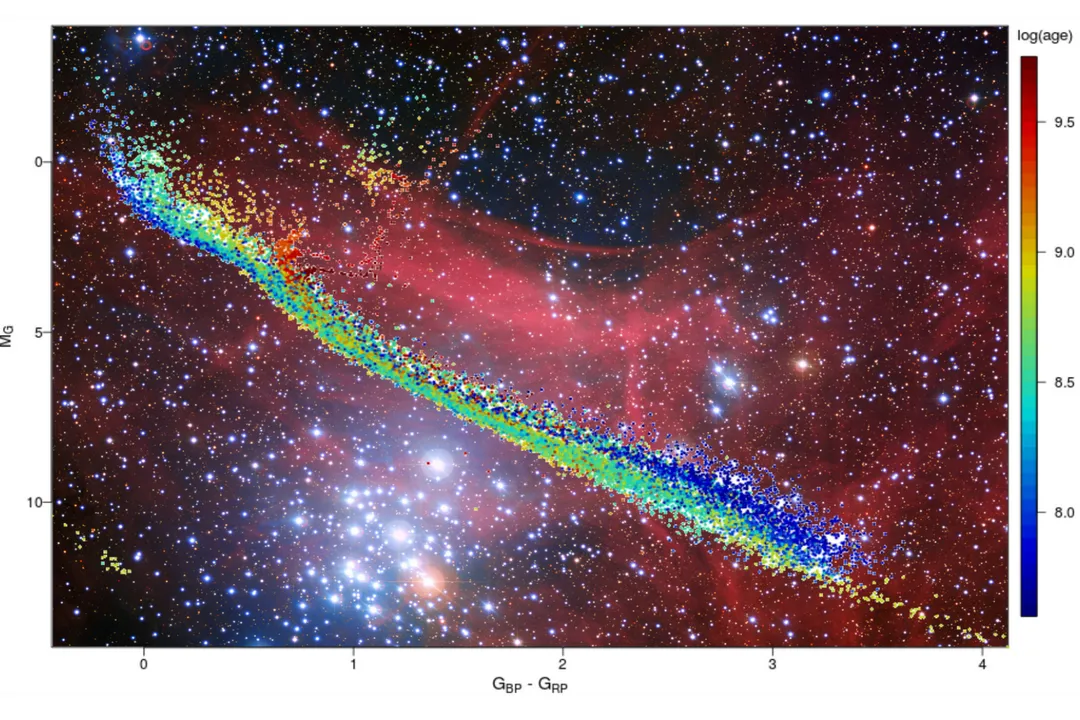
While dating individual stars is fraught with error, determining the age of a star cluster provides one of the most reliable benchmarks for astrophysics. [8][9] This method works because all stars within a cluster are assumed to have formed at roughly the same time from the same cloud of gas, meaning they share the same initial age and chemical composition. [1][8] Astronomers plot the cluster members on a color-magnitude diagram (CMD)—the observational equivalent of the H-R diagram. [1] As the cluster ages, its most massive stars evolve off the main sequence first, followed by less massive ones. [9] The point on the CMD where stars begin to leave the main sequence is known as the main-sequence turnoff point. [1][8] The specific luminosity and color of this turnoff point directly correspond to the mass of the stars that are just running out of core hydrogen, which, using the established models, gives a very precise age for the entire cluster. [8][9] This technique is fundamental for calibrating the absolute ages of other methods. [8]
# Oldest Populations
For finding the oldest stars in the universe, astronomers focus on globular clusters. [1] These ancient collections can contain hundreds of thousands of stars, all formed perhaps 12 to 13 billion years ago. [1][9] Dating these clusters relies on observing the precise location of their turnoff point, looking for stars at the fainter, redder end of the main sequence. [1] Since these stars are near the end of their main-sequence lives, even small differences in age result in significant shifts in their position on the CMD, allowing for good age precision relative to their immense age. [8] If we look at the faintest stars in these clusters, they have been burning hydrogen for the maximum possible time, giving us an estimate for the age of the universe itself. [9]
An interesting consequence of studying these ancient clusters relates to chemical evolution. When comparing a nearby, younger open cluster to an ancient globular cluster, one might observe that the globular cluster stars have significantly lower metal content (fewer elements heavier than helium). [1] This difference in initial composition means that while the theoretical isochrones used for both populations are based on similar physics, the specific model tracks must be meticulously adjusted for the precise metallicity of the cluster stars before a reliable age can be determined from the turnoff point. [1][6] This highlights that stellar age determination is often a three-variable problem: mass, initial composition, and time elapsed. [6]
# White Dwarf Clocks
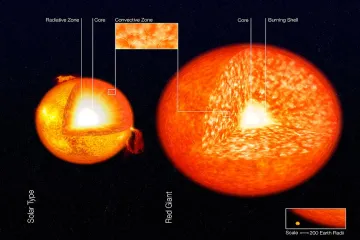
To date stellar populations older than the main-sequence turnoff point in the oldest globular clusters, or to date isolated field stars that cannot be grouped into clusters, astronomers employ the cooling rate of white dwarfs. [1][7] A white dwarf is the dense, hot stellar remnant left after a star like the Sun has exhausted its fuel and shed its outer layers. [1][7] Once formed, a white dwarf no longer generates energy through fusion; it simply cools down very slowly over eons, radiating away its stored thermal energy. [1][5] This cooling process is highly predictable, acting like a cosmic cooling clock. [2][7] By measuring a white dwarf’s temperature, astronomers can calculate how long it has been cooling—its age since it formed. [2][7] This method is particularly powerful for dating the oldest disk populations, as the faintest, coolest white dwarfs represent the earliest formations. [1] A crucial point here, often missed in simplified explanations, is that this method measures the cooling time, not the star's total lifetime. To get the star's total age, one must add the time it spent evolving before becoming a white dwarf, which depends heavily on its initial mass. [7]
# Vibrational Signatures
Another increasingly precise technique involves the study of stellar pulsations, known as asteroseismology. [1] Just as seismologists study earthquakes to map the Earth’s interior, astronomers study the internal sound waves, or oscillations, propagating through a star to determine its internal structure. [1][2] These oscillations are affected by the star’s internal density, temperature, and chemical profile, all of which change predictably as the star ages and converts hydrogen to helium in its core. [2] By analyzing the frequencies of these vibrations observed in the star’s brightness changes, scientists can effectively "weigh" the internal changes related to age. [1][2] This technique offers a way to age main-sequence and subgiant stars with far greater accuracy—often better than 10% error—compared to traditional methods, especially when applied to stars similar to the Sun. [1][2] While currently best suited for relatively nearby, well-observed stars, the potential exists to refine ages for a wider range of evolving stars in the future.
# Comparing Precision
The methods available present a spectrum of accuracy that depends heavily on the type of star being studied. [1][3]
| Method | Primary Application | Typical Age Precision | Key Assumption |
|---|---|---|---|
| Main-Sequence Fitting | Young to middle-aged isolated stars | Moderate (20–30%) | Mass-Luminosity relationship is perfect [3] |
| Cluster Turnoff | Stars within open or globular clusters | High (5–10%) | All stars formed simultaneously [8] |
| White Dwarf Cooling | Very old disk and halo populations | Good (depends on initial mass phase) | Cooling law is perfectly known and undisturbed [2] |
| Asteroseismology | Sun-like stars, red giants | Very High (often <10%) | Model physics accurately captures interior sound speed [2] |
For example, if we study the Sun, its age is best constrained by asteroseismology, yielding around billion years. [2] If we look at a distant, unattached star whose spectral type places it near the main-sequence turnoff of a known cluster, we often borrow the cluster's age, accepting a general uncertainty of about percent for that age bracket. [8] If we only had photometry for a solitary red giant, we might be forced to use isochrones, where the age result could easily have an error bar spanning a billion years, depending on the initial metallicity estimate. [1][6] The sheer density of stars in a globular cluster allows for statistical smoothing that makes the turnoff point far more trustworthy than the position of any single field star. [8] This is why the aging of clusters remains the bedrock for verifying the theoretical models that we apply to individual, older stars elsewhere in the galaxy. [9]
#Videos
How Do We Measure the Ages of Stars? With Astrophysicist Ruth ...
Related Questions
#Citations
Stellar age estimation - Wikipedia
How do scientists calculate the age of a star? - Science News
How do scientists determine the ages of stars? Is the technique ...
How Do We Measure the Ages of Stars? With Astrophysicist Ruth ...
eli5 how do we KNOW how old stars are? : r/explainlikeimfive - Reddit
Measuring the Age of a Star Cluster | ASTRO 801
How do we measure the size and the age of the Universe?
How old are the stars? - ESO.org
How do astronomers know the age of the planets and stars?