What determines a main sequence star?
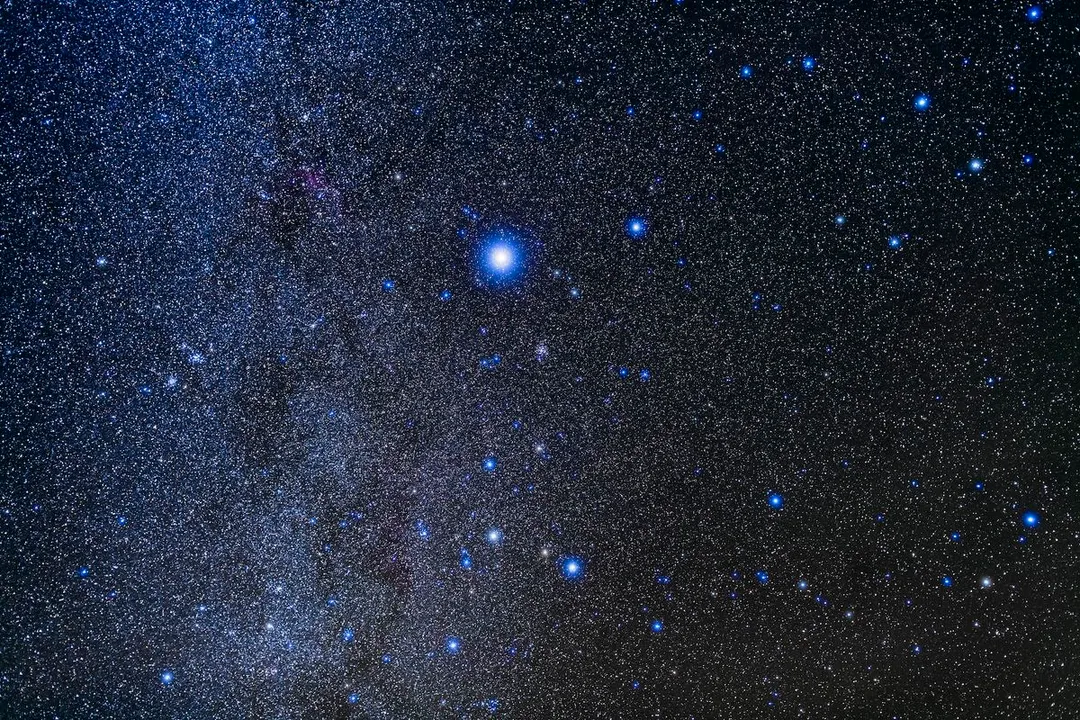
The vast majority of stars we observe, including our own Sun, reside on a specific band across the celestial population charts known as the main sequence. [1][3][10] This term describes a stable, prolonged phase in a star's life cycle where it generates its energy by fusing hydrogen atoms into helium atoms within its extremely hot core. [1][4][5] It is the stellar equivalent of adulthood—a long, steady period where the internal machinery is perfectly balanced against the relentless squeeze of gravity. [1][4][10] For an object to qualify as a main sequence star, it must be actively engaged in this core hydrogen burning process. [1][5] If a star is too small and cool, it never achieves the necessary core temperature to ignite sustained fusion; if it's too large and hot, it might burn through its fuel too quickly or have already moved past this stable phase. [5][6]
# Stellar Placement
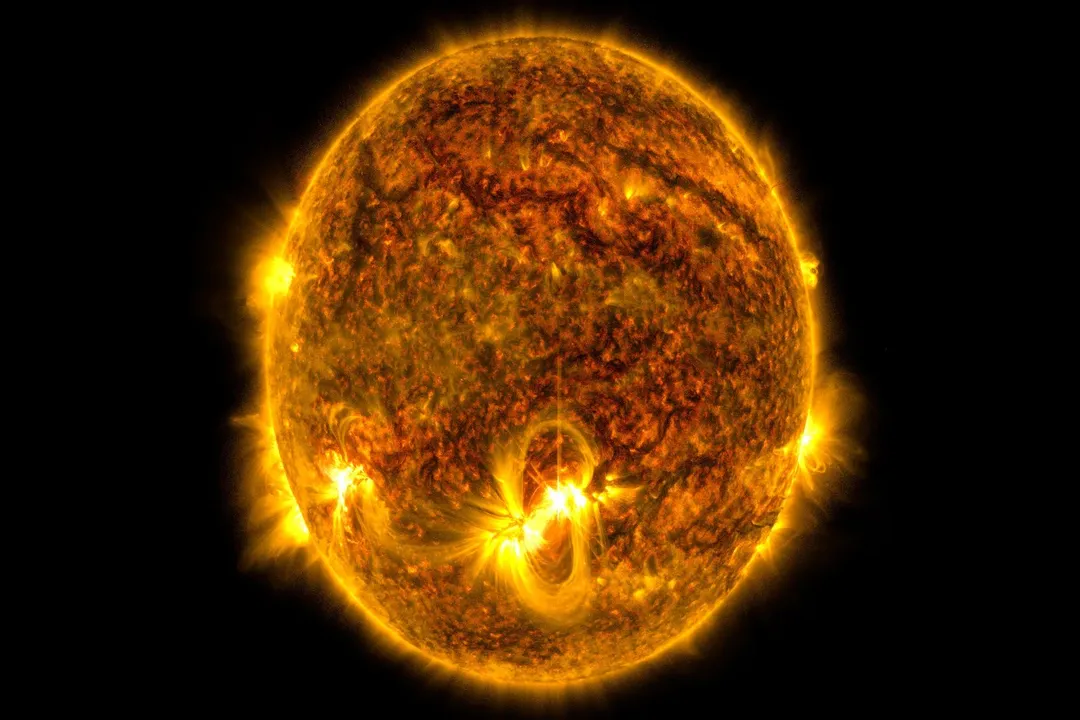
When astronomers plot the observed properties of stars—specifically their luminosity (brightness) versus their surface temperature (or spectral type/color)—a distinct diagonal band emerges on the resulting graph. [1][3][10] This graph is the famous Hertzsprung-Russell (H-R) diagram. [1][3][10] Stars that fall upon this pronounced curve are designated as main sequence stars. [1][3] The main sequence itself constitutes about 90% of all stars in the universe at any given time. [1][10] Our Sun has occupied this sequence for about $4.6$ billion years and is expected to remain there for about another $5$ billion years. [1][7] Stars that are in their pre-main-sequence phase, or those that have exhausted their core hydrogen and evolved into giants or supergiants, sit above or to the right of this main band on the H-R diagram. [1][3][10]
# Core Physics
The very definition of a main sequence star is rooted in the delicate, life-sustaining balance occurring at its heart. [4][10] This balance is called hydrostatic equilibrium. [1][4] On one side of this cosmic scale is the immense, inward-crushing force generated by the star's own gravity, determined by its total mass. [1][4] Counteracting this gravity is the outward pressure generated by the heat produced from thermonuclear fusion in the core. [1][4][10] In a main sequence star, the primary fusion reaction converts hydrogen into helium. [1][4][5] This process releases enormous amounts of energy, which then travels outward, pushing against the gravitational collapse. [1][10] As long as a star has sufficient hydrogen fuel in its core and this equilibrium is maintained, it will stay on the main sequence. [4][7]
An interesting way to conceptualize this stability is to think of it as an internal thermostat. If the core begins to contract slightly due to insufficient outward pressure, the temperature and density increase. This increased temperature dramatically accelerates the fusion rate, generating more outward pressure until the balance is restored. Conversely, if the core overheats, it expands slightly, lowering the temperature and slowing the fusion rate until stability returns.
For stars like the Sun, the fusion process is the proton-proton chain reaction. [1] More massive stars utilize the CNO cycle, which is far more temperature-sensitive but achieves the same end: converting hydrogen to helium and supporting the star against collapse. [1]
# Mass Prime Factor
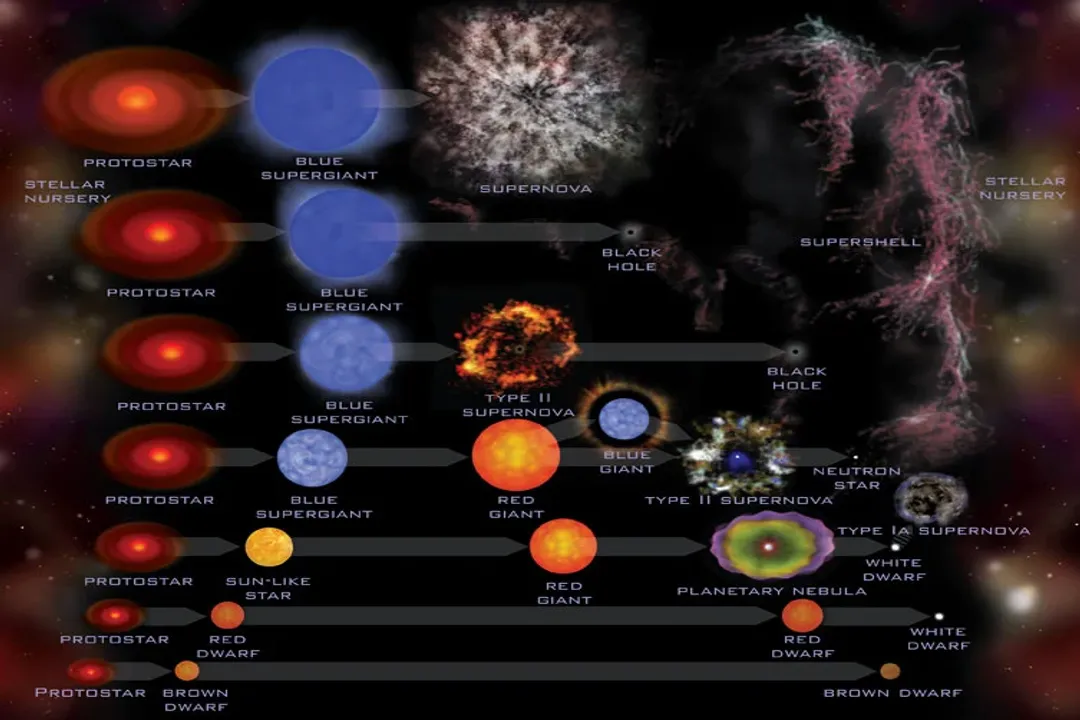
If we consider all the properties a star possesses—its initial chemical composition, its rotation rate, its magnetic field—one factor reigns supreme in determining where it will land on the main sequence and how long it will stay there: mass. [3][4][5][10] Mass dictates everything about a star's main sequence existence. [3] It determines the core temperature and pressure required to fight gravity, which in turn dictates the rate of hydrogen fusion. [3][4] The more massive a star is, the greater its gravitational pressure, which necessitates a much hotter and denser core to maintain equilibrium. [1][3]
Consider the extremes:
- Low-Mass Stars: Objects below about $0.08$ times the mass of the Sun (the hydrogen-burning limit) never get hot enough in their cores to start fusion and become brown dwarfs instead. [1][4] Stars just above this threshold burn their fuel very slowly and dimly. [5]
- High-Mass Stars: Stars significantly more massive than the Sun have incredibly high core temperatures, leading to extremely rapid fuel consumption. [1][4][5]
It is a counterintuitive relationship that general readers often miss: the most massive stars are the least efficient with their fuel, burning it at a prodigious rate compared to their smaller brethren. [4][5]
# Color Spectrum
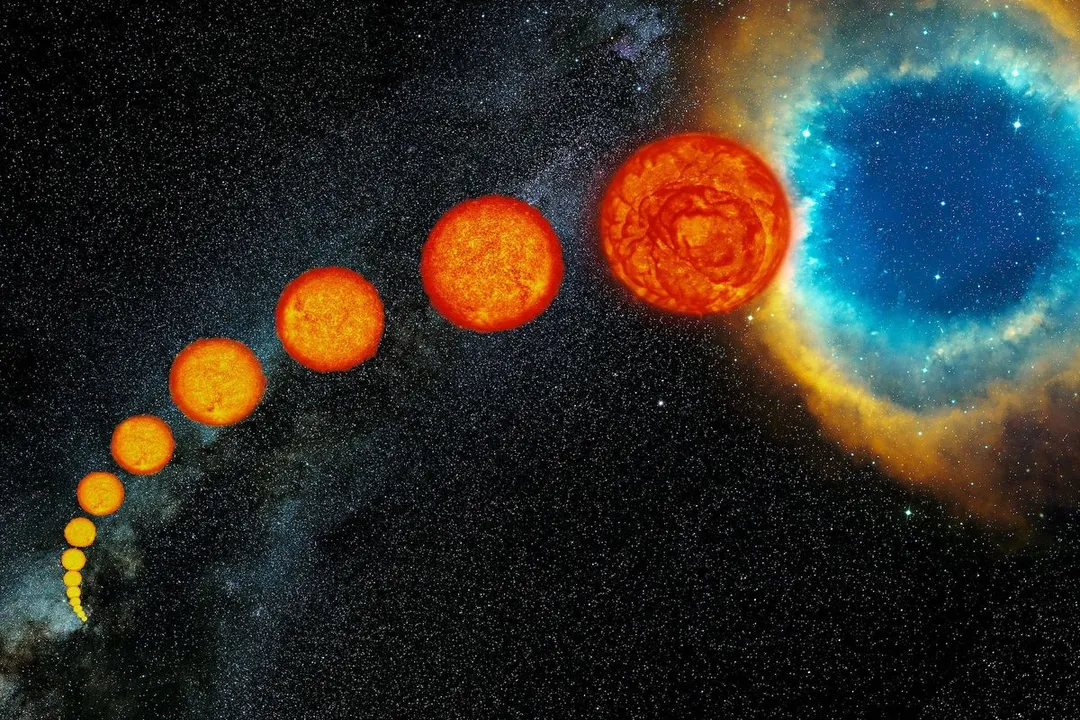
Since temperature is a key parameter plotted on the H-R diagram, and temperature is a direct consequence of mass and fusion rate, the color of a main sequence star is intrinsically linked to its mass. [3] This creates a clear sequence from the upper-left to the lower-right of the main band. [1][3]
| Stellar Property | Hot End (Top-Left) | Cool End (Bottom-Right) |
|---|---|---|
| Color | Blue/White | Yellow/Orange/Red |
| Mass (Solar Masses) | Very High ($>10$) | Low ($<1$) |
| Luminosity | Very High | Very Low |
| Fusion Rate | Extremely Fast | Very Slow |
Stars at the upper end of the main sequence are blue giants—exceptionally hot, bright, and massive. [1][3] Conversely, stars toward the lower end are red dwarfs, which are cool, dim, and low in mass. [1][5] Our Sun sits near the middle of this scale, classified as a G-type, yellow-white star. [1]
# Lifespan Differences
The main sequence phase is the longest period of a star's life, but the duration varies enormously based on that single determinant: mass. [4][5] The relationship between mass and lifespan is inverse and non-linear; a slight increase in mass results in a significant decrease in lifetime. [4][5] This highlights the dramatic impact of the core temperature on fuel consumption.
For instance, a star with $25$ times the mass of the Sun (and far more luminous) might only survive on the main sequence for a few million years. [5] Compare this to our Sun, which has a main sequence lifespan estimated around $10$ billion years. [1][7] At the very low end, small, dim red dwarfs can potentially remain on the main sequence for trillions of years, far exceeding the current age of the universe. [5]
To put the stellar timescales into perspective, imagine a highway system where fuel efficiency dictates travel time. A massive star is a Formula 1 car constantly redlining on an open track—incredible speed, very short distance covered. The Sun is a reliable family sedan cruising at the speed limit, expected to make the long haul. A red dwarf is an electric scooter, moving slowly but possessing an inexhaustible-seeming battery for local trips. When a star begins its life, its initial mass sets its life clock, and that clock ticks down only as long as the core hydrogen remains the primary energy source. [6][7]
# Leaving Sequence
The main sequence defines stability through hydrogen fusion. A star’s tenure on this line ends the instant the supply of hydrogen fuel in its core is depleted. [4][6][7] Once the core runs out of hydrogen, fusion stops there, and the outward pressure it was generating immediately diminishes. [4][7]
Gravity then wins the first round, causing the inert helium core to contract and heat up significantly. [4][7] This contraction generates heat that is sufficient to ignite a shell of fresh hydrogen surrounding the core, causing this shell to fuse rapidly. [4] The resulting massive increase in energy output forces the outer layers of the star to expand dramatically and cool down, changing the star's appearance and moving it off the main sequence. [4][7]
For a star like the Sun, this transition marks the beginning of its evolution into a Red Giant. [7] For the more massive stars, the process is even more energetic, leading them toward becoming Red Supergiants. [1][7] The key takeaway is that while a star remains on the main sequence, it is defined by that steady, core-driven hydrogen burning; any deviation from that state means it has graduated, or perhaps failed, the main sequence test. [1][4] The primary determinant is therefore the initial mass, which establishes the core conditions necessary to achieve and maintain that specific energy-generating equilibrium. [3][10]
#Videos
What Defines A Main Sequence Star? - YouTube
Related Questions
#Citations
Main sequence - Wikipedia
Main Sequence Stars: Definition & Life Cycle | Space
Lecture 14: The Main Sequence
Main Sequence Star | Definition, Chart & Characteristics - Study.com
Star Basics - NASA Science
Main sequence stars | Research Starters - EBSCO
What Defines A Main Sequence Star? - YouTube
Main Sequence Star Lives | CK-12 Foundation
Star Main Sequence - Universe Today
Stellar Evolution: Main Sequence - University of Oregon