What factor determines how a star dies?
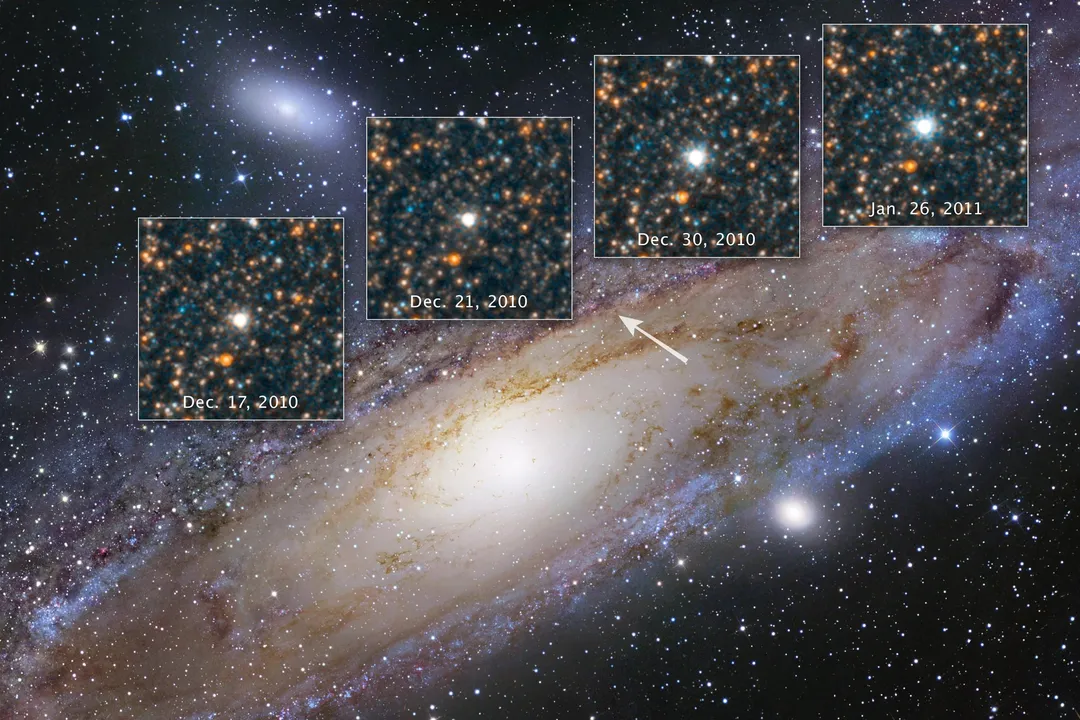
The fate awaiting a star is not a matter of chance, but a predetermined outcome written in its very substance at the moment of its birth. While the long, luminous life of a star seems eternal to us, its demise is governed almost entirely by one fundamental characteristic: its initial mass. [4][8] This single measurement dictates whether a star will fade gently over eons or end its existence in a cataclysmic explosion, scattering elements across the cosmos. [1][7]
# Mass Dictates
Every star spends the vast majority of its life on the main sequence, fusing hydrogen into helium in its core. [8] During this phase, a stable equilibrium is maintained between the relentless inward pull of gravity and the outward push generated by the heat from nuclear fusion. [5] When the hydrogen fuel runs out, this balance is broken, and the star begins its death sequence. The mass the star held when it first formed sets the stage for which final act it will perform. [4][8]
Astronomers categorize these stellar deaths based on mass relative to our Sun (one solar mass, or ). The boundary between a quiet end and a violent one typically hovers around eight times the mass of the Sun. [8]
# Gentle Fading
Stars with masses up to about will burn their fuel slowly and eventually transition directly into a helium white dwarf without the dramatic expansion phases seen in larger stars. [7][8]
For stars similar to our Sun, roughly $0.5$ to , the end is more elaborate but still relatively peaceful in cosmic terms. [8] Once core hydrogen is depleted, the core contracts while the outer layers expand dramatically, turning the star into a red giant. [1][7] As the outer envelope drifts away into space, it forms a beautiful, expanding shell of glowing gas known as a planetary nebula. [2][7] What remains at the center is the extremely hot, dense core—a white dwarf. [7][8] This remnant is supported against further gravitational collapse not by fusion, but by electron degeneracy pressure, a quantum mechanical effect that resists further compression of the packed electrons. [5] A white dwarf simply cools down over billions of years, eventually becoming a cold, dark theoretical black dwarf. [7]
# Explosive Endings
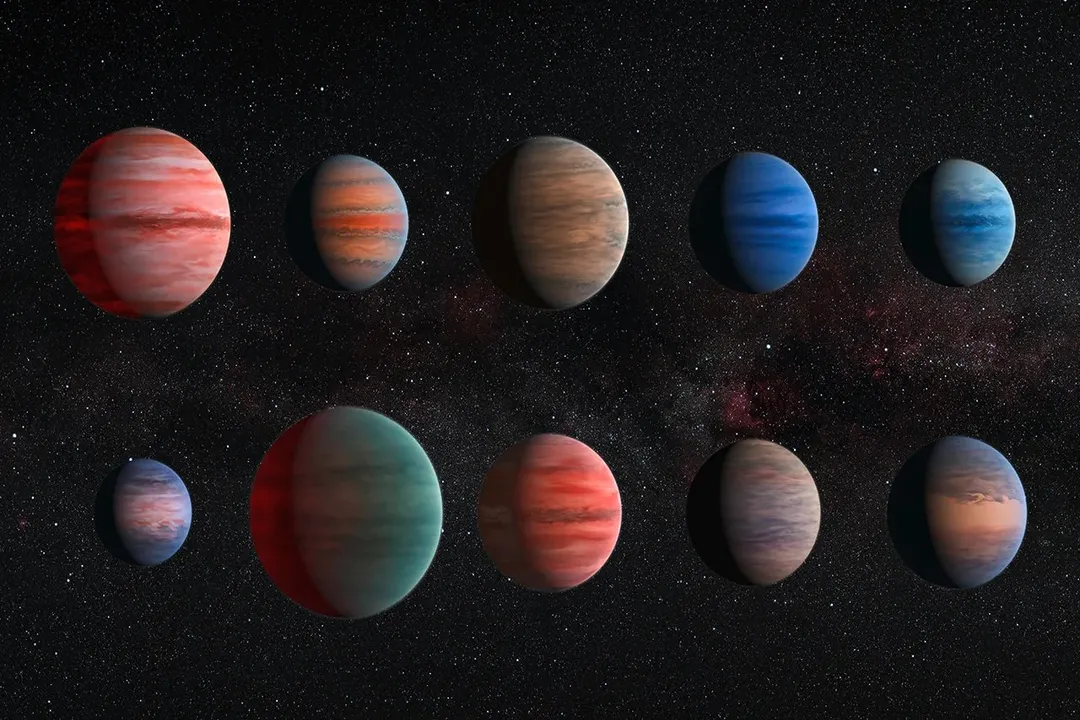
When a star begins its life with a mass exceeding roughly eight times that of the Sun, the core temperatures and pressures achieved during its life are sufficient to fuse heavier and heavier elements beyond helium, such as carbon, neon, oxygen, and silicon, building up to iron. [7] Since fusing iron consumes energy rather than releasing it, the outward pressure suddenly ceases when an iron core develops. [5]
Gravity wins the final battle instantly, causing the core to collapse in milliseconds. [5] This implosion rebounds violently off the incompressible central matter, generating a titanic explosion known as a Type II supernova. [1][7] This event briefly outshines entire galaxies and is the mechanism by which most heavy elements—those heavier than iron—are created and scattered throughout the interstellar medium. [1][7]
The remnant left behind after the supernova blast depends again on the original mass, or more specifically, the mass remaining in the collapsed core. If the remaining core mass is between about $1.4$ and $3$ solar masses, the collapse is halted by neutron degeneracy pressure, forming a super-dense neutron star. [8] If the core remnant exceeds this limit (often cited around ), no known force can resist the gravitational crush, and it collapses completely into a black hole. [1][8]
To illustrate the clear division in stellar destiny based on mass, we can summarize the general outcomes:
| Initial Stellar Mass () | Stellar Lifespan (Approximate) | Final Event | Remnant |
|---|---|---|---|
| $< 0.5$ | Trillions of years | Slow fade | Helium White Dwarf |
| $0.5$ to $8$ | Billions of years | Planetary Nebula | Carbon-Oxygen White Dwarf |
| $> 8$ | Few million years | Type II Supernova | Neutron Star or Black Hole |
| [4][7][8] |
# Lifespan Contrast
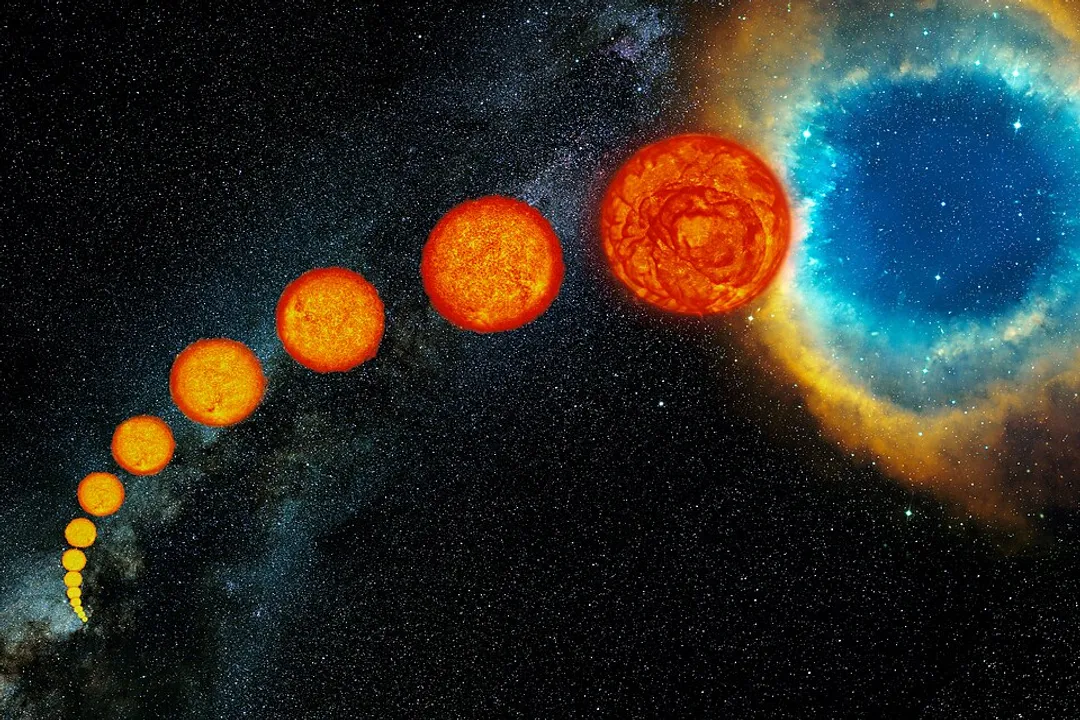
It is an interesting byproduct of these processes that the more massive a star is, the shorter its fiery existence proves to be. [6] Stars like the Sun have lifespans measured in billions of years, allowing for the gradual development of planetary systems like our own. [6] In contrast, the behemoths destined for supernovae burn through their fuel at an astonishing rate due to the intense pressure driving fusion, sometimes living for only a few million years. [6] While this seems counterintuitive—more fuel should mean longer life—the rate of consumption scales up much more steeply with mass than the total fuel supply does. [6]
# Gravity's End State
The physical mechanism underpinning the entire death sequence is the delicate, and eventually broken, balance of forces. [5] For a star with the mass of our Sun, the core shrinks after hydrogen depletion until it reaches a stable density supported by electron degeneracy. [5] If the star had been slightly more massive—say, pushing the limit closer to —the core contraction would have generated enough heat to ignite carbon fusion, bypassing the quiet white dwarf stage entirely, leading straight to the supernova path. [7] This suggests that the physical properties of the core right before the final collapse, dictated by the initial mass, are the direct executors of the star's final form.
While supernovae are the most spectacular stellar deaths, involving the rapid creation and dispersal of heavy elements, it is important to recognize that the vast majority of stars in the universe—those of low to intermediate mass—will perish quietly as white dwarfs. [7] Statistically speaking, the quiet death is the expected end for any star randomly observed across the cosmos, even though the supergiant explosions capture more attention due to their transient brilliance. [6] The mechanisms that lead to the formation of white dwarfs are far more common than the conditions required to trigger a core-collapse supernova that leaves behind a neutron star or black hole. [8]
#Videos
What Factors Determine A Star's Final Lifecycle? - Physics Frontier
Related Questions
#Citations
The Death of a Star - How Stars Work - Science | HowStuffWorks
The Death Throes of Stars - NASA Science
What Factors Determine A Star's Final Lifecycle? - Physics Frontier
What are the various ways a star 'dies', and what are the factors that ...
The Life And Death Of Stars
How Do Stars Die and How Long Do Stars Live? - Sky & Telescope
How Do Stars Really Die? | Scientific American
Stellar evolution - Wikipedia
[PDF] Death of a star - University of Western Australia