What determines what happens to a star at the end of its life?
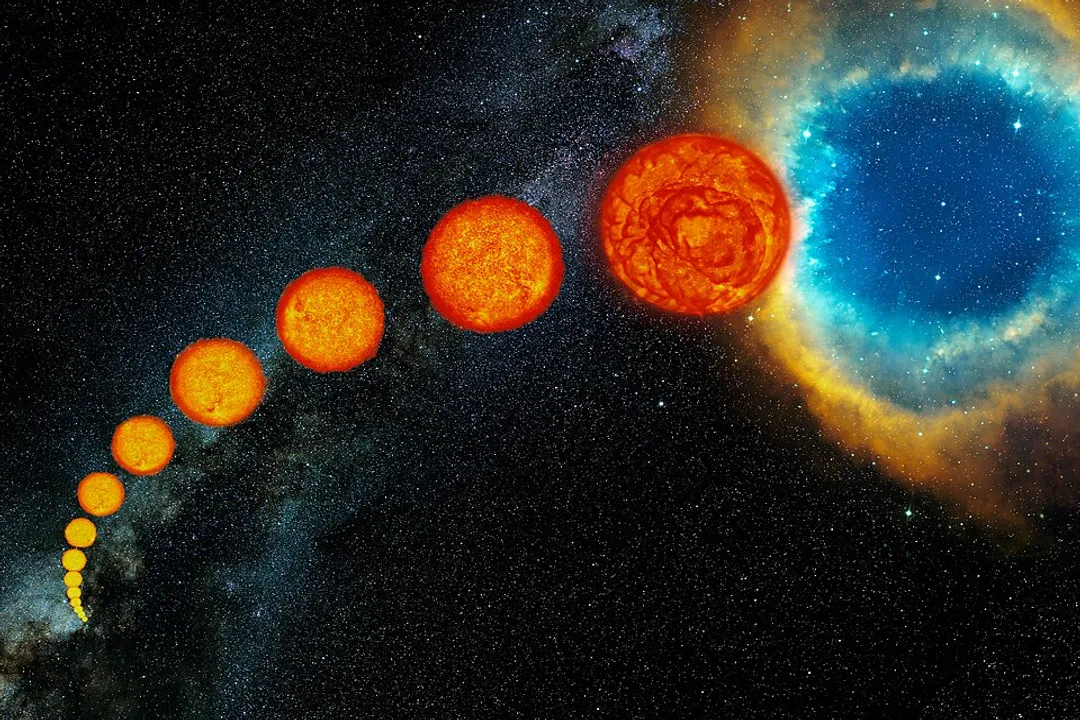
The ultimate fate of a star is sealed the moment it forms, a destiny entirely dictated by one crucial property: its initial mass. [1][2][7] While we observe the brilliant, burning majesty of these celestial bodies across the cosmos, their existence is finite. Every star, from the smallest red dwarf to the most colossal giant, will eventually exhaust the fuel that powers its internal furnace, leading to a dramatic, final act. [4][5] This process, known as stellar evolution, is a cascade of physical changes where mass acts as the great selector, determining whether a star will fade away gently or explode in a blaze of glory, leaving behind the densest objects the universe can create. [2][6]
# Mass Determines Lifespan
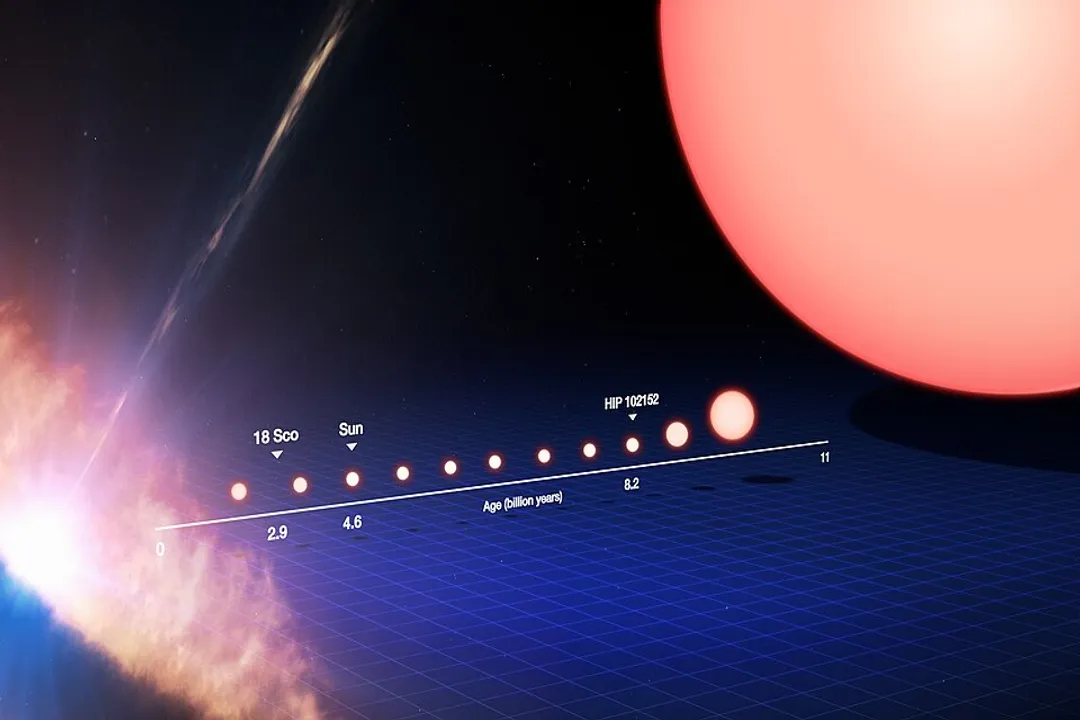
Stars spend the majority of their existence in a stable phase, known as the main sequence, where they generate energy through nuclear fusion in their cores, typically converting hydrogen into helium. [2][5] This outward pressure from fusion perfectly balances the inward crush of gravity, keeping the star in hydrostatic equilibrium. [6] However, this life of balance is not eternal; it depends directly on how much fuel the star has relative to how quickly it burns it. [4]
A star's mass is inextricably linked to its core temperature and luminosity. More massive stars possess much stronger gravitational forces, requiring significantly higher core temperatures to prevent collapse. [4][6] These higher temperatures force the star to consume its hydrogen fuel at an astonishingly accelerated rate. [4] Consequently, the more massive a star is, the shorter its life span, a counterintuitive concept to those used to thinking about lifetime in terms of available resources. [4] For instance, a star far more massive than our Sun might only survive for a few million years, whereas a star like the Sun will persist for billions of years, and the smallest stars can shine for trillions. [4] The initial mass, therefore, dictates the timescale for the entire stellar saga. [6]
# Life Of Sun-like Stars
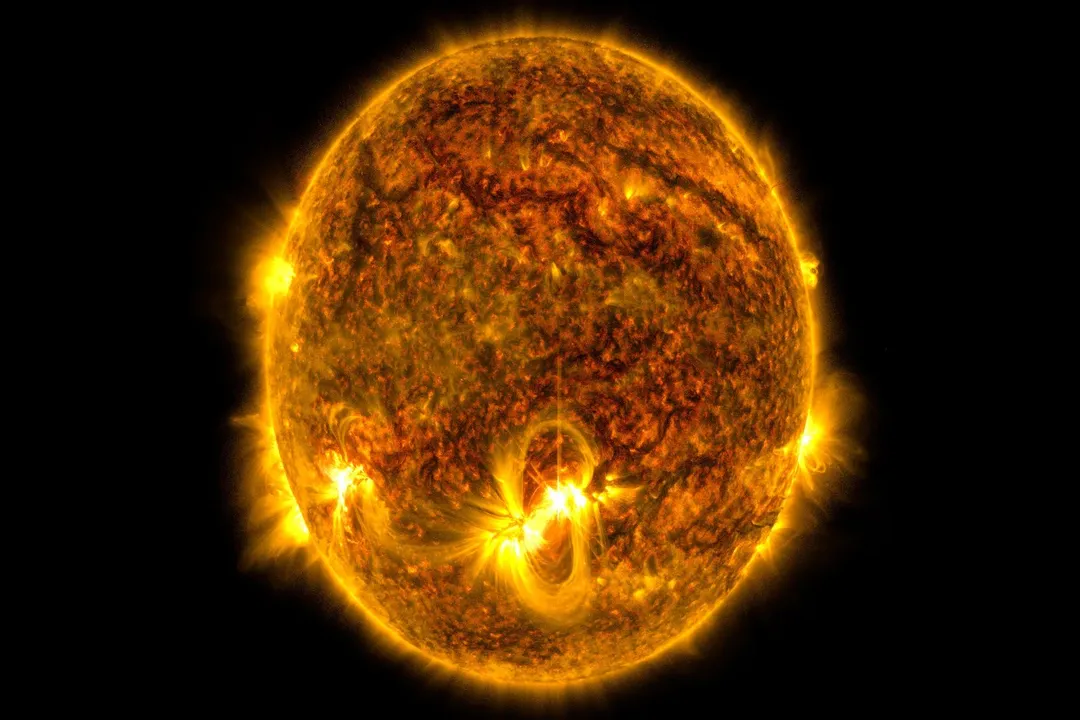
Stars comparable in mass to our Sun, often referred to as low-to-intermediate-mass stars, experience a relatively placid end to their main sequence lives. [2][7] When the hydrogen in the core is depleted, the delicate balance is disrupted. [2] Gravity gains the upper hand, causing the core to contract and heat up. [2][6] This causes the outer layers of the star to expand dramatically, cooling slightly in the process, turning the star into a Red Giant. [2][7]
As the core continues to compress, it eventually becomes hot enough to ignite helium fusion, creating carbon and oxygen. [2] This phase provides a temporary reprieve. However, once the core helium is exhausted, the star lacks the mass necessary to generate the temperatures required to fuse carbon. [2][7] For Sun-like stars, the process halts there, and the outer layers are gently puffed away into space, forming an expanding shell of glowing gas known as a Planetary Nebula. [1][2] This beautiful, transient structure offers astronomers fleeting glimpses of the star’s structure just before its final collapse. [5]
The remaining stellar core, stripped bare of its outer atmosphere, becomes incredibly dense and hot—a White Dwarf. [2][7] A white dwarf is composed primarily of carbon and oxygen, supported against further collapse not by heat from fusion, but by a quantum mechanical effect known as electron degeneracy pressure. [7] It ceases fusion entirely and simply cools down over eons, eventually predicted to become a cold, dark cinder known as a Black Dwarf. [1][7] While the universe is not old enough for any black dwarfs to have formed yet, the concept marks the final, faint state for these stellar remnants. [1]
# Massive Star Demise
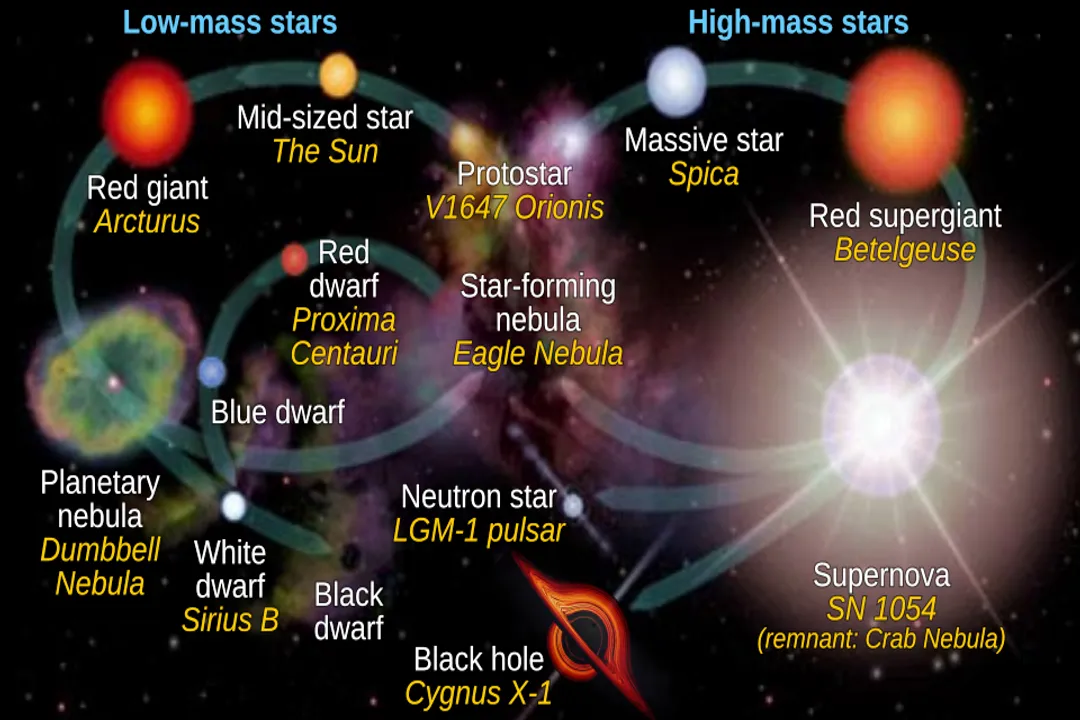
Stars significantly more massive than the Sun face a far more energetic and spectacular conclusion. [7] Like their smaller counterparts, they too swell into giants, but on a grander scale—becoming Red Supergiants. [2][7] The critical difference lies in their gravitational power. These giants can achieve the core temperatures and pressures needed to fuse progressively heavier elements in concentric shells: carbon fuses into neon, neon into oxygen, oxygen into silicon, and finally, silicon fuses into iron. [2][6]
Iron is the terminal fuel. Fusing iron does not release energy; it consumes it. [2][7] Once the core is predominantly iron, the star loses its energy source instantly, and gravity wins the final battle catastrophically. [7] The core collapses in a fraction of a second, creating an immense shockwave that rebounds outward, blasting the star's outer layers into space in a brilliant explosion known as a Type II Supernova. [2][7] This event can briefly outshine entire galaxies. [1]
The nature of the remnant left behind after the supernova explosion depends on the mass of the core that remains. If the remnant core is relatively modest, the immense pressure will crush electrons and protons together to form neutrons, resulting in an incredibly dense object called a Neutron Star. [2][7] These objects are fantastically compact; a star's worth of mass squeezed into a sphere only about 10 to 20 kilometers across. [8]
If the collapsing core exceeds a certain mass threshold—a limit determined by the maximum pressure neutrons can withstand—even neutron degeneracy pressure is insufficient. [7] In this scenario, gravity reigns supreme, crushing the matter to an infinitely dense point called a singularity, creating a Black Hole, an object whose gravitational pull is so strong that nothing, not even light, can escape its event horizon. [2][7][8]
# Stellar Remnants Detailed
The study of stellar endpoints reveals the most extreme physics in the universe. It's fascinating to compare the end products: the white dwarf, the neutron star, and the black hole. [8]
Consider the density contrast: a white dwarf, though incredibly dense (a teaspoon would weigh tons), is supported by electron pressure. [7] The neutron star takes this a step further; its density is such that an entire mountain range’s worth of material would compress into a sugar cube’s volume. [8] A black hole represents the absolute limit of collapse, where the concept of volume essentially breaks down to a singularity. [7]
Here is a brief comparison of the expected remnants based on the initial star’s characteristics:
| Initial Star Type | Intermediate Stage | Final Remnant | Support Mechanism |
|---|---|---|---|
| Low Mass (like Sun) | Red Giant / Planetary Nebula | White Dwarf | Electron Degeneracy Pressure [7] |
| High Mass (approx. 8x Sun) | Red Supergiant / Supernova | Neutron Star | Neutron Degeneracy Pressure [8] |
| Very High Mass | Red Supergiant / Supernova | Black Hole | None (Total Collapse) [7] |
It is an interesting exercise to consider that the fate of a star in our own solar neighborhood is essentially pre-written. Given the Sun's mass, its path is locked into the white dwarf sequence. If, hypothetically, the Sun were somehow able to rapidly accrete mass from a binary companion—pushing it beyond the stability limit where carbon fusion is possible—it might skip the gentle planetary nebula phase entirely, though such a scenario stretches beyond the standard evolutionary models for isolated stars. [2][6] This demonstrates how tightly bound the evolutionary path is to that initial mass measurement.
# Cosmic Chemical Factories
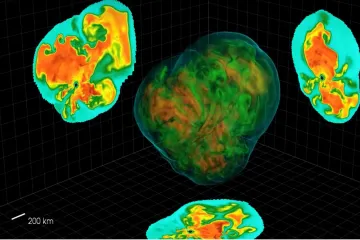
The death throes of stars, particularly the spectacular supernova explosions of massive stars, are not just dramatic endpoints; they are vital engines for cosmic enrichment. [1][5] The extreme temperatures and pressures generated during these events allow for the creation of elements heavier than iron, such as gold, silver, and uranium, through rapid neutron capture processes. [5]
These newly forged elements, along with the lighter elements already synthesized during fusion cycles, are scattered across the galaxy when the star explodes. [1][5] This ejected material mixes with existing interstellar gas clouds, enriching them for the next generation of stars and planets. [1][5] Without supernovae, the universe would be largely composed of only hydrogen and helium, lacking the heavier elements necessary for rocky planets and life as we know it. [1] Every atom of carbon in your body, and the iron in your blood, was once processed inside a star or forged in its catastrophic death. [5] This cycle of stellar birth, life, death, and rebirth is what drives the chemical complexity of the universe. [6] When we look up at the night sky, we are quite literally looking back at the recycling efforts of ancient, long-dead stars. If we could trace the isotopic signatures of elements found in Earth's crust, we could map out which specific massive stars exploded nearby billions of years ago to seed our formation region—a kind of fossil record written in the elements themselves. [1]
# Stellar Observation Tools
Understanding these complex processes requires dedicated astronomical observation and powerful instruments. [5] Missions like the Herschel Space Observatory have provided key insights into the formation and early evolution of stars by observing them in the infrared spectrum. [5] Because young stars and dusty stellar remnants are often obscured by thick clouds of gas and dust in visible light, observing in longer wavelengths allows scientists to peer through these veils and map out the chemical composition and temperature gradients of these evolving systems. [5] Studying the light emitted from these dying giants allows astronomers to measure the expansion rates of nebulae and the cooling rates of white dwarfs, providing observational evidence for the theoretical models of stellar end-states. [2] The ongoing monitoring of these dramatic events cements our understanding of stellar evolution, confirming that mass remains the single most important factor governing the final chapter of a star's existence. [4]
#Videos
What Factors Determine A Star's Final Lifecycle? - Physics Frontier
Related Questions
#Citations
Star Basics - NASA Science
Stellar Evolution - | The Schools' Observatory
The Death of a Star - How Stars Work - Science | HowStuffWorks
How Do Stars Die and How Long Do Stars Live? - Sky & Telescope
Stars: Life and Death - Herschel Space Observatory
Stellar evolution - Wikipedia
How do stars die? - BBC Science Focus Magazine
The End States of Stars - Science Capsule - impulso.space
What Factors Determine A Star's Final Lifecycle? - Physics Frontier