What is formed when a star dies?
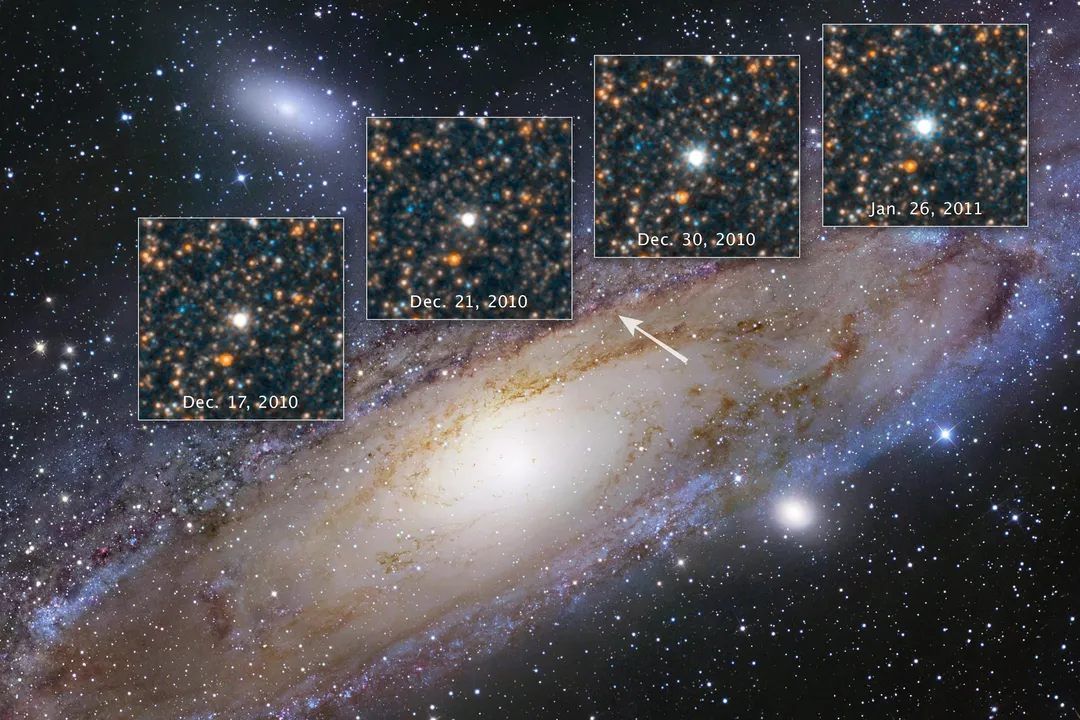
The fate awaiting any star is not a matter of choice or chance, but rather an immutable consequence dictated almost entirely by its initial mass. [1][7] While all stars begin their lives in a stable state—a delicate balance between the outward push of energy from core fusion and the relentless inward crush of their own gravity—when the fuel runs out, gravity wins, and the resulting corpse is cast according to the star's original heft. [9][7] Stars don't just vanish; they transform into some of the most exotic, dense, or ephemeral objects the cosmos can produce. [1]
# Mass Matters
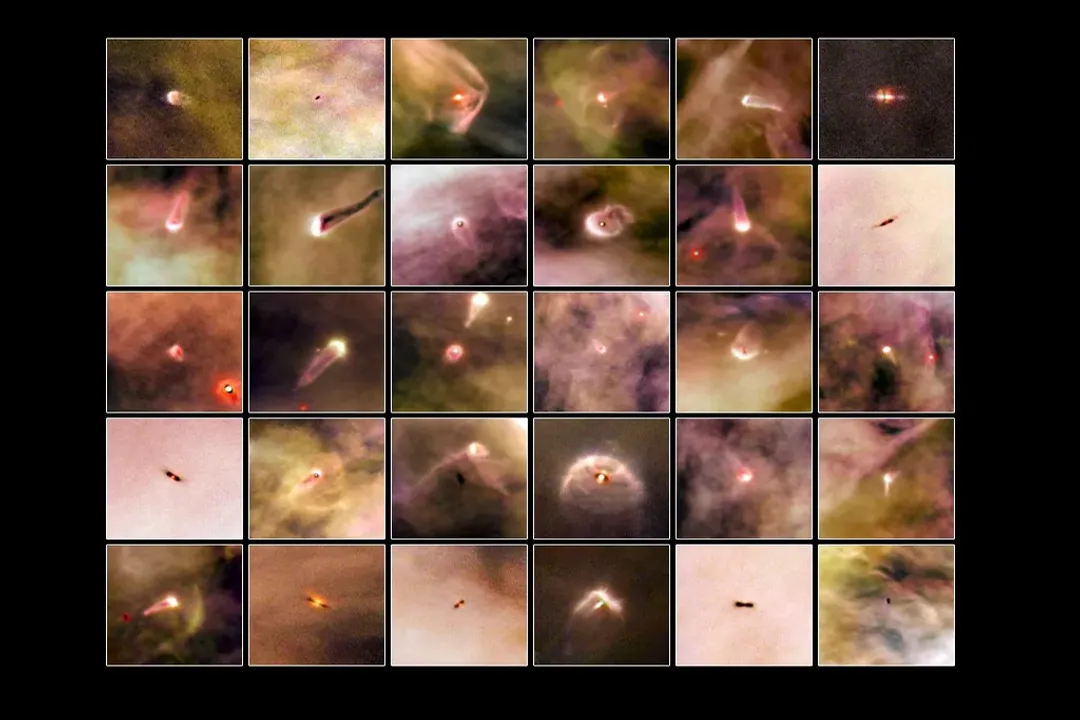
The spectrum of stellar death ranges from a quiet fade for low-mass stars like our own Sun, to the universe-outshining catastrophe of a supernova for the giants. [3][9] The sheer bulk of a star determines which thermonuclear reactions it can sustain before running out of options. For most of its life, a star converts hydrogen to helium in its core, generating the energy that makes it shine. [6][9] When the core hydrogen is spent, intermediate stars move to fusing helium into carbon and oxygen. [3][6][9] The path diverges significantly based on whether the core ever gets hot and dense enough to fuse elements all the way up to iron. [6][9]
# Gentle Fading Suns
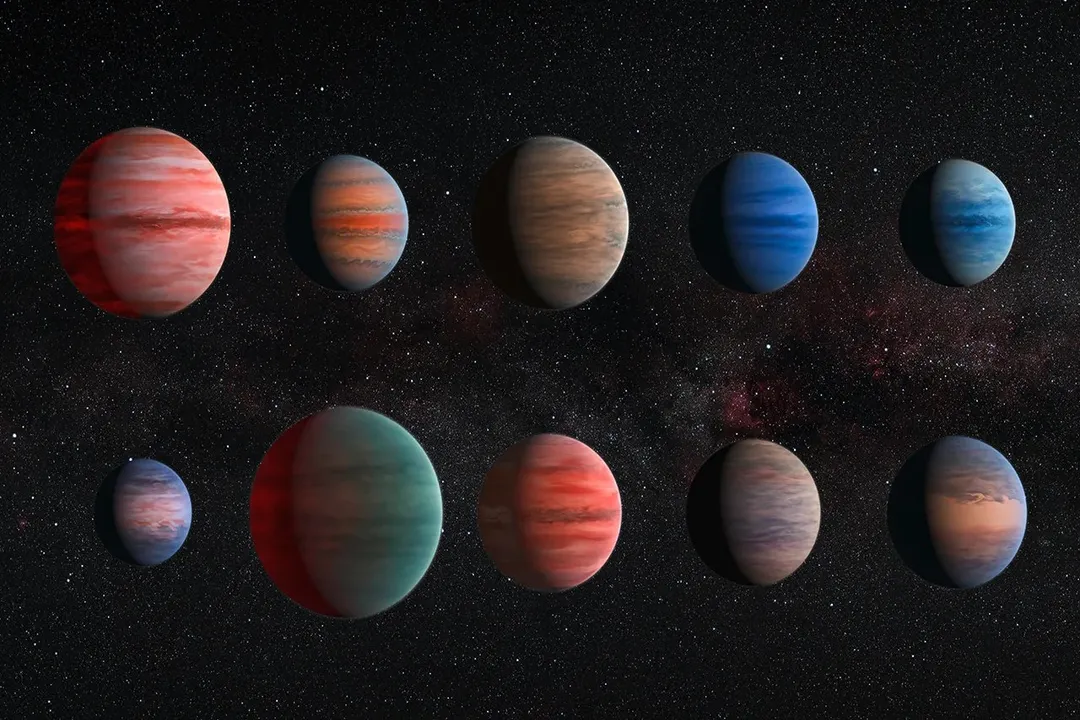
For a star of low or intermediate mass, comparable to our Sun, the end is a relatively gradual process of atmospheric shedding followed by core collapse. [1] Once helium fusion exhausts, the core, now rich in carbon and oxygen, lacks the necessary mass and pressure to initiate the next energetic stage of fusion, such as carbon burning. [6][9]
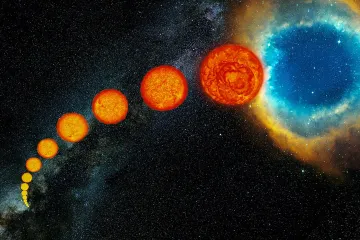
As the core contracts and heats, the outer layers of the star puff up dramatically, sometimes hundreds of times their original size, turning the star into a Red Giant. [3][5][6] For our Sun, this expansion is predicted to reach nearly to the orbit of Earth, likely consuming Mercury and Venus. [5][6] As this bloated giant cools, it ejects its gaseous outer material into space. [3] This expanding shell of gas and dust is known today as a planetary nebula. [1][6] Ironically, these beautiful, often ring-shaped structures have nothing to do with planets; the name is simply a historical misnomer from early telescopic observations. [1][2]
What remains at the center of this beautiful shroud is the star’s dead, incredibly hot core: the White Dwarf. [1][3] A white dwarf is shockingly dense—it can pack a mass comparable to the Sun into a volume roughly the size of the Earth. [1][6] This object no longer generates energy through fusion; it simply radiates away its stored heat over unimaginable timescales. [1][3] Over billions of years, this stellar ember will cool until it theoretically becomes a Black Dwarf, a cold, non-radiating lump of degenerate matter. [1][3][6] Given that the universe is not yet old enough, no true black dwarfs are thought to exist yet. [1]
It is worth noting that while the Sun's death will be quiet, its future as a red giant will be quite destructive to its close neighbors. If we consider the density contrast in the end states: a white dwarf, despite its small size, is so dense that a sugar cube of its material would weigh about as much as a car on Earth. [1] This level of compactness is sustained by electron degeneracy pressure, where the quantum mechanical resistance of electrons being squeezed together halts further gravitational collapse. [1][6]
# Cosmic Forges
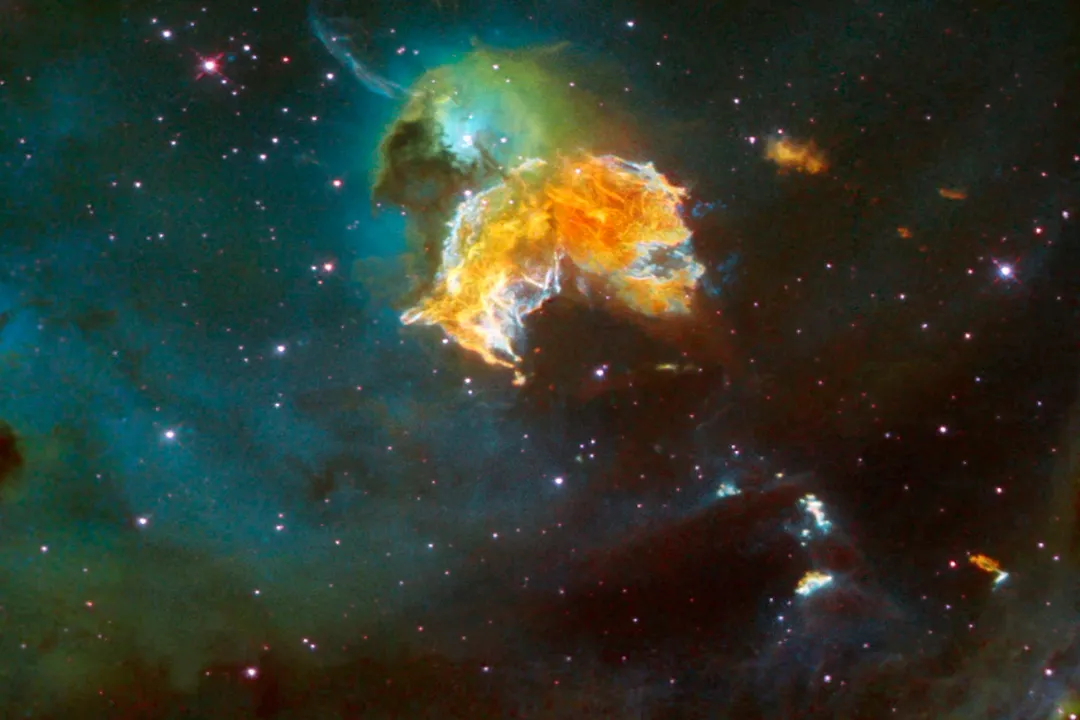
Regardless of whether the star ends as a white dwarf or explodes spectacularly, its death is essential for the existence of rocky worlds like Earth. [6] Stars are the universe's element factories. [6] During their lives, they synthesize lighter elements into heavier ones—hydrogen to helium, then carbon, oxygen, and so on, creating an "onion-skin" structure in massive stars. [6][9]
When a star like the Sun dies, the planetary nebula it sheds contains hydrogen, helium, carbon, and oxygen. [1][6] These expelled gases mix with the interstellar medium and contribute material for the next cycle of star and planet formation. [1][2] For the truly massive stars, the element creation goes much further, up to iron, and beyond, during the explosion itself. [6][9]
# Violent Endings
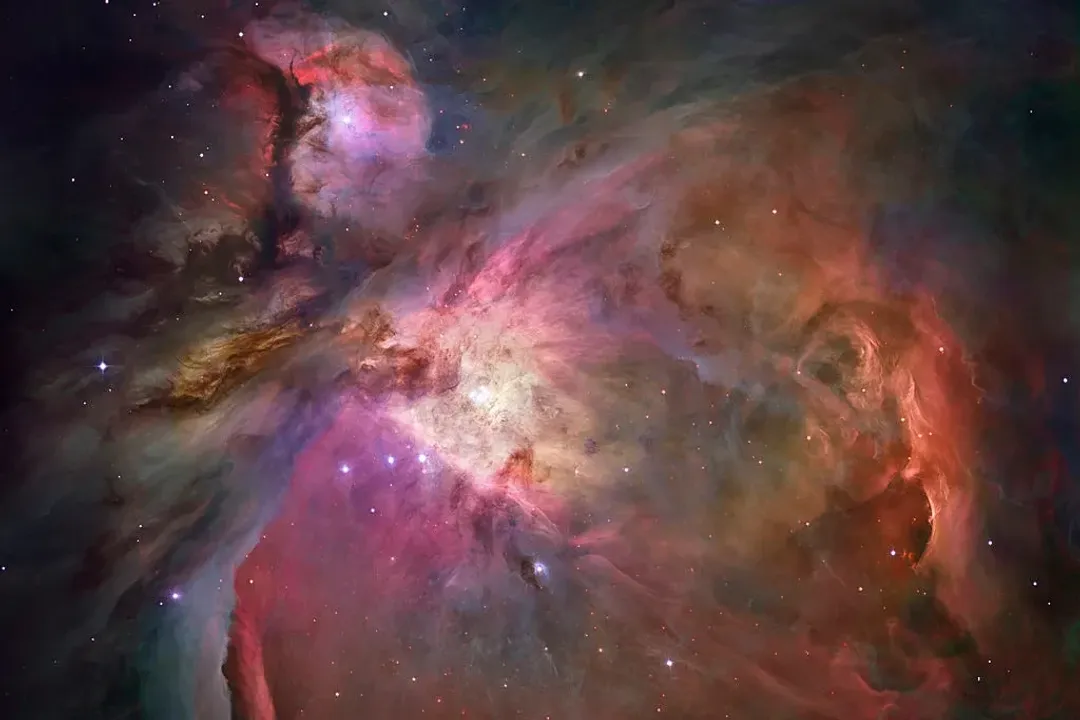
Stars significantly more massive than the Sun—perhaps 8 times the Sun’s mass or more—experience a much more spectacular finale. [1][3][9] These stars burn through their fuel rapidly, fusing elements all the way up to iron in their core. [6][9] Fusing iron does not release energy; rather, it consumes it, causing the star to suddenly lose its internal support structure. [6][9]
Gravity wins instantaneously and catastrophically. The iron core collapses in less than a second. [9] As it shrinks, electrons merge with protons, effectively neutralizing charge and creating a super-dense ball of neutrons. [1][9] The outer layers, still falling inward, slam into this newly formed, incompressible core, generating an immense shockwave that blasts the star apart in a supernova explosion. [3][9] A supernova can momentarily shine brighter than its entire host galaxy. [5] The resulting cloud is a supernova remnant, which is much more chaotic than a planetary nebula and is rich in elements heavier than iron, such as gold and uranium, which are forged in the explosive heat. [1][2][9]
# Stellar Corpses
The remnant left behind after the supernova depends on the mass of that collapsing core. [1][9]
# Neutron Stars
If the collapsing core is between about $1.4$ and $3$ solar masses, the collapse is halted by neutron degeneracy pressure—the force exerted by neutrons resisting further compression. [1][9] The result is a Neutron Star: an object roughly the size of a city (a radius of about 10 kilometers) but containing more mass than our Sun. [1][3][9] The gravity here is staggering; the surface gravity of a 10-kilometer neutron star has been calculated to be 200 billion times that of Earth. [1] These objects are often highly magnetized and spin incredibly fast, sometimes appearing as pulsars that emit beams of radiation like cosmic lighthouses. [1][6]
# Black Holes
If the core mass exceeds the upper limit for neutron degeneracy pressure—roughly 3 solar masses, or greater than $2.16$ solar masses in some models—no known force can resist gravity. [1][9] The collapse continues indefinitely until the core shrinks to a point of infinite density and zero volume, known as a singularity. [1][9] Before reaching that point, the gravity becomes so intense that it warps spacetime to the degree that nothing, not even light, can escape the boundary called the event horizon. [1][3] This is the creation of a Black Hole. [1]
# The Cosmic Ash Heap
While the ejected material from supernovae enriches the galaxy for future generations, the stellar remnants themselves take different long-term paths. [7] The white dwarf slowly cools into a black dwarf, a fate still trillions of years away for the smallest stars. [7][9] Neutron stars and black holes, the collapsed remnants of the most massive stars, end up as objects locked away from the cycle of star birth. [7]
It is fascinating to contrast the remnants. A white dwarf is supported by electron pressure, [1] resulting in density where a small volume weighs as much as a car. [1] A neutron star results when gravity overcomes that electron pressure, squeezing matter into neutrons, reaching a density where a single tablespoon would weigh as much as Mount Everest. [1] In an even more extreme scenario, the most massive cores bypass the neutron star stage entirely, becoming black holes where the mass is concentrated to an extent we cannot observe directly. [1] This stark difference shows how the final battle between gravity and quantum pressure determines whether an object becomes a cooling ember, a super-dense nuclear ball, or an absolute void in spacetime. [1][9]
In some extremely rare instances, the death of the most massive stars, perhaps those over 150 solar masses, results in a pair-instability supernova that completely disperses the entire star, leaving no central remnant behind at all. [9] Thus, when a star dies, it leaves behind gas clouds, or a compact corpse like a white dwarf, a neutron star, or a black hole—the exact outcome being a final, non-negotiable sentence written by its mass at birth. [1][7]
#Videos
How Stars Die - YouTube
Related Questions
#Citations
The Death Throes of Stars - NASA Science
The Death of a Star - How Stars Work - Science | HowStuffWorks
[PDF] Death of a star - University of Western Australia
If when a star dies it produces a nebula, and a white dwarf ... - Reddit
How Stars Die - YouTube
[PDF] Death of Stars
What happens when all the stars die? | Royal Museums Greenwich
When a star dies, what remains: a rock, nothing, or something else?
How do stars die? - Space