What force pulls matter together to form a star?
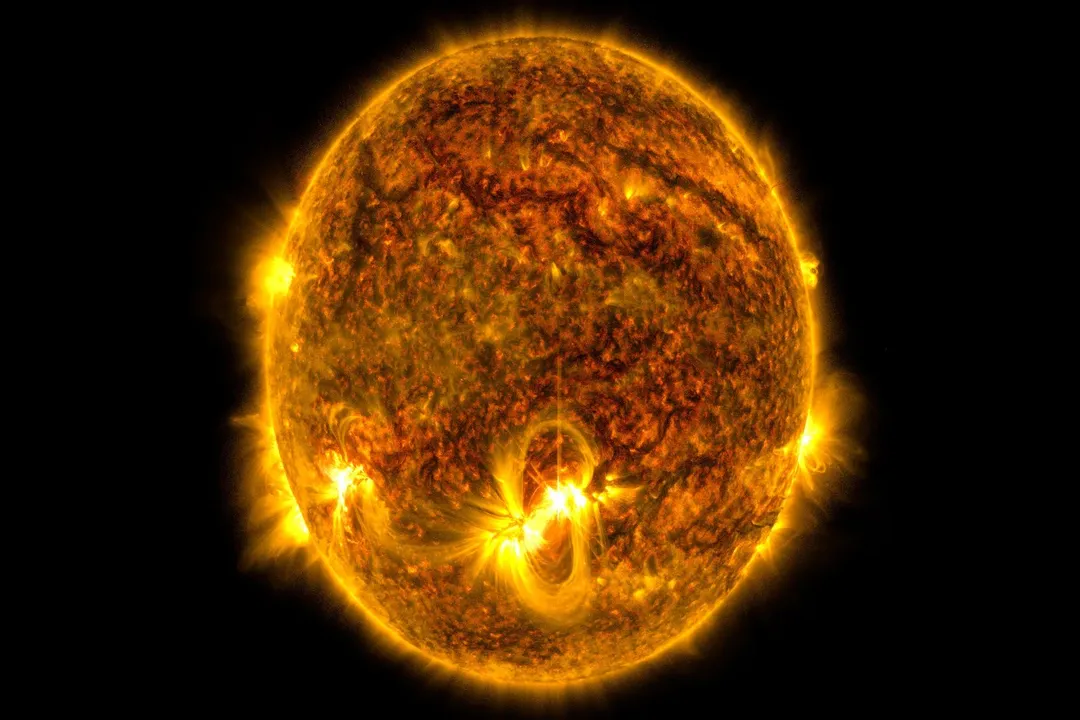
The immense structures we observe as stars, glowing steadily across the cosmos, are brought into existence by one fundamental, omnipresent force: gravity. [1][5][6][9] While we experience gravity daily as the weight of an object pressing down, on the grand scale of the universe, gravity acts as the chief architect, drawing vast clouds of gas and dust inward until they reach the conditions necessary to ignite into self-sustaining stellar bodies. [6][9] This process, known as star formation, is a slow, inexorable victory of attraction over the natural tendency of matter to remain dispersed. [2]
# Fundamental Pull
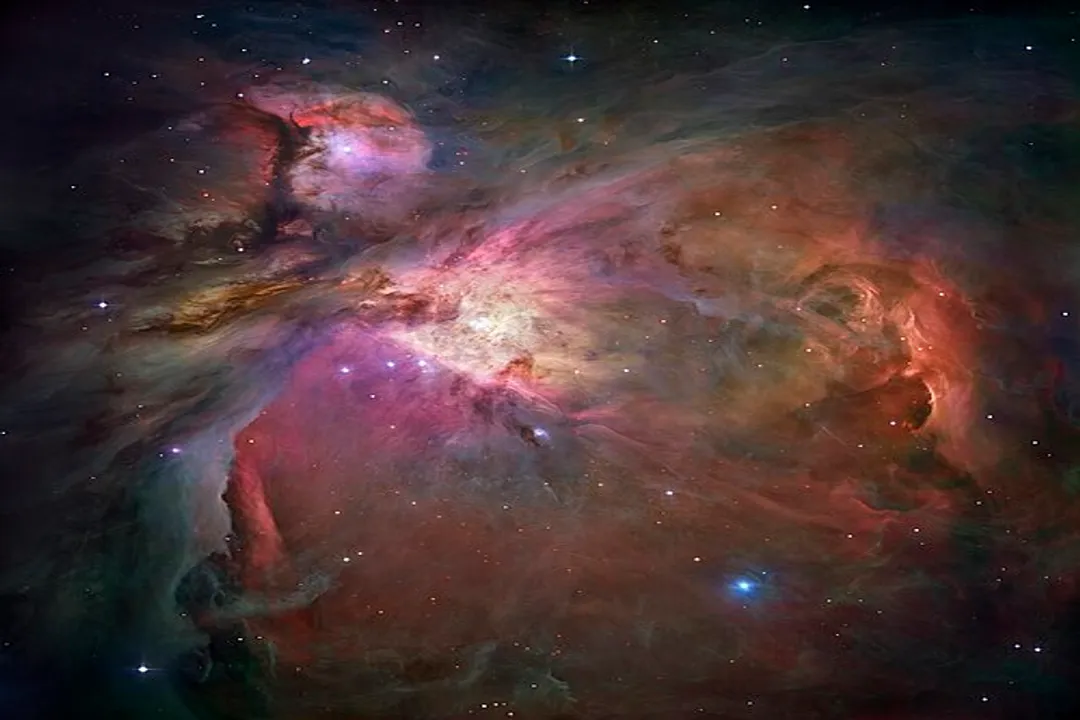
Gravity is universally recognized as the attractive force between any two objects with mass. [9] In the context of star formation, the initial building blocks are enormous, tenuous clouds of interstellar material, often spanning many light-years across. [2][6] Although gravity is mathematically the weakest of the four fundamental forces, when dealing with the sheer volume of matter present in these cosmic nurseries—trillions upon trillions of times the mass of our Sun—gravity becomes the dominant sculptor, relentlessly tugging every particle toward a common center. [9] The slight density variations that naturally exist within these clouds begin to serve as gravitational seeds. [2] A slightly denser pocket attracts slightly more matter than its surroundings, strengthening its gravitational influence, which in turn pulls in even more matter, creating a runaway effect. [6]
# Cosmic Nurseries
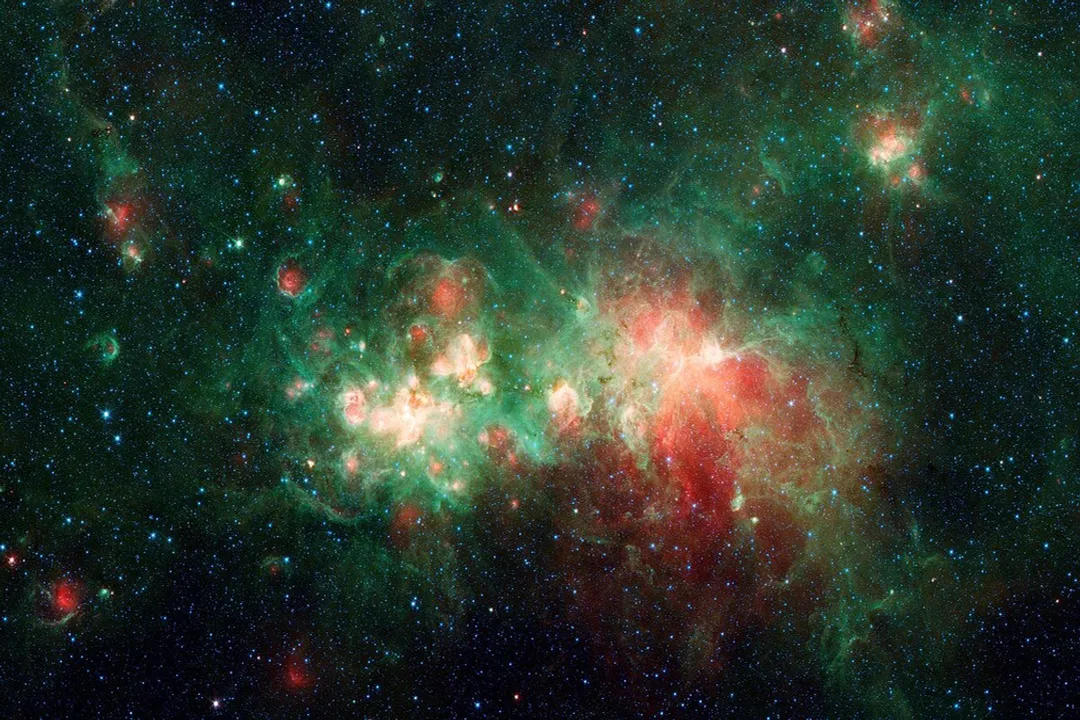
These stellar cradles are known scientifically as giant molecular clouds or nebulae. [2][5][6] These clouds are not entirely empty space; they are composed primarily of the lightest elements, mainly molecular hydrogen () and helium, with trace amounts of heavier elements mixed in as dust grains. [2] These regions are exceptionally cold, often just a few tens of degrees above absolute zero, which is essential because cold temperatures mean the gas particles are moving slowly, giving gravity an easier time overcoming the internal pressure holding the cloud apart. [2] A typical molecular cloud can hold enough raw material to form hundreds or even thousands of stars. [5]
# Collapse Initiated
For a star to begin forming, the cloud must overcome its own internal pressure and the turbulence within it, allowing gravity to gain the upper hand. [6] This initial trigger for collapse can come from several sources: the shockwave generated by a nearby supernova explosion, the pressure from the radiation of a nearby hot, massive star, or even the slow compression caused by the rotation and eventual collision of two separate molecular clouds. [2][6] Once triggered, this instability causes parts of the cloud to fragment and contract inward. [2] As the overall cloud structure shrinks, its density increases, causing the gravitational attraction across the entire collapsing mass to become significantly stronger. [6] Think of this initial phase like a massive, cold sponge being gently squeezed; the material moves inward, but it hasn't yet developed the necessary heat or structure for starhood. [2][6]
# Heating Core
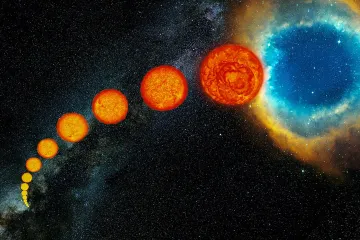
As the dense clump continues to shrink under its own weight, gravitational potential energy is converted into thermal energy, causing the center of the collapsing region to heat up dramatically. [2][5] This contracting, heating mass is now termed a protostar. [2][6] During this phase, the material doesn't just fall directly inward; due to the conservation of angular momentum, the surrounding gas and dust begin to spin faster and flatten out into a rotating disk around the central protostar. [2] This disk is often where future planets might eventually form. Meanwhile, the protostar itself continues to accrete mass from this surrounding disk, growing hotter and denser at its core over millions of years. [6]
It is fascinating to consider that the initial mass of this condensing core dictates its entire destiny, long before it ever becomes a visible star. If the accumulated mass fails to reach a specific critical threshold—roughly $0.08$ times the mass of our Sun—the core temperature and pressure will never become high enough to initiate the next, definitive stage of stellar life. Instead of a star, the object stabilizes as a brown dwarf, sometimes called a "failed star," which glows faintly from leftover heat but cannot sustain thermonuclear reactions. [1][2]
# Achieving Balance
The moment a star is truly born is marked by a spectacular event occurring deep within that intensely hot, dense core: nuclear fusion. [2][5][6] When the central temperature reaches about fifteen million degrees Celsius, the kinetic energy of the hydrogen nuclei becomes sufficient to overcome their natural electrical repulsion, allowing them to fuse together to form helium. [2][5] This fusion process releases an enormous amount of energy, primarily in the form of photons and neutrinos. [6]
This outward rush of energy creates an outward thermal pressure that directly counters the continuous inward squeeze of gravity. [1][9] When the outward pressure exactly balances the inward gravitational force, the star achieves a state of hydrostatic equilibrium. [1][6][9] At this point, the collapse stops, the star settles onto the main sequence—the longest and most stable phase of its existence—and it begins shining brightly by converting mass into energy according to Einstein's famous equation, . [1][6] A star remains on the main sequence as long as it has hydrogen fuel available in its core to power this outward pressure. [1]
# Stellar Variations
While gravity is the unifying force for all stars, the amount of matter initially gathered determines the star's final properties, including its temperature, luminosity, and lifespan. [1][5] High-mass stars, perhaps ten or twenty times the mass of the Sun, exert a vastly greater gravitational pull. This immense gravity forces their cores to burn fuel at an incredible rate, making them brilliant blue giants that live fast and die young. [1][5] Conversely, low-mass stars, like red dwarfs, possess a weaker gravitational field, allowing them to burn their fuel reserves incredibly slowly and last for trillions of years. [1] This comparison illustrates that gravity is not just a building tool; it is the primary dial setting the star's operational parameters for its entire existence. [5]
| Stellar Mass Comparison | Typical Lifespan (Relative) | Core Temperature (Relative) | Gravitational Force |
|---|---|---|---|
| Low Mass (e.g., Red Dwarf) | Very Long (Trillions of years) | Lower | Weaker |
| Medium Mass (e.g., Sun) | Medium (Approx. 10 billion years) | Moderate | Balanced |
| High Mass (e.g., Blue Giant) | Very Short (Millions of years) | Highest | Strongest |
The entire stellar lifecycle, from the initial cloud assembly to the final stable glow, is therefore a continuous negotiation between the universal attraction of gravity pulling things inward and the resulting internal energy pushing things outward. [9] Without that initial, tireless pull of gravity across the immense scales of space, the necessary pressure and temperature required for hydrogen fusion would never be achieved, and the night sky would be significantly darker. [2][5]
Related Questions
#Citations
Star Basics - NASA Science
Star Formation - | The Schools' Observatory
Star formation - Wikipedia
Gravity and Energy | Multiwavelength Astronomy - eCUIP
[FREE] What force tends to pull together the matter in stars? - Brainly
The Life Cycle of Stars | National Air and Space Museum
How Are Stars Formed? - Slooh
Stars - Imagine the Universe! - NASA
What force holds stars together? - Quora
ELI5: How stars come to be formed and kept in place by gravity?