What is the force that clumps galaxies together?
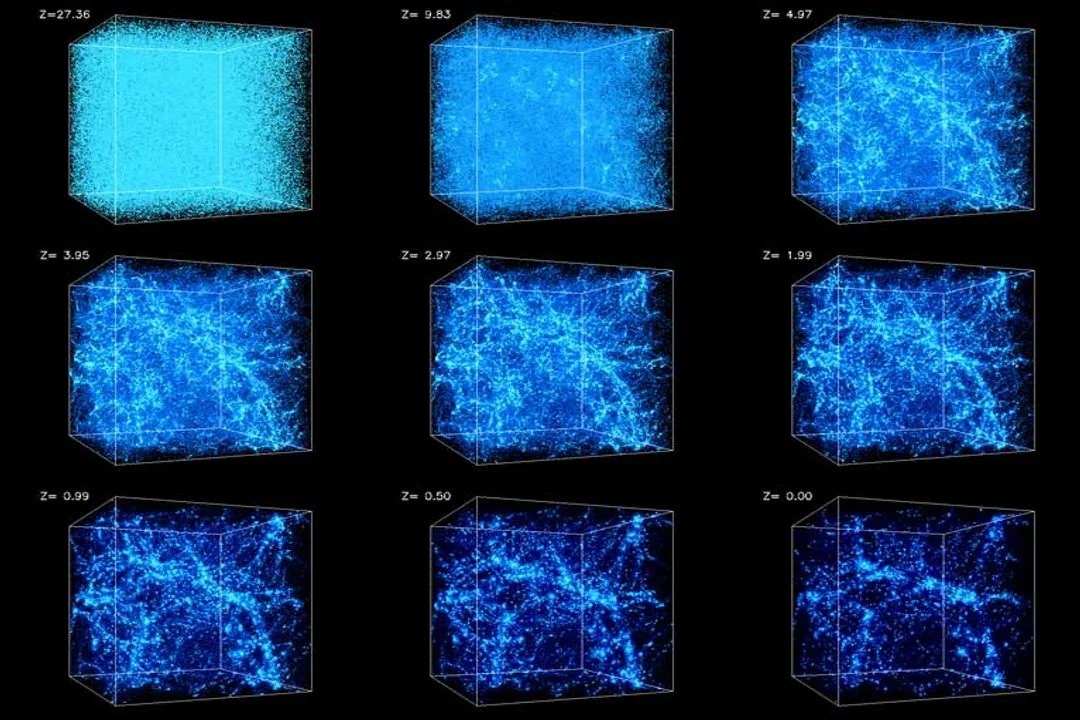
The phenomenon that binds galaxies into massive structures against the backdrop of an ever-expanding universe is rooted in a fundamental force, though the overall picture involves a cosmic tug-of-war. At the heart of this aggregation lies gravity. [1] This is the force responsible for holding individual stars in orbit within a galaxy, and more importantly, for pulling separate galaxies into groups, clusters, and superclusters. [1][7] Galaxies are not floating randomly; they are gravitationally bound systems, meaning the attraction between their immense masses is strong enough to overcome the mutual outward push caused by the expansion of space itself, at least on localized scales. [1][8]
# Binding Force
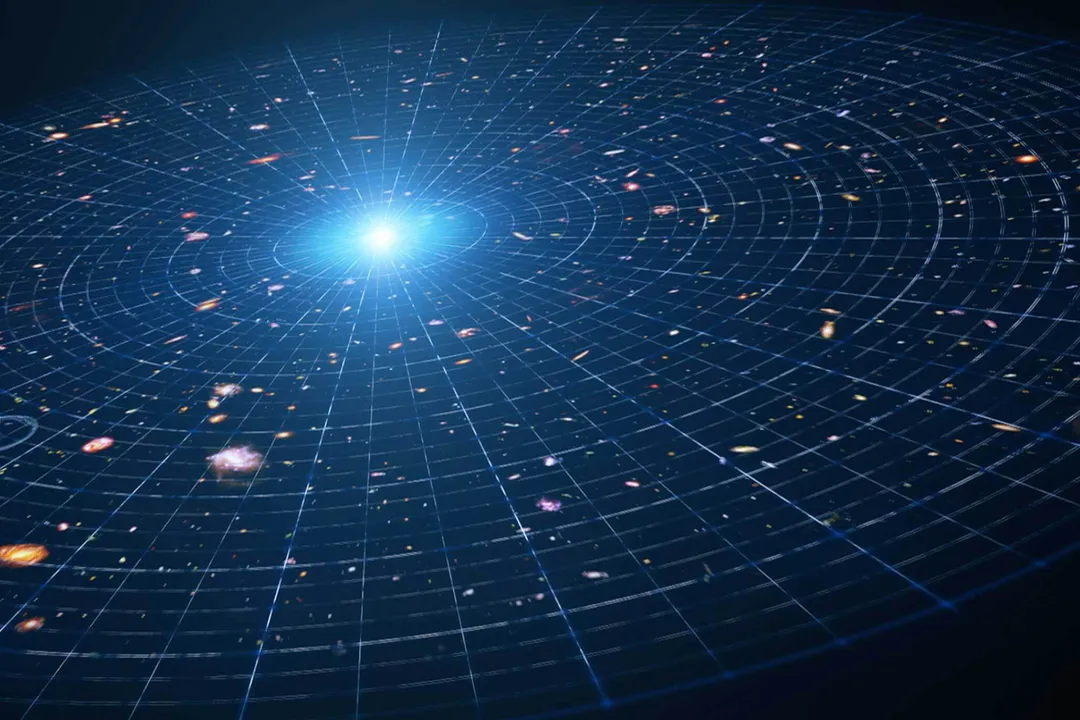
The simplest explanation is that gravity dominates locally. If you consider a galaxy, or a small group of galaxies, the total mass within that volume exerts a collective gravitational pull. As long as the density of matter in that region remains high enough, gravity will win the day against the general acceleration of the cosmos. [8]
When we look at structures like the Local Group—the small collection of galaxies that includes our own Milky Way and Andromeda—the gravitational attraction between these members is significant enough to ensure they are destined to collide rather than simply drift apart. [1] Think of it like individual grains of sand staying together in a small pile due to their mutual attraction, even if the table they sit on is moving away from another table across the room. The interaction between the grains (galaxies) is dominated by their own mass, while the separation between the tables (the largest structures) is governed by the expansion of the room (spacetime). [8][9] This local dominance allows for the creation of structures that persist over cosmic timescales.
# Galaxy Aggregation
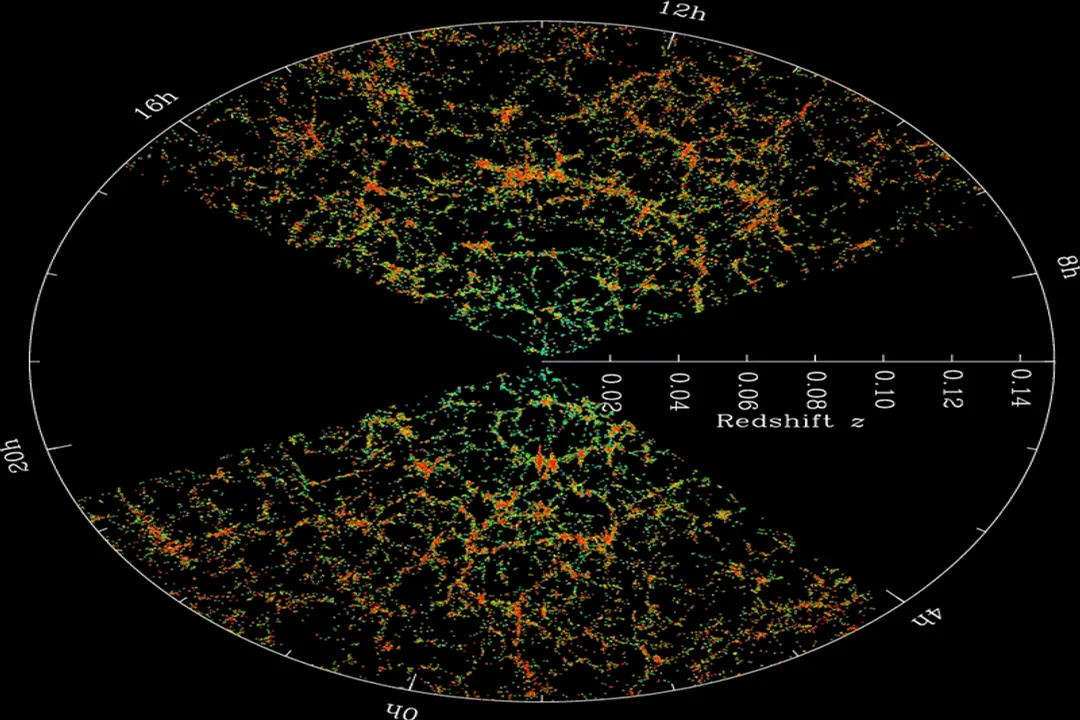
This gravitational dominance is what drives the assembly of the largest structures we observe in the cosmos. Over billions of years, smaller groups are drawn together, resulting in galaxy mergers and the formation of massive galaxy clusters. [2][7]
Galaxy mergers are violent, yet creative, events. When two or more galaxies approach each other closely, their immense gravitational fields distort each other, causing tides of stars and gas to stretch out. [2] Eventually, the two structures collide. The actual stars rarely hit each other because the space between them is so vast, but the gas clouds collide violently, triggering intense bursts of star formation, often turning the system into a bright "starburst" galaxy for a time. [2]
The long-term result of these major mergers, especially involving two large spiral galaxies, is usually a transformation in shape. [4] The organized, spinning disks of spiral galaxies are gravitationally scrambled during the collision. The resulting structure tends to be a larger, more featureless, spheroidal or oblong galaxy known as an elliptical galaxy. [4] This process of accretion and collision builds up the largest known gravitationally bound structures in the universe: the galaxy clusters. [3][7]
# Invisible Scaffold
While gravity is the mechanism, the sheer amount of gravitational force required to hold a massive cluster together presents a problem if we only account for the stars and gas we can see. [3] This is where the concept of dark matter becomes indispensable to understanding galaxy clumping.
Observations, such as how light bends around massive clusters—a phenomenon called gravitational lensing—reveal that the total gravitational mass is far greater than the mass accounted for by visible luminous matter. [3] Dark matter, which does not interact with light but possesses mass, forms an underlying, invisible gravitational "scaffold" upon which visible galaxies are arrayed. [3] It is the presence and distribution of this mysterious substance that provides the necessary gravitational glue for galaxy clusters to form and remain coherent structures. [3] In many ways, the dark matter dictates the shape and longevity of the clumps we observe today.
# Cosmic Expansion
To fully appreciate why clumping is an achievement, one must consider the opposing force: the accelerating expansion of the universe, driven by dark energy. [8][9]
General cosmological observations indicate that the universe is not only expanding but that this expansion is speeding up over time. [9] Dark energy is theorized to be a property of space itself, exerting a sort of negative pressure that pushes everything apart. [9] This expansion is extremely weak on small scales—too weak to tear apart solar systems, galaxies, or even small galaxy groups—but it becomes the dominant factor when looking at the vast voids between these structures. [8]
The scale at which gravity loses its grip to dark energy is immense. For example, a galaxy cluster like the Virgo Cluster, which contains over a thousand galaxies, is gravitationally bound and will not be pulled apart by expansion. [7] However, the distance between the Virgo Cluster and the rest of the universe on the largest scales is increasing due to dark energy. [8]
Consider the transition zone between the clumping and the separation. If we look at the average density of the cosmos, it is steadily dropping as the volume of space increases due to expansion. [9] Gravity relies on density to exert a strong influence. As the universe expands, the density drops, weakening the large-scale gravitational influence that might otherwise cause structures to grow indefinitely. The structures that did form early on, when the universe was denser, are stable against this expansion, but the empty space between these established structures continues to inflate rapidly. [8][9]
# Structure Formation Timing
The interplay between gravity and expansion is fundamentally tied to when structure formed. In the early universe, matter was distributed much more uniformly, but there were tiny density fluctuations left over from the Big Bang. [7] Gravity immediately began working on these slightly over-dense regions, pulling in surrounding matter. The force of gravity acted most effectively in areas where the initial clumping was strongest.
As the universe aged and dark energy’s repulsive effect became more pronounced, the rate at which new, large-scale structures could form slowed down significantly. [9] The structures we see today—the massive superclusters—are essentially the relics of the most successful early gravitational collapses that managed to achieve binding before the accelerating expansion pushed the intervening space apart too far. [8] It is a race against time where gravity wins the local battles by quickly consolidating matter, but dark energy wins the universal war by steadily increasing the distance between these consolidated structures. [8][9]
| Structural Scale | Dominant Force | Outcome |
|---|---|---|
| Within a Galaxy | Gravity (Electromagnetism/Strong force less relevant for overall shape) | Stable orbits, disk formation |
| Galaxy Group/Cluster | Gravity (Dominated by Dark Matter) | Bound systems, mergers, elliptical formation [2][3] |
| Between Clusters/Voids | Dark Energy | Accelerating separation of structures [8][9] |
#Videos
What Force Binds A Galaxy Together? - Physics Frontier - YouTube
Related Questions
#Citations
ELI5: How are Galaxies gravitationally bound? - Reddit
Galaxy merger - Wikipedia
Hubble sees dark matter ring in a galaxy cluster - ESA
Why do colliding spiral galaxies form elliptical galaxies?
What Force Binds A Galaxy Together? - Physics Frontier - YouTube
Role of Dark Matter in Galaxy Clusters - Facebook
Dark Matter in Galaxy Clusters - Astronomy Notes
Why aren't galaxies clumped together by the force of gravity ... - Quora
Dark energy, explained - UChicago News - The University of Chicago