Why is it helpful to look at very distant galaxies to study galaxy formation and evolution over cosmic time?
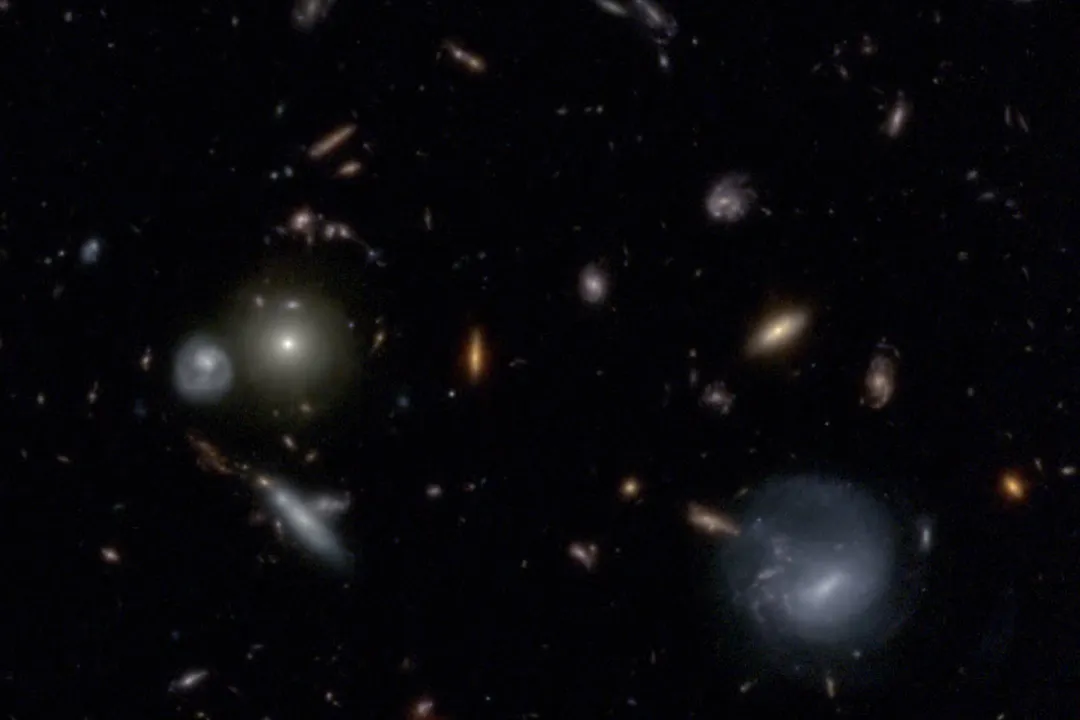
The universe offers us a unique, one-way journey through time, and the most profound way to study the history of cosmic structures, especially galaxies, is by looking incredibly far away from us. [3] This isn't a matter of needing better telescopes to see things happening now further out; it's about capturing light that began its journey billions of years ago, effectively looking backward through the eons. [1] Because light travels at a finite speed—a fundamental constant of nature—the farther away an object is, the longer its light has taken to reach us. [3] Observing galaxies billions of light-years distant means we are seeing them as they were shortly after the Big Bang, offering snapshots of cosmic infancy. [2][7]
This simple relationship between distance and time provides the foundation for an entire field of astrophysics: extragalactic archaeology. We are not reconstructing a single story from a single artifact; rather, we are collecting billions of snapshots from different eras of the universe’s 13.8-billion-year history, allowing scientists to assemble a cosmic movie reel. [2] Every time we discover a galaxy at a higher redshift, we are effectively dialing back the clock further on galaxy formation and evolution. [9]
# Cosmic Time Machine
The concept of looking back in time is perhaps the most critical takeaway when considering deep-field observations. [3] When astronomers observe a galaxy that is, for instance, 13 billion light-years away, they are seeing that galaxy as it appeared when the universe was only about one billion years old. [1] This distance allows researchers to trace the history of galaxy assembly, star formation rates, and chemical enrichment across cosmic epochs. [8] Without these distant look-backs, our understanding of galactic life cycles would be stuck observing only mature galaxies, leaving the vast, formative early stages a complete mystery. [2][7]
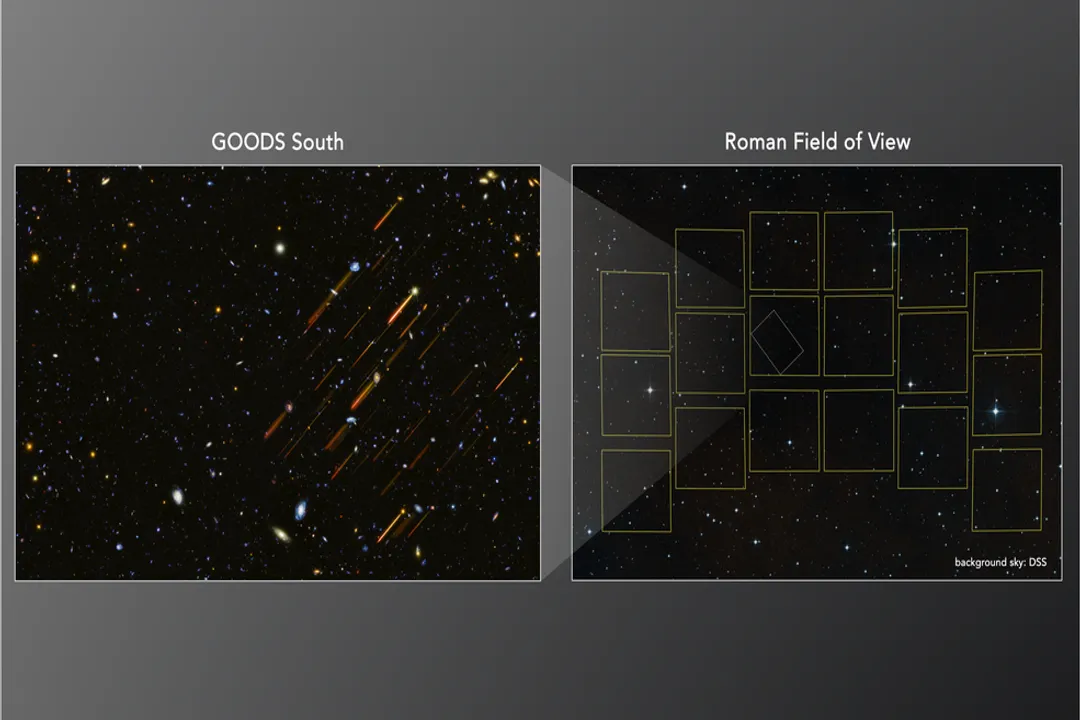
The immense distances mean that these early galaxies appear incredibly faint and small due to the dimming effect of distance and the stretching of their light by the expansion of the universe—a phenomenon known as redshift. [9] Modern telescopes, such as the James Webb Space Telescope (JWST), are specifically designed to capture this ancient, redshifted light, which is shifted into the infrared spectrum. [1][6] Instruments like JWST allow us to resolve structures that were previously entirely invisible, providing a sharper image of the very early universe than ever before possible. [5] The Roman Space Telescope is also set to expand this census, surveying vast swathes of the sky to create a new understanding of how galaxies evolved over time. [4]
# Redshift Significance
Redshift () is the quantitative measure of how much the light from these distant objects has been stretched by the expansion of space during its travel. [9] A higher redshift corresponds to a greater distance and an earlier time in the universe’s history. [3] For example, galaxies with a redshift of are seen just a few hundred million years after the Big Bang. [1] By cataloging galaxies across a wide range of redshifts, astronomers create a time sequence:
- Low z (): Recent, mature galaxies similar to the Milky Way.
- Medium z ( to $5$): Adolescence, where rapid mergers and structural development are common.
- High z (): Infancy, where the first building blocks of galaxies are forming and assembling. [7]
This systematic gathering of data across the redshift spectrum is indispensable. Imagine trying to understand human development only by looking at middle-aged adults; you would miss birth, infancy, and childhood entirely. The deep field survey achieves the equivalent for galaxies. [2]
# Early Morphology
When we look back, the appearance of galaxies changes drastically, offering clues about the physical processes that dominated their youth. [8] Early galaxies, those seen at high redshifts, do not look like the grand spirals or smooth ellipticals we see nearby. [1] Instead, they often appear small, irregular, clumpy, and sometimes incredibly faint. [7] This structural difference implies that the mechanisms responsible for organizing matter into neat structures were still in their nascent stages. [8]
Observations suggest that in the early universe, galaxy formation was a highly chaotic and hierarchical process. [2] Small clumps of stars and gas likely merged frequently to build up larger galaxies over time. [8] The current understanding is that large, well-defined spiral arms or smooth elliptical profiles take many billions of years to develop through successive mergers and internal processes like disc settling. [2] The distant views confirm this; we see the components that will become massive galaxies, but they are still in their preliminary phases. [5]
This allows researchers to test models of structure formation, which predict how dark matter halos collapse and how baryonic matter (stars, gas) cools and settles within them. [2] If theoretical models predict that large spirals should have formed early, but observations only show irregular fragments, the models require adjustment regarding star formation efficiency or the role of early supernovae feedback in regulating gas cooling.
# Chemical Fingerprints
Galaxy evolution is not just about shape; it’s about composition. The chemical makeup of a galaxy tells a story of its stellar life cycle. [8] Stars are born from gas clouds composed mostly of hydrogen and helium. Through fusion in their cores, they create heavier elements—what astronomers call "metals"—like carbon, oxygen, and iron. When these stars die, often in spectacular supernova explosions, they enrich the surrounding interstellar and intergalactic medium with these new elements. [8]
By studying the spectra of distant, young galaxies, scientists can measure their metallicity. [8] A galaxy seen just a billion years after the Big Bang is expected to have a much lower abundance of heavy elements compared to the Milky Way today, which has had billions of additional years of star formation and enrichment cycles. [1] The observed chemical abundance patterns directly constrain the types of stars that were living and dying in that early environment and the efficiency with which newly synthesized material was cycled back into new generations of stars. [8] Finding galaxies already enriched with significant metals at high redshifts presents a challenge to models, suggesting that the very first generations of stars (Population III stars, which were metal-free) must have formed and died rapidly. [9]
One interesting implication arises when comparing the rate of structural evolution to the rate of chemical evolution. If we observe that galaxies quickly develop some clumpy structure but take significantly longer to reach even half the metallicity of the present-day universe, it suggests that the physical mechanism governing gas cooling and star formation efficiency was more sensitive to environmental factors (like mergers or active galactic nuclei) than the simple gravitational assembly of dark matter halos in the early phases. [5][8] The material required for star formation might have been present, but the conditions for sustained, efficient fusion might have been harder to maintain in those small, turbulent early environments.
# Assembly and Growth
Looking back in time allows us to track the growth of galaxies from their smallest observable seeds to their current majestic forms. [2] The data collected by powerful instruments maps out the history of stellar mass accumulation. [4] We can see which progenitors merged to form which modern galaxy populations. [2]
For instance, the process of mass buildup is likely not smooth. It is expected to be dominated by bursts of activity following major mergers between smaller systems. [2] By observing galaxies at redshifts to $3$, astronomers study what is often considered the "peak epoch of star formation" in the universe, about 10 billion years ago. [7] This period shows a large population of actively forming, massive galaxies. [4] Studying these galaxies helps distinguish between two primary growth models:
- Major Mergers: Rapid growth through the collision of similarly sized galaxies.
- Steady Accretion: Slow, continuous feeding of gas and smaller satellite galaxies onto a larger central system.
Observing the morphology at this peak epoch reveals which scenario was more prevalent for building up the most massive systems, providing direct evidence for the evolutionary pathways galaxies take. [2] Furthermore, by charting the mass function (the number of galaxies of a given mass) across cosmic time, researchers can confirm or revise cosmological models that predict the initial distribution of matter fluctuations in the early universe. [9]
# Observational Hurdles
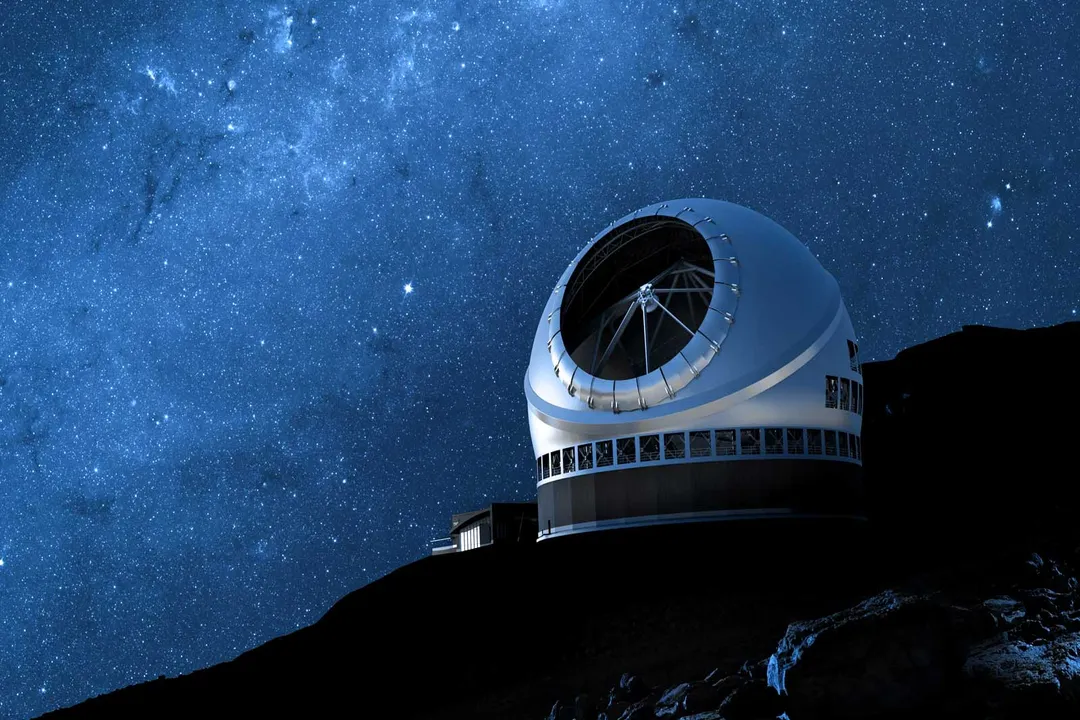
While the payoff is immense, studying these distant light sources is fraught with observational difficulty, which underscores the expertise required in this field. [2] The light has traveled for so long that it is spread thin and significantly redshifted. [9] This makes the objects extremely faint, demanding the largest possible light-gathering power, as found in facilities like the Extremely Large Telescope (ELT). [7]
Moreover, the redshift is not just an inconvenience; it fundamentally changes how we measure things. For example, the observed size of a high-redshift galaxy is affected by cosmological distance effects that depend on the assumed cosmological model (). [9] When we see a galaxy at , we are measuring its apparent size, which needs careful de-projection to estimate its actual physical size at that early time. [3] This inherent dependency means that improving the precision of our measurements of distant galaxies also helps to place tighter constraints on the fundamental parameters describing the universe's expansion history itself. [4]
A particularly challenging aspect is distinguishing between intrinsic faintness and simple distance dimming. [6] JWST's infrared sensitivity mitigates the redshift problem, but resolving fine details requires even greater angular resolution. [5] The TMT, for example, aims to study the earliest structures and the intergalactic medium (IGM) through absorption lines imprinted on the light from these distant quasars and galaxies, a technique that requires incredibly sharp vision to isolate spectral features. [9]
If we failed to account for the observational biases inherent in looking through the expanding universe—for example, if we treated the apparent colors and sizes of high-z galaxies as if they were local objects—we would severely miscalculate their stellar masses and star formation rates. [3] This systematic error would paint a completely incorrect picture of cosmic evolution.
# The Space Between
The study of distant galaxies is also intrinsically linked to understanding the space between them—the Intergalactic Medium (IGM). [9] As the light from a distant galaxy travels toward us, it passes through intervening clouds of gas that existed at various points in cosmic history. [9] These gas clouds absorb specific wavelengths of light, leaving characteristic gaps or absorption lines in the galaxy’s spectrum. [9]
By analyzing these absorption features, astronomers can probe the physical conditions, temperature, density, and chemical composition of the IGM at times when the universe was much younger. [9] This is an extraordinary advantage: we don't need to find a bright object within that early cosmic web; the light from a distant background source acts as a flashlight shining through the structure we want to study. [9]
This technique allows researchers to chart the reionization epoch—the period when the first stars and galaxies heated and stripped electrons from the neutral hydrogen fog that pervaded the early universe, making the cosmos transparent to light. [9] The Roman telescope is specifically designed to conduct large surveys that will help map out this process across a larger volume of space than currently possible. [4]
If one were to imagine a perfect experiment, it would be to select a specific, representative volume of space near us today, model the gravitational effects backward, and then observe the actual light from the galaxies that occupy that same spatial region across cosmic time. [1] Since that's impossible, the next best thing is this deep-field survey across different lines of sight. [3] Every new galaxy discovered at is not just an interesting object; it's an anchor point in the timeline, helping to calibrate the entire evolutionary curve. [5] Furthermore, the sheer volume of data being collected by instruments like JWST is now enabling statistical studies on large samples, moving from studying exceptional early galaxies to understanding the typical processes that governed the majority of structure formation across the eons. [2][6] This shift from studying outliers to characterizing populations is what transitions our understanding from anecdotal evidence to genuine, confirmed physical laws governing galactic growth.
Related Questions
#Citations
Galaxies Over Time - NASA Science
Galaxy Formation and Evolution | Center for Astrophysics | Harvard ...
Why does studying distant galaxies help us understand the early ...
A New Understanding of Galaxy Evolution with NASA's Roman ...
A Sharper Image of the Early Universe | Tufts Now
James Webb Space Telescope Challenges Galaxy Formation ...
Galaxies | ELT - ESO.org
Formation and evolution of galaxies - University of Hertfordshire
Early Universe, Galaxy Formation and the IGM