Why does Venus look so bright lately?
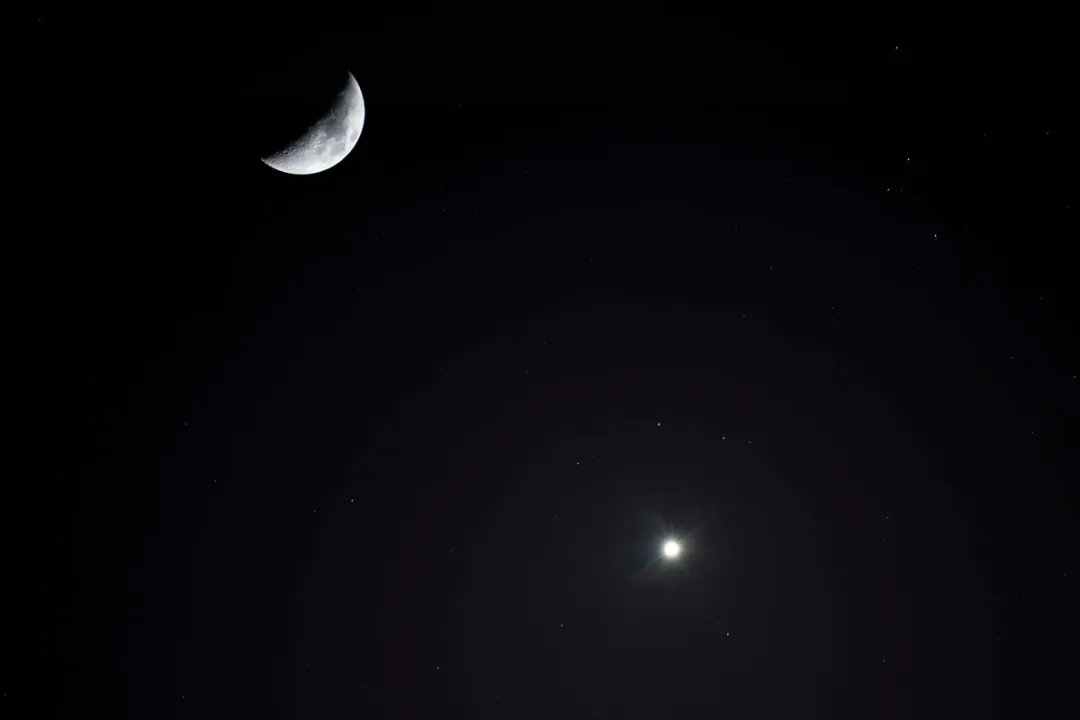
The dazzling object that has recently commanded attention in the twilight sky, often appearing long before the stars have fully emerged, is the planet Venus. Its brilliance is no accident of recent celestial alignment alone; rather, it stems from a perfect cosmic recipe involving its physical nature, orbital mechanics, and the specific viewing geometry we currently experience from Earth. [1][2] For many observers, it easily outshines every star in the night sky, becoming the third brightest natural object visible after the Sun and the Moon. [3][5]
# Reflective Cloud
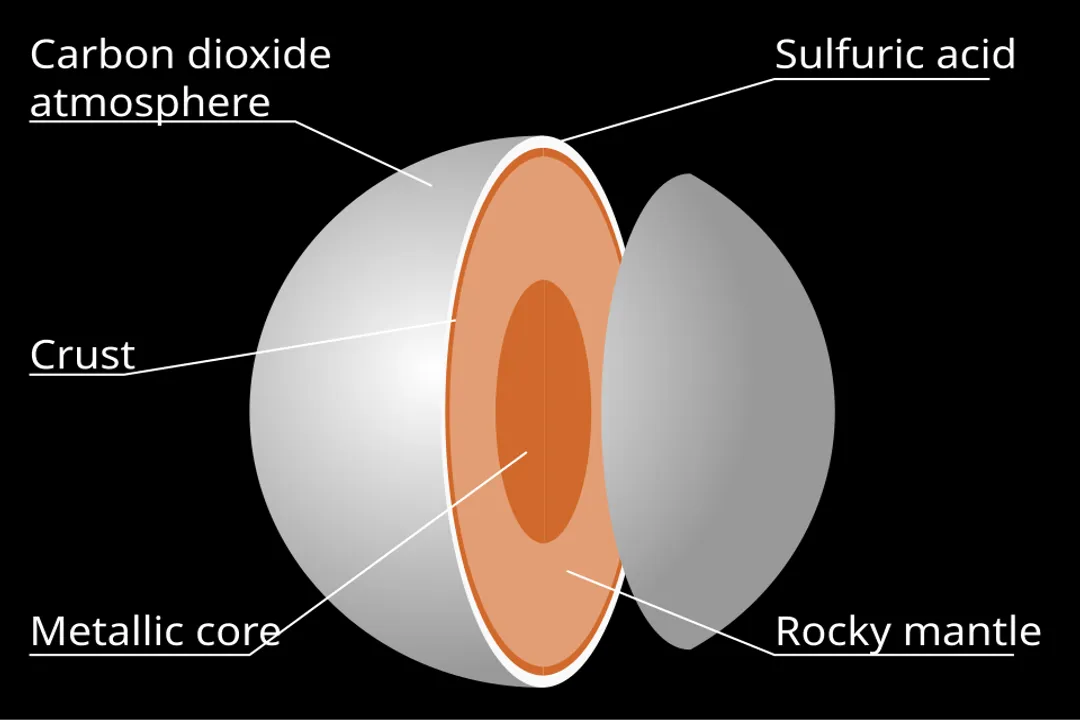
The primary reason for Venus's superlative brightness is its incredibly efficient reflective surface. [2] Unlike Mars, which is reddish and rocky, or Jupiter, which is banded gas, Venus is shrouded in a dense, highly reflective atmosphere. [8] This atmosphere is composed mainly of carbon dioxide, but it is the persistent, bright white clouds of sulfuric acid that act like a giant, perfectly aimed mirror in space. [2][5]
The efficiency of this reflection is quantified by its albedo, which measures how much incident light an object reflects. Venus boasts an albedo of around 0.70 or 0.75, meaning it reflects about 70 to 75 percent of the sunlight that hits it. [2][8] To put this into perspective, the Moon has an albedo closer to 0.12, reflecting only about 12 percent of the light it receives. [2] This massive difference in reflectivity is why Venus appears so much brighter than other planets, even when they are much larger. [1][2]
When Venus is near its closest approach to Earth, this high reflectivity coincides with its nearest physical proximity, leading to its most spectacular appearances. [1] This combination is what makes its recent appearances so striking. [1][5]
# Orbital Dance
Venus has a surprisingly close orbit to the Sun, which dictates its visibility pattern from our perspective on Earth. [8][9] Since it orbits inside Earth's orbit, we never see Venus high in the night sky around midnight; it is always seen relatively close to the horizon, either shortly after sunset (the "Evening Star") or shortly before sunrise (the "Morning Star"). [1][4]
The reason it seems "so bright lately" usually relates to its position relative to Earth, specifically its elongation. [4] Elongation is the angular separation between the planet and the Sun as viewed from Earth. [4]
# Greatest Elongation
Venus reaches its greatest elongation twice during its orbit around the Sun—once in the west (best for morning viewing) and once in the east (best for evening viewing). [4] At these points, the planet is at its maximum apparent distance from the Sun in the sky, offering the longest possible window to observe it after sunset or before sunrise, and often giving it the best viewing angle relative to Earth before it begins to move back toward the Sun from our vantage point. [4]
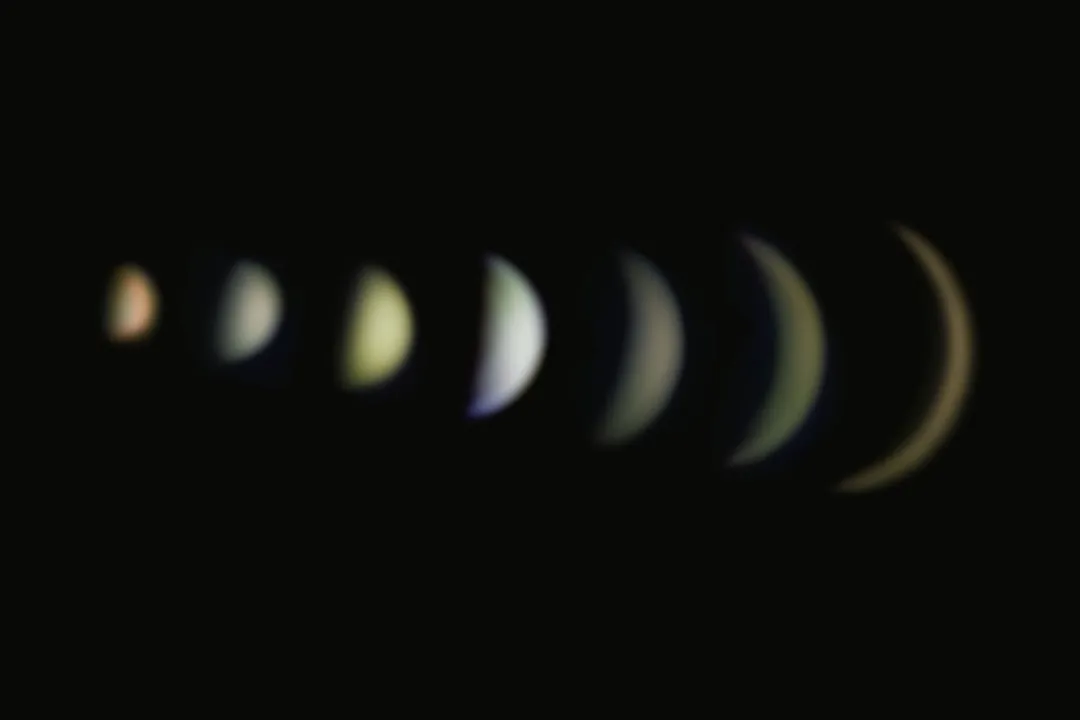
The entire cycle, from when Venus is obscured by the Sun's glare (inferior conjunction) to when it moves to its farthest angular distance (greatest elongation) and back again, takes about 584 Earth days. [4][9] Depending on where we are in this cycle, Venus can present dramatically different appearances, much like the phases of the Moon. [1]
This phase cycle is critical to its apparent brightness. When Venus is near its closest approach to Earth (inferior conjunction), it appears as a large, fully illuminated disk, but because it is nearly between us and the Sun, we see very little of the sunlit side, making it dimmer. [1] Conversely, when it is farther away, we see almost a full disk, but its size in the sky is smaller, resulting in a less intense overall view. [1] The period of peak visibility, where maximum brightness coincides with a substantial phase angle, is what catches observers' eyes. [1]
# Brightness Magnitude
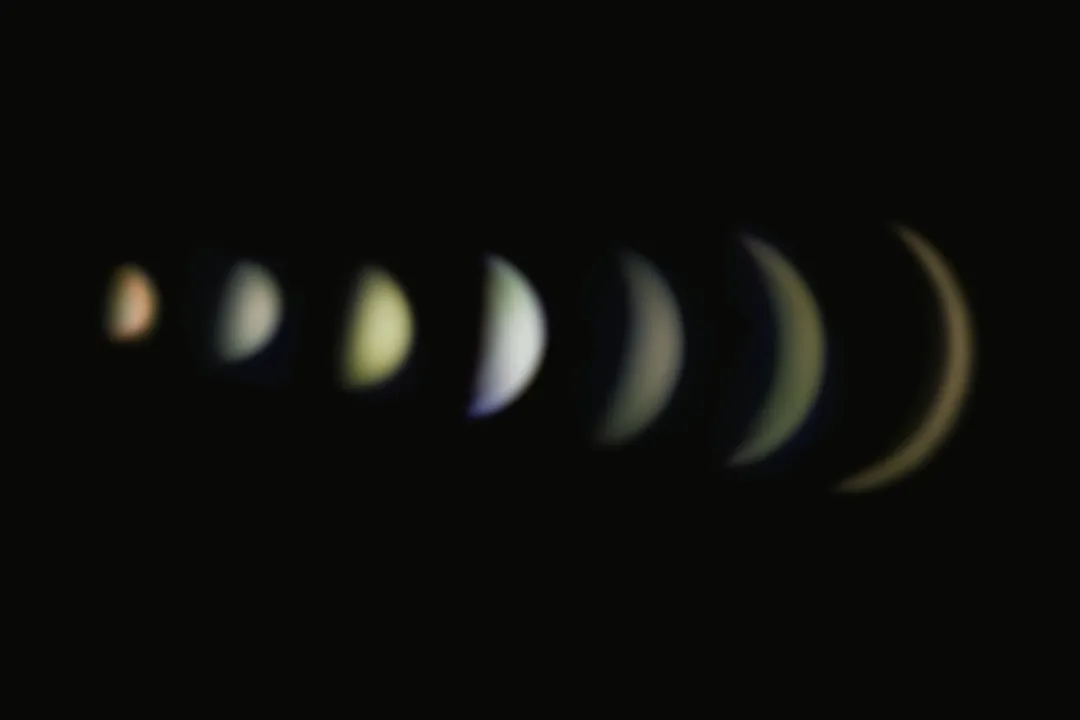
The difference in Venus's brightness across its cycle is staggering. At its brightest, it can reach an apparent visual magnitude of approximately $-4.6$. [8] To put this into a more relatable context, Sirius, the brightest star in the night sky, hovers around magnitude $-1.46$. [3] This means Venus can appear over ten times brighter than the next brightest celestial object besides the Sun and Moon. [3]
This extreme brightness, especially when it's hanging low on the horizon just after twilight fades, creates a powerful visual effect that often causes confusion among casual sky-watchers. The intensity of the light is so pronounced that it can sometimes be mistaken for a low-flying aircraft or a bright beacon, rather than a planet millions of miles away. [3]
| Observation Point | Approximate Apparent Magnitude | Comparison |
|---|---|---|
| Venus at Maximum | $-4.6$ | Over 10x brighter than Sirius |
| Sirius (Brightest Star) | The benchmark for night sky stars | |
| Jupiter (Brightest Planet) | Second brightest celestial object | |
| Moon (First Quarter) | Brightest object besides the Sun |
When Venus is near its maximum brightness phase, its light is so significant that it can occasionally cast faint shadows on Earth, a phenomenon observed by ancient cultures and documented in historical records. [5] This level of illumination is achieved only when the reflected light travels through a relatively thin sliver of Earth's atmosphere before reaching our eyes, which occurs during the specific elongation angles mentioned previously. [1][4]
# Viewing Context
The term "lately" in observing Venus points to a current favorable window dictated by Earth’s position relative to Venus’s orbit. [4] If Venus has recently been prominent in the evening sky, it means we are currently experiencing the eastern elongation phase, and it is slowly moving away from the Sun in the west after sunset. [4] If it is seen in the east before sunrise, we are near the western elongation phase. [4] The planet’s visibility is governed by the geometry between the observer, Earth, and Venus. [4]
A common feature of observing Venus during these bright phases is its persistence. While most stars appear only after true darkness sets in, Venus becomes visible while the sky is still quite bright near the horizon. [3] This early visibility is a direct result of its high contrast against the bright background sky, thanks to that incredible reflective surface. [2][3]
One subtle effect of observing Venus when it is very low on the horizon, often necessary when it's at its brightest phase, involves atmospheric distortion. Because the light travels through the thickest layers of the Earth's atmosphere at these times, the planet can appear to twinkle or shimmer noticeably. [3] This twinkling is caused by pockets of turbulent air bending the intense light rays, an effect usually associated only with distant stars, not planets, which typically shine with a steady light. [3] The sheer intensity is what makes this atmospheric shimmering observable in the first place.
# Observing Tips
For those eager to catch Venus during its peak visibility, timing is everything, especially if the goal is to appreciate its maximum potential light. [4]
- Locate the Date: Check current astronomical reports for the date of the greatest eastern elongation (for evening viewing) or greatest western elongation (for morning viewing). [4] This sets the stage for the best few weeks of observation. [4]
- Horizon Check: Because Venus is an inner planet, it will always be seen close to the Sun's position in the sky. Therefore, look low in the east before dawn or low in the west just after sunset. [1][4]
- Appreciate the Difference: Try observing Venus on a night when it is very far from Earth (near superior conjunction) versus when it is near greatest elongation. [1] The visual difference in apparent size and brightness, even through binoculars, underscores the dramatic impact of orbital mechanics on planetary visibility. [1]
Considering the vast distances involved, the fact that an object millions of miles away can outshine everything except our own Sun and Moon, even when viewed through the haze of our lower atmosphere, speaks volumes about its unique atmospheric composition. [2][5] It’s a constant reminder that while the stars are distant suns, the planets are neighbor worlds, often sharing our immediate corner of the solar system and showing off their surfaces with brilliant, reflected light. [8] The recent brightness is simply a temporary alignment in our ongoing cosmic companionship with the "Morning Star" or "Evening Star". [4]
#Videos
Why Venus is so bright this weekend - YouTube
Related Questions
#Citations
Why is Venus so bright in our Earth's sky? - EarthSky
Why Venus Is So Bright Right Now | Scientific American
Why is Venus so bright and persistent in the night sky at the moment?
Why Venus is so bright this weekend - YouTube
Why is Venus so high in the sky tonight? - Facebook
What causes Venus to appear brighter in the sky during sunset ...
Venus: Facts - NASA Science
Venus - Wikipedia