Does Venus always appear in the West?
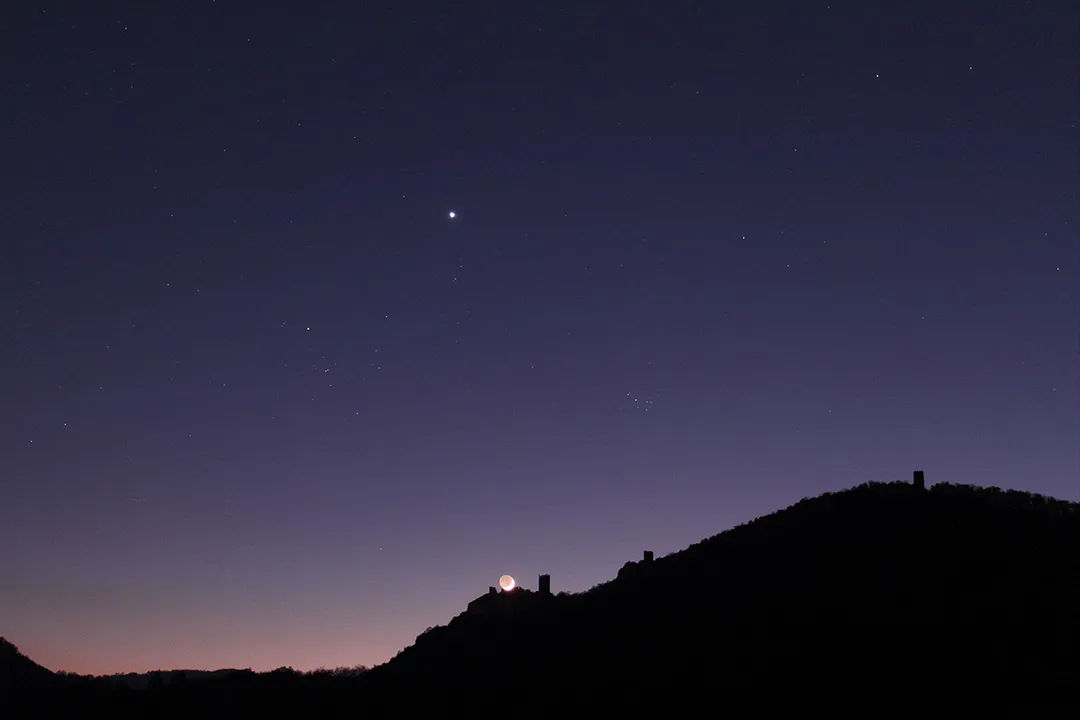
The planet Venus holds a captivating position in our night (or rather, twilight) sky, often shining as the brightest object other than the Moon. This brilliance frequently leads observers to assume it maintains a fixed location, such as always appearing in the West after the sun sets. However, the reality of observing Venus is far more dynamic. Venus is famous for being the "Evening Star" or the "Morning Star," and this nickname perfectly encapsulates why it does not always appear in the West; it constantly trades places between the western sky after sunset and the eastern sky before sunrise. [7][9]
Venus is the second planet from the Sun, orbiting much closer to our star than Earth does. [1] Because its orbit is contained inside Earth's, Venus can never stray far from the Sun's immediate vicinity as viewed from our perspective. [2][3][4] This constraint dictates its visibility cycle. If a planet orbits outside Earth's path, like Mars or Jupiter, it can be seen high in the sky at midnight, far from the Sun. Venus, however, is bound to the dawn or dusk hours. [3][9]
# Orbital Proximity
To understand the changing location, one must appreciate the geometry of the inner solar system. Venus orbits the Sun in approximately 225 Earth days, while Earth takes about 365 days. [1] Since it orbits faster and closer to the Sun, the angular separation between Venus and the Sun, as seen from Earth, changes dramatically over time. [5] When Venus is on the western side of the Sun from our viewpoint, it sets after the Sun, making it the Evening Star, visible in the western sky. [3][7] When it swings around to the eastern side of the Sun, it rises before the Sun, becoming the Morning Star, visible in the eastern sky just prior to dawn. [7][9]
This regular movement means that for observers, Venus's appearance is cyclical, not constant in one direction. [6] It cannot be seen every night throughout the year because of these orbital maneuvers. [6]
# Evening Appearance
When Venus is at its maximum angular distance from the Sun in the evening sky, it reaches what astronomers call its greatest elongation west. [3] During this phase, it sets at its latest time after the Sun, offering the best and longest viewing window in the western sky following sunset. [3] This time is often when the planet shines with maximum intensity as the Evening Star. The specific date of greatest elongation changes from year to year, depending on where Earth and Venus are in their respective orbits. [3] For instance, in early 2024, one might find it shining brightly in the West well after twilight had faded. [3]
# Morning Visibility
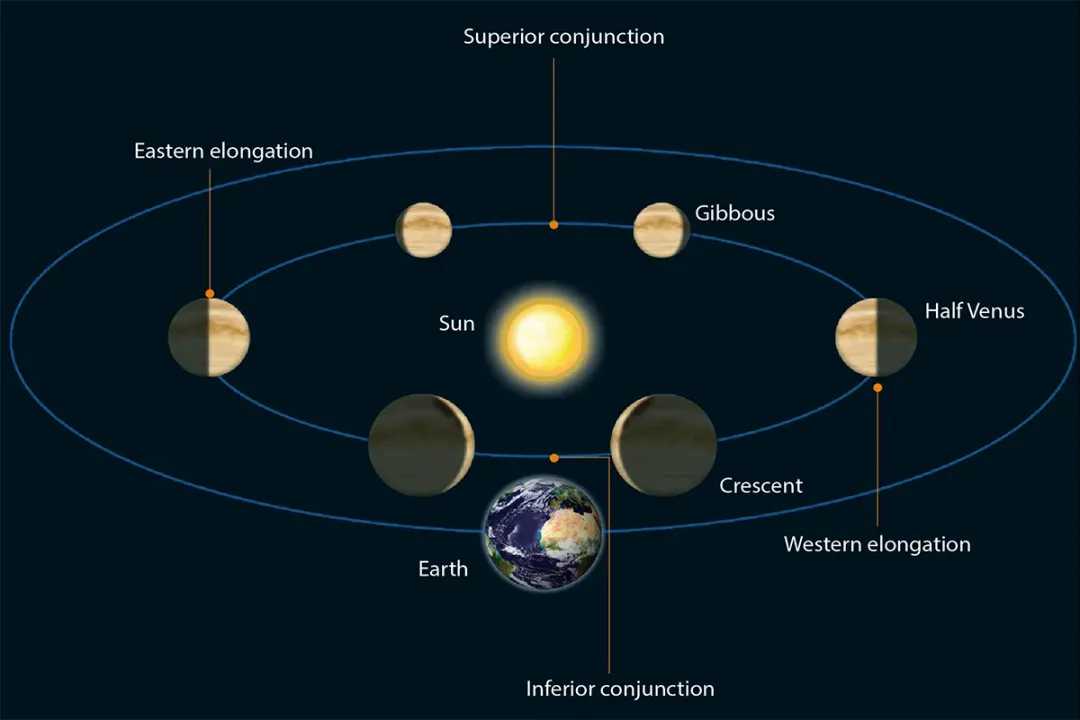
Conversely, there are periods when Venus is on the eastern side of the Sun relative to Earth. During these stretches, the planet rises before the Sun, earning it the title of the Morning Star. [7][9] If you are looking to spot Venus low on the eastern horizon just before sunrise, you are witnessing it in its Morning Star phase. Like the evening phase, there is a point of greatest elongation east, which dictates the longest possible viewing time before dawn. [3] A common misconception is that because it is sometimes an Evening Star, it should always be visible in the West; in reality, the switch between East and West is a routine part of its appearance cycle. [7]
# The Disappearing Act
The most significant reason Venus doesn't always appear in the West (or East) is that sometimes it is simply not visible at all for weeks or even months at a time. [6] This happens when Venus passes directly between the Earth and the Sun, an event called inferior conjunction. [5][9] During inferior conjunction, the planet is too close to the Sun's glare to be seen safely or at all. [5] Immediately following this, as it moves to the other side of the Sun, it transitions from being the Evening Star to the Morning Star, or vice versa. [5][9]
There is also superior conjunction, which occurs when the Sun passes between Earth and Venus. [5] While Venus is farther away from Earth during this time, making it appear smaller and dimmer, it is still obscured by the Sun's light, rendering it unobservable. [5] The time it takes for Venus to complete this full cycle of being visible in the West, then disappearing, then appearing in the East, and disappearing again, is tied to its synodic period, which is approximately 584 Earth days. [2] This means that any given observer will not see Venus continuously throughout the year. [6]
To truly appreciate the transition, consider tracking the date of greatest elongation west. If you mark that date on your calendar, you will notice that the very next time Venus becomes visible, it will be rising in the east before the Sun, having completed its transit behind the Sun from our perspective. [5][9]
# Predicting Observation Windows
For casual skywatchers, knowing when Venus is visible is more practical than knowing its exact orbital mechanics. Since Venus is so bright—sometimes even visible in the daytime sky if you know exactly where to look—it's easy to mistake its absence for an issue with the planet itself. The key takeaway for a consistent observer is that you will never see Venus high overhead near midnight, regardless of the time of year. [4] If you look for it around 10:00 PM and it's not there, check your morning sky a few weeks later. This predictability allows an amateur astronomer to create a simple observation schedule. For instance, if Venus is at its maximum elongation west in January, you can reasonably predict it will be undergoing superior conjunction (hidden) around late March or early April, and then reappear as the Morning Star in May or June. [5]
A helpful, non-technical way to approach this is to check the sky at the same time every day for one week. If it's currently visible, you'll see it shifting its position relative to the sunset or sunrise point slightly each day. If it vanishes during that week, it means an inferior conjunction is imminent. [6]
This cyclical nature offers an excellent opportunity for comparative study. For instance, while Venus is brilliant, Mercury, being closer to the Sun, never gets as far from the Sun in the sky as Venus does. [2] Because Venus can achieve a much larger elongation angle from the Sun than Mercury can, Venus offers longer and brighter viewing periods in the twilight, even though both planets are restricted to the dawn/dusk hours. [2][3] Mercury’s greatest elongation is only about 28 degrees, whereas Venus’s is around 47 degrees. [2] This difference in maximum angular separation explains why Venus is so much more reliably noticeable as the Evening or Morning Star than its inner neighbor.
# Brightness Factors
The actual visibility and how long Venus stays "out" after sunset depends on more than just the geometry of the orbits; the tilt of the Earth's axis relative to the Sun plays a significant role in the duration of twilight viewing. When the ecliptic (the plane of the solar system) is highly inclined to the horizon—which happens more sharply during certain seasons depending on your latitude—Venus can set much later after the Sun. A very steep angle means Venus drops below the horizon quickly, even if it is near its greatest elongation. Conversely, a shallower angle allows the planet to linger longer in the western twilight. This means that one Evening Star period might be short and dramatic, while another might last for many weeks, even if the maximum elongation angle is similar. [3]
For example, a person living in the Northern Hemisphere in the spring might see Venus set relatively quickly after the Sun because the ecliptic is climbing steeply out of the western horizon. However, in the autumn months, the ecliptic sinks more slowly below the horizon, allowing Venus to remain visible much later into the evening, providing a longer window for observation in the West. [3] This seasonal effect is often overlooked by beginners who expect the visibility time to be the same every time Venus appears as the Evening Star.
# Observing Considerations
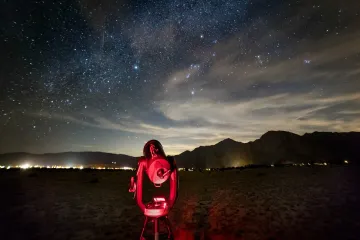
When observing Venus, especially when it is near the horizon in the West after sunset, remember that you are looking at a cloud-covered world that is nearly the size of Earth. [1] Because it is so bright, it is often the first "star" people notice in the twilight. However, safety is paramount. Never attempt to observe Venus when it is very close to the Sun, as even a small distance might still place it near the Sun's blinding glare. Only observe it after the Sun has set well below the horizon, or before it has risen, to protect your eyes. [4]
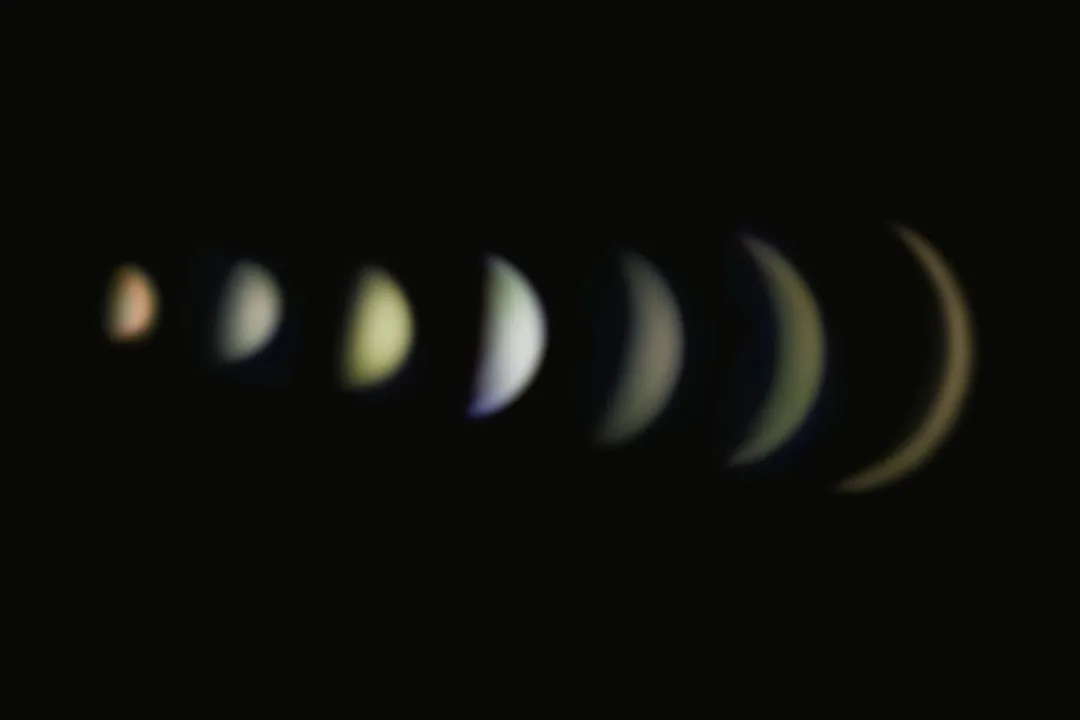
The transition period, when Venus is near inferior conjunction, is particularly tricky. At this time, it might appear as a thin crescent very low in the East just before dawn, or perhaps just appear as a faint, quick flash very low in the West just after sunset. Because it is positioned between us and the Sun, the phase we see is a thin crescent, contrasting sharply with the nearly full phase it displays when it is far out in its orbit (like at greatest elongation). [9]
In summary, Venus's location is entirely dependent on its current position in its orbit relative to the Earth and the Sun. [2] It is never consistently found in the West; it is a star of the twilight, eternally dancing around the Sun in the sky, appearing first in the west after dusk, then moving behind the Sun to reappear in the east before dawn. [7][9]
Related Questions
#Citations
Venus: Facts - NASA Science
Venus - Wikipedia
Venus greatest distance from the sun August 14-15, 2026 - EarthSky
How can we see Venus from Earth during nightime if we're ... - Reddit
Why does Venus always appear in our sky all year round if it ... - Quora
Do we see planet venus everyday? - Astronomy Stack Exchange
Why Venus is called the morning star or the evening star
How can Venus always lead the sun and rise before it? - Facebook
Observing Venus, the Morning and Evening Star - Stelvision