Why does Venus glow?
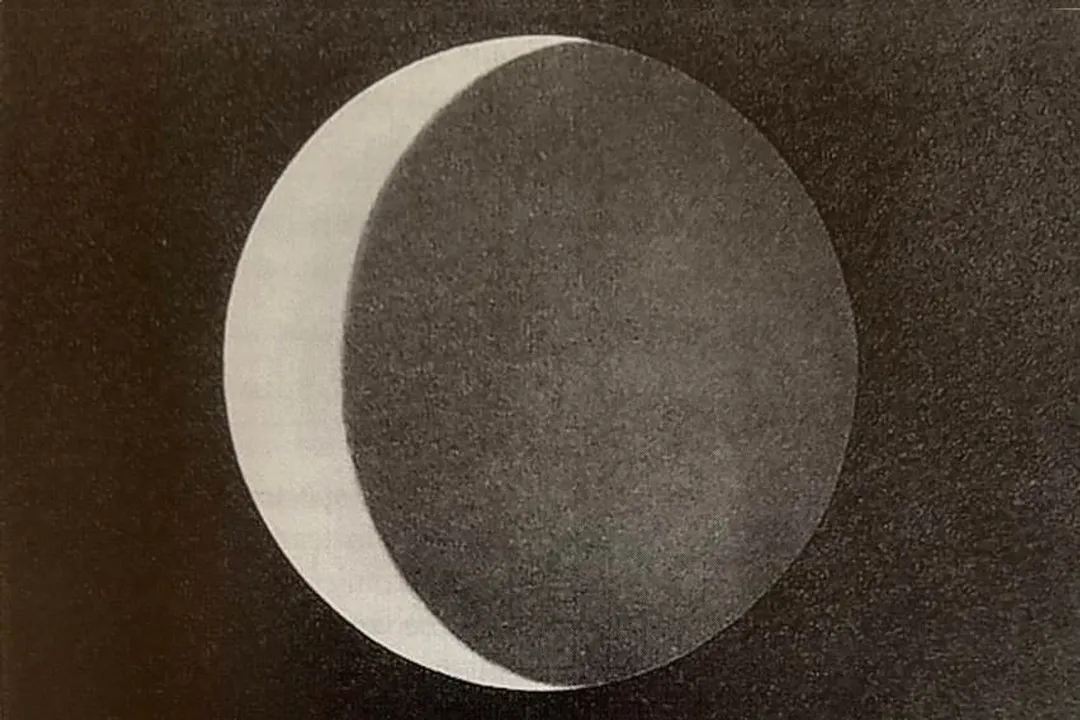
The brilliant object visible in the twilight sky, often called the Morning or Evening Star, is the planet Venus, and its striking brightness prompts many people to wonder why it seems to shine so intensely. It is important to first clarify a common misconception: Venus does not produce its own light, unlike a star; it is entirely illuminated by reflecting sunlight, much like our own Moon. [4][7] Its remarkable visibility stems from a combination of its proximity to Earth and the highly efficient reflective nature of its atmosphere. [1][2][6]
# Sunlight Reflection
Venus earns its title as the brightest natural object in the night sky after the Moon because of its incredible ability to bounce back the Sun’s rays. [1][2][6] This measure of reflectivity is known in astronomy as albedo. Venus boasts an average Bond albedo of about 0.70, meaning that roughly 70% of the sunlight hitting its upper cloud deck is immediately reflected back into space. [1][9] To put this into perspective, Earth’s albedo is only about 0.30, meaning we reflect less than a third of the sunlight that strikes us. [1] This stark difference highlights why Venus appears so much more dazzling than our home planet when viewed from space or, in Venus’s case, from Earth. [1]
# Cloud Chemistry

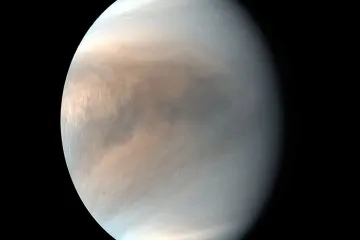
The material responsible for this exceptional sheen is not bare rock, but rather a dense, planet-enveloping blanket of clouds. [1] These clouds are primarily composed of droplets of sulfuric acid and water vapor. [1][9] While the surface conditions on Venus are hellish—scorching hot due to a runaway greenhouse effect—it is these high-altitude clouds, located about 45 to 65 kilometers (28 to 40 miles) above the surface, that act as the planet’s polished mirror. [1] The sheer density and persistent nature of this cloud layer ensure that virtually no sunlight penetrates to the surface and returns; instead, it is scattered back efficiently from the very top layer. [9] This continuous, reflective shroud keeps Venus a steady, bright beacon in our sky. [1]
# Orbital Proximity

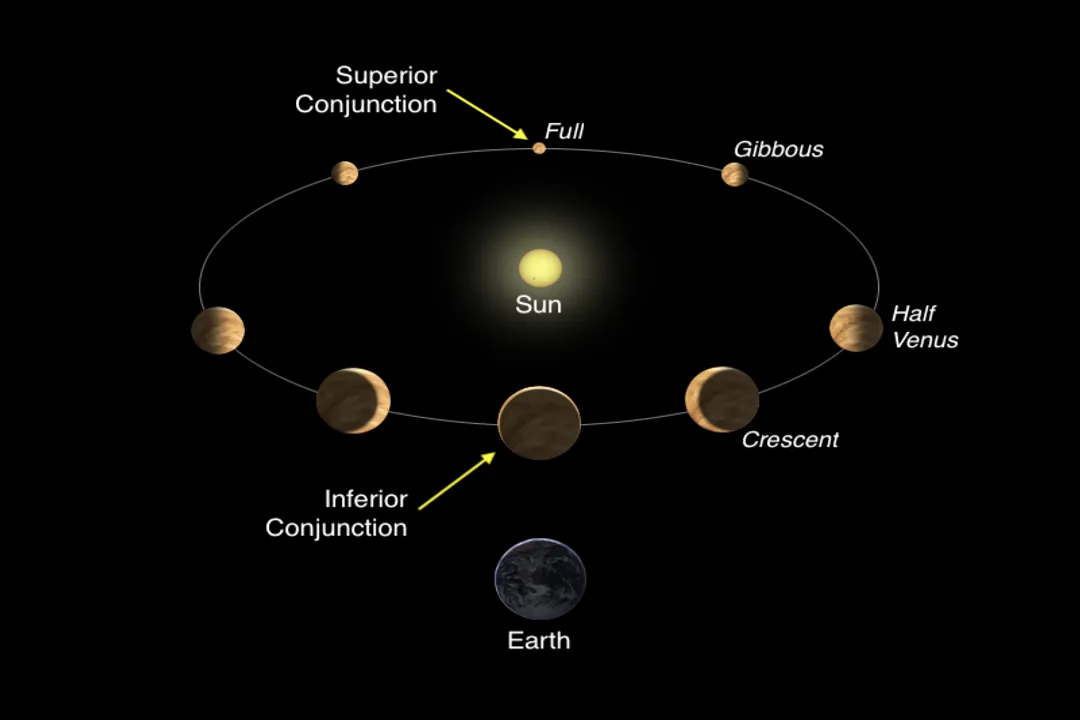
While reflectivity is a major factor, the distance between Earth and Venus plays an equally important role in perceived brightness. Venus is the closest planet to Earth. [1][2] Because its orbit is closer to the Sun than ours, it circles inward from Earth’s path. [2] This orbital arrangement means that at its closest approach, Venus is nearer to us than any other planet. [2] The inverse square law of light dictates that apparent brightness drops off rapidly with distance, so being the closest major reflective body significantly boosts its visual impact. [7] When Venus is at its nearest point, it can appear magnified several times over compared to when it is on the opposite side of the Sun from us. [2] If a planet with Earth's reflectivity were as far away as Mars, it would be far less conspicuous. [1]
A neat way to think about the combined effect is through an efficiency comparison. Imagine two identical mirrors. If you placed one 10 feet away and the other 100 feet away, the closer one would look vastly brighter. Now, imagine the first mirror reflects 70% of the light (Venus), and the second reflects 30% (Earth). Even if the second mirror were closer, the first one’s superior reflective quality allows it to dominate the view when they are at their typical closest approach distances. Because Venus is both close and highly reflective, its status as the brightest "star" (after the Moon) is secure. [6][9]
# Seeing the Star

Because Venus orbits inside Earth's path, it never strays far from the Sun in our sky. [2] This means that once the Sun sets, Venus is often the first bright object to appear, shining brilliantly in the west, which earns it the title of the "Evening Star". [2] Conversely, just before sunrise, it can be seen low in the east as the "Morning Star". [2] This visibility pattern—only observable for a few hours after sunset or before sunrise—is a direct consequence of its orbital mechanics. [2] When it is near the horizon, the light passes through a thicker layer of Earth’s atmosphere, which can sometimes cause it to twinkle slightly or diffuse its light, making it appear larger or more haloed than when it is higher up. [9] If you know the time of sunrise or sunset for your location, you can almost always predict where Venus will be in the sky, provided the skies are clear. [2]
# Dark Side Glow
Beyond the reflected sunlight, there is a much more mysterious phenomenon sometimes associated with Venus: a faint illumination visible on the dark side of the planet when it is in its crescent phase, often referred to as the Ashen Light. [6] This is not related to reflected sunlight; rather, it suggests some form of light emission from Venus itself, or an unusual atmospheric scattering effect. [6][5]
Historically, observers have reported seeing this faint glow illuminating the portion of the disk turned away from the Sun. [6] While some earlier reports were dismissed as optical illusions or observations of Earthshine reflecting off the Moon back onto Venus, modern observations have provided more compelling evidence. [6] Spacecraft like Venus Express have been positioned to observe this effect, finding that the illumination is real, though its precise cause remains debated. [3][6]
Several theories attempt to explain this dim luminosity:
- Atmospheric Electrical Activity: The intense atmospheric dynamics and dense cloud layer might generate significant electrical discharges, similar to terrestrial lightning, which could cause parts of the upper atmosphere to glow. [6]
- Airglow: Chemical reactions occurring high in the atmosphere, known as airglow, could be responsible for producing this faint, persistent light. [6]
- Frictional Heating: Some speculation suggests that high-speed atmospheric motion or friction within the super-rotating atmosphere might cause localized heating that manifests as a faint visual glow. [6][5]
The fact that this glow is difficult to observe consistently, often requiring specific viewing geometry and dark skies, suggests that whatever mechanism is at work is intermittent or extremely low-intensity. [6] Scientists who study Venus must filter out the known reflective properties to isolate this faint emission, which requires highly sensitive instruments, as it is dramatically dimmer than the reflected sunlight. [3] The existence of the Ashen Light shows that Venus, while not a star, possesses atmospheric activity dynamic enough to create its own faint, transient illumination against the blackness of space. [6]
If one were to try to capture the Ashen Light with basic equipment, the challenge is immense. Because the illuminated crescent is so bright, the cameras or eyes must be rapidly adjusted to see the faint glow on the unlit portion, meaning any slight error in exposure or atmospheric turbulence will wash out the effect. [3] In practical terms, amateur astronomers looking for the planet’s familiar brilliance rarely see this phenomenon, as it requires patience and specific orbital alignment relative to Earth and the Sun. [6] This dichotomy—Venus being the brightest object in the sky one moment and a faint, mysterious glow the next—underscores the complexity hidden within its veil of clouds. [1][6]
#Videos
Why is Venus so Bright? + more videos - YouTube
Related Questions
#Citations
Why is Venus so bright in our Earth's sky? - EarthSky
Why is Venus so bright and persistent in the night sky at the moment?
ESA - Watching Venus glow in the dark - European Space Agency
Why does Venus produce its own light? - Quora
Why is Venus so Bright? + more videos - YouTube
Ashen light - Wikipedia
What makes the Moon and Venus shine? - Astronomy Stack Exchange
Why is Venus so bright in the night sky? - Cool Cosmos
Why Venus Shines Brightly - Explaining Science