Do we have a camera on Venus?
The planet Venus, often appearing as the brilliant "Morning Star" or "Evening Star" in our sky, is a world shrouded in mystery, yet we do possess photographs taken directly from its hellish surface. These images are not numerous, nor are they recent in the modern space exploration sense, but they represent some of humanity’s most tenacious engineering achievements. The visual reality of Venus is that only a handful of cameras have ever successfully operated on its ground, primarily thanks to the Soviet Union's ambitious Venera program decades ago. Even more recently, our ability to see the surface has taken a significant leap forward, not from a lander, but from an orbiter using a method previously thought impossible for visible light observation.
# Surface Photos
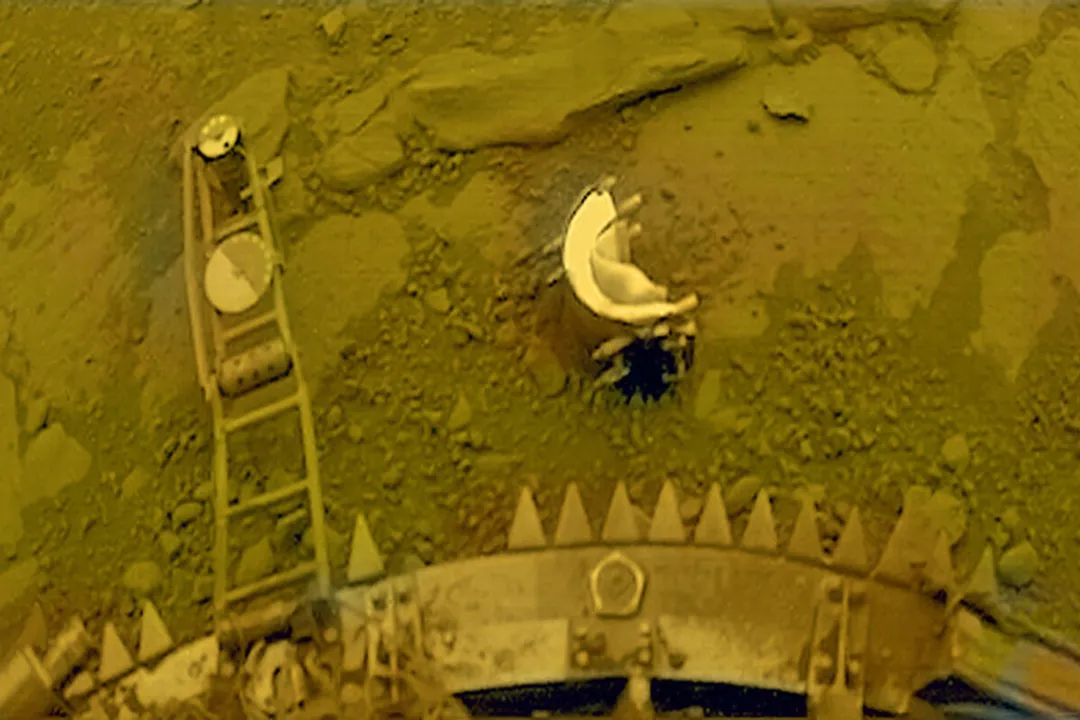
For many decades, the only direct evidence of what the Venusian surface looks like came from the descent probes of the Venera missions. These missions were triumphs of survival against incredible odds. The atmosphere of Venus is extremely dense, composed mostly of carbon dioxide, and it creates crushing surface pressures—about 92 times that of Earth at sea level—and temperatures hot enough to melt lead, hovering around 475 degrees Celsius (900 degrees Fahrenheit). Any camera sent down had to be encased in heavy, specialized protection, and even then, the operational lifespan on the ground was measured in mere hours, sometimes minutes.
The Soviet Venera landers successfully transmitted a handful of panoramic images back to Earth from various landing sites across the planet. These photographs revealed a desolate, rocky landscape bathed in a dim, orange-yellowish light. The terrain often appeared barren, strewn with stones or large rock formations under a hazy sky. Because the thick, sulfuric acid clouds filter and scatter sunlight so effectively, the light reaching the surface is diffuse, meaning there are no harsh shadows, giving the scene a perpetually twilight appearance. While subsequent missions have mapped the planet extensively, these Venera pictures remain the definitive, up-close visual record of the actual ground beneath those clouds. It is perhaps telling that we managed to land a camera on Venus and capture surface images before we had fully imaged the deep ocean floor on our own planet, illustrating a historical drive to conquer the seemingly most hostile nearby world.
The rarity of these images is staggering. If you look at the entire history of Venus exploration, the surface photographs are few. For instance, one key mission, Venera 13, provided the first color images and operated for over two hours, transmitting back a limited number of shots. This longevity, under such extreme conditions, stands in stark contrast to modern expectations for robotic explorers; a rover on Mars might be expected to last for years, yet the Venera cameras achieved their mission in less than three Earth hours before succumbing to the heat and pressure.
# Orbital Vision
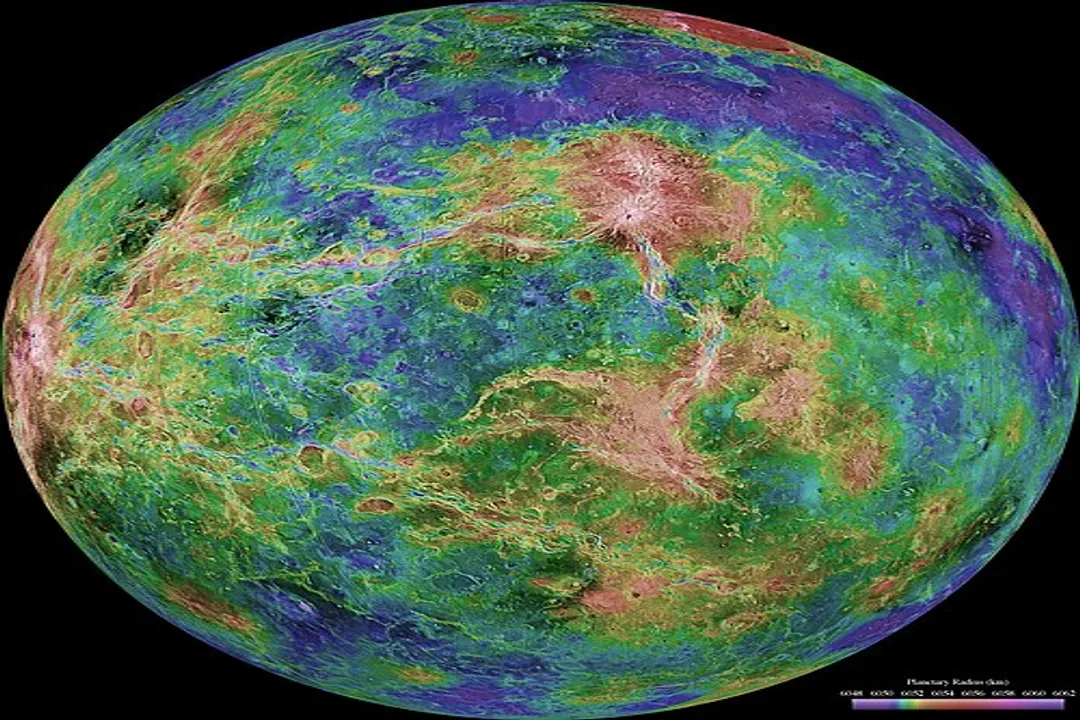
While the surface cameras are rare, orbiting spacecraft have been the workhorses for mapping Venus, though they rely on non-visible light techniques. Because the planet is perpetually covered by those thick clouds, traditional optical cameras—like the ones we use to photograph the Moon—cannot penetrate them to see the surface features directly from orbit.
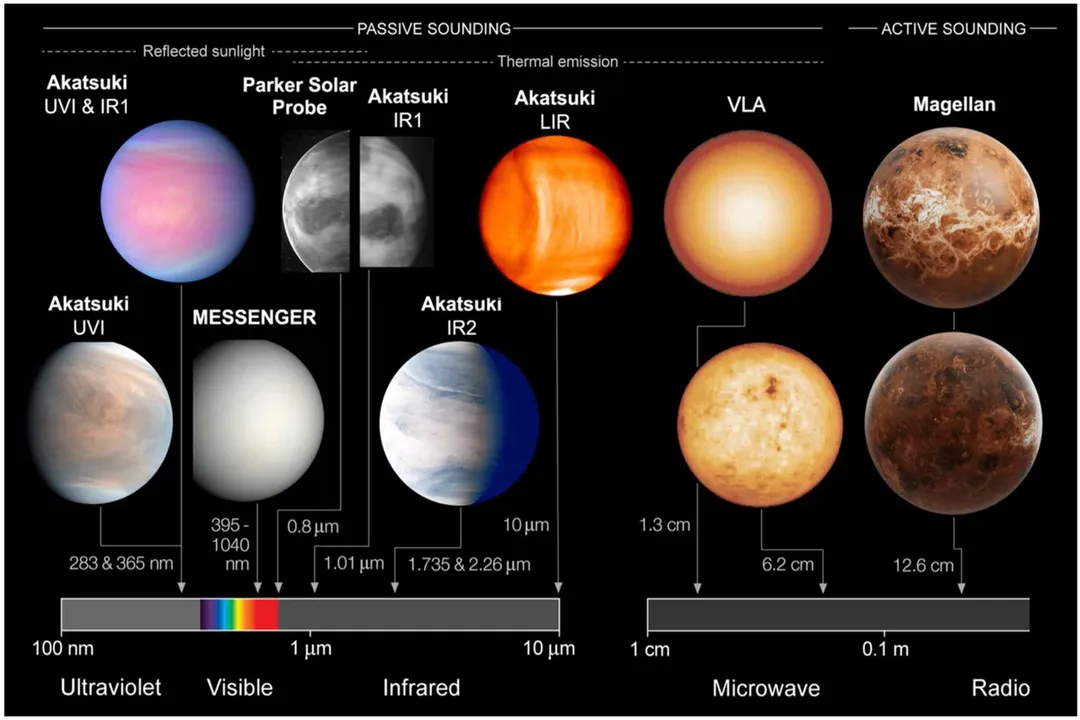
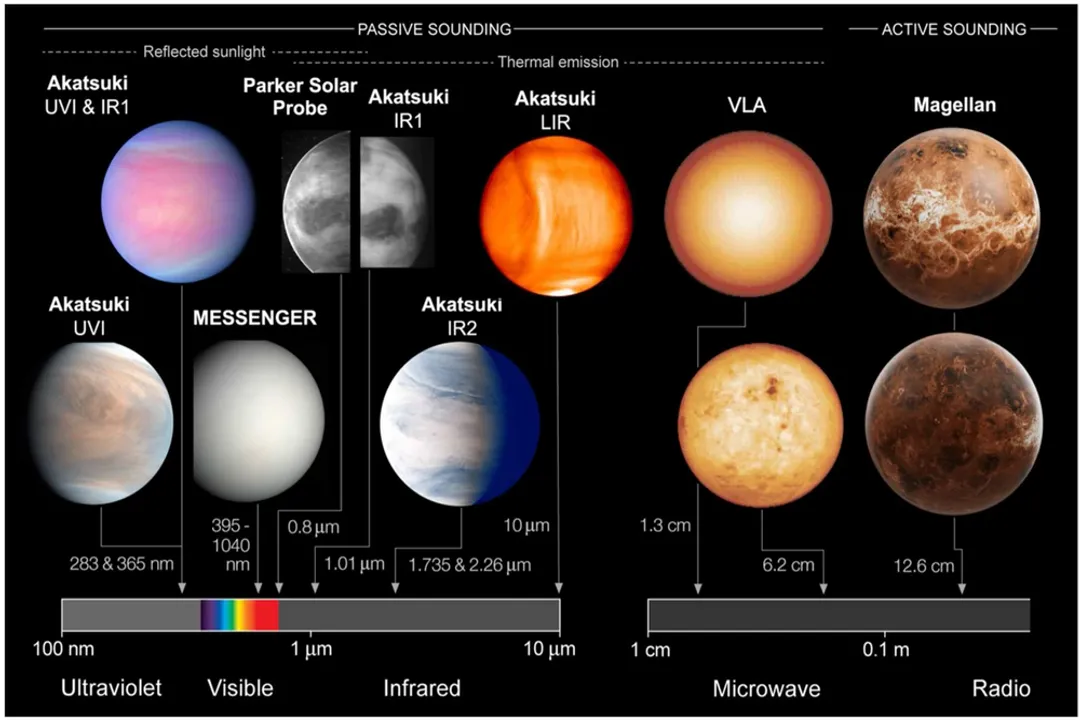
To bypass this obstruction, scientists and engineers turned to radar mapping. Radar uses radio waves, which can pierce the clouds. Missions like NASA’s Magellan spacecraft utilized synthetic aperture radar (SAR) to create detailed topographical maps of the entire planet. These maps are incredibly valuable, revealing vast plains, towering volcanoes, and unique geological features like coronae and tesserae. However, a radar map is not a photograph; it is a rendering based on the time it takes for the radio signal to return and its intensity, offering information on elevation and surface roughness, but not the direct color or texture of the rocks as a visible-light camera would capture them. Even infrared instruments have been employed to peer through certain atmospheric layers, but they, too, offer a different view than what the human eye perceives.
# New Light
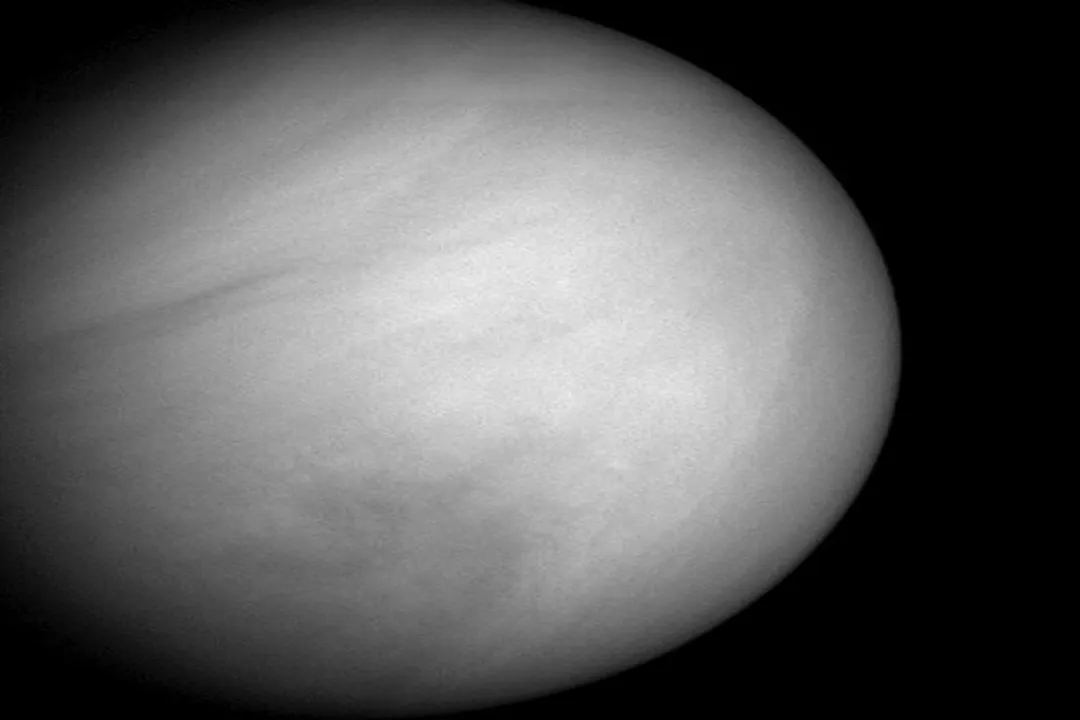
The biggest news in Venus imaging came recently with the Parker Solar Probe (PSP). This probe was primarily designed to study the Sun, but its close flybys of Venus presented an opportunity. During a September 2022 flyby, PSP managed to capture the first confirmed images of the Venusian surface using visible light while in orbit.
This was a monumental achievement because it demonstrated that even from orbit, under very specific viewing conditions—likely looking at the night side or a region where atmospheric scattering allowed a small amount of reflected sunlight to reach the camera—it was possible to capture surface detail in the visible spectrum. The images captured by PSP's Wide Field Imager (WFI) were grainy compared to modern terrestrial photography, but they confirmed structures on the planet's surface, specifically the large feature known as the Aphrodite Terra highlands.
The ability of PSP to capture these images in visible light, even if limited by its geometry and the constant cloud cover, suggests a crucial avenue for future exploration. If future orbiters could be designed to exploit specific atmospheric "windows" or view the planet during moments of favorable solar illumination, they might gather much richer surface context than radar alone provides. A radar image tells you how high something is; a visible-light image confirms what color the rock is and what its texture appears like in ambient light. For instance, knowing the precise mineralogical composition requires color data that radar struggles to deliver unambiguously. This new data stream from PSP, captured from space rather than resting on the hostile surface, is a powerful proof-of-concept.
# Naked Eye Versus Camera
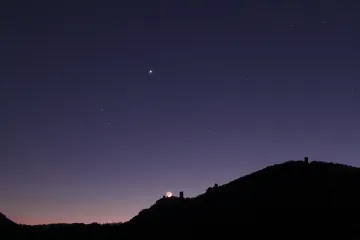
It is worth distinguishing between what a camera captures and what we see with our own eyes. Without a telescope or any camera, Venus is one of the brightest objects in the sky after the Sun and Moon. It appears as a dazzling, near-perfectly white or slightly yellowish beacon. This brightness is due to its thick, highly reflective atmosphere, which reflects about 70% of the sunlight that hits it.
However, because of this dense, uniform cloud layer, the naked eye perceives no surface features whatsoever. It is a smooth, bright disk. The surface photographs from Venera, or the data derived from radar, give us a view that is completely hidden from direct observation, even with the best optical telescopes. The contrast here is stark: what we see from Earth is a bright, pristine marble, while the ground beneath is a scorching, rocky wasteland.
# The Challenge of Data Return
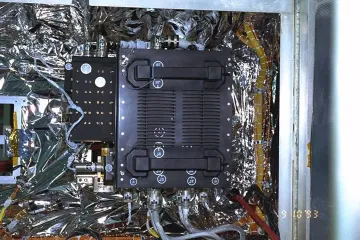
Considering the extreme environment, the feat of getting any data—let alone visual data—from the surface is worth emphasizing. The design constraints for a Venus lander camera system are among the toughest in planetary science. They require specialized thermal shielding, pressure vessels, and imaging sensors capable of functioning across a massive dynamic range of light (from near-darkness to bright, diffused daylight) while enduring intense radiation and corrosive chemistry.
The Venera missions often relied on mechanical shutters and film-based or early solid-state imagers housed in protective chambers, sometimes using a small window. The limited power supply and the need to transmit data quickly before equipment failure meant that every image was a precious commodity, often requiring the sacrifice of other scientific instruments or operational time. This high-stakes, low-duration imaging contrasts sharply with the data return protocols we expect today. If a modern lander were to successfully operate on Venus today, the expectation would be for high-resolution, panoramic, multi-spectral imaging over weeks or months, not minutes. The technological gap underscores how much more we could learn now if we returned to the surface with contemporary camera technology, assuming we could solve the endurance problem for a longer duration.
The fact that only a handful of surface pictures exist underscores an area where exploration has lagged. While Mars has sent multiple rovers capturing tens of thousands of images, Venus remains largely a world viewed remotely through radar or atmospheric analysis. The recent confirmation that visible light images can be taken from orbit hints that perhaps the next generation of orbiters should focus on optimizing viewing angles during close passes to build a mosaic, rather than solely relying on the risky, complex endeavor of soft-landing another camera. The long-term view of the planet's geology is far better served by a consistent, global radar map, but the immediate human curiosity about "what it looks like down there" is satisfied only by those few, historic, hard-won surface snapshots.
#Videos
The First and Only Photos From Venus - What Did We See? (4K)
Related Questions
#Citations
Parker Solar Probe Captures its First Images of Venus' Surface in ...
Every picture from Venus' surface, ever. There are six. : r/space
Every picture from Venus' surface, ever | The Planetary Society
We landed a camera on Venus before seeing…
The clearest picture ever taken of Venus' Surface. - Facebook
The First and Only Photos From Venus - What Did We See? (4K)
Has anyone ever seen Venus without the use of a telescope ... - Quora
Surface of Venus revealed in 1st visible-light images from space
Observations and explorations of Venus - Wikipedia