How many images of Venus exist?
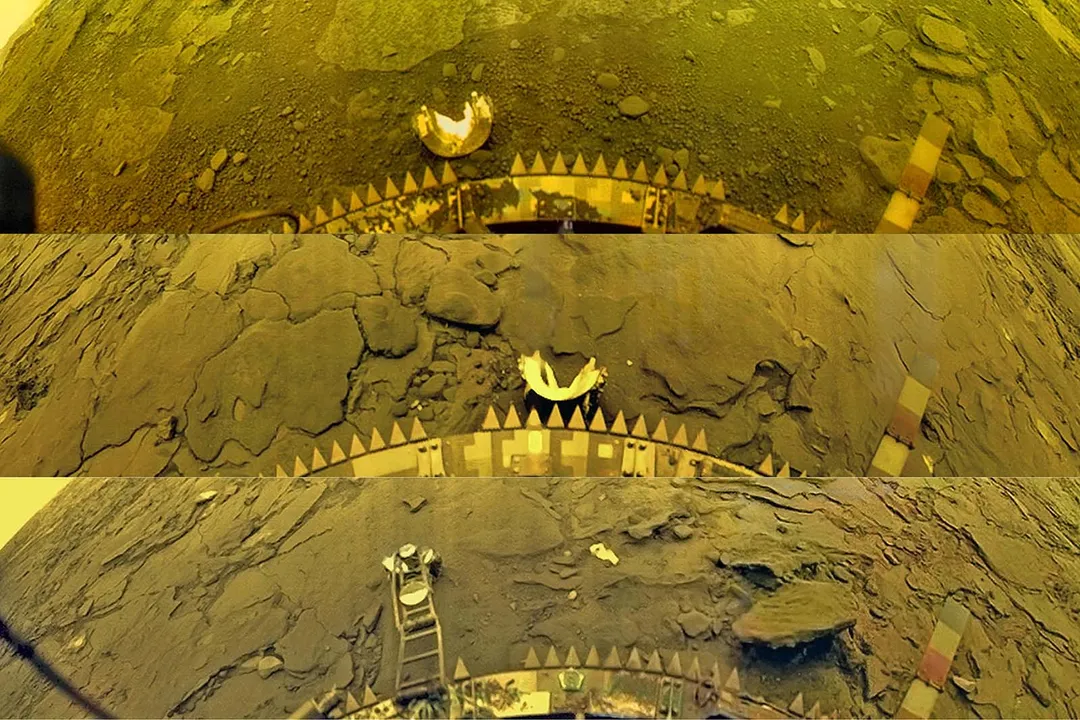
The actual count of images taken of Venus depends entirely on what counts: the rare, direct photographs from the surface, or the massive data sets returned by orbiting and flyby spacecraft. For most people, the question centers on the direct visual record—the actual photographs of what it looks like standing on the ground. In that very specific context, the number is shockingly small, comprising only a handful of pictures transmitted across unimaginable static and heat. [1][2]
These iconic surface images are the crowning achievement of a single, ambitious program conducted by the Soviet Union: the Venera missions. [1][4]
# Surface Photography
The harsh reality of Venus’s surface environment—temperatures hovering around () and atmospheric pressure 90 times that of Earth—means any camera sent down has a vanishingly brief operational window. [2][9] This extreme hostility is why we possess so few true snapshots of the planet’s ground level. [1][4]
# First Glimpses
The first successful attempts to image the surface came from the Venera 9 and Venera 10 landers in . [1][4] These probes managed to send back panoramic views, which were constructed using line-by-line transmissions that give them a distinctive, somewhat jagged appearance. [1][4] While revolutionary, these initial images were in black and white, showing a desolate, rocky terrain under a murky, yellowish-orange sky. [1][4] They confirmed the surface was not the smooth, flat world some early models predicted, but rather a world strewn with angular debris and flat rocks. [1]
# Color Confirmation
The true photographic gems arrived almost seven years later with Venera 13 and Venera 14 in . [1][2][4] These landers successfully captured the only known color images from the Venusian surface to date. [1][2] Venera 13 transmitted four unique images, and Venera 14 also sent several back before succumbing to the heat and pressure. [2] These images clearly depict a flatter, pavement-like area punctuated by darker, flatter stones that contrasted against the brighter soil. [4] The color palette is overwhelmingly dominated by shades of orange and yellow, illustrating how the dense, sulfuric acid-laced clouds scatter the light. [1]
If we strictly count these distinct, high-fidelity, color panoramic transmissions from the 1982 missions, the total is often cited as being limited to just four primary images that define our entire visual understanding of the Venusian ground. [2][4] When adding the distinct black-and-white panoramic scans from the 1975 missions, the total number of unique surface views remains in the very low single digits. [1]
It is fascinating to consider that in the time it has taken to send rovers across Mars for decades, accumulating millions of images, our direct visual record of Venus’s surface is defined by what a handful of hardened Soviet cameras could capture in mere hours. [1][4] This scarcity speaks less to a lack of interest and more to an unparalleled engineering hurdle that has only been overcome fleetingly. [9]
# Beyond the Surface Images
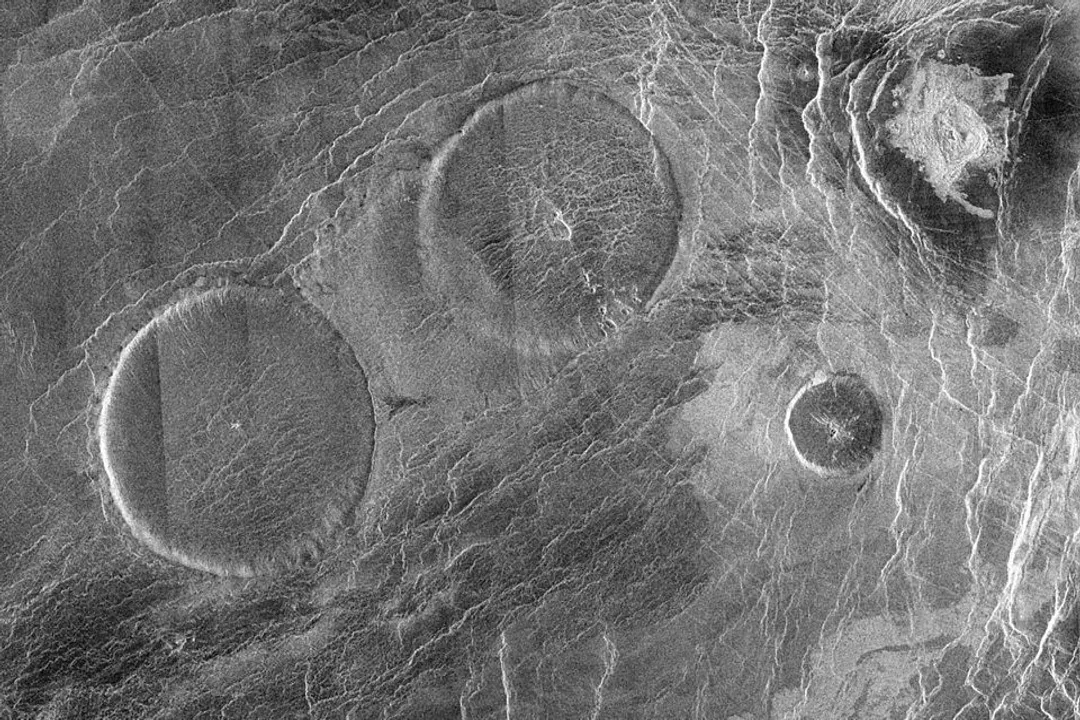
When expanding the definition of "images of Venus" to include every scan, radar map, and orbital photograph, the number skyrockets into the millions, transforming the planet from a visual mystery into a well-mapped body. [9] This broader category relies heavily on indirect sensing techniques to pierce the thick atmospheric veil that prevents optical telescopes from seeing the ground directly from orbit. [9]
# Radar Mapping
The most comprehensive visualization of the planet's surface comes from radar imaging. [9] Radar signals can penetrate the clouds, allowing spacecraft to map topography and surface features much like an astronaut sees Earth from space, but using radio waves instead of visible light. [9] The Magellan mission, operating in the early s, was the gold standard for this work. [9] Magellan essentially mapped nearly the entire surface of Venus using Synthetic Aperture Radar (SAR), gathering vast amounts of data that, when processed, create detailed, high-resolution images of mountains, plains, and volcanic features. [9]
# Modern Flybys
More recently, even missions not explicitly designed to study Venus have returned spectacular imagery. The Parker Solar Probe (PSP), primarily focused on the Sun, has performed several close flybys of Venus. [5] During these rapid passes, PSP’s scientific instruments, including its Wide-field Imager for Solar and Planetary Science (WISPR), have successfully captured the first images of Venus’s surface in visible light from an advantageous angle. [5] While not a landing, these orbital glimpses provide a different perspective, showing the planet’s cloud tops and revealing features on the surface below during specific solar alignments. [5] These newer images supplement the decades-old Venera data by providing context from above.
To better appreciate the distinction, here is a comparison of the image types available:
| Image Type | Primary Source | Information Provided | Rarity/Volume |
|---|---|---|---|
| Direct Surface Photos | Venera Landers () | Color, texture, immediate environment | Extremely Rare (Single Digits) [1][2] |
| Radar Topography | Magellan Orbiter (s) | Global surface shape, geological structures | High Volume (Global Coverage) [9] |
| Orbital/Flyby Visuals | PSP, Venus Express, etc. | Cloud structure, atmospheric dynamics | High Volume (Continuous) [5] |
# Analyzing Data Volume
When we look at the data returned, the disparity is stark. The Venera landers transmitted data for perhaps a few hours in total across all successful missions combined. [1] In contrast, the Magellan mission, which mapped the entire planet multiple times, generated a dataset so large it forms the bedrock of our current understanding of Venusian geology. [9] If we consider every single scan line from every successful radar pass, the number of individual data points is enormous, but these points are then rendered into processed images that look nothing like the grainy, stark photos from the Venera landers. [9]
The existence of a few color images from the 1980s alongside the comprehensive radar maps of the 1990s suggests that the technological progress moved rapidly from surviving the landing to mapping the planet from a safe orbit. [1][9] The sheer volume of high-quality orbital data—millions of radar pixels—should temper the perceived ignorance of Venus. We know its shape, its mountain ranges, and its plains intimately, even if we have never seen a tourist brochure-quality photograph of a Venusian sunset. [9]
# Environmental Constraints

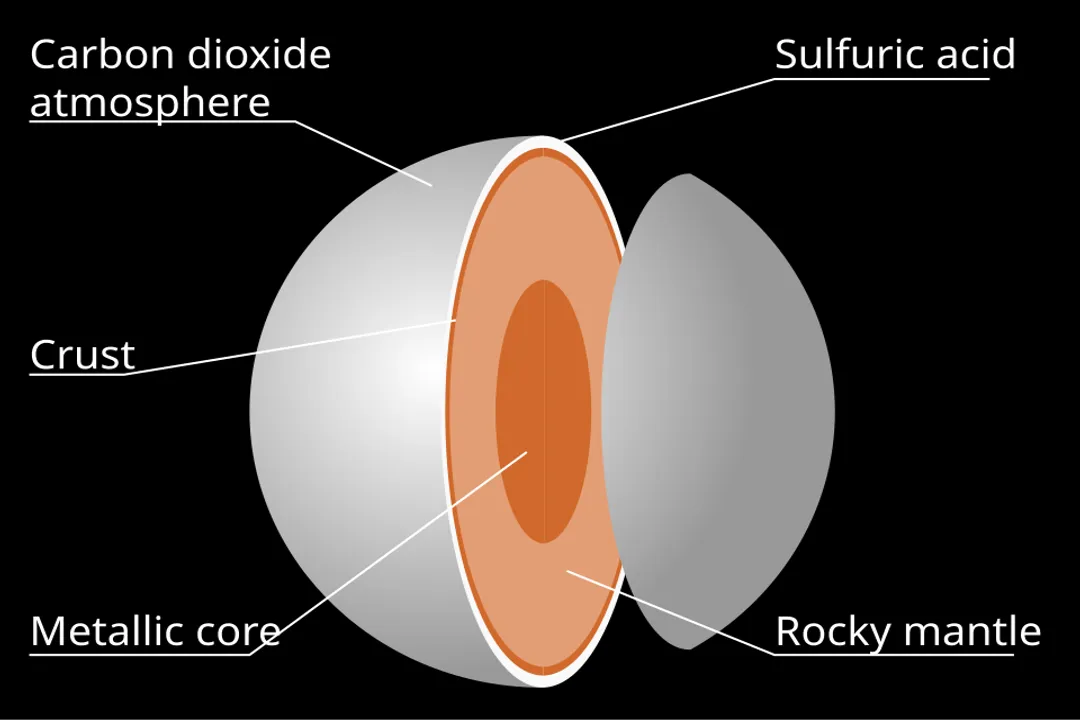
The primary reason why the count of direct surface images is so low relates to the physics of the Venusian environment. [9] The thick atmosphere, composed mostly of carbon dioxide with clouds of sulfuric acid, acts like a massive insulating blanket, trapping heat and creating a runaway greenhouse effect. [9]
When the Venera probes landed, they were essentially entering an oven with the crushing weight of the deep ocean pressing down on them. [2][9] The pressure is roughly equivalent to being over 900 meters underwater on Earth. [9] This extreme pressure and heat rapidly degrade electronics, causing the landers to fail quickly after deployment. [1] The time window for opening the camera shutter, capturing the data, encoding it, and transmitting it back across the vast distance to Earth—all before the batteries died or the camera fried—was incredibly narrow. [1]
This engineering feat explains the value of those four color pictures. They represent the absolute limit of what technology could withstand for a brief moment under those conditions. [4] Any subsequent mission attempting this would need revolutionary advancements in heat-resistant electronics or an entirely different power source to significantly increase the visual tally from the ground. [1]
In essence, the answer to "How many images of Venus exist?" splits into two very different worlds: a handful of profound, historic glimpses of the surface that define the planet's character, and a vast, radar-drawn portrait of its geography painted by orbiting eyes that never dared to land. [5][9]
#Videos
The First and Only Photos From Venus - What Did We See? (4K)
Related Questions
#Citations
Every picture from Venus' surface, ever | The Planetary Society
Only Four Pictures of Venus's Surface Exist Today — Here They Are
Every picture from Venus' surface, ever. There are six. : r/space
These Are the Only Photos Ever Captured of the Surface of Venus
The First and Only Photos From Venus - What Did We See? (4K)
Parker Solar Probe Captures its First Images of Venus' Surface in ...
The last photographs from the surface of Venus were taken 43 years ...
Captured by Venera 13 in 1982: The Only Photos Humanity Has of ...
Venus - Wikipedia