How many bodies are in the Milky Way?

The sheer scale of our home galaxy, the Milky Way, is a concept that strains human intuition. Asking how many "bodies" reside within this vast, swirling collection of matter leads us into a realm of staggering numbers, where estimates rather than exact counts define our current knowledge. This cosmic census isn't about counting individual people or objects like you would in a city; rather, it involves using sophisticated astronomical techniques to gauge the mass and distribution of stars, planets, dust, gas, and the mysterious dark matter that binds it all together.
# Stellar Population
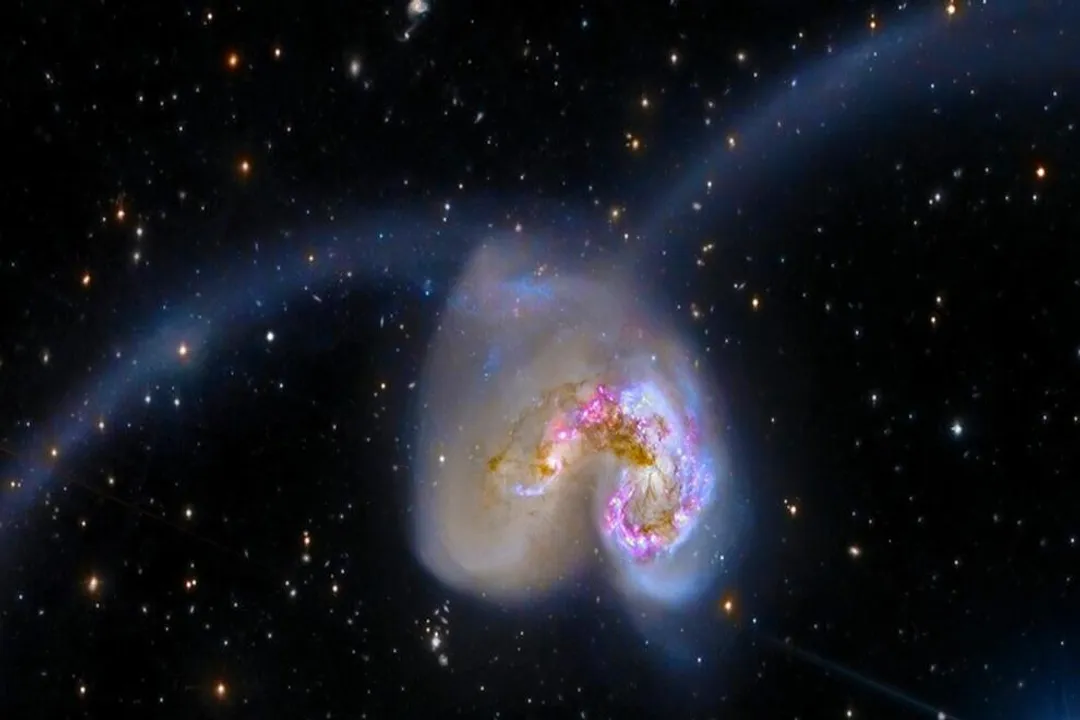
The most frequently discussed components of the galaxy are its stars, the luminous beacons that make up the bulk of its visible mass. Pinpointing the exact number is impossible, but astronomers have settled on ranges that consistently place the total count in the hundreds of billions. One common estimation places the number of stars in the Milky Way between 200 billion and 400 billion. Other sources support the lower end of that spectrum, suggesting at least 100 billion stars populate our galaxy.
These stellar estimates are derived not by counting individual pinpricks of light, but by measuring the total mass of the galaxy—accounting for the light emitted and factoring in how much of the mass is locked up in unseen or fainter objects, such as dim red dwarfs, which vastly outnumber the brighter, more easily detected Sun-like stars. The difference between a consensus of 100 billion and a high estimate of 400 billion can seem vast, but it often reflects evolving models used to calculate the mass contribution of these faint stellar populations. For example, if the average star is much less massive than our Sun, the total number of stars required to produce the observed galactic luminosity would be significantly higher than if most stars were Sun-like.
# Planetary Census
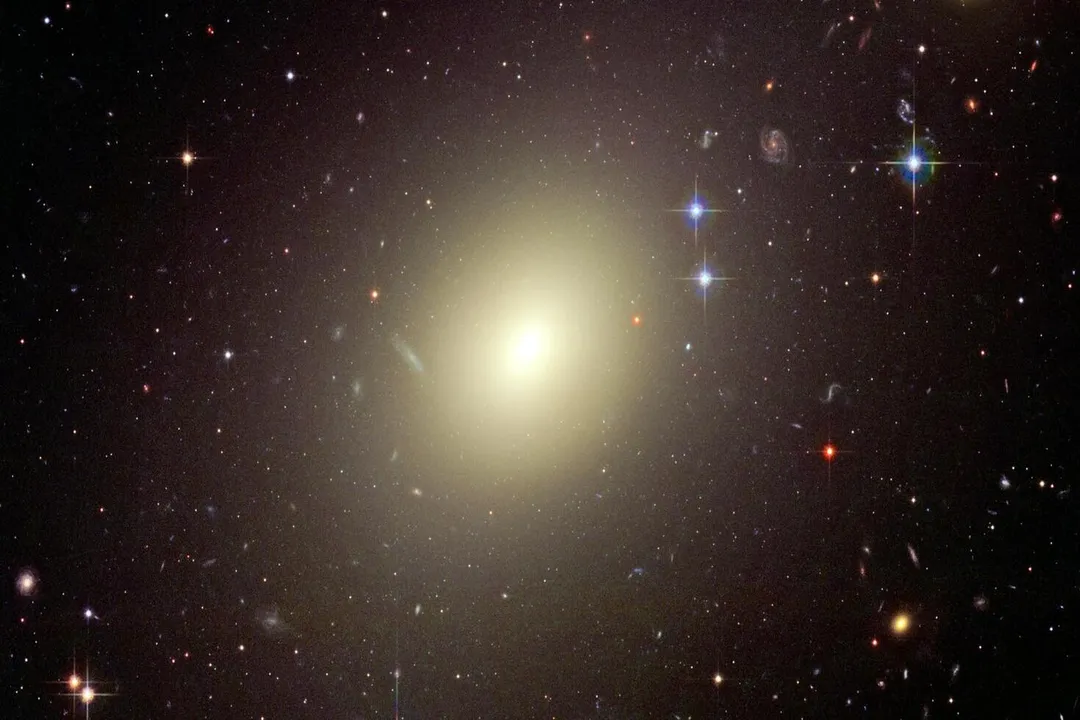
If the star count is immense, the count of planets orbiting those stars is even more staggering. While observing individual exoplanets in a distant galaxy like ours is extremely difficult, statistical extrapolations based on our local neighborhood and targeted surveys paint an incredible picture. It is currently estimated that the Milky Way contains 100 billion planets.
This 100-billion-planet figure suggests that, on average, there is at least one planet for every star in the galaxy, and possibly many more. Think about that for a moment: if the lower-end star estimate of 100 billion is accurate, it means there could be a one-to-one ratio. If the higher star estimate of 400 billion is more accurate, the planet count of 100 billion might actually be understated, implying that many stars could host multiple planets, which is certainly the case in our own Solar System. In fact, given the variety we are discovering, it’s plausible that the actual number of planets—including rogue planets not tethered to any star—could easily exceed the number of stars themselves.
This extrapolation relies on the expertise developed through observing other stars. Astronomers use techniques like transit photometry (watching for slight dips in starlight as a planet passes in front) or radial velocity measurements to find these worlds. The success rate of these methods, applied across large samples, allows scientists to project the frequency of planet formation throughout the galaxy.
# Beyond Stars and Worlds
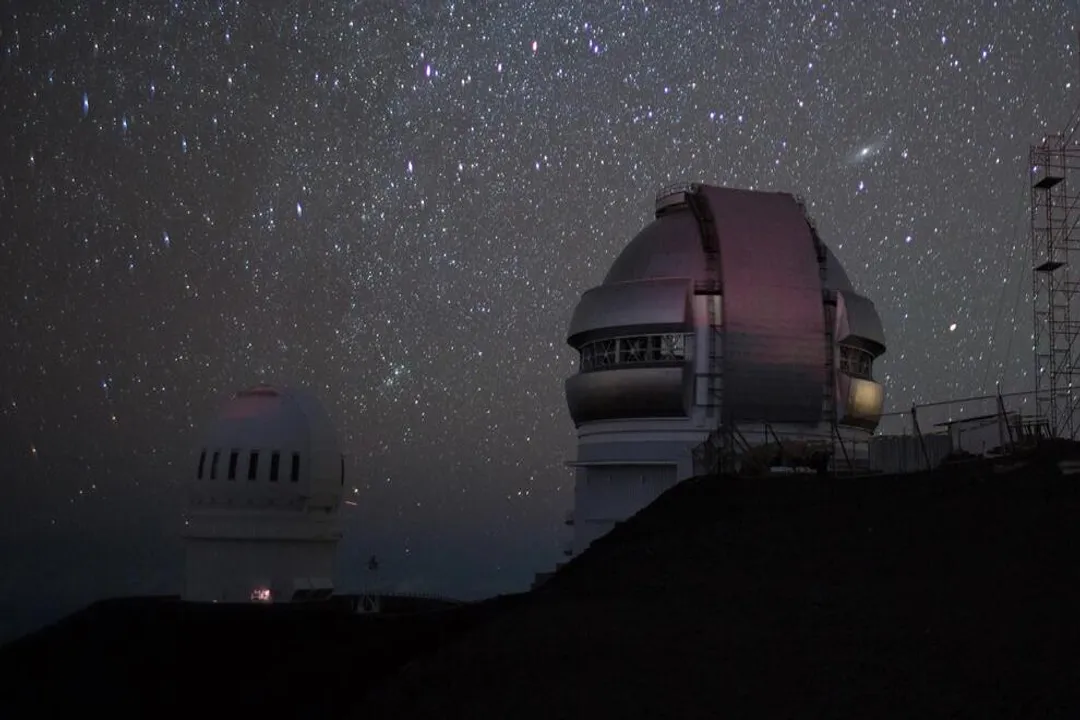
When we ask about "bodies" in the Milky Way, the roster extends far past the bright stars and the orbiting planets. The galaxy is fundamentally composed of gas and dust—the interstellar medium (ISM)—which is the raw material for future stars and planetary systems. Although these components are diffuse, their total mass is substantial, often equaling or exceeding the mass contained in all the stars combined. This material isn't a discrete body in the way a star is, but it certainly constitutes countless individual particles and molecules, adding incomprehensible numbers to the total count.
The most significant component by mass, however, remains invisible: dark matter. While we cannot see it, massive gravitational surveys and observations of galactic rotation curves indicate that dark matter constitutes about 90% of the Milky Way’s total mass. If we consider dark matter to be composed of some type of non-baryonic particle, the sheer number of these particles would dwarf the count of stars and planets by an unimaginable margin. A gargantuan survey aiming to map billions of celestial objects has helped constrain our understanding of the visible matter, but the dark matter component remains the largest, most enigmatic component of the galaxy's total "body count".
# Counting Difficulties

The reason for the wide ranges—100 billion versus 400 billion stars, for instance—lies in the inherent difficulty of observational astronomy on this scale. We are inside the Milky Way, looking through immense clouds of obscuring dust and gas, particularly toward the galactic center. This dust absorbs and scatters visible light, making distant stars appear fainter or completely invisible, which biases our counts toward closer, brighter stars.
To compensate, astronomers employ models that account for this extinction and extrapolate the numbers. If the model used to estimate the amount of intervening dust is slightly off, the final stellar count will be too. Furthermore, the vast majority of stars are red dwarfs, which are extremely dim and long-lived; accurately counting them requires specialized infrared surveys that penetrate the dust, a task still underway. The data gathered from large-scale surveys are essential for refining these population models.
If we consider the visible portion of the galaxy, the count of stars is the most critical measure of its visible heft. Imagine a conceptual table summarizing these leading estimates:
| Component | Low Estimate | High Estimate | Basis for Estimate |
|---|---|---|---|
| Stars | Billion | Billion | Mass modeling and luminosity |
| Planets | Billion | Potentially Higher | Exoplanet frequency statistics |
| Dark Matter | of Total Mass | of Total Mass | Gravitational effects |
It is useful to juxtapose the known and the unknown. While we can argue over whether the star count is 200 billion or 300 billion, the reality is that the number of dark matter particles likely outnumbers the stars by factors we can barely articulate. Our confidence in the stellar count is moderate, built on decades of spectral analysis, but our confidence in the number of dark matter particles is much lower, relying entirely on gravitational inference.
# Contextualizing Scale
To bring these monumental numbers down to a slightly more graspable level, consider this thought experiment based on the known ranges. If we take the middle-ground estimate of 250 billion stars and combine it with the minimum 100 billion planets estimate, we get a total of 350 billion major celestial bodies (stars and planets). If the average planet-to-star ratio is even just two planets per star, the total count of planets alone would reach 500 billion, putting the combined star and planet total nearing three-quarters of a trillion objects. This exercise highlights how conservative the 100 billion planet estimate might be, especially when considering that gas giants like Jupiter are easier to detect than smaller rocky worlds. The search is really about discovering the distribution of masses, not just the total count.
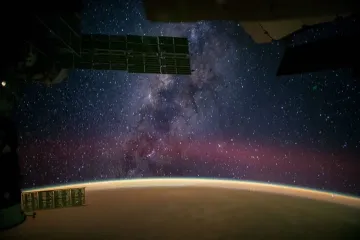
Furthermore, reflecting on the galaxy's structure helps ground the numbers. The Milky Way is a barred spiral galaxy, a flat disc with arms spiraling out from a central bulge, all embedded in a massive halo. The vast majority of these hundreds of billions of stars reside within that relatively thin disc structure. If you could view the galaxy from above, the density of stars, though appearing as a smooth haze from Earth's perspective, is incredibly high in the galactic plane relative to the sparse regions farther out or toward the halo.
# The Ongoing Count
The quest to refine these numbers is central to modern astrophysics. Surveys, like the gargantuan ones mentioned in astronomical news, continuously feed data into our models, allowing for periodic updates to stellar population estimates. These efforts are crucial because the composition and age distribution of stars tell us the history of the galaxy—how fast it formed stars, when it consumed smaller galaxies, and how its stellar mix has evolved over billions of years. Every new observation helps trim down the uncertainty bracket surrounding the star count. While we might never achieve a precise, absolute figure for the number of stars, continuous observational refinement brings us closer to a highly accurate statistical description of our cosmic home.
The final takeaway is that the number of bodies in the Milky Way is not one number but a hierarchy of uncertainty. We have reasonable confidence in the order of magnitude for stars (hundreds of billions), strong statistical evidence for an equal or greater number of planets, and overwhelming gravitational proof that the vast majority of the galaxy’s mass comes from an unseen source that is likely composed of an even larger count of fundamental particles. Our census focuses on the luminous objects, but the true, total count of "bodies," down to the smallest particle of dark matter, remains the grandest, most fundamental unknown in galactic astronomy.[1][2][3][4][5][6][7][8][9]
#Videos
How Many Planetary Systems Are In The Milky Way? - Physics Frontier
Related Questions
#Citations
The Milky Way's 100 Billion Planets - NASA
How Many Stars Are in The Milky Way? More Than You Can Imagine
There are approximately 200 to 400 billion stars in the Milky Way ...
The Milky Way Galaxy | AMNH
The Milky Way contains 100 billion stars and planets - Facebook
Billions of Celestial Objects Revealed in Gargantuan Survey of the ...
The Milky Way - New Scientist
How many stars are in the Milky Way? - BBC Science Focus Magazine
How Many Planetary Systems Are In The Milky Way? - Physics Frontier