What icy bodies does the Oort Cloud contain?
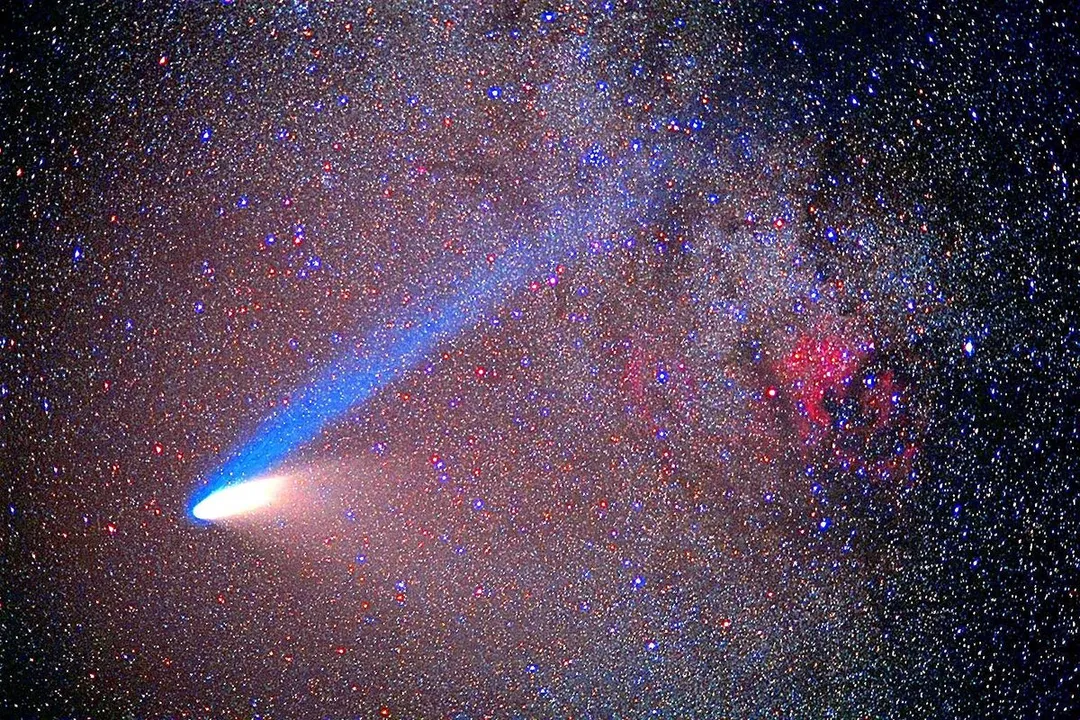
The remote reaches of our solar system harbor a colossal, spherical reservoir composed primarily of icy debris, a structure theorized to represent the leftover building blocks from the Sun's formation nearly five billion years ago. These distant, frozen remnants are the inhabitants of the Oort Cloud, a shell surrounding the Sun extending far past the orbits of the planets and even the Kuiper Belt. While direct observation remains impossible due to their faint nature and extreme distance, astronomers infer their existence and contents based on the behavior of the long-period comets that periodically drop into the inner solar system. The objects themselves are characterized by their composition: they are icy bodies, essentially primordial snowballs mixed with rock and dust.
# Icy Reservoir
The sheer scale of this population is difficult to grasp; estimates suggest the Oort Cloud contains trillions of individual objects. These are not terrestrial planets or rocky asteroids like those found closer to the Sun; instead, they are dark, cold clumps of volatiles that have remained largely untouched since the early days of the solar nebula. The consensus among planetary scientists is that these are primitive materials that were flung outward by gravitational interactions with the giant planets—Jupiter, Saturn, Uranus, and Neptune—billions of years ago.
The composition varies across the cloud, but the core components involve various types of ice. We are talking about frozen compounds such as water ice, but also more volatile ices like methane and ammonia. Mixed in with these ices are dust and rock fragments, meaning the bodies are often described as 'dirty snowballs' or icy conglomerates. The objects range in size, though the larger ones are likely responsible for the most significant cometary impacts when perturbed inward.
# Comet Origins
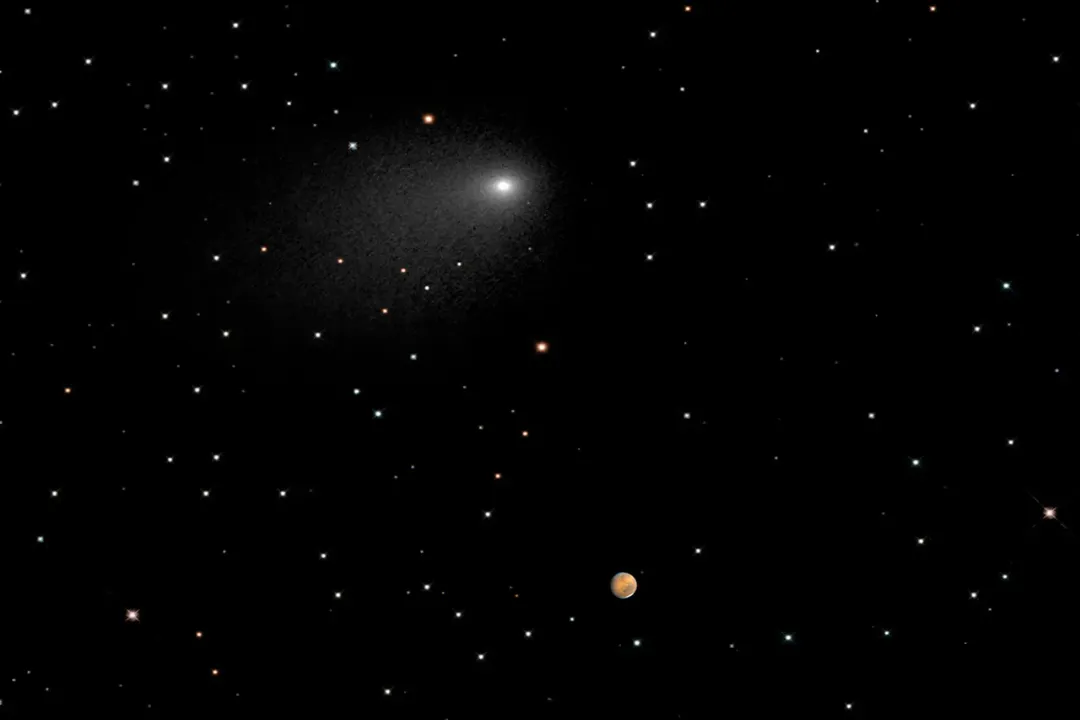
The most tangible evidence for the Oort Cloud's existence comes from studying long-period comets. A comet that appears in the inner solar system with an orbital period exceeding 200 years, or one that arrives on a highly eccentric, parabolic, or even hyperbolic path, is generally thought to have been nudged out of the Oort Cloud. When a passing star, the tidal gravity of the Milky Way galaxy, or a rare collision imparts just the right amount of energy to one of these ancient ice blocks, it can send it spiraling toward the Sun.
It is important to distinguish these incoming visitors from the objects commonly seen in the inner or middle solar system. Kuiper Belt Objects (KBOs), for example, orbit in a much flatter plane closer to the Sun, typically beyond Neptune, and have shorter orbital periods. The Oort Cloud bodies, conversely, exist in a vast, three-dimensional sphere extending far beyond the planetary plane. This difference in origin means that Oort Cloud comets are chemically pristine; they represent material that never condensed close enough to the Sun to be significantly altered by heat, offering a direct window into the solar system's initial chemical makeup.
# Cloud Structure
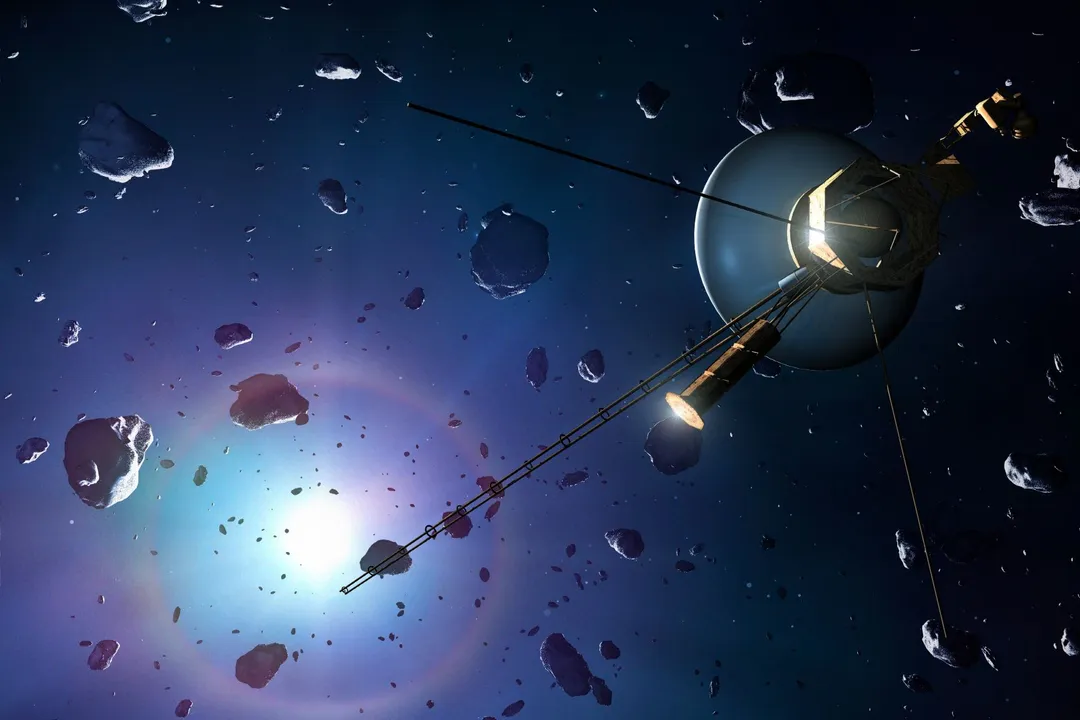
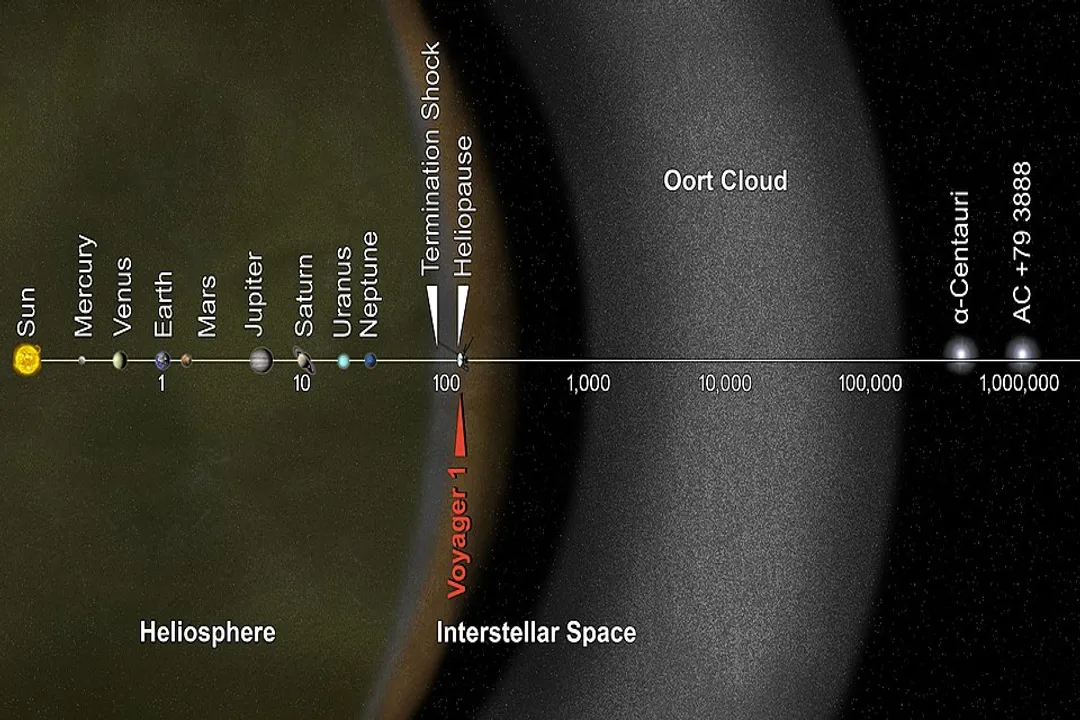
Defining the Oort Cloud involves detailing its immense, albeit theoretical, boundaries. Astronomers generally divide the structure into two main components: the inner region and the outer region. The inner boundary is often called the Hills Cloud, starting perhaps around to $5,000$ Astronomical Units (AU) from the Sun, though definitions can vary slightly. The outer edge is hypothesized to extend perhaps as far as $50,000$ to $200,000$ AU. To put this staggering distance into perspective, Neptune orbits at roughly $30$ AU, and the Voyager 1 probe, currently the farthest human-made object, is only now leaving the heliopause at around $150$ AU. The gravitational influence of the Sun barely holds these outermost bodies; they are nearly on the edge of being captured by the gravity of other nearby stars.
Despite the incredible number of objects—trillions—the cloud is overwhelmingly empty space. If we assume a population of, say, objects spread throughout a volume defined by the outer limits of $200,000$ AU, the average distance separating any two icy bodies must be enormous. It has been calculated that the average distance between these objects can be in the range of millions of kilometers. This extreme sparsity is why the Oort Cloud, despite its mass, does not obscure the light from stars lying behind it; the volume is vast, but the density is incredibly low. In fact, the gravitational influence of passing stars is often stronger on the outermost Oort Cloud objects than the Sun's is, which explains how these bodies are occasionally perturbed into the inner system.
# Composition Details
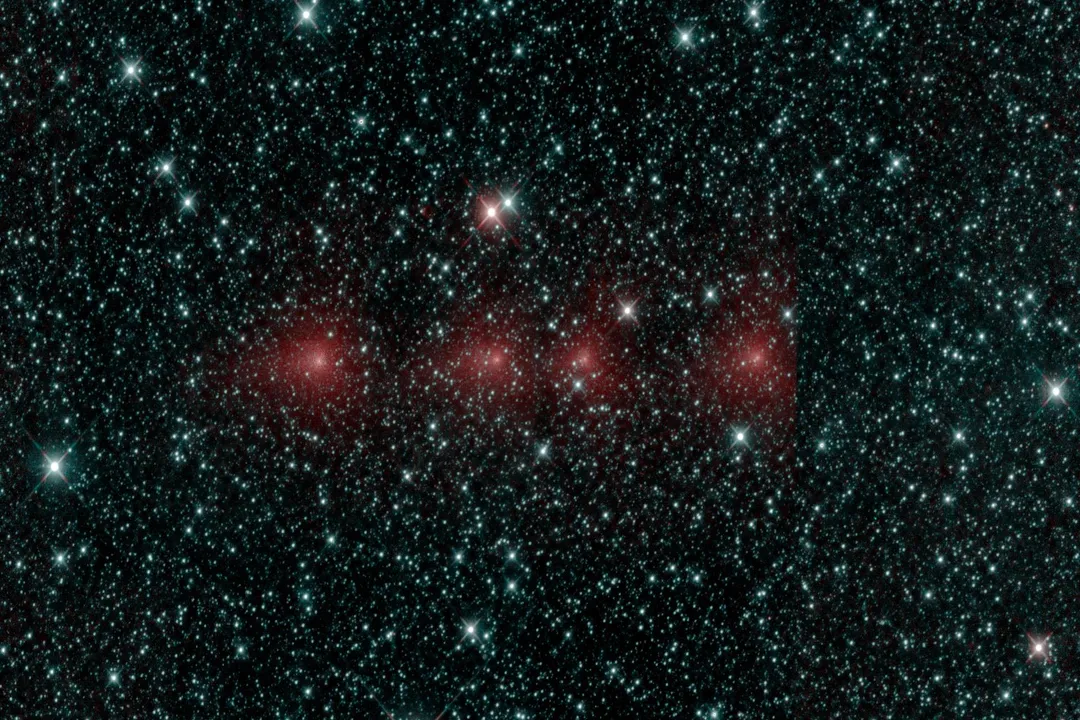
While we categorize them broadly as "icy bodies," the variation in composition is a key aspect of their scientific interest. We can compare the typical composition profiles associated with the solar system's colder regions to help understand what the Oort Cloud objects are made of.
| Component | Typical State/Volatility | Solar System Location Analogy |
|---|---|---|
| Water Ice () | Moderately Volatile | Kuiper Belt, Jovian Moons |
| Methane () | Highly Volatile | Outer Kuiper Belt, Pluto |
| Ammonia () | Highly Volatile | Outer Solar System Ices |
| Rock/Dust | Refractory Material | Asteroid Belt, Planetary Cores |
The fact that objects retain methane and ammonia in a frozen state strongly indicates they formed far from the Sun, beyond the "ice line" of the early solar system, which is why they are so valuable for studying the initial composition of the cloud that formed the planets. They are time capsules, essentially frozen solar nebula material.
One interesting analysis stemming from the hypothesized structure is the concept of orbital stability. Because the Oort Cloud is spherical and extends so far, its objects spend the vast majority of their existence in orbits where the Sun's gravitational tug is weak relative to interstellar perturbations. The extremely long orbital periods—potentially thousands or even millions of years for the most distant ones—mean they are barely gravitationally bound, existing in a semi-stable limbo between being true solar system members and stray interstellar objects. This precarious orbital situation is why a slight external nudge can result in a sudden, dramatic change in trajectory, sending the object inward as a spectacular comet.
The historical context further emphasizes the nature of these bodies. Jan Oort developed the hypothesis in the $1950$s precisely because he noticed that long-period comets seemed to cluster in their orbits suggesting they all came from a distant, distant reservoir, rather than being captured from interstellar space or originating from the known plane of the planets. The icy bodies are thus not recently formed; they are the original, slowest-moving, and coldest relics of planetary accretion. Their primary significance is not their individual mass, which is tiny, but their collective volume and pristine chemical nature.
Related Questions
#Citations
Oort cloud - Wikipedia
Oort Cloud: Facts - NASA Science
What is the Oort cloud and where is it located? - Space
What is the Oort Cloud in our solar system? - Facebook
Oort cloud | Research Starters - EBSCO
I've heard that the Oort Cloud contains trillions of icy bodies. What ...
If the Oort cloud is a 'thick bubble' of icy objects, how come it doesn't ...
Oort Cloud | Definition, Location & Facts - Study.com