How many objects have been discovered in the Kuiper belt?
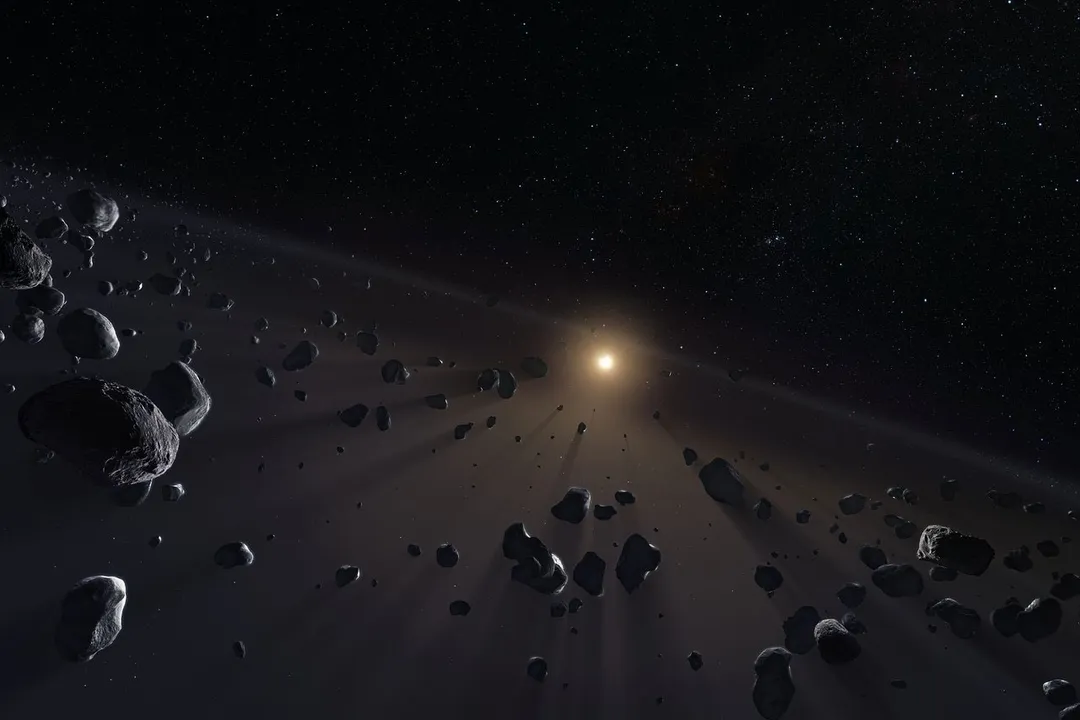
The remote, icy frontier beyond Neptune, known as the Kuiper Belt, is home to countless primitive objects that offer a pristine glimpse into the early days of our solar system. [1][5] While it is clear that this disk of trans-Neptunian objects (TNOs) hosts an immense population, pinning down the exact number of discovered objects requires looking closely at ongoing surveys and cataloging efforts. The count is not static; it grows regularly as detection technology improves and more sky surveys complete their data processing. [6]
# Current Count
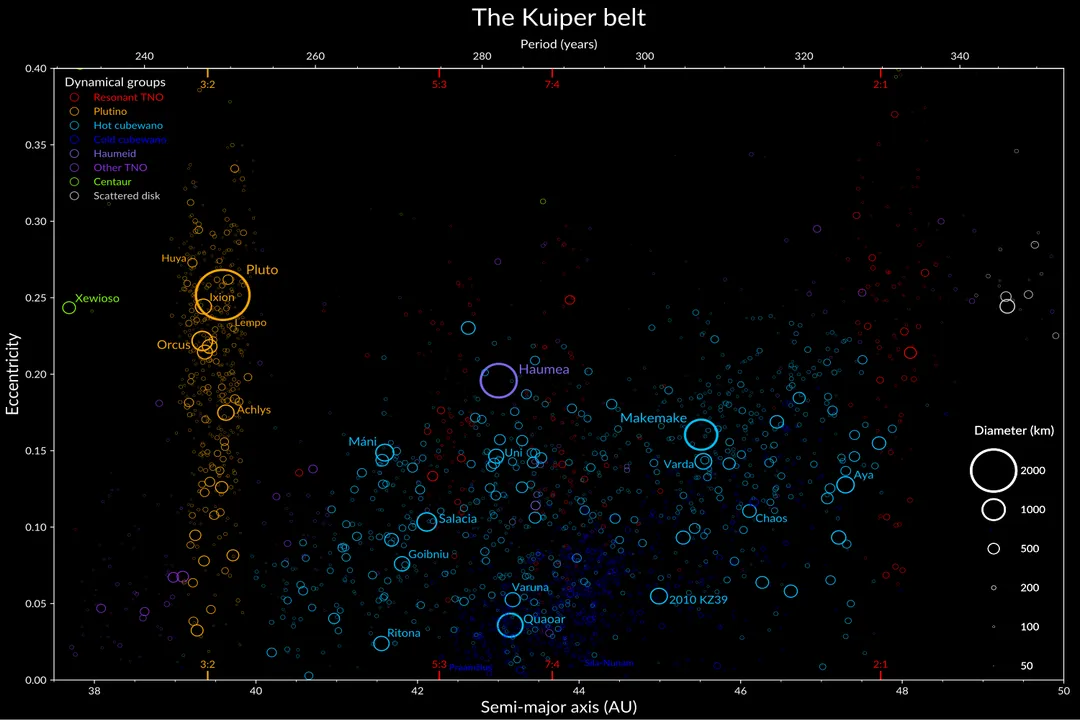
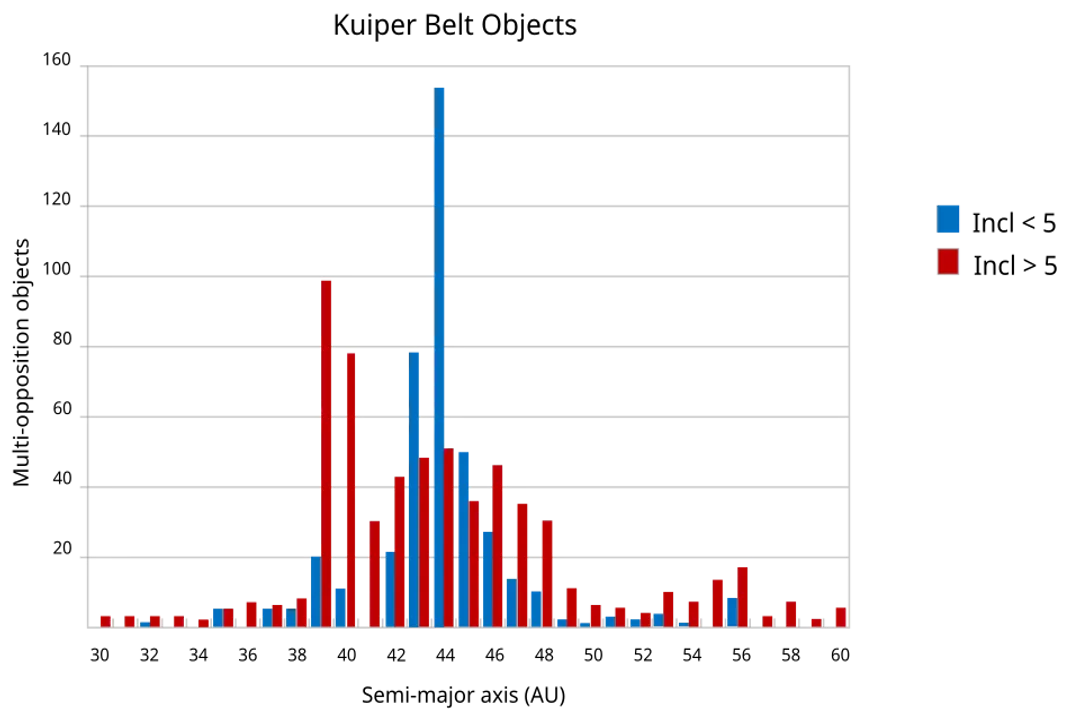
As of recent astronomical tallies, the number of officially designated Kuiper Belt Objects (KBOs) that have been discovered and cataloged sits in the thousands, though this number constantly fluctuates. [6] Specific sources tracking these discoveries indicate that the number of confirmed TNOs, which includes the KBOs, is around 2,000 to 3,000 cataloged bodies, depending on the precise date and inclusion criteria used by different databases. [6][1] For instance, the Minor Planet Center (MPC) maintains the official register for these small solar system bodies. [5] It is important to remember that this confirmed count represents only the brightest and nearest objects accessible to current telescopes. [7]
It’s worth noting the distinction between discovered objects and the total estimated population. While thousands are known, the total population of objects larger than perhaps 100 kilometers across is estimated to be in the hundreds of thousands, or even millions, with the vast majority remaining unseen. [6][10] The discovery rate itself is a fascinating metric; for example, the New Horizons mission, while famous for visiting Pluto and Arrokoth, has also contributed to finding many faint KBOs during its ongoing mission phase. [3][7]
# Major Bodies
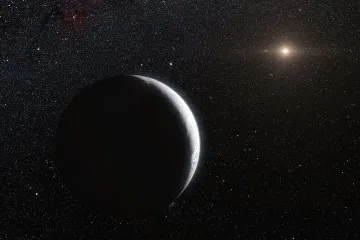
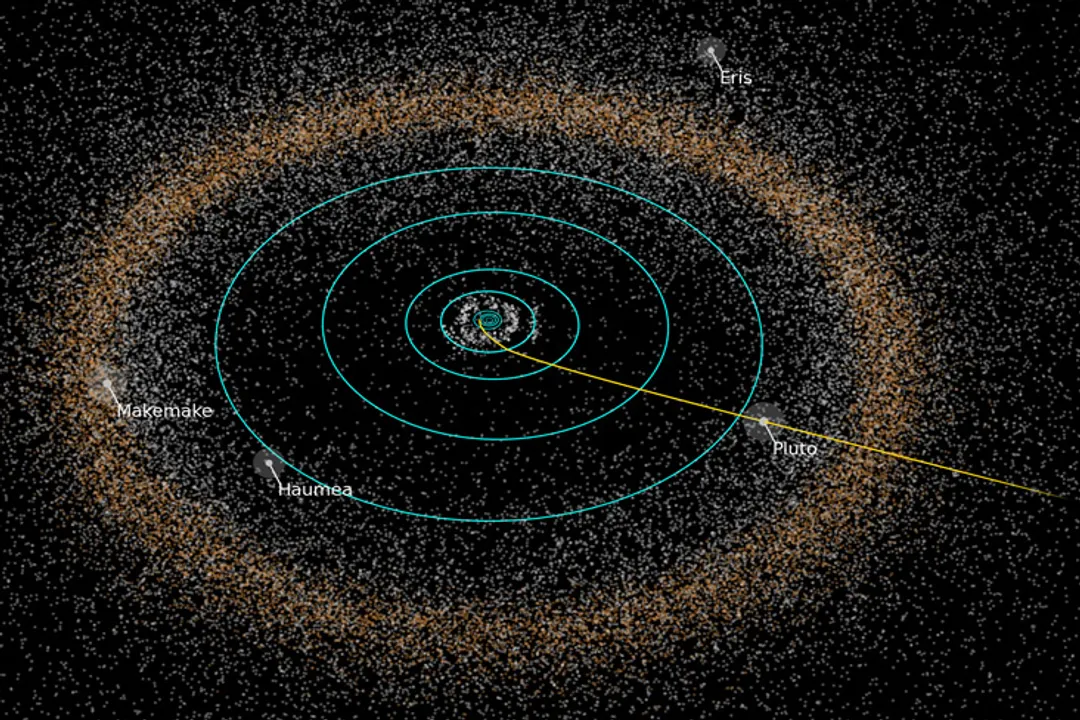
Among the thousands of cataloged TNOs, a smaller, elite group commands special attention: the dwarf planets. [1] These are the largest, brightest, and most significant objects found so far. The most famous of these is Pluto, which is also the largest known KBO, followed by other established dwarf planets like Eris, Makemake, and Haumea. [1] These large bodies are often the first discovered in new observational areas because they reflect more sunlight, making them easier to spot than their smaller, dimmer brethren. [7]
Objects are further grouped by their orbital characteristics. For example, Plutinos are KBOs that share a 3:2 orbital resonance with Neptune, meaning they orbit the Sun twice for every three orbits Neptune completes. [1] Other categories include scattered disk objects, which have highly eccentric and inclined orbits extending far beyond the main belt, and classical KBOs, which orbit in a more stable, doughnut-shaped region between about 30 and 50 astronomical units (AU) from the Sun. [1][10]
| Orbital Class | Defining Characteristic | Example |
|---|---|---|
| Classical KBO | Stable orbits between ~30–50 AU | Arrokoth [3] |
| Plutino | 3:2 orbital resonance with Neptune | Pluto [1] |
| Scattered Disk Object | Highly eccentric and inclined orbits | Eris [1] |
# Detection Challenges
The reason the known count is so low compared to the estimated total lies in the sheer difficulty of observation. The Kuiper Belt begins roughly 30 AU from the Sun—that’s 30 times the distance between the Earth and the Sun—and extends potentially past 50 AU. [10][5] At these vast distances, sunlight is incredibly faint, causing these icy bodies to appear extremely dim. [7]
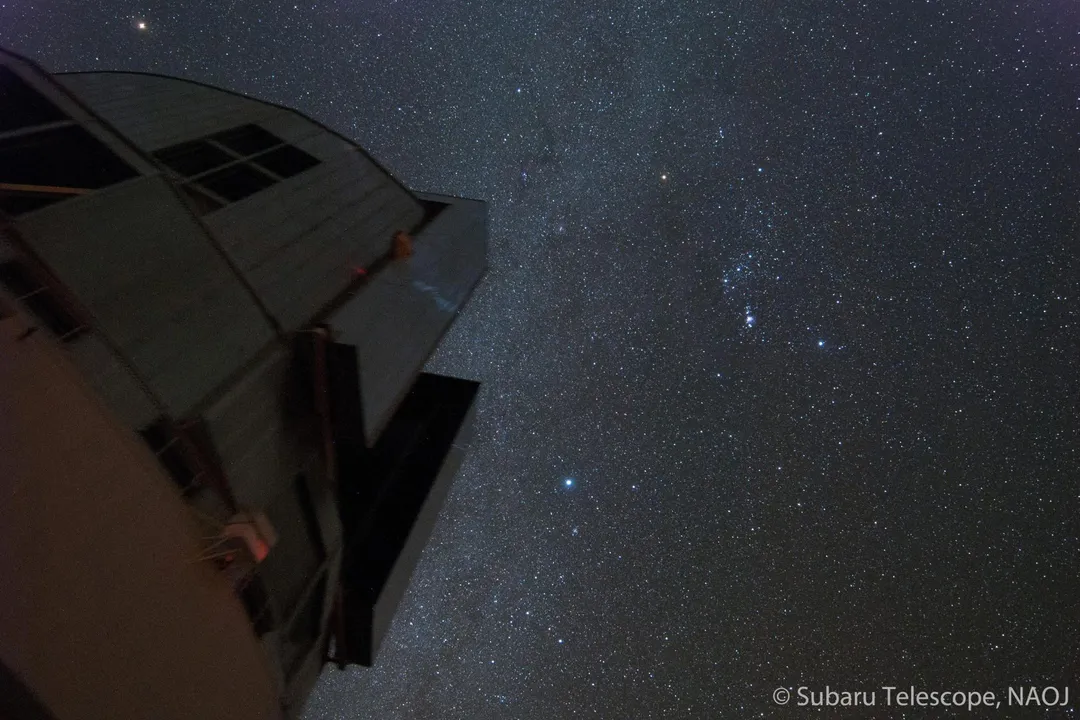
Detecting a KBO requires powerful telescopes, long exposure times, and sophisticated image processing to distinguish a slow-moving, tiny speck of light from background noise and static stars. [7] Surveys like those conducted by the Subaru Telescope have recently been instrumental, often detecting fainter objects than previous surveys could manage. [7] It is estimated that for every bright object we can see, there could be tens of thousands of smaller, darker objects that are currently undetectable by our best instruments. [10]
If we consider the current known count (let’s use ~2,500 for illustration), and compare it to estimates that there are 100,000 KBOs larger than 100 km, it means we have only identified roughly 2.5% of the larger population. [10] This ratio highlights the immense observational frontier that remains. Thinking about the typical brightness of these objects, an object the size of Pluto is significantly brighter than a 100-kilometer object, which in turn is much brighter than a 10-kilometer object. To find the smaller bodies, astronomers are pushing the limits of current sensitivity, often relying on dedicated searches that look for very slow-moving points of light over multiple nights. [7]
# Methods Used
The process of discovery is a methodical one, often involving comparisons between images taken weeks or months apart to identify objects that have changed position relative to the fixed background stars. [5] The discovery of objects like Arrokoth by the New Horizons spacecraft showcases the value of in situ exploration combined with ground-based surveys. [3] While New Horizons is an active probe, ground-based observatories like the Keck Observatory have also been crucial, especially in studying binary KBO systems, such as the three objects recently observed together, which helps constrain models of their formation and evolution. [4]
Modern surveys are designed to scan large swaths of the sky repeatedly, hunting for these slight shifts in position. The ability to detect these objects relies heavily on sophisticated statistical analysis to filter out artifacts and confirm genuine orbital paths. [7] For example, the use of wide-field survey cameras on large telescopes allows astronomers to cover a much larger area of the sky in a single night than was possible two decades ago. [7]
# Population Scale
To put the scale of the Kuiper Belt into context, consider the total estimated mass. While the discovery count is in the thousands, the total mass of the entire belt—including the countless small fragments—is thought to be only about one-tenth the mass of Earth, or perhaps even less. [1] This low total mass, when spread across the enormous volume, suggests that the majority of the material exists as very small, faint remnants, many of which are likely icy comets that have not yet been perturbed into orbits that cross into the inner solar system. [6][10]
If we look specifically at the population estimate for objects larger than 100 km in diameter, some models suggest there could be around $100,000$ of them. [10] If we were to extend that estimate down to objects just 1 km in diameter, the number would soar into the trillions, though these smaller objects are exceedingly difficult to detect even with specialized equipment. [6] The current confirmed count is a mere sliver of this entire population, serving as a census of only the most substantial and easily observable members orbiting beyond Neptune. [7]
It is an interesting exercise to consider the efficiency of current detection technology. If we assume a uniform distribution of KBOs by size, and knowing the size/brightness relationship, we can infer that for every classical KBO brighter than magnitude , there may be many thousands of fainter ones currently undetected. [10] This disparity between the known and the unknown is what drives future missions and ongoing sky surveys—the census is far from complete. [4]
# Future Insights
The ongoing discovery of these objects is not just about racking up a higher number; it’s about refining the history of the solar system. Every new orbit measured helps astronomers trace back the gravitational history of the giant planets, particularly Neptune. [1] For instance, the discovery of new orbital groups or binaries provides physical constraints on how these objects formed and survived the chaotic early stages of planetary migration. [4] The data from confirmed KBOs, such as the composition learned from the New Horizons flyby of Arrokoth, gives context to the faint lights we are just now beginning to detect. [3]
The development of next-generation telescopes, like the Vera C. Rubin Observatory, promises a massive jump in the confirmed KBO count. These instruments are designed specifically to conduct deep, repeated surveys of the sky, pushing detection limits far fainter than previous surveys. [7] When these observatories become fully operational and their data is processed, the official catalog of discovered objects could easily jump from the current few thousand to tens of thousands within a few years, finally beginning to map the true structure of the main Kuiper Belt population. [6]
The story of the Kuiper Belt discovery count is less a final tally and more a progress report on humanity's reach into the outer solar system. While the current confirmed list is a modest few thousand, this small sample is already reshaping our understanding of planetary formation and the distant edges of the Sun's gravitational domain. [1][5]
Related Questions
#Citations
Kuiper belt - Wikipedia
Kuiper Belt: Facts - NASA Science
About the Kuiper Belt - New Horizons
New Research Reveals Kuiper Belt Duo May be Trio
Kuiper belt | Research Starters - EBSCO
How Many Asteroids Are Locked Up in the Kuiper Belt?
Hidden Kuiper Belt Objects Detected by New Horizons and Subaru ...
Are any Pluto-sized objects remaining to be discovered in the Kuiper ...
[PDF] The largest Kuiper belt objects - CalTech GPS