How many LEO satellites for global coverage?
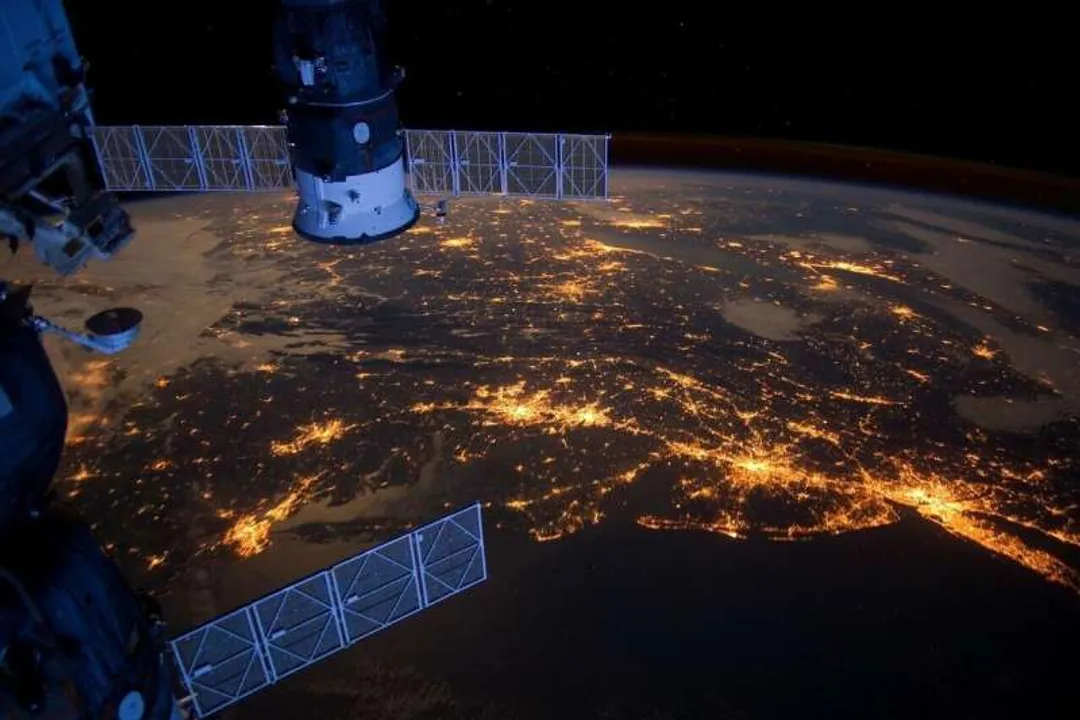
The scale of hardware being placed into Low Earth Orbit (LEO) to achieve truly global connectivity is perhaps the most striking feature of modern space internet initiatives. It is not a question of launching a handful of powerful relays; rather, achieving ubiquitous, low-latency service demands constellations numbering in the hundreds, often scaling into the thousands. [1][9] This massive undertaking is dictated by orbital physics, the need for constant handoffs, and the market's growing demand for high-speed data access anywhere on the planet. [6]
# Orbital Mechanics
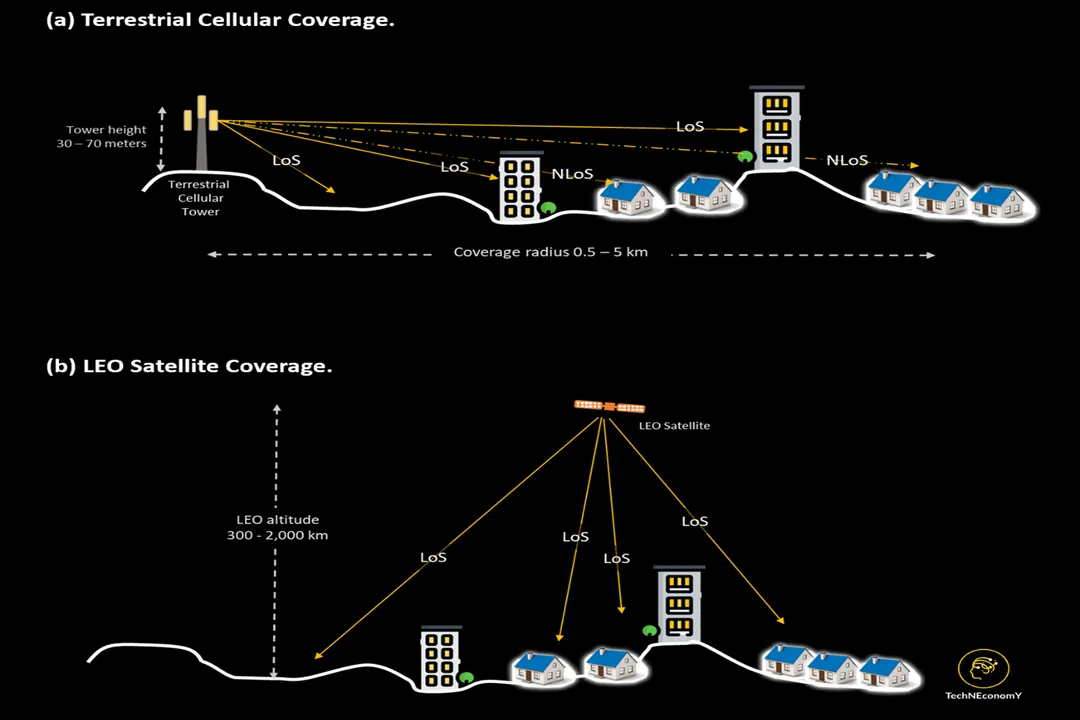
LEO operates several hundred kilometers above the Earth, vastly lower than traditional Geostationary Orbit (GEO) satellites, which sit roughly 36,000 km up. [3] This low altitude is the source of the desired low latency—the time it takes for a signal to travel—making LEO services viable for real-time applications like video conferencing and gaming. [3] However, this low altitude is also why so many satellites are required. Because they move very quickly relative to a point on the ground, any single satellite is only in view of a specific ground user for a short window, perhaps only ten minutes. [3]
To ensure continuous service, a constellation must maintain sufficient overhead coverage at all times. This requires substantial spatial redundancy. If one satellite passes out of view, another must already be visible or rapidly approaching to take over the connection without interruption. [4] This mechanism necessitates a sheer quantity of assets positioned strategically across multiple orbital planes to guarantee coverage, irrespective of the user's latitude or the time of day. [6]
# Minimum Scale
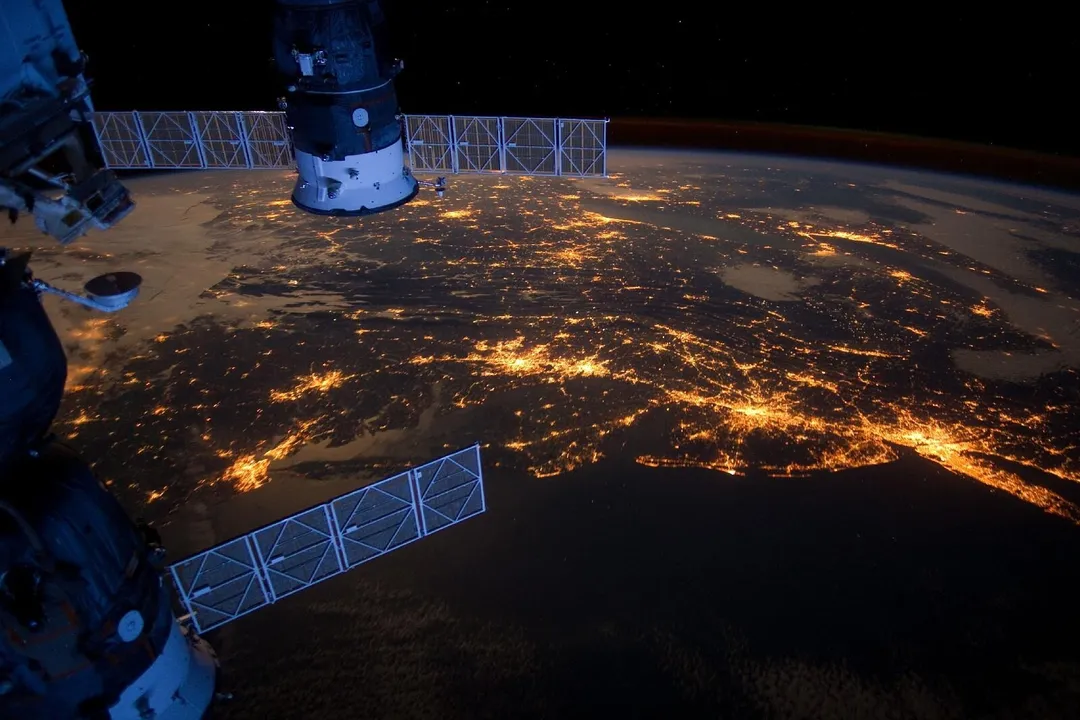
The exact number required for "global coverage" is dynamic, depending heavily on the altitude, the required percentage of service uptime, and the minimum elevation angle a ground terminal can support. [3] While a small LEO constellation might offer service to a limited geographic zone, achieving worldwide coverage implies a commitment to deploying hardware sufficient to blanket nearly every accessible landmass and ocean sector. [1][9]
For some current or planned major systems, the theoretical requirement sits well into the thousands. For instance, initial deployment plans that aim for baseline global coverage often start with several hundred satellites, but the final, fully operational constellation can easily exceed two thousand units when accounting for in-orbit spares and the necessary distribution across orbital planes. [1] The complexity isn't just about how many but where they are placed; an optimal deployment balances the required number with the complexity of managing ground beam steering and inter-satellite links. [4]

# Optimization Efforts
It is important to note that the sheer projected size is not necessarily the final, most efficient answer. The industry is actively researching ways to shrink the required satellite count while maintaining or even improving service quality. [8]
One area of study focuses on improving beam forming and orbital design to maximize the service area each satellite can manage. [8] For example, if researchers develop a novel technique that successfully reduces the necessary geographical overlap between adjacent satellites for maintaining link continuity by just ten percent, the operational requirement for a major constellation could drop by hundreds of units. [8] This kind of engineering efficiency directly translates to reduced launch costs, faster time-to-market, and, critically, less debris in the orbital environment. [8]
# Market Drivers
The intense focus on launching large constellations is fueled by significant projected market growth. Analysts anticipate that the global satellite market will expand substantially, potentially becoming seven times larger than its current size within the next decade. [2] This economic surge supports the capital expenditure required for massive satellite manufacturing and launch campaigns. [9]
This financial backing means that operators are designing for massive scale from the outset, viewing the initial deployment as a foundation for future capacity upgrades. [2] The move toward LEO is viewed not just as a technical upgrade but as a necessary step to capture emerging bandwidth demand, especially in underserved terrestrial areas. [7] The deployment rhythm is dictated by investment milestones as much as by technical necessity. [9]

# Connectivity Spectrum
While LEO is positioned as revolutionary, it is also useful to view it within the broader context of global connectivity solutions. [7] LEO satellite internet services offer advantages over traditional GEO systems, primarily due to latency. [6] However, for many established, densely populated regions, LEO acts as a sophisticated supporting mechanism rather than the sole provider of connectivity. [7] The high cost and complexity of deploying thousands of satellites mean their primary initial value proposition often lies in connecting the hard-to-reach areas where building fiber or maintaining terrestrial towers is economically impractical. [6]
To put the required volume into perspective, consider the objective of achieving $99.9%$ uptime across North America. This might necessitate a constellation architecture requiring, perhaps, five hundred active satellites visible at any given moment for optimal performance across various ground terminals. However, achieving that same $99.9%$ uptime over the South Pole, where satellites maintain very low elevation angles to ground stations, demands a distinctly different constellation design, often requiring a higher density of satellites in specific orbital inclinations to maintain constant line-of-sight. [3] This geographic variance proves that "global coverage" is never a single number; it is a constellation engineered for the most challenging coverage areas first.
# Space Environment Concerns
With thousands of operational spacecraft being deployed, the management of the orbital environment becomes a major operational consideration. The sheer number of active satellites and the corresponding number of objects creating drag or maneuvering space dramatically increases the complexity of Space Traffic Management (STM). [5] Ensuring that these massive systems operate safely requires advanced tracking, communication, and coordination protocols to prevent collisions, a task that grows exponentially with the size of the installed base. [5] The international community and national space agencies must contend with this density, as the operational lifespan of these assets contributes directly to the long-term sustainability of the LEO domain.
Related Questions
#Citations
Low Earth Orbit Satellites: Potential to Address the Broadband ...
The global satellite market is forecast to become seven times bigger
Low Earth Orbit (LEO): An Overview - Deep InSecurity
Telesat Lightspeed LEO Network
LEO, MEO or GEO? Diversifying orbits is not a one-size-fits-all ...
Five Things You Should Know about Low-Earth Orbit (LEO) satellite ...
LEO Satellites: Revolutionary Connectivity or a Supporting Act?
New method could decrease number of satellites needed for global ...
[PDF] The evolving role of LEO satellites in Europe's connectivity future - EY